


How to Turn Booth Traffic Into Qualified Leads, Sales Opportunities, and Revenue
Let's be honest.
Booth traffic is exciting.
A crowded booth looks impressive.
A busy exhibit creates energy.
But here's the truth:
Booth traffic doesn't pay the bills. Leads do. Opportunities do. Customers do.
One of the biggest mistakes exhibitors make is measuring success by how many people visited their booth instead of how many qualified opportunities they generated.
A successful trade show isn't about collecting the most business cards.
It's about creating meaningful conversations with the right people and moving them toward becoming customers.
In this section, we'll explore proven trade show lead generation strategies that help exhibitors attract better prospects, capture more qualified leads, and maximize trade show ROI.
What Is a Trade Show Lead?
Before discussing lead generation, it's important to define what a lead actually is.
Not every booth visitor is a lead.
Some visitors are:
- Competitors
- Vendors
- Students
- Job seekers
- Industry observers
A true lead is someone who has a genuine interest in your product or service and could potentially become a customer.
The goal is not more contacts.
The goal is more qualified contacts.
Lead Quality vs Lead Quantity
Many exhibitors celebrate collecting hundreds of leads.
But quantity alone means very little.
Consider this example:
- Company A500 Leads
10 Opportunities - Company B100 Leads
40 Opportunities
Which company had the better show?
Most likely Company B.
The best exhibitors focus on quality first and quantity second.
Start With a Lead Generation Strategy
Lead generation should never be an afterthought.
Before the event, ask:
- Who Are We Trying to Meet?
- What Industries Matter Most?
- What Job Titles Are We Targeting?
- What Problems Do We Solve?
- What Qualifies Someone as a Lead?
Clear answers help your team focus on the right opportunities.
Define Your Ideal Visitor
Successful lead generation begins with knowing exactly who you want to attract.
Examples include:
- CEOs
- Marketing Directors
- Operations Managers
- Engineers
- Purchasing Managers
- Facility Managers
- Event Professionals
- Healthcare Administrators
The more specific you are, the easier it becomes to identify qualified prospects.
Create Booth Messaging That Attracts the Right Audience
Your booth should act as a filter.
Great messaging attracts the right people and discourages the wrong ones.
Instead of generic statements, focus on:
- Problems You Solve
- Industries You Serve
- Outcomes You Deliver
Visitors should immediately understand whether your solution is relevant to them.
Use Product Demonstrations to Generate Leads
Demonstrations remain one of the most effective lead generation tools in the trade show industry.
Why?
Because they create engagement.
Visitors who stop for a demonstration often spend more time in your booth and ask better questions.
Demonstrations help:
- Educate prospects
- Build trust
- Increase engagement
- Improve lead quality
Whenever possible, show rather than tell.

Schedule Meetings Before the Show
One of the easiest ways to generate qualified leads is to secure appointments before the event begins.
Reach out to:
- Existing customers
- Prospects
- Industry contacts
- Referral partners
A booth full of scheduled meetings often outperforms a booth relying solely on walk-in traffic.
Create Multiple Engagement Opportunities
Not everyone engages in the same way.
Consider offering:
- Product Demonstrations
- Interactive Displays
- Video Presentations
- Educational Content
- Expert Consultations
- Product Samples
The more engagement options available, the more opportunities you'll create.
The Power of Asking Questions
Many exhibitors make the mistake of pitching immediately.
The best lead generators do something different.
They ask questions.
Examples include:
- What brings you to the show?
- What challenges are you facing?
- What solutions are you evaluating?
- What are your goals this year?
- What caught your attention about our booth?
Questions uncover opportunities. Opportunities lead to sales.
Lead Qualification Techniques
Not every lead deserves the same level of follow-up.
Qualification helps prioritize opportunities.
The BANT Method
One of the most common qualification frameworks.
- BudgetCan they afford the solution?
- AuthorityCan they influence or make decisions?
- NeedDo they have a relevant problem?
- TimelineHow soon are they planning to act?
This framework helps identify high-priority opportunities.
Lead Scoring
Many exhibitors use lead scoring to rank opportunities.
Example:
- Hot LeadReady to buy.
- Warm LeadInterested but not immediate.
- Cold LeadLong-term potential.
This allows sales teams to focus their efforts effectively.
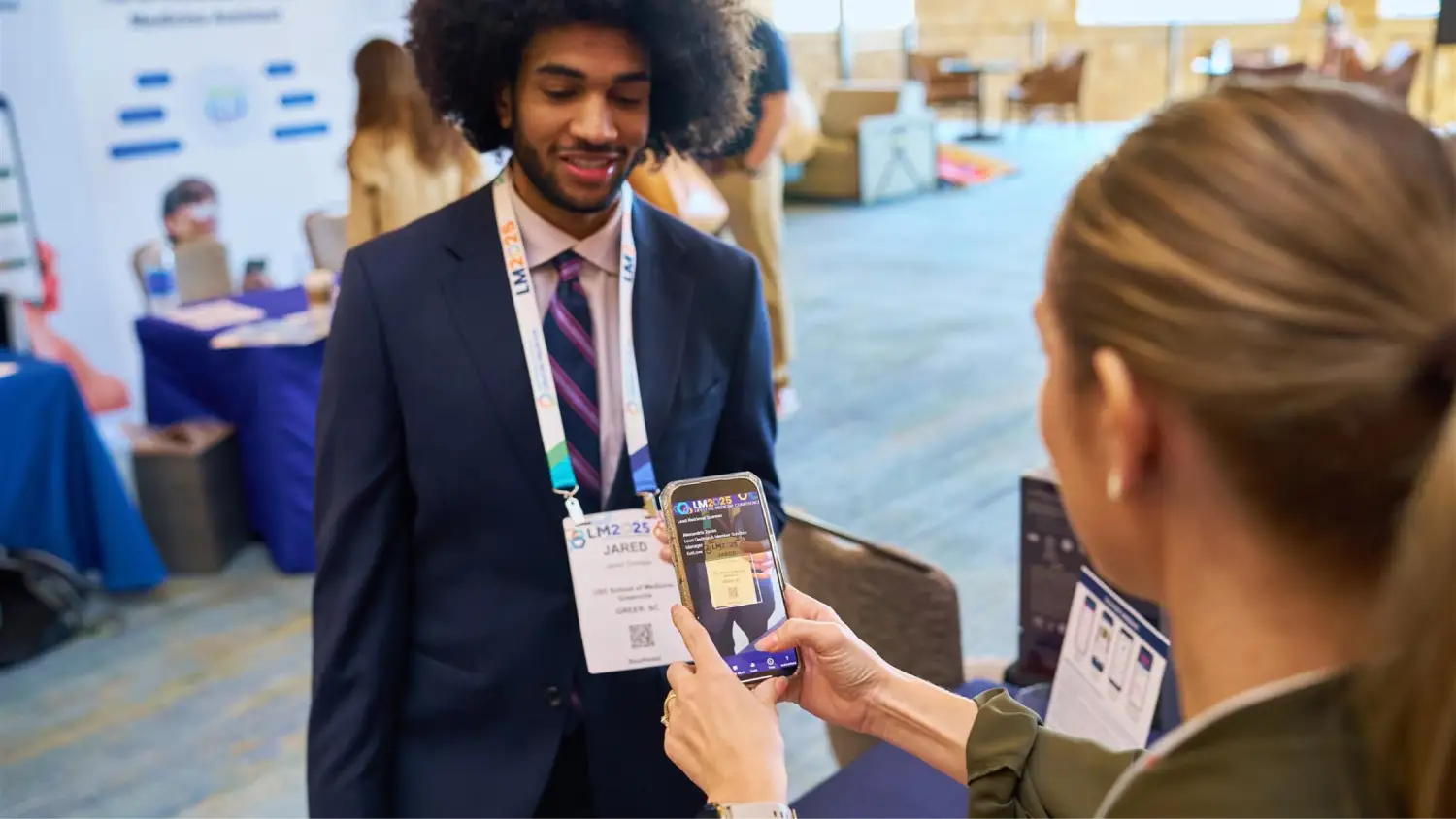
Using Technology to Capture Leads
Technology makes lead collection easier and more accurate.
Popular options include:
- Badge ScannersFast and efficient.
- QR CodesSimple for attendees.
- TabletsGreat for custom forms.
- CRM IntegrationsAutomatically organize leads.
- Mobile AppsIncreasingly popular at modern events.
The easier the process, the more likely staff will use it consistently.
For the operational steps after a booth conversation, explore our Lead Capture & CRM Handoff Guide, covering capture fields, duplicate cleanup, routing and CRM preparation.
Create Lead Magnets
People are more likely to share information when they receive value in return.
Examples include:
- Industry Reports
- Product Guides
- White Papers
- Educational Content
- Product Samples
- Consultation Offers
- Assessment Tools
Lead magnets help increase engagement and improve lead capture rates.
Hosting Giveaways the Right Way
Giveaways can be effective.
But only when used strategically.
Bad giveaways attract everyone.
Good giveaways attract your ideal audience.
Always ask:
Will this giveaway attract potential customers?
Or simply freebie hunters?
Quality matters.
Build Trust Quickly
Trade shows are often the beginning of a relationship.
Trust plays a major role.
Ways to build trust include:
- Customer Testimonials
- Case Studies
- Product Demonstrations
- Industry Certifications
- Awards
- Client Logos
Trust reduces hesitation and encourages engagement.
How to Capture Better Lead Notes
A name and email address are rarely enough.
Staff should record:
- Interests
- Challenges
- Products Discussed
- Budget Information
- Timeline
- Next Steps
Detailed notes dramatically improve follow-up quality.
Lead Follow-Up Best Practices
Many exhibitors lose opportunities because they follow up poorly—or not at all.
The best results often come from:
- Following Up Within 24–72 Hours
- Personalizing Communication
- Referencing Specific Conversations
- Providing Relevant Information
- Scheduling Next Steps Quickly
The faster and more relevant the follow-up, the stronger the results.
Common Lead Generation Mistakes
Avoid these costly errors:
- Focusing Only on TrafficTraffic is not the same as opportunity.
- Failing to Qualify LeadsNot all leads are equal.
- Delayed Follow-UpTime kills momentum.
- Collecting Incomplete InformationMissing details create follow-up challenges.
- Talking More Than ListeningThe best opportunities are often discovered through questions.
Measuring Lead Generation Success
Track metrics such as:
- Total Leads
- Qualified Leads
- Meetings Scheduled
- Opportunities Created
- Pipeline Value
- Closed Revenue
The goal is understanding which activities generate real business results.
The Purple Exhibits Philosophy on Lead Generation
At Purple Exhibits, we believe lead generation begins long before the show opens.
It starts with:
- Smart booth design
- Clear messaging
- Strong visitor flow
- Effective staffing
- Strategic marketing
When these elements work together, lead generation becomes significantly easier.
Because the best booths don't simply attract visitors. They attract the right visitors. And that's where real trade show success begins.
Final Thoughts
A successful trade show booth isn't measured by how many people walk past it.
It's measured by how many meaningful opportunities it creates.
When you focus on:
- Attracting the right audience
- Asking better questions
- Qualifying effectively
- Capturing accurate information
- Following up quickly
Your trade show results improve dramatically.
Remember:
The goal isn't collecting the most leads.
The goal is generating the most valuable leads.
Because valuable leads become opportunities. And opportunities become customers.
What's Next?
Now that we've covered trade show lead generation strategies, let's explore another important topic:
Trade Show Giveaways and Promotional Products.
We'll discuss what works, what doesn't, how to choose the right promotional items, and how giveaways can support lead generation rather than distract from it.