

Comparing Vision Expo booth quotes? Use this practical checklist to expose scope gaps, venue costs, ownership terms, product-display problems and on-site responsibilities before they become expensive.
By Purple Exhibits’ Strategy and Project Team Last reviewed: August 24, 2026
A beautiful rendering can still hide an incomplete project.
Two exhibit builders can propose a booth with the same footprint, similar finishes and nearly identical features—yet price two completely different jobs. One proposal may include engineering, graphics, packing, freight coordination, installation, on-site supervision and dismantle. Another may stop at the physical structure and leave the remaining costs for later.
That is why the lowest booth subtotal is not always the lowest show-floor cost. It may be the proposal with the most unanswered questions.
If you are comparing Vision Expo booth quotes, use these 15 questions to evaluate the complete project—not only the prettiest camera angle. For event details, exhibit ideas and full-service planning, begin with Purple’s Vision Expo 2027 booth builder guide.
The Quick Answer: What Should You Compare?
A Vision Expo booth proposal should clearly show:
- What is included, allowed for, estimated and excluded
- Who designs, engineers, fabricates and tests each component
- Who orders and pays for official show and venue services
- How many products the booth can display effectively
- How the proposed lighting performs with real frames, lenses or equipment
- Who manages freight, material handling, installation and dismantle
- What your company owns after the show
- What triggers a change order
- Who is responsible on-site
- How the booth can be reused or reconfigured
If any critical answer is “we will determine that later,” the proposal is not ready to sign.

Vision Expo 2027 Accuracy Note
According to the official Vision Expo schedule, Vision Expo 2027 takes place March 10–13, 2027, at The Venetian Expo in Las Vegas. The exhibit hall is scheduled for March 11–13.
Beginning in 2026, the former East and West events became one annual Vision Expo. Las Vegas hosts the 2027 edition.
Planning note—verified August 24, 2026: portions of the public Vision Expo exhibitor resources still contain 2026/Orlando carryovers and unfinished items. Confirm every official contractor, deadline, labor rule, EAC requirement and service order in the current Exhibitor Hub or final show-issued manual before committing costs.
The Venetian Expo currently identifies catering, cleaning, rigging, lighting, internet/telecom, electrical and plumbing as exclusive venue services. A booth proposal should state who specifies, budgets, orders and confirms each service, even when it must be ordered through a venue-designated provider.
How Purple Developed This Checklist
Purple Exhibits created these 15 questions from its experience managing custom, rental and hybrid exhibits across design, engineering, fabrication, merchandising, graphics, freight, installation, quality control, dismantle and storage.
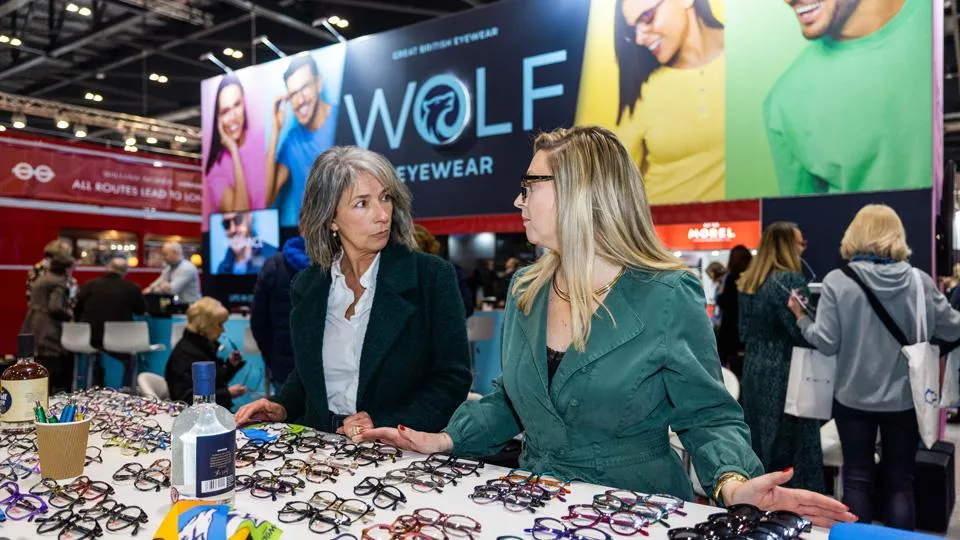
That experience includes work delivered on the Vision Expo floor, including Capri Optics in Las Vegas. The checklist focuses on the decisions that determine whether a booth merely looks complete in a rendering—or actually arrives complete on the show floor.
1. What Exactly Is Included in the Proposal?
Do not accept “turnkey” as a scope description.
Ask every builder to address the same line items:
- Creative strategy and 3D design
- Engineering and construction drawings
- Rental structure or custom fabrication
- Product displays, showcases and storage
- Graphics, dimensional logos and graphic installation
- Lighting fixtures and lighting labor
- Monitors, LED, AV equipment and content requirements
- Flooring, furniture and accessories
- Packing, crates and material labeling
- Inbound and outbound freight
- Material-handling coordination
- Installation and dismantle labor
- On-site supervision
- Show-service ordering and coordination
- Storage, inspection and future-show preparation
For each item, the proposal should identify what is being supplied, who is responsible and whether the amount is final or subject to adjustment.
A useful comparison table contains five columns:
Scope item | Status | Responsible party | Amount | Evidence or assumption
Pretty is good. Pretty with a complete scope is better.
2. Does the Proposal Distinguish Included, Allowance, Estimate and Exclusion?
These words are not interchangeable.
Ask each bidder to mark every proposal line with one of these four terms.
A blank is not an inclusion.
3. What Is the Real Landed Show-Floor Cost?
Compare the amount required to open the booth successfully—not just the exhibit subtotal.
A realistic planning formula is:
Design/build/rental + graphics + furnishings + AV + freight + material handling + installation/dismantle + utilities + venue services + supervision + taxes or fees = landed show-floor cost
Some official show or venue charges may not appear on the exhibit builder’s invoice. That does not make them optional or irrelevant.
If a final figure is not yet available, require a reasonable planning allowance based on the current footprint, weights, electrical plan, labor schedule and service requirements. Using zero for an unavoidable but unconfirmed cost makes a proposal look lower without making the project less expensive.
For broader budgeting guidance, review Purple’s trade show booth cost guide.
4. How Much Product Can the Booth Actually Display?
At Vision Expo, the product is the hero.
Ask for measurable capacity—not a general statement that the booth will include “eyewear displays.”
For an eyewear exhibit, confirm:
- The number of usable frame positions
- Horizontal and vertical spacing
- Reachable display heights
- Brand or collection zoning
- Mirror locations
- Try-on and product-return flow
- Lockable overnight storage
- Replenishment space
- Sample-case storage
- Lighting at every display level
For lenses, diagnostic equipment, lab systems or practice technology, confirm equipment footprints, operating clearances, sightlines, ventilation, cable paths, power, data and space for both the operator and visitor.
Never approve a product wall without knowing what it can hold.
5. Will the Builder Test a Real Product Under the Proposed Lighting?
A rendering can show a bright shelf. It cannot prove that a translucent frame, lens coating or diagnostic screen will look correct in the completed booth.
Ask for a sample-frame or real-product test before final production.
The test should examine:
- Color accuracy and consistency
- Glare and reflection
- Shadows created by shelves or signage
- Visibility of transparent and translucent materials
- Light intensity at different display levels
- Mirror placement
- Screen brightness
- Heat, cabling and power requirements
If the exhibit includes working equipment, test the actual or accurately sized equipment whenever possible.
Renderings are promises. Mockups are evidence.
6. What Engineering, Prebuild and Quality-Control Evidence Will You Receive?
Ask what will be reviewed before the exhibit ships.
Depending on the project, useful proof can include:
- Approved engineering drawings
- Product-display elevations
- Graphic dimensions and proofs
- Lighting specifications
- A production schedule
- Photos or video of critical preassembled sections
- A full or partial test fit
- AV and electrical testing
- Labeled packing plans
- A written punch list
- Final quality-control approval
Not every project requires a complete warehouse prebuild. Every project does require a documented method for confirming that critical components fit and function before move-in.
Purple’s custom exhibit design process connects concept development with the production and operational details required to deliver the approved idea.
7. Who Owns the Design and Exhibit Assets?
Paying an invoice does not automatically answer every ownership question.
Ask for a written schedule covering:
- Custom-fabricated components
- Rental-system components
- Design and CAD files
- Original graphic artwork
- Printed graphics
- Furniture and AV equipment
- Lighting fixtures
- Shipping crates
- Interactive software or media
- Lead data collected through booth technology
The proposal should also explain what Purple or another builder will store, what must be returned, what can be reused and whether access to production files continues after the project.
Ownership should be documented before the booth becomes difficult or expensive to move to another partner.
8. What Triggers a Revision Fee or Change Order?
A strong proposal explains how changes are managed before they occur.
Confirm:
- How many design revisions are included
- When design and production are considered approved
- Which client changes create added cost
- How late product, graphic or content delivery is handled
- Whether third-party invoices carry a markup
- When overtime or rush charges may apply
- Who is authorized to approve added cost
- Whether work begins before written approval
- What cancellation or postponement terms apply
A professional change order is visible before the added work is performed. A surprise invoice is not project management.
9. Who Orders and Coordinates Official Show and Venue Services?
The exhibit builder may coordinate a service without being the company authorized to provide it.
According to The Venetian Expo’s current guidance, exclusive services include catering, cleaning, rigging, lighting, internet/telecom, electrical and plumbing.
For every required service, determine:
The proposal should also explain who tracks discount deadlines and who responds if the installed service differs from the approved order.
10. Does the Proposal Separate Freight From Material Handling?
Shipping and material handling are related, but they are not the same service.
Freight moves the exhibit from a warehouse or other origin to the advance warehouse or venue.
Material handling, often called drayage, covers receiving the shipment, unloading it, moving it to the booth, handling empty containers and preparing outbound freight according to the show’s rules.
Ask:
- Is the freight carrier included or only coordinated?
- Is the shipment going to the advance warehouse or directly to show site?
- Who creates and verifies the shipping labels?
- What shipment weight is assumed?
- How are empty containers handled?
- Who prepares the outbound bill of lading?
- Who tracks the shipment after dismantle?
- Is material handling included, estimated or excluded?
Purple’s trade show logistics and shipping team connects shipment planning to the booth schedule, packing plan and move-in requirements.
11. Who Handles EAC Documents, Insurance and Show Compliance?
If the booth builder or installation company works as an exhibitor-appointed contractor, confirm who manages the required documentation.
Depending on the final show rules, that can include:
- EAC authorization
- Certificates of insurance
- Labor credentials
- Safety documents
- Rigging or engineering submissions
- Target move-in schedules
- Contractor check-in
- Work passes or badges
- Vehicle and marshaling instructions
- Dismantle and outbound procedures
Requirements and deadlines can change. The responsible party should verify them against the current Vision Expo Exhibitor Hub rather than relying on an old form.
The proposal should also clarify who manages installation and dismantle, who supervises the labor and who approves the booth before the exhibitor team arrives.
12. Who Is the Named Project Manager and On-Site Decision-Maker?
“On-site support available” is not a complete answer.
Ask for:
- The name and role of the primary project manager
- The production contact
- The logistics contact
- The installation supervisor
- Planned on-site coverage
- The opening-day escalation contact
- Response expectations after normal business hours
- Who has authority to approve corrective action
Then ask one practical question:
If something is wrong at 6:15 a.m. on opening day, who answers the phone and who can authorize the fix?
A booth can involve many specialists. Accountability should still be easy to locate.
13. How Does the Design Support Accessibility?
Accessibility should be part of the concept—not an adjustment made after the floor plan is approved.
Review:
- Open and unobstructed entrances
- Circulation width
- Accessible counter or interaction heights
- Reachable product and controls
- Seating options
- Trip hazards and cable management
- Captions or alternatives for video content
- Visibility of signs and instructions
- Space for visitors using mobility devices
Ask the builder to identify how accessibility was considered and to flag anything requiring confirmation under the current show, venue or applicable legal requirements.
A more usable booth is generally a better booth for everyone.
14. How Will Lead Capture, Technology and Staff Flow Work Together?
A screen is not a strategy, and a scanner is not a lead-management plan.
Map the visitor journey:
- What attracts attention from the aisle?
- Where does a visitor encounter the product?
- Where does a demonstration occur?
- Where is lead information captured?
- Where does a qualified conversation continue?
- What happens when several visitors arrive simultaneously?
- How does the team follow up after the show?
Confirm power, internet, device charging, screen sightlines, cable routing, content ownership, data handling, backups and technical support.
The booth should also provide hidden operational space for chargers, sample cases, replacement materials, literature, personal items and product resets. If the staff cannot operate comfortably, the visitor experience will eventually show it.
15. What Will This Booth Cost to Reuse or Reconfigure?
A reusable exhibit should be more than a structure that survives dismantle.
Ask the builder to identify:
- Which components can be reused
- Which elements are footprint-specific
- How the booth adapts to smaller or larger spaces
- What graphics must change
- How assets will be packed and inventoried
- Storage and inspection costs
- Expected repair or refurbishment
- Future installation requirements
- A preliminary cost for the next likely configuration
Compare both the one-show cost and the likely cost across the next three shows.
A slightly higher first-show investment can create better long-term value—but only when the reuse plan is specific and realistic.
The Vision Expo Proposal Proof Test
Do not score claims. Score evidence.
Experience is not a logo strip. It is a project that can be explained.
A 100-Point Vision Expo Booth Proposal Scorecard
Use this rubric to compare each proposal consistently:
Have at least two stakeholders score each proposal independently. Then discuss the largest differences.
A high score does not guarantee a successful show, but it reveals whether the proposal is complete enough for an informed decision. If a builder cannot provide the information required to score a category, do not award points based on assumptions.

Vision Expo Proposal Red Flags
Pause before signing if:
- Major services appear only as unexplained lump sums
- “Turnkey” is used without a responsibility matrix
- Display walls have no documented product capacity
- Lighting is approved without testing real products
- Freight and material handling are treated as the same cost
- AV equipment is quoted without power or internet requirements
- Ownership of custom assets is unclear
- On-site support is promised without a named supervisor
- The proposal relies on outdated show forms or deadlines
- Reuse is promised without a reconfiguration plan
- Important costs are left blank instead of estimated or excluded
One red flag may be easy to resolve. Several unresolved red flags usually indicate that the proposals are not yet comparable.

What Real Vision Expo Experience Changes
A builder with relevant Vision Expo experience should understand that optical products are purchased in the details.
Frames need deliberate spacing, reachable placement and lighting that reveals finish, color and transparency. Mirrors and try-on areas must work without creating congestion. Samples need secure storage and a fast reset process. Diagnostic and technology demonstrations require clear sightlines, operator space, power, data and cable management.
Purple Exhibits has delivered on the Vision Expo floor, including a Capri Optics exhibit in Las Vegas. That experience informs the questions we ask before design begins:
- What must buyers see first?
- How many products must be accessible?
- What deserves the strongest light?
- Where does try-on happen?
- How does interest become a qualified conversation?
- What must disappear into storage?
- What can be reused at the next show?
A Vision Expo exhibit should not feel like a generic structure filled with optical products after the fact. The architecture, displays, lighting and sales process should be developed as one environment.

Frequently Asked Questions
What should a Vision Expo booth quote include?
A complete quote should address design, engineering, structure, fabrication, product displays, graphics, lighting, flooring, furniture, AV, packing, freight, installation, dismantle, project management and on-site support. Official show and venue costs should be included, estimated or clearly identified as exclusions.
How do I compare Vision Expo booth quotes with different totals?
Normalize the scope first. Mark every line as included, allowance, estimate or exclusion. Then add reasonable external costs to calculate each proposal’s landed show-floor cost. Compare responsibility, evidence and risk alongside the total.
What costs are commonly missing from exhibit proposals?
Potential omissions include material handling, electrical service, internet, rigging, cleaning, overtime labor, EAC requirements, outbound freight, storage, AV content, graphic installation and on-site supervision. Scope varies, so request written confirmation.
Should I choose the lowest Vision Expo booth proposal?
Choose the proposal offering the best combination of design, complete scope, relevant evidence, operational accountability and realistic total cost. The lowest initial subtotal can become the most expensive option when essential responsibilities are missing.
What proof should I request from a Vision Expo exhibit builder?
Request named project examples, photographs, product-display drawings, real-product lighting tests, prebuild evidence, a responsibility matrix, a named project team and clear ownership and change-order terms.
Is the 2027 event still called Vision Expo West?
No. Vision Expo became one annual rotating event beginning in 2026. The official 2027 name is Vision Expo 2027, held in Las Vegas. The older name may still appear in historical material and legacy searches.
When should I begin comparing Vision Expo 2027 proposals?
Start as early as practical, particularly for large footprints, custom fabrication, specialized product displays, hanging elements or working equipment. Early planning provides more time to test the concept, resolve scope questions and avoid unnecessary rush exposure.
Bring Purple the Part That Makes You Pause
Maybe the numbers do not line up.
Maybe the product wall looks attractive but nobody has confirmed how many frames it holds.
Maybe the builder says “turnkey,” yet official services, freight and on-site responsibility remain unclear.
Bring Purple Exhibits the proposal, footprint, booth number, product count, goals and concerns. We will help identify the questions that must be answered and recommend the smartest custom, rental or hybrid direction for Vision Expo.
Ask Purple to review your Vision Expo booth scope.
One team. One plan. One accountable standard.
JUST SHOW UP. WE’LL HANDLE THE REST.
Purple Exhibits is an independent exhibit design and build company. It is not affiliated with, endorsed by or sponsored by Vision Expo, RX, The Vision Council or The Venetian Expo. Event dates, contractors, rules and deadlines can change; confirm final information with the event organizer.