

The exhibit world is changing fast, and 2026 looks set to be a turning point. Attendees no longer respond to visuals alone; they want value, immersion, storytelling, and moments that matter. With trade show floors more crowded than ever and digital expectations rising, design choices that worked a few years ago now risk being overlooked.
Exhibitors who stayed stuck in traditional layouts saw shorter interactions and fading interest, while brands that leaned into experience, smart tech, and purposeful layouts reported noticeably better foot traffic, longer dwell times, and stronger lead quality.
Experience-First Booth Design Is Becoming the New Standard
Experience-first booths are built around movement, narrative, and purpose, turning casual passersby into engaged visitors. The goal is to create short, memorable journeys that naturally lead to conversations rather than forcing staff to chase attention.
Key elements to include:
- Small areas where visitors can touch, test, or control a demo, making the product feel tangible and memorable.
- Subtle layout cues and sightlines that guide visitors from one point to the next, so the booth tells a story instead of presenting disconnected elements.
- Dedicated pods for hands-on trials or short live demos, designed to handle multiple quick sessions without crowding.
Customizable Modular Builds Are Winning Over Massive One-Time Structures
With budgets under pressure, exhibitors are replacing single-use massive structures with configurable modular systems that deliver a premium look without permanent cost.
Teams that stuck with one-off monuments found transport, storage and redesign costs ballooning when plans changed. Rental frames and hybrid modular custom builds now let brands future proof their presence, keep tighter control of budgets, and update messaging between shows.
Shipping becomes lighter, assembly on site is quicker, and rebranding for different markets is straightforward. For multi-city tours in 2026, modular setups keep impact consistent while cutting total program expenses significantly.
Digital Signage Isn’t a “Nice to Have” Anymore
On busy trade show floors visitors scan information before deciding where to walk. Exhibitors relying only on printed boards often saw people pass by without stopping, while booths using digital screens, LED walls and motion banners started capturing attention earlier. Digital signage works because it allows:
- Quick message swapping without reprints
- Real-time storytelling that feels alive
- Live announcements that keep the booth active
Marketing teams can push product highlights, update demo schedules or test headlines instantly. This makes the booth feel current and responsive, not frozen in time. The benefit shows up in the conversations. Visitors walking in already know what the booth offers and often arrive with specific questions, which means sales discussions begin deeper and faster.
AI-Powered Engagement Tools Are Quietly Driving Better Booth Results
AI is moving out of marketing hype and into practical booth tools. Teams that treated AI as a gimmick saw small gains, while exhibitors who added AI into visitor flow started seeing clearer leads and smoother demos. Common AI tools in booths include:
- AI hosted product explainers that answer basic questions and free staff for deeper conversations.
- Virtual guides that manage queues and direct visitors to the right demo.
- AI lead scoring that highlights attendees most likely to convert.
- Predictive insights that surface interests based on behavior.
Sustainability Isn’t Trendy Anymore
Many exhibitors who continued with heavy single-use structures found clients asking tough questions about waste and cost, while booths built with recyclable materials and reusable frameworks earned stronger approval during supplier reviews.
Around 70 percent of corporate procurement teams now consider environmental impact as a key decision factor, and energy efficient audiovisual systems are being compared just as closely as exhibition booth design quality.
Natural Materials and Warm Tones Are Replacing Futuristic “Tech-Only” Looks
Futuristic Tech-Only Look | Modern Naturalism Trend |
Cool, bright lighting that can feel harsh | Warmer lighting that feels welcoming and comfortable |
Glossy, reflective surfaces and metal finishes | Matte materials with softer, natural textures |
Metal and synthetic structures dominating the booth | Wood elements that add warmth and organic presence |
Vinyl graphics and hard printed panels | Textile-based displays that feel softer and more premium |
Can appear impersonal and overly modern | Creates a human, inviting environment |
Visual strain after a few minutes | Reduces visual fatigue and helps visitors relax |
Visitors move quickly through the space | Longer dwell time and more meaningful interactions |
Product Demos Are Becoming Mini-Events Inside the Booth
Teams that relied on handing out brochures saw limited engagement, while booths built around short live demos turned curiosity into active interest. Micro-stages, interactive test pods and show-and-tell presentations create scheduled moments that draw crowds and keep people watching longer.
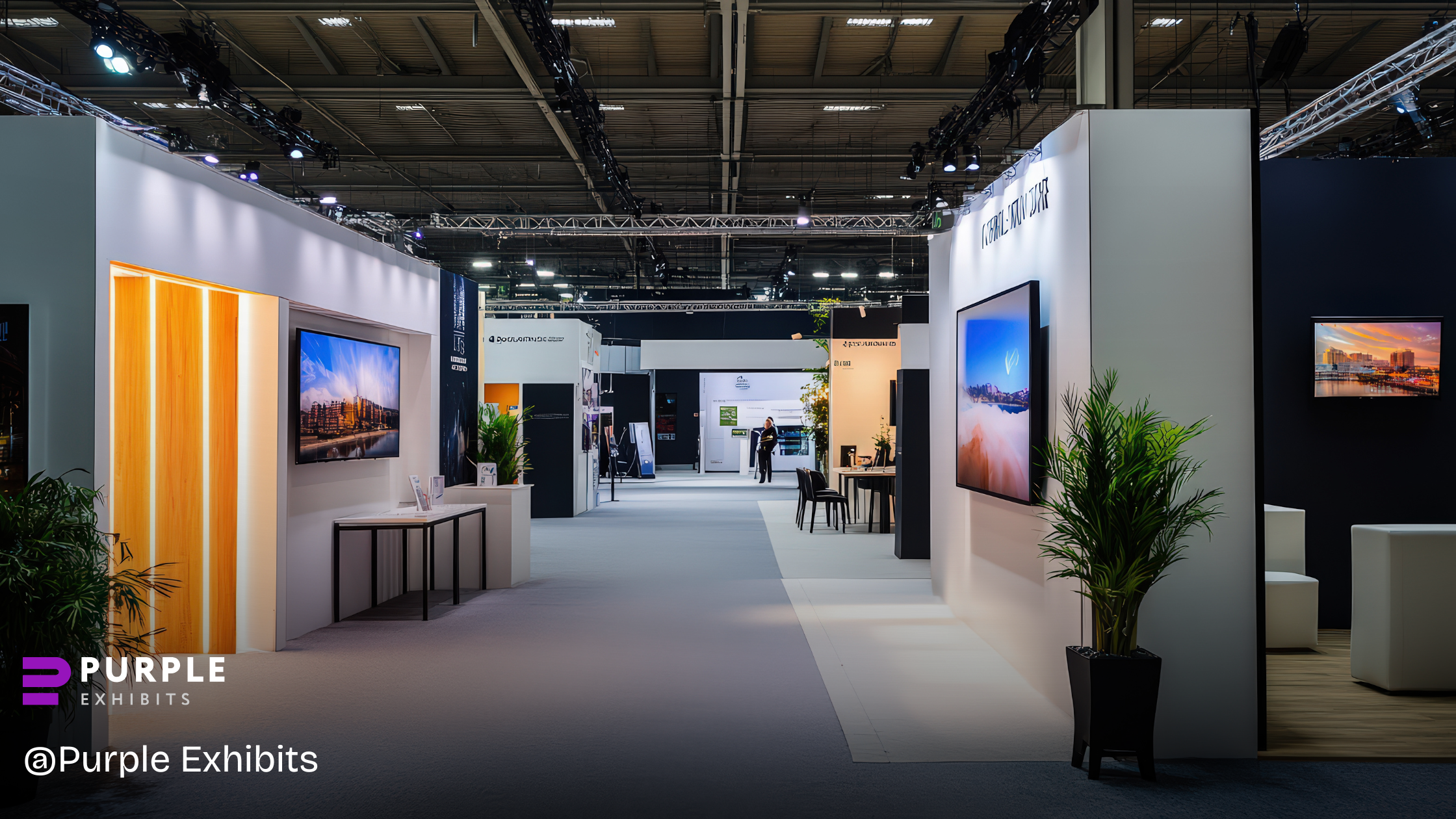
Live proof lets visitors touch, compare and judge a product on the spot, which shortens the sales cycle and raises lead quality.
Demonstrations also create crowd momentum, attracting passersby who join because something interesting is happening, not because someone handed them a flyer.
From a measurement perspective, demo-led activations frequently double dwell time and often produce two times or more qualified leads compared with passive displays.
Smart layouts, lighting accents and immersive ideas only work when the execution supports them, and this is where Purple Exhibits becomes a real partner.
The team handles everything from early design vision to fabrication, logistics, installation and on-site support, so nothing gets lost between the plan and the final structure.
Physical Booth + Digital Follow-Through
The strongest results come from exhibitors who design the physical booth to hand visitors directly into a digital next step. QR codes don’t just open generic homepages; they lead to personalized landing pages tied to the product or demo someone just interacted with.
Instant digital catalogs replace bulky brochures and track which sections people actually view. After the show, automated nurture journeys follow up with content based on what a visitor scanned, watched, or asked about
Advanced Material Innovation is Making Booths Lighter, Stronger, and More Flexible
Exhibitors who once relied on heavy lumber and large custom structures found setup times dragging and damage risks increasing with every move. Newer materials like honeycomb-core panels, high-strength aluminum frames, and fabric tension systems are changing the equation.
These innovations create booths that look polished, structural, and high-end while keeping total weight low enough to move from city to city without shipping giant 5-ton crates.
Key advantages:
- Faster builds that reduce labor hours during setup
- Lower transport costs thanks to significantly lighter materials
- Less risk of scuffs, breaks, or corner damage during shipping
- Premium visual quality without the logistical burden of oversized structures
2026 Will Reward Exhibitors Who Plan for Engagement, Not Just Aesthetics
Exhibitors who treated displays as decor often struggled with low conversion, while teams that planned engagement into every square foot consistently saw stronger results. Strategic planning, smart materials, digital layers, and human centered layouts work together to create a booth that invites participation and keeps people inside longer.
CIndustry data shows that exhibits designed around interaction can deliver up to 40 percent higher lead quality and noticeably longer dwell times compared to display only setups.