
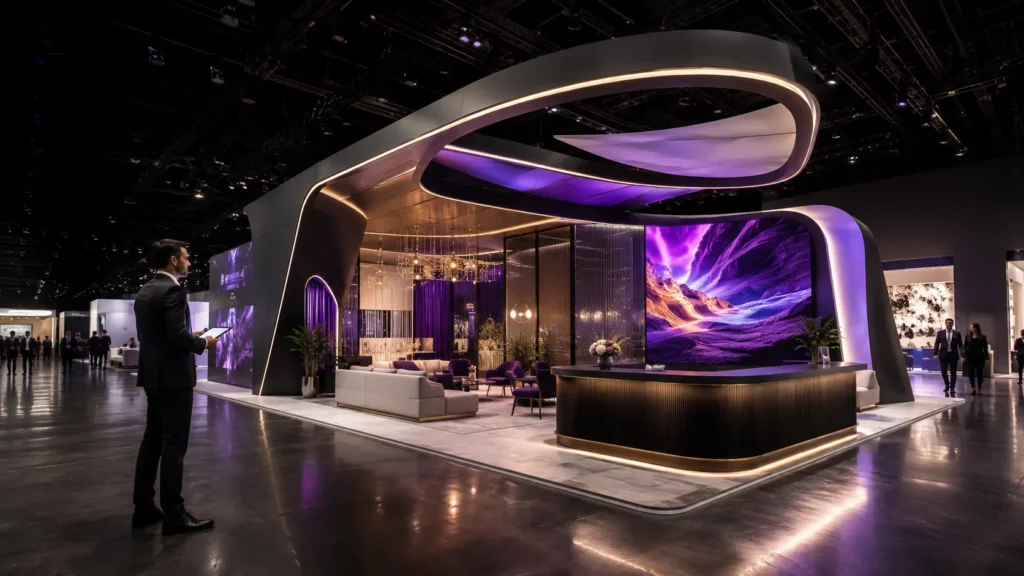
Las Vegas does not give exhibitors a rehearsal.
By the time the hall lights come on, every important decision has already been made: what shipped, what fit, where power landed, which graphic was approved, who supervised the crew and who owns the final punch list.
A beautiful rendering cannot rescue a missing crate.
A low proposal cannot protect you from an undefined scope.
The product you are buying is not only a booth. It is a complete plan for turning that booth into a working sales environment at the Las Vegas Convention Center, The Venetian Expo, Mandalay Bay Convention Center, Caesars Forum or another Las Vegas venue before the doors open.
Pretty is good. Ready is better. The right Las Vegas exhibit builder delivers both.
If you are comparing Las Vegas exhibit companies, use these 17 questions to test the rendering, the scope, the logistics and the team behind the promise—on the same evidence, not just the lowest opening number.
What Should You Look for in a Las Vegas Exhibit Builder?
Searching for the best Las Vegas exhibit builder? There is no reliable universal ranking. The right partner is the one that can document comparable finished work, define every included, coordinated and excluded cost, demonstrate current venue knowledge, prebuild and test the exhibit, plan freight and drayage, name the installation lead and remain accountable through move-out. Compare builders against the same written brief—not only the rendering or opening price.
Quick Navigation
- Why Las Vegas execution is different
- How to verify a builder’s experience
- 17 exhibit-builder questions
- 100-point vendor scorecard
- Editable RFP and comparison workbook
- Las Vegas booth-planning timeline
- Frequently asked questions
Use This Guide in 10 Minutes
- Give every shortlisted builder the same booth brief, technical requirements, target budget and deadline.
- Ask the 17 questions below and request written evidence—not only verbal assurances.
- Score each response with the 100-point due-diligence scorecard.
- Compare inclusions, third-party charges, allowances and exclusions in the editable workbook.
- Put the winning builder’s responsibilities, deadlines and escalation commitments into the final contract.
Planning a Las Vegas show now? Explore Purple’s custom trade show booths in Las Vegas, then send us your show, venue, booth size, products, goals, target budget and deadline. We will review the scope and help you identify the right custom, rental or hybrid direction before costly assumptions become change orders. Request a complimentary Las Vegas exhibit-scope review.
Why Las Vegas Booth Execution Demands Serious Planning
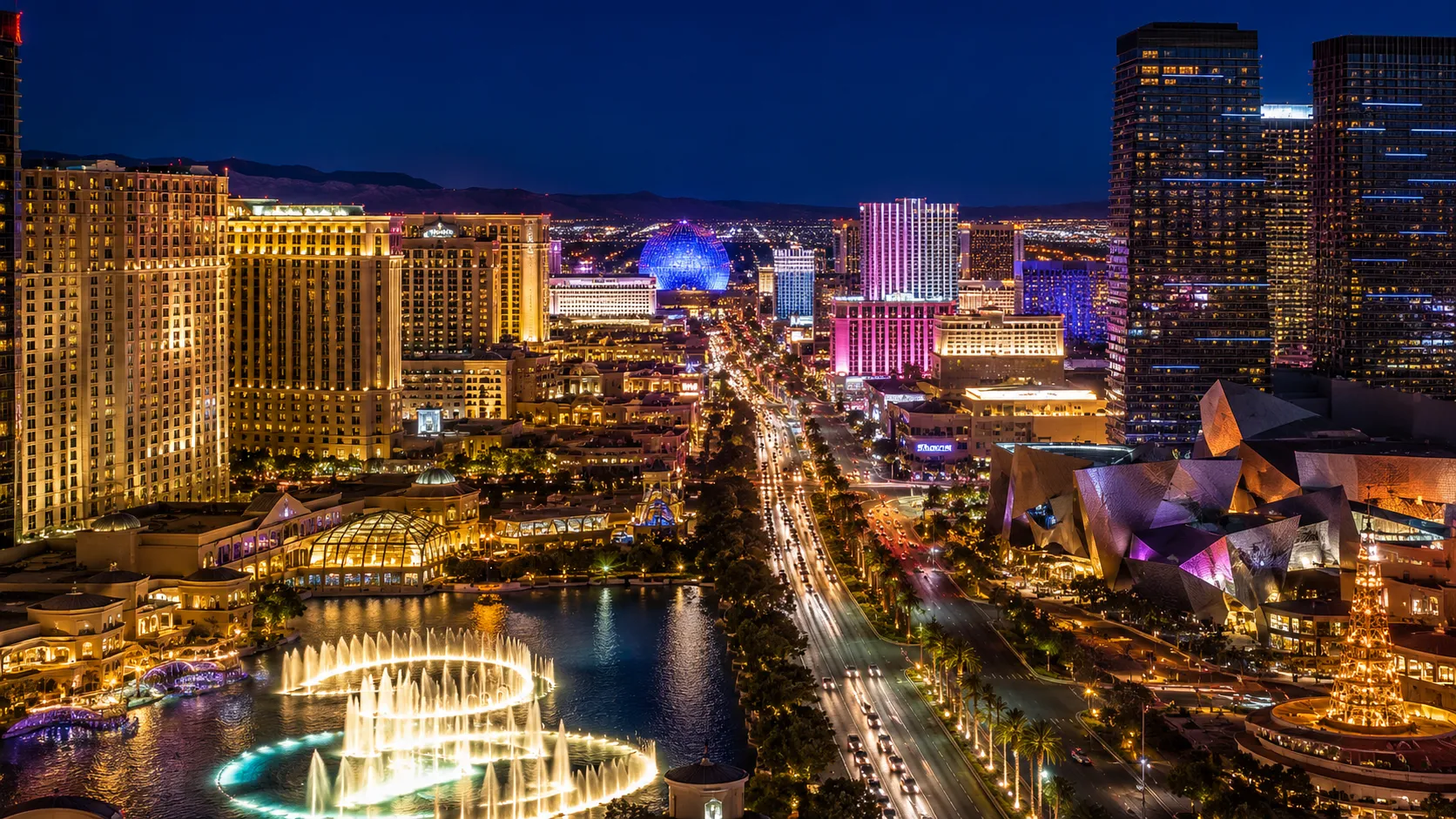
Las Vegas is built for large events. The Las Vegas Convention and Visitors Authority reported six million convention attendees in 2025 and nearly 15 million square feet of meeting and convention space across Southern Nevada.
That scale creates opportunity, but it also raises the standard.
At major shows such as CES, SEMA, NAB Show, World of Concrete, SHOT Show, MAGIC Las Vegas, JCK, IMEX America, KBIS, IBS and Black Hat, exhibitors compete across enormous halls for attention, labor, freight access and production capacity. A booth must read clearly from the aisle, support the way people actually use it and arrive with every operational detail resolved.
An experienced trade show booth builder in Las Vegas should understand a crucial distinction: the exhibit builder, the show’s general service contractor and the venue’s exclusive service providers are not necessarily the same company. Your exhibit partner may design, fabricate and manage the booth while coordinating electrical, internet, rigging, plumbing, cleaning or material handling through show-appointed providers.
The current exhibitor manual always controls. Every show, venue and year can be different.
How Do You Verify a Las Vegas Exhibit Builder’s Experience?
Proof before promises.
Anyone can call themselves a Las Vegas exhibit company. The useful question is: what can they prove?
Las Vegas Proof: Capri Optics at Vision Expo West 2024
Purple Exhibits delivered Capri Optics’ exhibit for Vision Expo West 2024 at The Venetian Expo in Las Vegas. Optical exhibits often require careful product density, display spacing, focused lighting, mirrors, secure sample storage and buyer flow. Ask to review the finished photograph, booth size, Purple’s exact scope and the installation record during proposal review. Purple will publish project imagery in this guide only with client permission.
See Purple’s Vision Expo Las Vegas booth-builder guide and Capri Optics project reference.
Large-Project Delivery: Fabuwood at KBIS 2026, KBIS-Verified Best Large Booth Winner
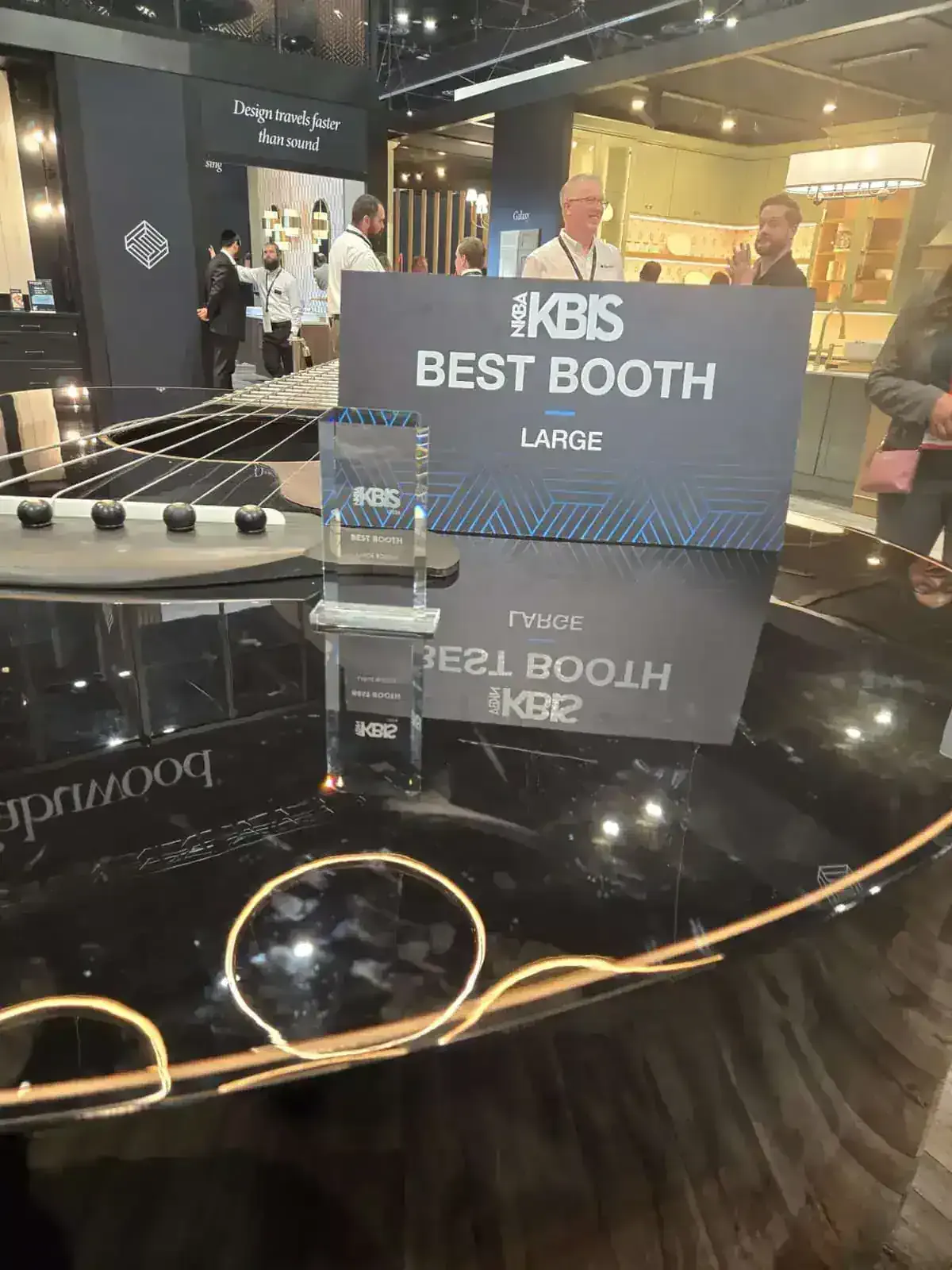
KBIS independently named Fabuwood the 2026 Best Large Booth winner. Purple reports providing project management, fabrication, logistics, installation and on-site support for Fabuwood’s KBIS 2026 exhibit. Kerrie Kelly Studio credits its team with the overall design direction and spatial planning.
The show was held in Orlando, not Las Vegas. It demonstrates Purple’s large-project delivery, while Capri Optics supplies the Las Vegas-specific proof. Precision is part of the proof: no builder should claim a location, outcome or design role that the project record does not support.
What to ask every bidder: Show the approved concept beside the finished exhibit. Then identify the show, venue, booth size, builder scope and person who supervised installation. Proof should survive a closer look.
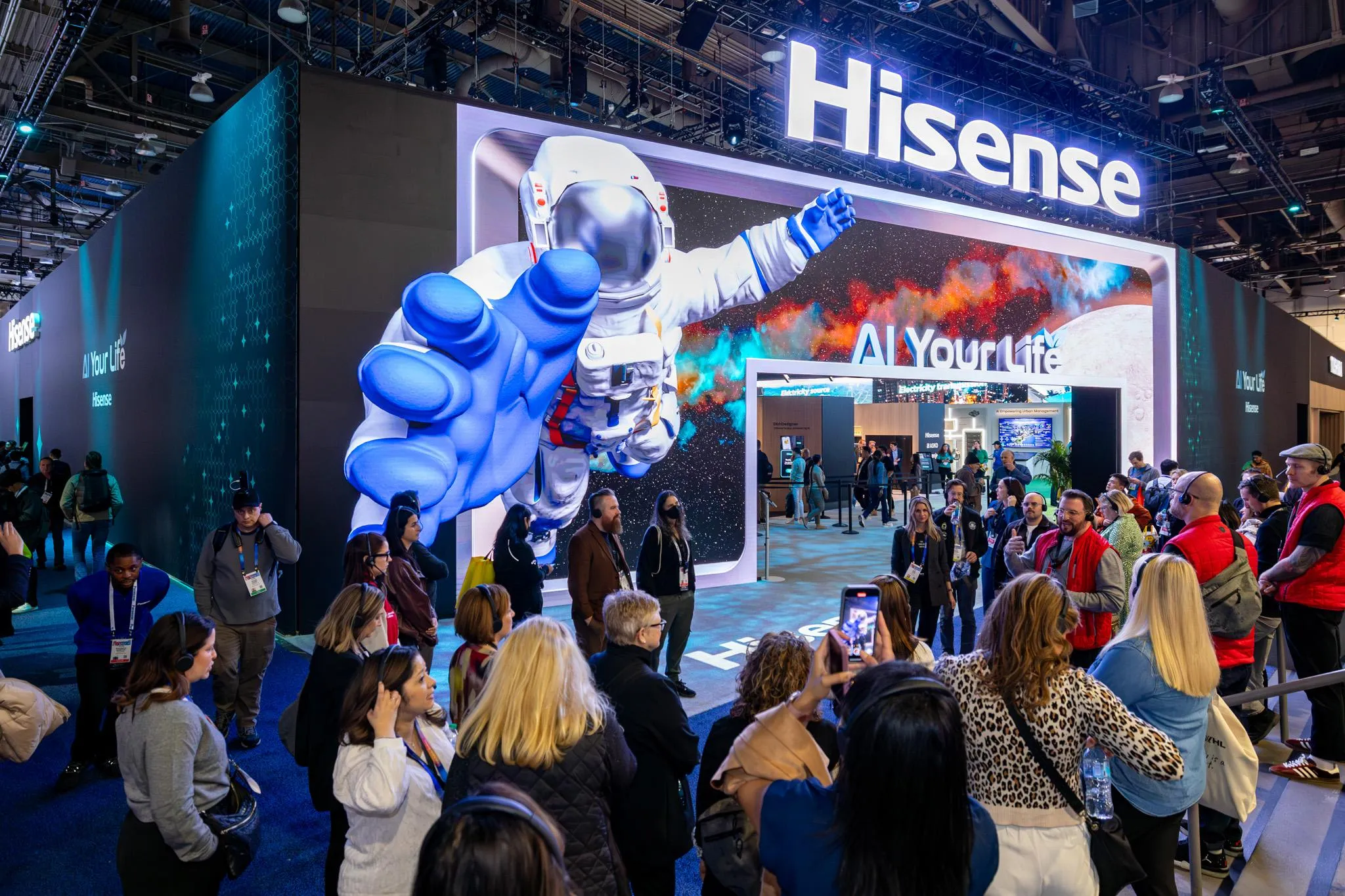
What Strong Exhibit-Builder Evidence Looks Like
Evidence turns a sales promise into something your team can compare, verify and put into the contract.
17 Questions to Ask Any Las Vegas Trade Show Booth Builder
1. Can You Show Us Finished Exhibits Similar to Ours?
Renderings prove that a team can visualize an idea. Finished work proves that it can deliver one.
Ask to see completed projects with a comparable booth size, construction level, product load, technology and visitor experience. If your exhibit needs working equipment, private meeting rooms, illuminated displays, suspended signage or a large LED wall, a portfolio of simple backwalls will not answer the question.
Look at real show-floor photographs and videos. Compare the approved concept with the finished build. Review the details people often crop out: seams, edge finishing, cable management, storage doors, lighting consistency and graphic alignment.
Ask for two recent client references with projects similar in size, venue and complexity. Ask whether the completed booth matched the approved design, whether major deadlines were met, whether final billing matched the agreed scope and how the builder responded when something changed.
Start with Purple’s completed exhibit portfolio and trade show case studies.
2. Who Is Accountable From the First Brief Through Move-Out?
A complex booth may involve designers, engineers, fabricators, printers, freight carriers, AV technicians, labor crews and show-service providers. Your team should not have to determine which vendor owns each problem.
Ask whether you will have one project lead, who has decision-making authority and how information moves between departments. Request the escalation contact for move-in and show days. Clear ownership prevents important details from disappearing between an email, a drawing and the show floor.
One project. One plan. One accountable team.
The Purple move-in rule: Every critical item needs one owner, one deadline and one proof of completion.
3. Which Services Do You Manage Directly, Coordinate or Exclude?
“Turnkey” is useful only when it is defined.
Ask the builder to separate the proposal into four categories:
- Included in the exhibit-builder contract
- Coordinated by the builder but billed separately
- Ordered from the venue, organizer or general service contractor
- Optional upgrades
A complete scope may involve custom booth design, engineering, fabrication, rental structure, graphics, flooring, furniture, lighting, AV, shipping, material handling, I&D, show-service coordination, on-site supervision, dismantling and storage. The exact arrangement can vary, but the responsibilities should never be vague.
Ask what is designed, fabricated, printed and tested in-house; what is subcontracted; and where each part of the work takes place. “Full service” may describe excellent project management rather than direct ownership of every capability. That can work—but every handoff and quality-control responsibility should be visible.
The Purple proposal rule: If a cost or responsibility cannot be found in the proposal, it has not disappeared. It has become a surprise.
4. Does the Design Begin With Our Business Goal?
A Las Vegas trade show booth is not a sculpture with a logo. It is a working sales and marketing environment.
Before drawing walls, the design team should understand what success means. Are you launching a product, demonstrating equipment, meeting distributors, educating buyers, collecting leads, hosting private conversations or creating a brand experience people will share?
The answer should shape every choice:
- Visibility from the most important approach directions
- A clear message hierarchy
- An inviting entrance and natural visitor flow
- Demonstration and presentation zones
- Meeting, hospitality and lead-capture space
- Product support, power and security
- Accessible circulation
- Hidden storage for cases, coats and literature
The booth should help your people do their jobs—not make them work around the design.
5. Should We Rent, Buy or Choose a Hybrid Exhibit?
There is no universally “best” booth type. There is only the best fit for your program.
A custom exhibit is often right for a flagship experience, specialized product integration, distinctive architecture or a long-term program that needs a recognizable brand asset.
A customized rental exhibit can deliver a high-quality branded environment without requiring ownership of every structural component. It is often useful for one show, changing footprints or companies that prefer fewer storage and asset-management obligations.
A hybrid exhibit combines reusable rental or modular architecture with custom graphics, surfaces, product displays and signature features. For many exhibitors, that creates a strong balance of originality, flexibility and cost control.
Buying can make sense for a stable multi-show program that expects to reuse its principal architecture. Renting can make sense for one event, changing footprints or a brand that wants flexibility without assuming long-term asset ownership and storage. A hybrid can protect recognizable custom elements while allowing the structure to adapt.
Review Purple’s trade show booth rental options and ask how the same system could adapt to future booth sizes.
6. How Many Design Revisions Are Included—and What Triggers a Change Order?
A professional proposal should explain the design process, milestone approvals and number of included revision rounds. It should also explain what happens when the booth size, products, layout, materials or technical requirements change after approval.
Ask when the concept becomes a production drawing, who signs off on dimensions and where late changes begin to affect engineering, graphics, labor, freight or schedule. A clear change-control process protects creativity without allowing the project to drift.
7. Who Handles Engineering, Safety Reviews and Required Approvals?
Large hanging signs, enclosed ceilings, covered booths, multilevel structures, heavy products, vehicles and unusual demonstrations may require additional engineering or approval.
Ask who reviews the organizer’s rules, venue policies and applicable fire-safety requirements. Confirm who prepares drawings, submits documents and tracks approval status. If the exhibit builder will act as an exhibitor-appointed contractor, ask who handles authorization forms, certificates of insurance and contractor paperwork.
Never assume that a design approved for one Las Vegas show is automatically approved for another.
8. Will the Booth Be Prebuilt and Tested Before It Ships?
Pre-show quality control is where preventable surprises should be found.
Ask what the team will assemble before shipping and how it verifies:
- Structural fit and hardware
- Graphic size, color and orientation
- Lighting and power locations
- Monitor mounts and LED integration
- Product-display dimensions
- Door, cabinet and storage operation
- Packing labels and crate sequence
- Replacement parts and touch-up materials
Complex AV should be tested with the actual content, signal path and equipment whenever practical. A monitor that turns on is not the same as a complete presentation that works.
The Purple QA rule: The show floor is not a testing lab. Test the fit, graphics, lighting, mounts, content and packing sequence before the truck leaves.
Purple can coordinate trade show AV and display technology as part of the wider exhibit plan.
9. Have You Reviewed Our Venue and Current Exhibitor Manual?
“We work in Las Vegas” is not enough. Ask what the builder has learned from your specific show manual.
The Las Vegas Convention Center, The Venetian Expo, Mandalay Bay Convention Center and Caesars Forum are different facilities with different service systems and operational requirements.
Whether you need an LVCC booth builder or an exhibit partner for The Venetian Expo, Mandalay Bay or Caesars Forum, request evidence of relevant facility experience—and proof that the team reviewed your current show manual, not merely worked somewhere in Las Vegas before.
For example, The Venetian currently identifies catering, cleaning, rigging, lighting, internet/telecom, electrical and plumbing as exclusive services. That does not mean the same list applies everywhere. It means your builder must verify the current rules instead of relying on memory.
10. Who Orders Electrical, Internet, Rigging, Plumbing and Cleaning?
The booth design determines where services are needed, but the venue or an appointed provider may control the actual order and installation.
Ask who creates the service floor plans, checks load calculations, submits orders, watches discount deadlines and confirms that every order matches the final design. A misplaced electrical drop can affect flooring, counters, screens and demonstrations. An undersized internet order can derail a live product experience.
Purple’s trade show coordination services help connect booth requirements with the forms, vendors and deadlines behind them.
11. What Is the Freight, Advance-Warehouse and Drayage Plan?
Freight transportation and drayage are different.
Freight moves the exhibit from the warehouse or fabrication facility to the destination. Drayage—often called material handling—covers the movement of exhibit freight from the advance warehouse or receiving point to the booth, storage of empty containers during the show and return of those containers for move-out. The show’s service contractor commonly manages that process.
Ask:
- Will freight go to the advance warehouse or directly to show site?
- What are the receiving dates and label requirements?
- Who prepares the bill of lading and outbound paperwork?
- How will crates be packed and sequenced for installation?
- Who tracks the shipment and confirms receipt?
- What happens if a crate or graphic is delayed?
Never use a venue’s street address as the shipping address unless the current show instructions specifically tell you to do so. Purple’s trade show logistics and shipping team can coordinate the route from production through move-out.
12. Who Manages Installation and Dismantling?
A strong booth deserves a strong finish on the show floor.
Confirm who schedules labor, provides installation drawings, supervises the crew, checks graphics and lighting, coordinates AV startup and completes the final walk-through. Ask whether the same plan covers dismantling, repacking, outbound freight and condition reporting.
The person supervising setup should know what the finished exhibit is supposed to look like—not only how the pieces connect. Learn more about Purple’s trade show installation and dismantle services.
13. What Local Las Vegas Resources, Emergency Support and Show-Floor Backup Are Available?
Trade shows have immovable opening times. A credible builder should be able to explain the response plan if a crate is late, a graphic is damaged, a monitor fails, a product changes or the venue requests an adjustment.
Ask who can approve a repair, where replacement graphics or common parts can be produced, what tools and touch-up materials travel with the booth, and who remains reachable after the initial installation.
Ask what “local support” means in practical terms. Where are replacement graphics, hardware and common components available? Which crew will install the booth? Who can reach the venue during move-in, and how quickly? A nearby resource may reduce long-haul freight risk, but it does not automatically eliminate drayage. Material handling can still apply between receiving and the booth.
Ask for the after-hours escalation number, expected response time, local printing or repair capability, available replacement parts, authority to dispatch labor and any rush charges. “24/7 support” is useful only when the person, capability and escalation path are defined.
No one can promise that nothing will change. The important question is whether the team is prepared when it does.
The Purple contingency rule: A backup plan is not pessimism. It is professionalism with the clock running.
14. What Timeline Do You Recommend—and What Do You Need From Us?
For many custom projects, beginning three to six months before the show gives the team better control over concept development, approvals, materials, production and service deadlines. Large island exhibits, heavy product integration, complex AV, hanging signs and multilevel structures should often begin earlier. Streamlined rental projects may be possible on a shorter schedule.
Purple can evaluate compressed schedules when a project demands it, but “possible” and “ideal” are not the same thing. Early planning protects design options and reduces avoidable rush costs.
Ask the builder to identify every client dependency: brand files, product dimensions, content, approvals, insurance, shipping information and final attendee needs. A schedule works only when both sides know what is due.
15. Is the Quote Complete—and What Can Change the Final Price?
A low opening number is not useful if essential costs appear later.
Request a line-item scope that addresses:
- Strategy, design and engineering
- Custom fabrication or rental structure
- Graphics, signage and finishing
- Flooring, furniture and lighting
- AV, LED and content requirements
- Packing and crates
- Freight and return transportation
- Material handling or drayage
- Installation and dismantle labor
- Rigging, electrical, internet, plumbing and cleaning
- Travel and on-site supervision
- Taxes, disposal, storage and refurbishment
- Overtime, rush work and change orders
Some costs may be estimated or billed directly by third parties. That is normal. What matters is that the proposal identifies them, explains the assumptions and tells you who is responsible.
Do not accept “turnkey” or “all-inclusive” without a written definition. Ask shortlisted builders to quote the same brief, then compare design, fabrication, graphics, freight, drayage, I&D, show services, supervision, travel, taxes, exclusions and allowances line by line. Also request the payment schedule, cancellation terms, defect-resolution or warranty policy, and a statement identifying who owns finished custom components, production files and reusable assets.
For detailed national planning ranges by booth size, review Purple’s 2026–2027 trade show booth cost guide.
16. What Happens to the Exhibit After the Show?
Move-out is not the end of an exhibit program.
Ask whether the booth will be returned, stored, refurbished, disposed of or reconfigured for another event. If you exhibit several times a year, discuss inventory tracking, graphic updates, maintenance, packing, storage, and how the architecture can adapt to 10×20, 20×20 or larger spaces.
A thoughtful post-show plan can extend the life of custom components and reduce the need to start over. Purple offers exhibit storage and warehousing for ongoing programs.
17. How Will We Learn From This Show?
The best exhibit programs improve from one event to the next.
Before the show, define a few useful outcomes: qualified conversations, scheduled meetings, product demonstrations, scans, content captured, distributor appointments or another action that matters to the business.
After the event, review what worked. Did people understand the message? Were the demos easy to see? Did the meeting area earn its footprint? Was storage sufficient? Did the booth staff have the tools they needed? Did traffic enter where the design expected it to?
Those answers should influence the next layout, not disappear with the carpet.
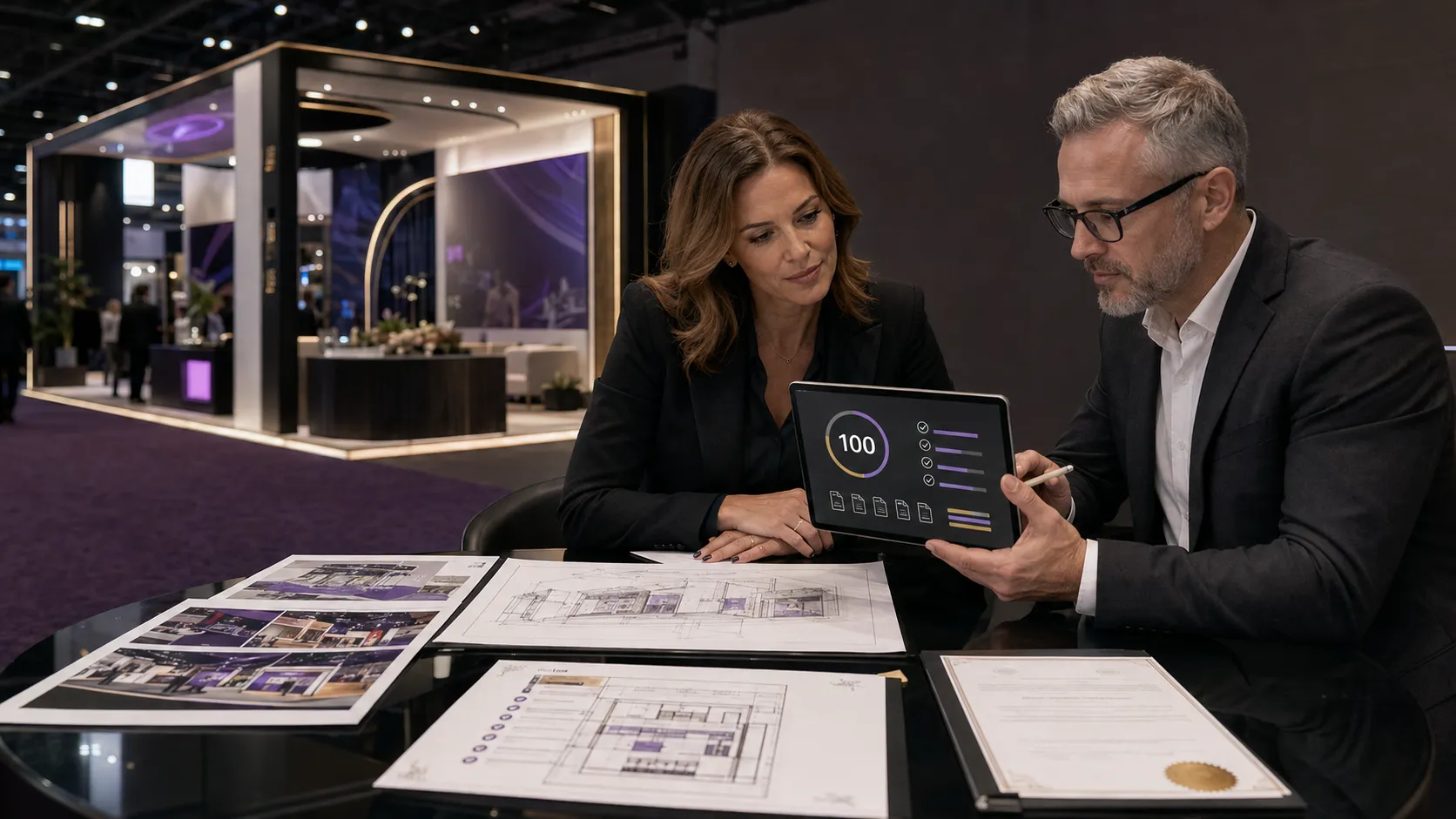
Las Vegas Exhibit Builder Evaluation Scorecard
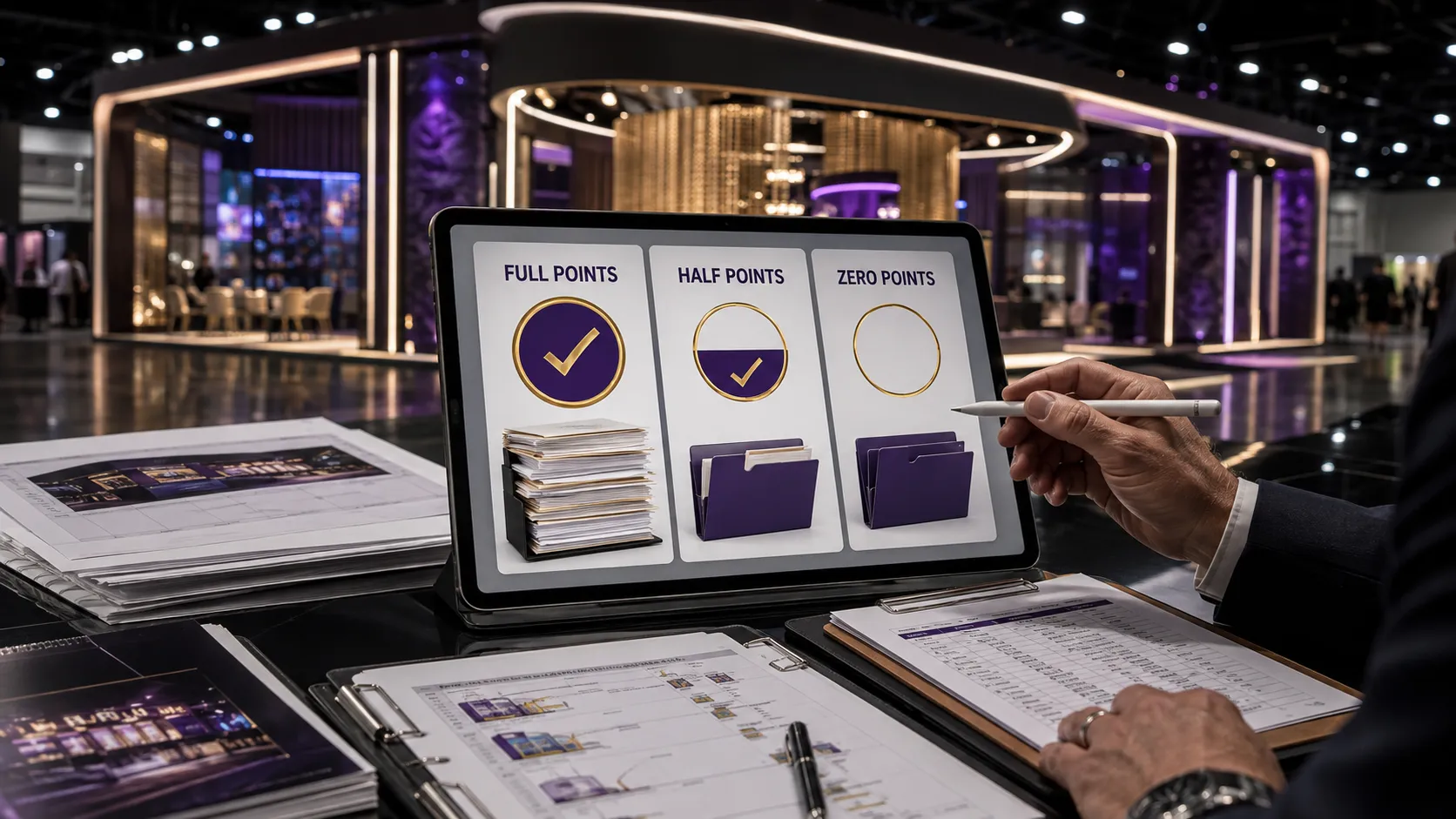
This 100-point, evidence-first scorecard is designed to make vague promises visible. Score only what each builder documents. Award full points for complete, current evidence; half points for partial evidence; and zero when evidence is missing. Compare every finalist against the same booth brief and scope.
Download the free 100-point Las Vegas Exhibit Builder Due-Diligence Scorecard (PDF)
How to Read the Score
- 90–100: Strong documented readiness. Verify references and put every commitment into the contract.
- 75–89: Viable finalist. Close each missing item in writing before awarding the project.
- 60–74: Material execution gaps. Require a corrective plan before proceeding.
- Below 60: Do not award the project without substantial additional evidence.
A score is not a certification or performance guarantee. It is a way to make missing information visible before it becomes an opening-day problem. Venue and show requirements change; the current exhibitor manual always controls.
Methodology v2.0 | August 2026 | Prepared by Purple Exhibits. Criteria reflect the operational responsibilities explained in this guide and current official venue guidance cited above. Purple Exhibits does not certify third-party builders. The scorecard may be shared unmodified with source credit.
Methodology, Limits and Corrections
Purple created this screening framework to help buyers ask every finalist for the same operating evidence. The weights reflect the execution risks emphasized in this guide; they are not an independently validated industry benchmark, certification, endorsement or prediction of project performance. A high score does not replace reference checks, contract review, insurance review or the current exhibitor manual.
Source links and venue examples were reviewed in August 2026. Show rules, exclusive services, deadlines and labor jurisdictions can change by organizer, venue, task and year. If this guide conflicts with the current official exhibitor manual, the manual controls.
Send factual corrections to info@purpleexhibits.com. Purple reviews documented correction requests and will update the HTML guide and downloadable assets when a material error is confirmed.
How the Score Is Assigned
Use only three values for each criterion:
- Full points: Dated, current written evidence addresses every element in the criterion and identifies the responsible person, source or proof location.
- Half points: Written evidence addresses only part of the criterion, is undated or partly outdated, or leaves a material owner, assumption or proof item unresolved.
- Zero points: Evidence is missing, verbal only, generic marketing language or contradicted by another proposal, source or reference.
The weights are deliberate:
- Finished-work proof receives 12 points because it tests delivery, not presentation.
- Scope ownership, current-manual review, prebuild QA, freight/drayage, I&D/support and pricing receive 10 points because gaps can directly affect opening readiness or final cost.
- Approvals and show-service planning receive 8 points because they are critical but apply differently by booth, show and venue.
- Schedule, post-show stewardship and references/learning receive 5, 4 and 3 points. They remain material tie-breakers but carry less direct opening-morning risk than the higher-weight categories.
Change Log, Citation and Reuse
Seven Automatic Red Flags—Regardless of the Score
- The portfolio contains renderings but few identifiable finished projects.
- The price is presented as “all-in” without written inclusions, allowances and exclusions.
- No one can name the installation supervisor or opening-day escalation contact.
- The builder has not requested the current exhibitor manual, booth location or technical product details.
- The proposal combines freight, drayage, electrical, rigging and labor into vague language that cannot be compared.
- The builder cannot explain what is produced directly, what is subcontracted and who controls each handoff.
- There is no documented repair, dismantling, condition-reporting or outbound-freight plan.
If a proposal is inexpensive because major responsibilities are missing, it is not the lowest quote. It is the least complete quote.
Already comparing Las Vegas booth proposals? Send Purple the show, venue, booth size, products, technical requirements and proposed scope. We will help expose missing responsibilities and clarify whether a custom, rental or hybrid approach makes the most sense. Request your complimentary scope review.
A Practical Las Vegas Booth-Planning Timeline
Every show has its own deadlines, but the following framework gives most exhibitors a useful starting point:
Service discounts and submission deadlines can occur well before move-in. Use the current show manual as the master calendar.
Why Exhibitors Choose Purple as Their Las Vegas Exhibit Company
Purple was built around a simple promise: exhibiting should not require your team to chase a designer, fabricator, printer, freight carrier, installer and AV provider separately.
Purple’s published services connect strategy, design, fabrication, rentals, graphics, AV, freight, show coordination, installation, dismantling and storage through one defined project path. The proposal should still state which services Purple performs, coordinates through partners or expects the exhibitor to order directly. Clear scope is part of the service.
What should that make concrete for your team?
- One named project lead connecting the moving pieces
- Custom, rental and hybrid exhibit options
- A written responsibility matrix and critical-path schedule
- Pre-show planning, prebuild and quality checks when included
- Coordination with show and venue providers
- Named I&D supervision and show-floor escalation when included
- Transparent separation of builder costs and third-party venue charges
- Public project proof from the Las Vegas show floor and an officially recognized Best Large Booth project
The exact deliverables vary by project. Put the project lead, responsibility matrix, schedule, prebuild plan, I&D supervision and escalation path into Purple’s written proposal before treating them as commitments.
You bring the brand, the products and the people you want to meet.
We manage what happens behind the wall, under the floor, inside the crate and before the doors open—so your team can focus on the people in front of it.
Explore Purple’s custom trade show booths in Las Vegas or request a proposal for your next exhibit.
Skip the chaos. Show up ready.
JUST SHOW UP. We’ll handle the rest.
About the Author
Itzy Holczler is Head of Sales at Purple Exhibits. He works with exhibitors to translate show goals, product requirements, booth size, timeline and budget into a buildable exhibit scope. This guide reflects the questions buyers should resolve before approving design, production, show services and installation responsibilities.
Frequently Asked Questions About Las Vegas Exhibit Builders
What Does a Full-Service Exhibit Builder in Las Vegas Handle?
A full-service exhibit builder may manage strategy, 3D design, engineering, fabrication, rental structure, graphics, flooring, furniture, lighting, AV, shipping, show-service coordination, installation, dismantling, storage and project management. Confirm the exact included and coordinated scope in writing because companies use “full service” differently.
What Is the Difference Between an Exhibit Builder, an EAC and the General Service Contractor?
The exhibit builder designs, produces or rents the booth and may manage the overall project. An exhibitor-appointed contractor, or EAC, is an independent contractor authorized to work for the exhibitor at the show. The general service contractor is appointed by show management to provide broad event services such as material handling and other show-floor operations. A single company can perform more than one role, but exhibitors should confirm responsibilities. “Booth contractor” is an ambiguous marketing term: it may mean the exhibit builder or a labor-focused provider, so verify the written scope rather than relying on the label.
Can an Independent Booth Builder Work at LVCC, The Venetian Expo, Mandalay Bay and Caesars Forum?
Generally, independent exhibit builders can support projects at major Las Vegas venues when they follow the current show and facility requirements. The organizer may require EAC authorization, insurance and contractor documentation. Certain services can remain exclusive to the venue or its appointed providers, so the current exhibitor manual must be reviewed.
Do Las Vegas Trade Shows Require Union Labor?
Requirements vary by show, venue, task and current labor jurisdiction. For example, the 2026 NBAA-BACE rules for LVCC give Teamsters jurisdiction over exhibit erection and dismantling, with an exception for full-time employees of the exhibiting company and limited hand-carry rules. Electrical, rigging, material handling and other services may have separate providers or jurisdiction. Review the current exhibitor manual and identify who orders, performs and supervises each labor category before approving the scope. Never treat one show’s rule as a citywide rule.
How Much Does a Trade Show Booth Cost in Las Vegas?
Cost depends on booth size, custom fabrication, rental components, graphics, flooring, furniture, lighting, AV, rigging, freight, material handling, I&D, show services, schedule and storage. Compare complete scopes rather than a single headline price, and ask which venue or general-contractor charges are outside the builder’s proposal. For detailed planning ranges by footprint, review Purple’s 2026–2027 trade show booth cost guide.
How Early Should I Hire a Las Vegas Trade Show Booth Builder?
Three to six months is a useful starting window for many custom exhibits. Large island booths, complex technology, working product displays, hanging signs, covered structures or multilevel builds should often begin earlier. Smaller customized rentals may be possible in less time, but early planning improves choice and control.
Should I Choose a Local Las Vegas Exhibit House or a Nationwide Exhibit Company?
Local operational support can reduce response time and make venue coordination, storage, replacement production and show-floor problem solving easier. A nationwide partner may provide stronger consistency across a multi-show calendar. But neither a Las Vegas address nor a national footprint is proof of full-service capability. Ask where the exhibit will be designed, fabricated, prebuilt and stored; who owns the project; which team supervises installation; what resources are available during move-in; and who remains accountable after the show. Choose the strongest complete operating plan—not merely the nearest ZIP code.
What Should Be Included in a Las Vegas Booth-Builder Quote?
A comparable quote should identify design, engineering, fabrication or rental structure, graphics, flooring, furniture, lighting, AV, packing, crates, freight, drayage assumptions, I&D labor, supervision, venue services, travel, storage, taxes, overtime and change-order rules. Every line should be marked included, estimated, coordinated, optional, excluded or billed directly by another provider.
Is a Custom Exhibit or Las Vegas Trade Show Booth Rental Better?
A custom exhibit can provide maximum design freedom and a distinctive long-term brand asset. A customized rental can reduce ownership and storage obligations while maintaining a strong branded presence. A hybrid combines reusable rental architecture with custom features. The right choice depends on goals, show frequency, booth sizes, budget and reuse plans.
Are Electrical, Rigging, Internet and Drayage Included in the Booth Price?
Not automatically. These services are often ordered from show-appointed or venue providers and may be estimated, coordinated or billed separately. Ask the exhibit builder to identify each requirement, who places the order, who pays the provider and whether the amount is included in the proposal total.
Does Hiring a Local Las Vegas Exhibit Builder Eliminate Drayage?
No. Local fabrication may reduce long-haul freight exposure and improve response time, but material-handling charges can still apply when exhibit freight moves through the show’s receiving system. Confirm the current show manual, official contractor and rate schedule.
Should We Ship Our Booth to the Advance Warehouse or Directly to the Las Vegas Venue?
It depends on the show’s current receiving windows, rates, freight readiness and installation schedule. Advance warehousing often provides a wider delivery window and confirmation before move-in, while direct-to-show may be necessary for late production or show-specific requirements. Compare both options in the current exhibitor manual rather than relying on a universal rule.
Can a Las Vegas Exhibit Builder Handle a Last-Minute Booth Project?
Some rental or modular projects can be completed on a compressed schedule, but feasibility depends on booth size, graphics, engineering, products, technology, venue approvals, labor and available inventory. Ask for a written critical-path schedule and identify which design choices must be simplified to protect opening readiness.
What Should I Include in a Las Vegas Exhibit-Builder RFP or Proposal Request?
Send every shortlisted builder the same written brief: show name, venue, dates, booth number and size, booth configuration, business goals, target audience, products or equipment, desired features, brand guidelines, inspiration, existing assets, timeline and realistic budget range. Product dimensions, power requirements and technical content are especially important for demonstrations. A consistent RFP makes the resulting concepts, scopes and prices easier to compare fairly.
Can Purple Support International Exhibitors Looking for an Exhibition Stand Builder in Las Vegas?
Yes. Purple can provide international brands with one U.S. project path for booth design, fabrication, graphics, show-service coordination, domestic shipping, installation and dismantling. International exhibitors should also confirm metric-to-U.S. dimension conversion, voltage and plug requirements, time-zone approvals, U.S. engineering and fire-safety requirements, EAC documents, insurance, customs-broker responsibility, temporary import or bond requirements, domestic receiving, product shipping, and post-show disposal or return freight.
Can Purple Handle Las Vegas Booth Installation and Dismantling?
Yes. Purple can coordinate labor, installation, on-site supervision, final detailing, dismantling, packing and outbound logistics as part of the project scope. The exact responsibilities and third-party show-service costs should be defined in the proposal.
Start Planning Your Las Vegas Trade Show Booth
Your show already has a deadline.
Your booth should have a team.
Send Purple your show, venue, booth size, goals, products, desired features, timeline and budget range. We will help determine whether a custom, rental or hybrid exhibit is the right next step—and build a plan that goes beyond the rendering.
Start my Las Vegas booth project.
JUST SHOW UP.