

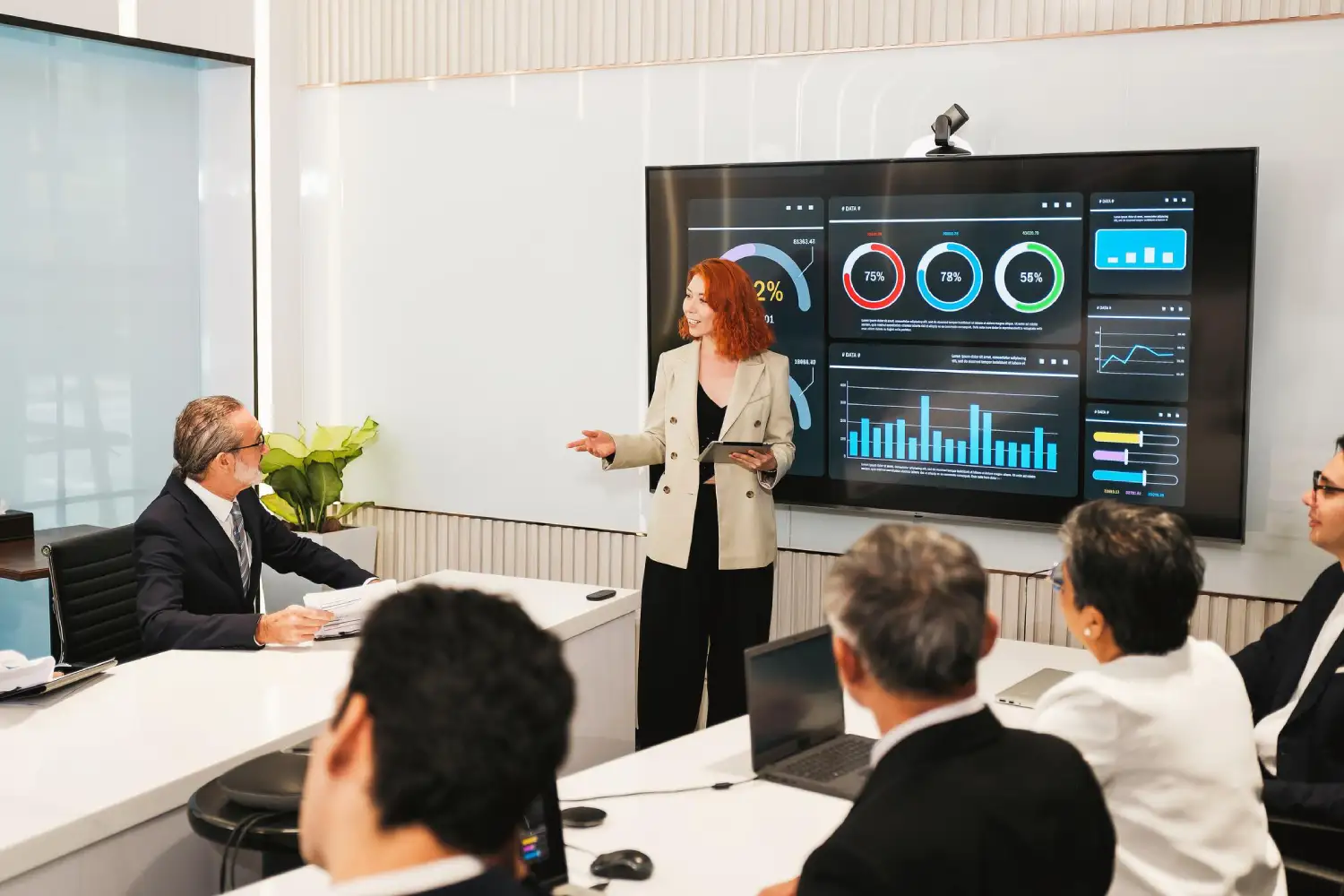
How to Determine Whether Your Trade Show Investment Was Worth It
You've planned the event.
Designed the booth.
Trained your team.
Collected leads.
Packed up the exhibit.
Now comes one of the most important questions of all:
Was the show worth it?
Surprisingly, many exhibitors struggle to answer this question.
They know how many people visited the booth.
They know how many business cards they collected.
But they don't know whether the event actually generated meaningful business results.
The most successful exhibitors don't guess.
They measure.
Understanding trade show ROI helps you identify which events deserve future investment, where improvements can be made, and how your trade show program contributes to business growth.
What Is Trade Show ROI?
ROI stands for Return on Investment.
Simply put, it measures the value generated compared to the money invested.
A successful trade show should produce more value than it costs.
That value may come from:
- New customers
- Sales opportunities
- Qualified leads
- Strategic partnerships
- Product awareness
- Customer retention
- Brand visibility
Trade show ROI isn't always immediate.
Many opportunities generated at a trade show take weeks or even months to convert into revenue.
That's why measuring success requires more than counting leads.
Why Measuring ROI Matters
Without measurement, it's difficult to improve.
Many companies continue attending the same events year after year without fully understanding whether those events are producing results.
Measuring ROI helps you:
Identify Your Best Events
Not every trade show performs equally.
Some events may generate significantly more opportunities than others.
Improve Future Performance
Understanding what worked—and what didn't—helps optimize future exhibits.
Justify Budget Decisions
ROI data makes it easier to secure future trade show budgets.
Improve Lead Quality
The goal isn't more leads.
The goal is better leads.
Start With Clear Goals
Before you can measure success, you need to define what success looks like.
Examples include:
Lead Generation
Generate qualified sales opportunities.
Product Launches
Introduce new products to the market.
Customer Meetings
Strengthen relationships with existing customers.
Recruiting
Attract talent and potential employees.
Brand Awareness
Increase visibility within your industry.
The right metrics depend on your objectives.

The Most Important Trade Show Metrics to Track
Many exhibitors focus on vanity metrics.
The best exhibitors focus on business metrics.
Booth Traffic
Measure how many visitors enter your booth.
This provides a baseline for evaluating engagement.
Questions to ask:
- How many people stopped?
- How many entered?
- How many engaged with staff?
Traffic alone doesn't equal success, but it's a useful starting point.
Qualified Leads
This is often one of the most important metrics.
A qualified lead is someone who fits your target audience and has genuine interest in your solution.
Track:
- Total leads
- Qualified leads
- Sales-qualified leads
Lead quality matters more than lead quantity.
Meetings Held
Meetings often indicate a higher level of interest than casual conversations.
Track:
- Scheduled meetings
- Walk-up meetings
- Customer meetings
- Partner meetings
Strong meeting activity is often a positive indicator of future opportunities.
Product Demonstrations
If demonstrations are part of your strategy, measure:
- Number of demos conducted
- Average audience size
- Engagement levels
- Follow-up requests
Demonstrations often play a major role in lead generation.
Opportunities Created
Many companies stop measuring after lead collection.
That's a mistake.
Track how many leads become actual sales opportunities.
This provides a much clearer picture of performance.
Pipeline Value
One of the most useful metrics is pipeline value.
Pipeline value measures the total estimated revenue associated with opportunities generated at the event.
Example:
- Opportunity A = $25,000
- Opportunity B = $50,000
- Opportunity C = $75,000
Total pipeline value = $150,000
This helps quantify the event's potential impact.
Revenue Generated
Ultimately, revenue is one of the strongest indicators of success.
Track:
- Closed sales
- New customers
- Repeat customer revenue
- Event-attributed revenue
Remember that revenue may not appear immediately after the show.
Cost Per Lead
Cost per lead helps compare events objectively.
Formula:
Total Event Cost ÷ Total Leads
Example:
$20,000 Event Investment
200 Leads Generated
Cost Per Lead = $100
This metric becomes especially useful when comparing multiple trade shows.
Cost Per Qualified Lead
This is often more valuable than cost per lead.
Formula:
Total Event Cost ÷ Qualified Leads
Example:
$20,000 Event Investment
50 Qualified Leads
Cost Per Qualified Lead = $400
This provides a more accurate view of lead quality.
Lead Conversion Rate
Not all leads become customers.
Track:
Total Leads
Opportunities Created
Deals Closed
This reveals how effectively your team converts trade show opportunities into revenue.
Brand Awareness Metrics
Not every trade show objective is directly tied to immediate sales.
Brand awareness can also be valuable.
Metrics may include:
- Website traffic increases
- Social media engagement
- New followers
- Media mentions
- Product inquiries
- Direct traffic increases
These indicators help measure visibility and market presence.
Customer Retention and Relationship Growth
Trade shows aren't only about finding new customers.
They also strengthen relationships with existing customers.
Track:
- Customer meetings
- Renewals
- Upsell opportunities
- Partner conversations
Relationship-building often generates long-term value.

The Importance of Follow-Up
A surprising number of exhibitors work hard during the event and then fail to follow up effectively.
This can dramatically reduce ROI.
The highest-performing exhibitors typically:
- Follow Up Within 24–72 Hours
- Prioritize Hot Leads
- Schedule Next Steps Quickly
- Continue Nurturing Opportunities
The speed and quality of follow-up often determine whether opportunities become revenue.
Comparing Multiple Trade Shows
One of the most valuable uses of ROI measurement is comparing events.
Track metrics across all shows:
| Metric | Show A | Show B | Show C |
|---|---|---|---|
| Total Cost | |||
| Leads | |||
| Qualified Leads | |||
| Meetings | |||
| Pipeline Value | |||
| Revenue | |||
| Cost Per Lead |
Over time, patterns become clear.
Some shows consistently outperform others.
Those insights help guide future investment decisions.
Common ROI Measurement Mistakes
Avoid these common errors:
Measuring Only Booth Traffic
Traffic alone doesn't generate revenue.
Ignoring Lead Quality
100 poor leads are less valuable than 10 great ones.
Not Tracking Revenue
Lead generation is only part of the story.
Failing to Compare Events
Each event should be evaluated against others.
Delayed Follow-Up
Great opportunities can disappear quickly.
The Purple Exhibits Approach to ROI
At Purple Exhibits, we believe successful exhibits are built around measurable goals.
A trade show booth should do more than look impressive.
It should:
- Generate conversations
- Create opportunities
- Support sales efforts
- Strengthen relationships
- Produce measurable business results
The most successful exhibitors view trade shows as investments—not expenses.
And like any investment, performance should be measured.
The Bottom Line
The real value of a trade show isn't measured by how busy your booth looked.
It's measured by what happens afterward.
The leads.
The meetings.
The opportunities.
The partnerships.
The revenue.
When you consistently track these metrics, trade shows become easier to evaluate, easier to improve, and significantly more profitable.
Because the ultimate goal of a trade show isn't simply attending.
It's growing your business.
And that's what great exhibits are designed to do. 💜
What's Next?
Now that we've covered trade show booth design, exhibit strategy, budgeting, planning, mistakes, tips, checklists, and ROI measurement, let's answer the most common questions exhibitors ask.
In the next section, you'll find our comprehensive Trade Show Booth Design FAQ, covering everything from booth rentals and custom exhibits to graphics, shipping, installation, and lead generation.