
By Purple Exhibits · Source review completed August 23, 2026
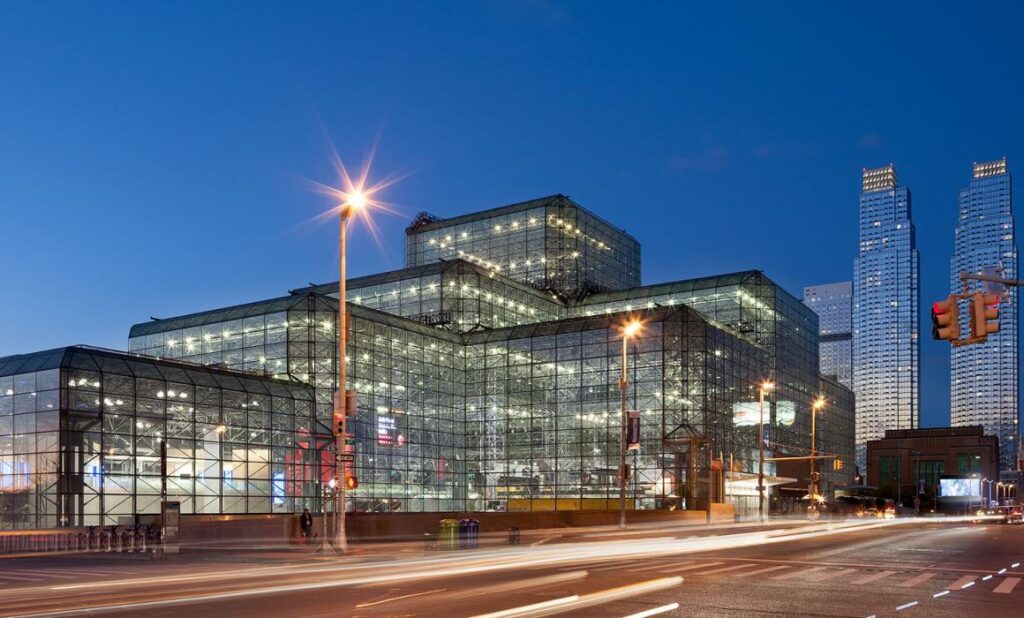
This Javits Center exhibitor checklist turns a booth concept into an executable move-in plan by connecting the current show manual, design, freight, labor, utilities, show services, and outbound shipping.
A beautiful rendering can hide an incomplete budget.
The walls may be priced. The graphics may be priced. The reception counter may be right there in the picture. But who included the freight appointment? Who is ordering electrical service? Who estimated the material-handling charges, installation labor, internet, rigging, cleaning, outbound shipping, and on-site supervision?
If those answers are unclear, you do not have a complete Javits Center exhibit plan. You have the beginning of one.
This matters at every venue, but especially at the Jacob K. Javits Convention Center. The Javits Center spans 3.4 million total square feet across two buildings, and its operations involve scheduled freight, designated service providers, venue labor, event-specific requirements, and deadlines that can affect both cost and execution.
Before hiring an exhibit builder in New York, compare more than designs and bottom-line numbers. Compare scope, responsibility, assumptions, exclusions, and what will actually happen between the approved concept and opening morning.
That is what this guide will help you do.
If you are ready to discuss an upcoming project, explore Purple Exhibits as your New York trade show booth builder. For national size-based planning ranges, see Purple’s 2026–2027 trade show booth cost guide. If you are still comparing proposals, keep reading. The checklist below can save you from discovering an unassigned responsibility on the show floor.
On This Page
- When a Javits exhibit plan is actually ready
- How to turn the exhibitor manual into a move-in brief
- The Purple Five-Plan Readiness Check
- What exhibitors can do themselves at Javits
- The Purple Four-Owner Test
- 14 questions to ask a New York booth builder
- Shipping to the Javits Center
- Advance warehouse or direct-to-show
- How to compare booth proposals
- The Purple Dock-to-Doors-Open Sequence
- Frequently asked Javits planning questions
The Short Answer: When Is a Javits Center Exhibit Plan Actually Ready?
A Javits Center exhibitor plan is ready only when five plans agree: the approved booth drawings, inbound freight route, labor call, utility layout, and outbound instructions. If one is missing, the booth is not show-ready—even if fabrication is complete.
Use this 14-point checklist to compare New York exhibit builder proposals and assign an owner to every approval, service order, delivery, installation task, and invoice before move-in.
How This Guide Was Prepared
Purple prepared this guide by comparing the Javits Center’s current exhibitor-services, freight, operational-policy, floor-plan, and sustainability resources with the service, deadline, and handoff decisions an exhibitor must assign. Official sources were last checked August 23, 2026. Your current show manual, organizer instructions, GSC documents, and written venue directions control. Purple Exhibits is independent of and is not affiliated with or endorsed by the Javits Center.

Why a Javits Center Booth Budget Needs Its Own Plan
The Javits Center is not an empty hall where a booth is delivered and assembled. It operates a large convention campus with its own policies, labor structure, freight procedures, and exhibitor services.
The Javits Center’s official exhibitor information identifies electrical, internet, plumbing, cleaning, and other essential services available through its exhibitor ordering system. Its current freight guidance states that contractor and exhibitor freight deliveries and collections must be scheduled in advance through the Javits logistics platform. Current venue policies also require Javits personnel for designated services, subject to the applicable rules and exemptions.
Then the individual event adds another layer. The organizer may set its own:
- General Servicing Contractor (GSC) and advance-receiving instructions
- Discount and final service-order deadlines
- Move-in and move-out schedule
- Exhibit Appointed Contractor (EAC) requirements
- Insurance and certificate requirements
- Booth-height and line-of-sight rules
- Hanging-sign and rigging procedures
- Fire-safety documentation requirements
- Product, machinery, sampling, or demonstration rules
- Hand-carry and personally operated vehicle procedures
That is why the current exhibitor manual—not last year’s memory—must control the plan.
A capable Javits Center exhibit partner should review the show manual before finalizing the design and again before production, shipping, and installation. A design that ignores the operational rules is not finished, no matter how good the rendering looks.
Official Javits Source Map: Which Page Controls Which Decision?
This table identifies the verification path; it does not turn venue-wide guidance into universal show dates, prices, or permissions.

The Purple Manual-to-Move-In Brief: How to Read a Javits Exhibitor Manual
An Exhibitor Services Manual (ESM)—also called the exhibitor manual, service kit, or show kit—is not background reading. It is the operating document for your specific event.
There is no single universal show manual that replaces the instructions for every Javits event. The organizer and its General Servicing Contractor, commonly called the General Service Contractor or GSC, publish event-specific dates, labels, forms, rates, and procedures. Javits publishes the venue policies, freight process, and official-service information that sit underneath them.
Turn those sources into one controlled brief before the exhibit design is locked:
Use this source hierarchy:
- The current event manual and organizer notices for show-specific requirements.
- The current GSC service kit and rate sheet for freight, labor, rentals, forms, deadlines, and billing paths.
- Current Javits policies, freight guidance, and service confirmations for venue-controlled rules and services.
- Written order confirmations and approved project documents for what your team will actually execute.
If two current sources appear to conflict, stop and obtain written clarification from the responsible organizer, GSC, or Javits service team. Do not create a hybrid address, deadline, or work rule from two different shows or document versions.
Do not ask only, “Did we read the manual?” Ask, “Can we show the one-page move-in brief it produced?”

The Purple Five-Plan Readiness Check
A Javits Center exhibit reaches the show floor through five connected plans. The project is not ready when one of those plans lives only in an email, an outdated drawing, or somebody’s memory.
If one plan changes, review the other four. A larger monitor can change the power draw, mounting details, crate weight, installation sequence, and outbound packing. A revised booth location can change utility drops, freight timing, labor access, and rigging eligibility. Readiness comes from agreement between the plans—not from five separate checkmarks.
Budget Context: Price the Exhibit and Its Execution
A Javits plan has three connected financial layers: the physical exhibit, show-floor execution, and post-show program. For national price ranges by booth size and build type, use Purple’s 2026–2027 trade show booth cost guide.
This guide focuses on responsibility inside a New York proposal. A builder quote can be clear even when venue or show-contractor charges are separate, but every excluded service still needs a named owner, ordering path, deadline, execution check, and billing route. An unassigned cost is not a saving; it is an unresolved part of the plan.
Javits Center EAC vs. General Servicing Contractor: Who Owns What?
Three different operational roles can appear in one Javits Center booth plan:
The current Javits operational policies and the individual event manual control. EAC account, insurance, approval, identification, labor, and deadline requirements should be confirmed for the specific show.
An outside builder can be approved without every show-floor service being included. Approval answers who may manage the work; the proposal must still answer who orders, verifies, and pays for it.
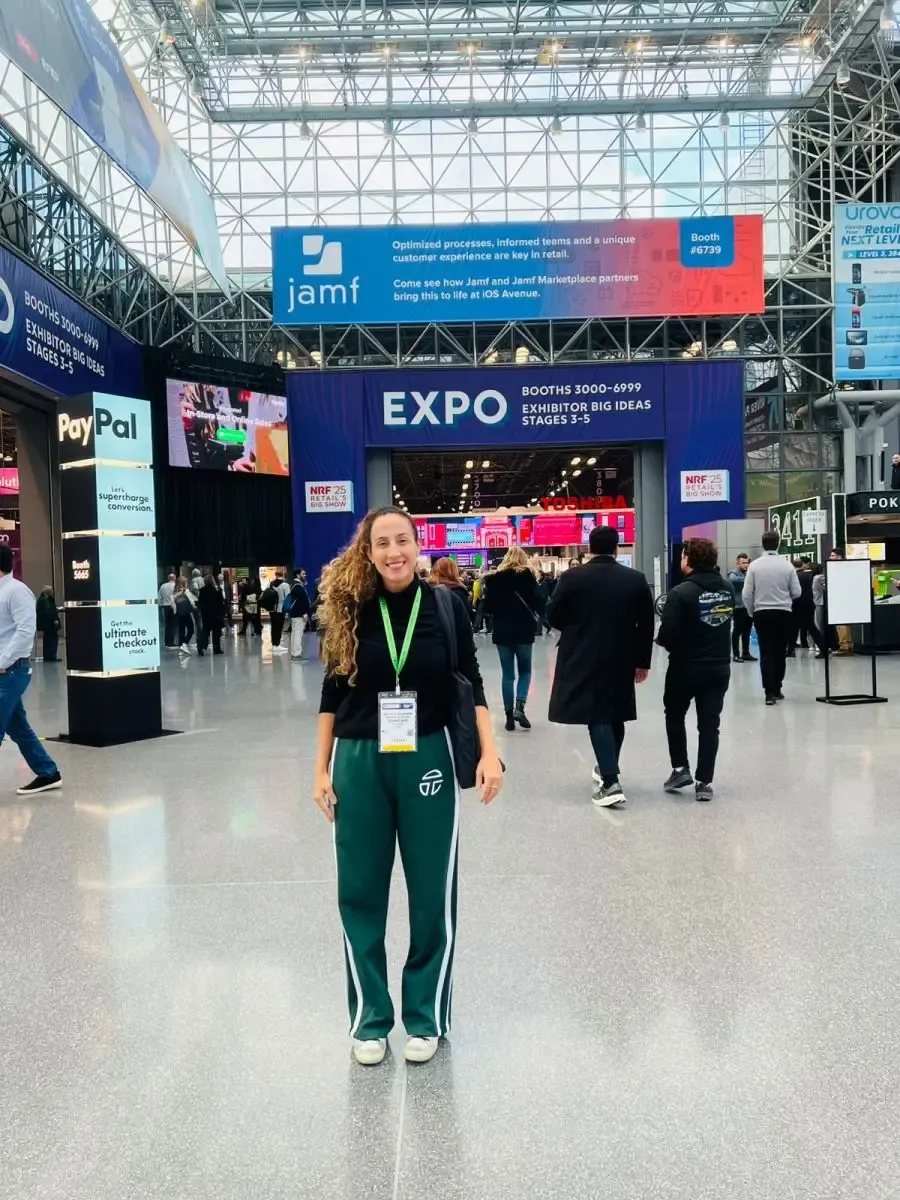
What Can Exhibitors Do Themselves at the Javits Center? The Purple Work-Rule Matrix
Current Javits policy does not reduce the answer to “everything is union” or “employees can do anything.” Work is assigned task by task. Exhibitor employees may perform specific limited work, while other installation, freight, utility, rigging, and cleaning functions remain assigned to designated teams.
These are summaries of the current Javits operational policies, not permission to improvise. Event-specific rules, unsafe conditions, or later policy changes can narrow an exception. Verify the current event manual and obtain written clarification whenever the task does not fit cleanly inside a published allowance.
The useful question is not, “Is Javits a union venue?” It is, “Which task, under which current rule, belongs to whom?”
Who Usually Bills Each Part of a Javits Center Project?
The exact billing path changes by event, but the following responsibility map helps expose missing scope before contracts are signed.
Do not treat this table as a substitute for the current show manual. Use it to ask who owns each line, who issues the invoice, and whether the number in your working budget is fixed, estimated, or still unknown.

The Purple Four-Owner Test: Is Your New York Booth Plan Actually Complete?
A cost appearing in a proposal does not prove the related service is controlled. This is especially important at the Javits Center, where the exhibit builder, venue, organizer, general contractor, labor provider, carrier, and exhibitor may all touch the same project.
Use the Purple Four-Owner Test for every applicable service:
A booth service is not controlled until its scope, order, execution, and final invoice each have a named owner.
Score the project before production and again before freight leaves:
Responsibility score = documented owner points ÷ (4 × applicable service categories) × 100
Classify every row as applicable (A) or not applicable (N/A) before calculating. If no service is classified as applicable, the result is not scored—never 100% and never “show-ready.” A 100% score does not mean one company must perform or invoice every service. It means every applicable handoff is visible. An included service can score poorly when nobody can explain who orders it or verifies it on-site. Any applicable row below 4/4 is a planning gap to close before move-in.
Download the free Javits Center Exhibit Readiness Workbook to use the Manual-to-Move-In Brief, Five-Plan Check, Four-Owner Test, Work-Rule Matrix, Freight-Route Decision, and Dock-to-Doors-Open Sequence with your marketing team, vendors, and approvers.
Event organizers, associations, educators, and industry publishers may cite the guide. For substantial reproduction or adaptation of a Purple framework, request permission first. If a publisher chooses to include credit or a link, the wording, destination, anchor text, and link qualification remain entirely at its discretion.

14 Questions to Ask Your New York Booth Builder Before a Javits Move-In
Use the following checklist when comparing a custom exhibit, a booth rental, or a hybrid solution for a New York trade show.
1. Is the Design Scope Clearly Defined?
The proposal should explain what the design phase includes: discovery, initial concepts, revisions, 3D renderings, floor plans, elevations, production drawings, engineering, and final artwork support.
Ask how many revision rounds are included and what causes additional design fees. Also confirm whether the exhibit is being designed around your marketing goals or adapted from an existing layout.
A productive discovery process should define what the booth must accomplish: attract traffic, demonstrate a product, host meetings, support hospitality, launch a brand, capture leads, or combine several objectives.
2. Does the Quote Separate Custom, Rental, and Purchased Components?
“Booth rental” can mean many things. One proposal may include only the structural system. Another may include structure, graphics, flooring, lighting, furniture, freight, and labor.
Ask for a clear breakdown of:
- Rental structure
- Custom-fabricated elements
- Purchased items you will own
- Graphics you will own
- Technology rentals
- Furniture rentals
- Consumable or one-show materials
This matters after the show. You should know what is returning to the exhibit house, what goes into your storage, and what can be reused.
Purple can combine flexible trade show booth rentals with custom graphics, signage, counters, product displays, lighting, and specialty fabrication to create a distinctive hybrid booth without requiring you to purchase every structural component.
For rental-first local options and venue coverage, see Purple’s trade show booth rentals in New York City.
3. Are Engineering and Venue Approvals Included?
Complex structures may require engineering, stamped drawings, fire-safety documentation, rigging plans, or other approvals. Double-deck exhibits and suspended elements can require additional review and permits, and the rules can depend on the hall, show, and specific design.
Do not assume “custom fabrication” automatically includes every approval. Ask who prepares the drawings, who submits them, who tracks approval, and whether engineering or permit fees appear in the proposal or as an allowance.
Four Javits Approval Triggers to Check Before Production
The current show manual and approved design control. Do not copy a universal approval deadline from another Javits event.
4. Has the Booth Been Designed for Its Exact Floor Location?
An island booth near a main aisle needs a different plan from an inline space against a perimeter wall. Entrances, neighboring booths, columns, utilities, ceiling conditions, loading access, and attendee traffic can all change the design.
Your builder should request the official floor plan and confirm:
- Booth number and dimensions
- Inline, corner, peninsula, or island configuration
- Open and closed sides
- Required setbacks and height limits
- Utility locations
- Hanging-sign eligibility
- Nearby entrances, anchors, and sightlines
- Product weights and floor-loading needs
The strongest custom trade show booth is not merely attractive. It is designed for the exact place where it will stand.
5. Are Graphics, Color Matching, and Final Proofing Included?
Graphics are often approved late, produced under pressure, and expected to fit perfectly. That combination leaves no room for guesswork.
Confirm which graphic materials are included, who supplies templates, who checks resolution and bleeds, how brand colors are reviewed, and when artwork becomes final. Ask whether the graphics will be test-fitted or installed during a pre-build.
Backlit SEG fabric, blackout fabric, rigid panels, vinyl, dimensional letters, and illuminated logos all behave differently. The specification should match the structure, lighting, viewing distance, and reuse plan—not just the artwork file.
6. Are AV, Electrical, Internet, and Content Treated as One System?
A screen in a rendering is not yet an operational presentation.
The plan must address the display, mount, media player or computer, power, signal path, cable routing, audio, content format, connectivity, and on-site testing. If you need live demonstrations or reliable internet, decide early whether the show-provided connection meets the requirement and what backup plan is appropriate.
Purple’s trade show AV services can integrate monitors, LED walls, touchscreens, projectors, sound, lighting, and presentation technology into the exhibit design before fabrication begins.
Ask one direct question: Who is responsible for getting every screen from “mounted” to “playing the correct content” before handoff?
7. Does the Freight Plan Cover More Than Transportation?
Shipping a booth to New York is only one part of freight planning. The complete plan may need to address:
- Advance warehouse versus direct-to-show delivery
- Required delivery appointments
- Crate count, dimensions, and weights
- Certified weight documentation when required
- Labels and destination instructions
- Driver check-in and waiting time
- Target move-in sequence
- Empty-container storage
- Outbound labels and material-handling forms
- Carrier check-in for move-out
- Return delivery or shipment to the next event
The official Javits guidance requires freight deliveries to be scheduled through its logistics process. The individual show manual provides the current addresses, dates, contractors, and instructions.
Purple’s trade show exhibit shipping and logistics services can coordinate packing, transportation, delivery timing, material-handling paperwork, and return logistics around the actual move-in plan.
8. Is Material Handling Estimated Separately From Freight?
Freight and material handling are related, but they are not the same service.
Freight is the transportation of the exhibit to and from the event. Material handling—often called drayage—generally covers receiving the shipment, unloading it, moving it to the booth, storing empty containers during the show, returning those containers after the show, and moving packed freight back to the loading area.
Charges and rules vary by event and shipment type. Ask what weight the estimate is based on, what rate assumptions were used, and which organization will bill the final amount.
If one design needs six heavy crates and another can ship safely in three well-planned cases, the rendering may not show the difference. The material-handling invoice will.
9. Who Orders Official Show and Venue Services?
Someone must own every form and deadline.
Create a responsibility list covering:
- Electrical
- Internet
- Plumbing or compressed air
- Rigging
- Cleaning
- Material handling
- Installation and dismantling labor
- Lead retrieval
- Catering or sampling services
- Security when needed
- Exhibit Appointed Contractor paperwork
- Certificates of insurance
Some services are ordered from the venue, some from the show’s general contractor, and some may be coordinated by the exhibit builder. At the Javits Center, designated services use venue personnel under the applicable policies.
Your proposal should state whether the exhibit company is preparing orders, submitting them with your authorization, estimating them for budgeting purposes, or leaving them to your team.
“Not included” is acceptable when it is clear. “We thought somebody else had it” is not.
10. Is Installation and Dismantling Based on a Real Labor Plan?
A labor estimate should be tied to the exhibit—not guessed from the booth dimensions alone.
The crew size and hours can change based on:
- Number and weight of components
- Assembly method
- Graphic installation
- Flooring type
- Electrical and AV integration
- Product placement
- Rigging schedule
- Access to crates and empties
- Required completion time
- Straight time, overtime, and event schedule
Ask whether the estimate includes a lead installer or on-site supervisor, how labor hours will be approved, and what happens if freight or utilities delay the crew.
Purple provides trade show installation and dismantling with coordinated crews, project documentation, and optional supervision so the approved design becomes a finished booth rather than a collection of parts.
11. Will the Exhibit Be Pre-Built and Tested?
Pre-show quality control is where many expensive show-floor problems are found while there is still time to solve them.
For an appropriate project, the pre-build should confirm:
- Components fit and align
- Graphics match the approved layout
- Doors, shelves, counters, and storage work
- Lighting powers on
- Monitors and mounts fit
- LED or media systems receive and play content
- Hardware and spare parts are packed
- Crates are labeled in installation order
- The installation team receives drawings and packing information
Ask what “quality control” actually means. A final look at packed crates is not the same as assembling critical elements and testing the technology.
Purple’s published staging and setup process shows the exhibit assembled in working order before shipping, followed by field setup, function testing, visual proof, teardown, and repacking.
12. Who Is the Responsible Person During Move-In?
When several vendors are involved, every problem can become someone else’s problem.
Identify one person with responsibility for the complete booth handoff. That person should know the design, scope, freight status, labor plan, electrical locations, AV requirements, graphics, service orders, and opening deadline.
For a large or technically complex exhibit, on-site supervision can reduce the time lost between separate crews and providers. It also gives your marketing team one person to call instead of asking a carrier, installer, electrician, AV technician, and general contractor to diagnose the same issue independently.
13. What Is Excluded, Estimated, or Subject to Change?
Every proposal has exclusions and variables. The issue is not whether they exist. The issue is whether you can see them.
Request three clear lists:
- Included: fixed elements covered by the proposal.
- Estimated or allowance: costs based on current assumptions that may reconcile after the show.
- Excluded or billed directly: services your company will order or pay elsewhere.
Also ask how change orders are approved. A good process should identify the requested change, cost impact, schedule impact, and responsible approver before work moves forward.
14. Is There an Outbound and Reuse Plan?
Move-out is not the time to decide where the booth is going.
Before the show opens, confirm:
- What will be repacked
- Who supplies outbound labels and paperwork
- Which carrier will collect the freight
- Where the exhibit will be delivered
- What rental items must be separated
- What products or marketing materials return to your company
- Which material-handling agreement or outbound release form is required
- Where empty-storage labels come from and when containers are expected back
- The carrier’s freight-booking or driver check-in deadline
- What the GSC may do with freight remaining after the published pickup deadline
- Whether damaged components will be photographed and documented
- What will be stored, repaired, recycled, or discarded
- How the exhibit may be reconfigured for the next show
Ask the organizer whether the event participates in JavitsCares or another approved donation and waste program before deciding what to do with leftover products or materials. Javits sustainability guidance says its team works with event organizers on waste operations and donations, so exhibitors should not assume material may be abandoned or donated without advance approval.
A smart reuse plan can influence the original design. Modular architecture, replacement graphics, reusable crates, adaptable counters, and flexible AV mounts can protect the investment across several events.
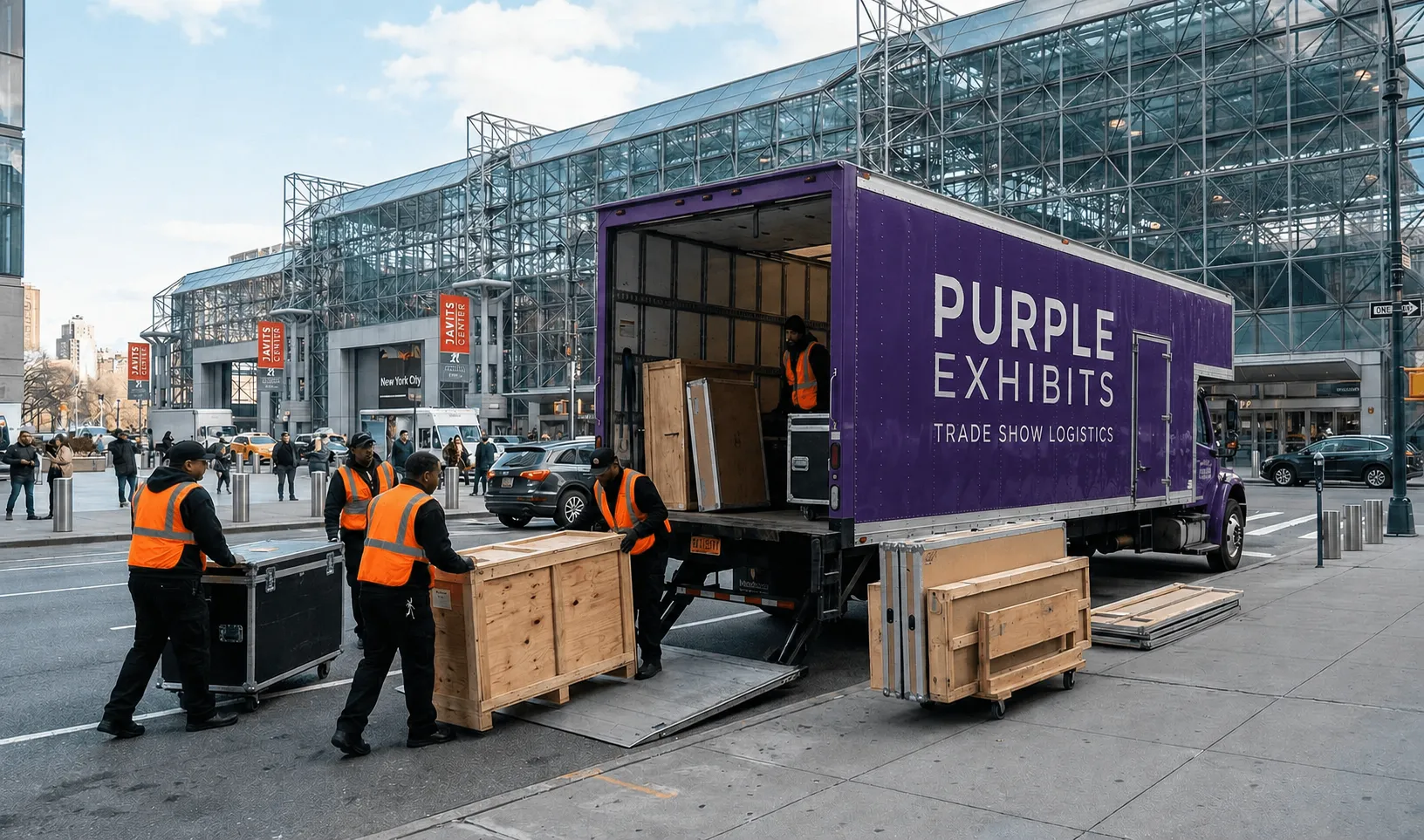
Shipping to the Javits Center: Direct Freight, Advance Warehouse, and Driver Check-In
The short answer: the Javits Center does not accept advance exhibit shipments. If the event offers advance receiving, use the warehouse address and instructions published by its General Servicing Contractor. Direct event freight must follow the current show manual, consignee format, labels, delivery window, Javits freight booking, and driver check-in process.
The Purple Freight-Route Decision: Advance Warehouse or Direct-to-Show?
Neither route wins by default. Choose from the event’s current rate sheet, the date the freight will actually be ready, receiving windows, shipment characteristics, carrier capability, and installation sequence—not from a universal online rule.
Do not decide from a generic claim that one route is always cheaper or safer. Show contracts, rate sheets, production dates, and shipment types differ. Compare the current written options, then document the route, owner, cost assumption, and fallback.
These details are based on the current Javits freight page and operational policies. The current exhibitor manual controls whenever show-specific addresses, contractors, labels, dates, or procedures differ.
Freight is not ready because a carrier was booked. It is ready when the route, shipment identity, receiving party, appointment, paperwork, driver instructions, and outbound collection all agree.
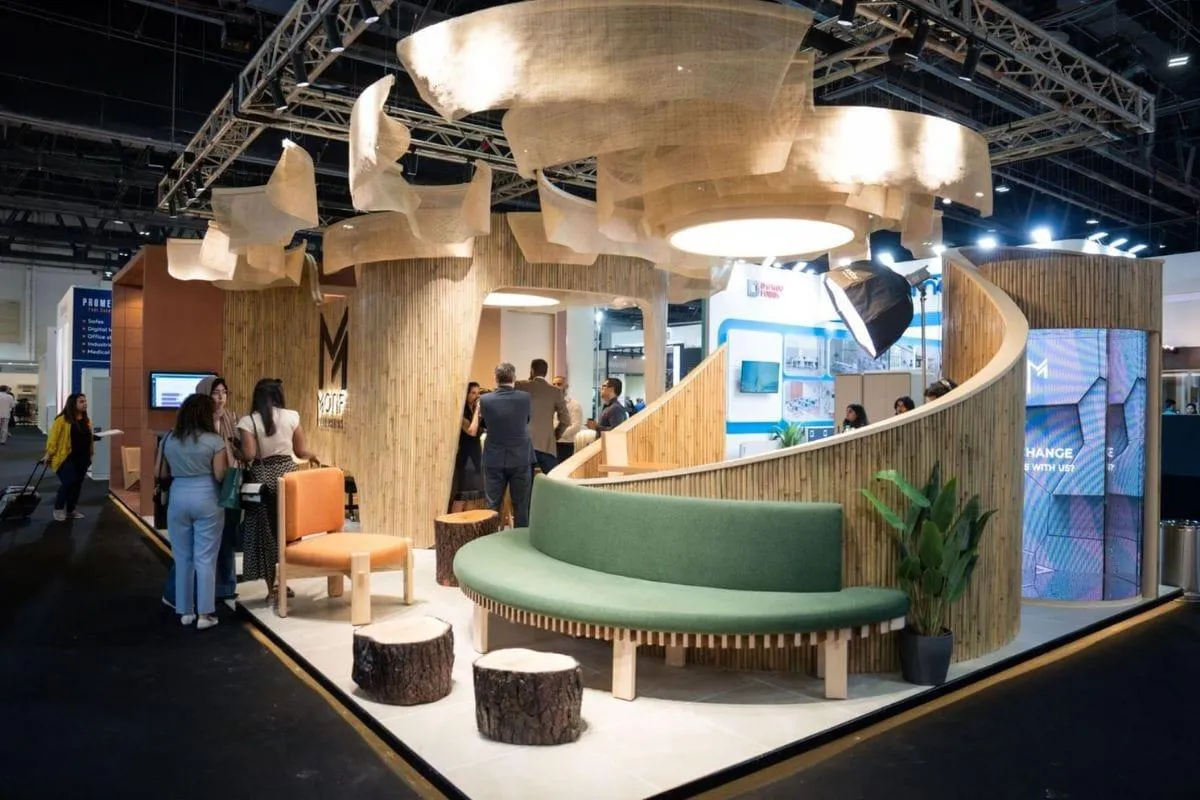
A Simple Way to Compare New York Booth Proposals
Put every proposal into the same comparison table before judging the bottom line.
This exercise often reveals that a more expensive-looking proposal is more complete.
Have the show manual already? Send Purple the show name, booth number, floor plan, move-in dates, desired features, and working budget. We will map the exhibit scope, show services, and direct-billed items before you compare the total.
Deadlines That Can Change the Final Cost
Every event publishes its own schedule, so replace generic planning advice with the dates in the current exhibitor manual. Five deadline groups deserve a named owner:
- Design and engineering approvals: Late structural changes can affect fabrication, permits, packing, and labor.
- Artwork and content approvals: Delayed files can trigger rush production, reprints, expedited shipping, or on-site fixes.
- Advance show-service rates: Electrical, internet, rigging, cleaning, labor, and other services may cost more after published discount dates.
- Freight windows and appointments: Missing the planned route can create carrier wait time, delayed delivery, or a different material-handling path.
- Labor calls and move-in sequence: A crew booked before freight, electrical, or rigging is ready can still be billable while it waits.
Begin custom projects early enough for design, approvals, production, quality control, and freight planning. Large structures, complex AV, machinery, hanging signs, or multiple approval teams require more time. The reliable date is the one confirmed in your event documents and project schedule—not a universal countdown copied from another show.
What Happens During Javits Center Booth Setup?
A Javits Center booth setup should follow dependencies—not a pile of unrelated tasks. Once freight is released to the booth, the team confirms the footprint and service locations, installs flooring and structure in the correct order, brings power, internet, lighting, and AV online, adds graphics, products, and furniture, and completes a tested client handoff. The current show manual and live hall conditions determine the actual timing.
The Purple Dock-to-Doors-Open Sequence
How long does a Javits Center booth setup take? There is no dependable universal hour count. Timing depends on freight release, booth size, assembly method, rigging, utility readiness, AV complexity, product placement, and the event’s labor window. Purple builds the schedule backward from opening time and gives every gate a named owner and release condition.
Do not ask only, “Is installation finished?” Ask, “Which gate is still open?”
When Purple manages the project, the objective is simple: your staff arrives at Gate 6—not Gate 2. Send Purple your show manual, booth number, floor plan, and move-in window to build a dependency-based Javits move-in plan.
Red Flags in a Javits Center Exhibit Proposal
Be cautious when:
- The proposal says “turnkey” but does not define what it includes
- The vendor will not separate fixed costs, allowances, and direct-billed services
- The design is presented without discussion of freight, labor, utilities, or venue rules
- Nobody can explain who orders show services
- The labor estimate is not connected to an installation plan
- The company cannot show relevant completed exhibits
- There is no pre-build, graphic-fit, or technology-testing process
- There is no named person responsible during move-in
- The outbound plan begins after the show closes
- The quote depends on unrealistically late approvals or artwork
- Reuse is promised without explaining what you will own and how it will be stored
New York rewards preparation. Vague responsibility becomes expensive when the loading dock is active, the crew is on the clock, and the show opening is no longer a distant date.
How This Checklist Was Researched
This guide was source-checked on August 23, 2026 against the Javits Center’s current exhibitor resources, freight guidance, and operational policies. The event-specific fields were cross-checked against current organizer and GSC manual patterns, including show-specific service deadlines, EAC forms, freight labels, warehouse options, and move-in schedules. The planning frameworks organize those requirements around Purple’s published project-lead, staging, testing, setup, and handoff workflow.
This page is a planning and proposal-review resource, not a substitute for your current event manual or written service confirmations. Venue and show rules can change. Recheck the cited primary sources and the manual for your event before design approval, ordering, shipping, and move-out.
How Purple Supports Javits Center Exhibitors
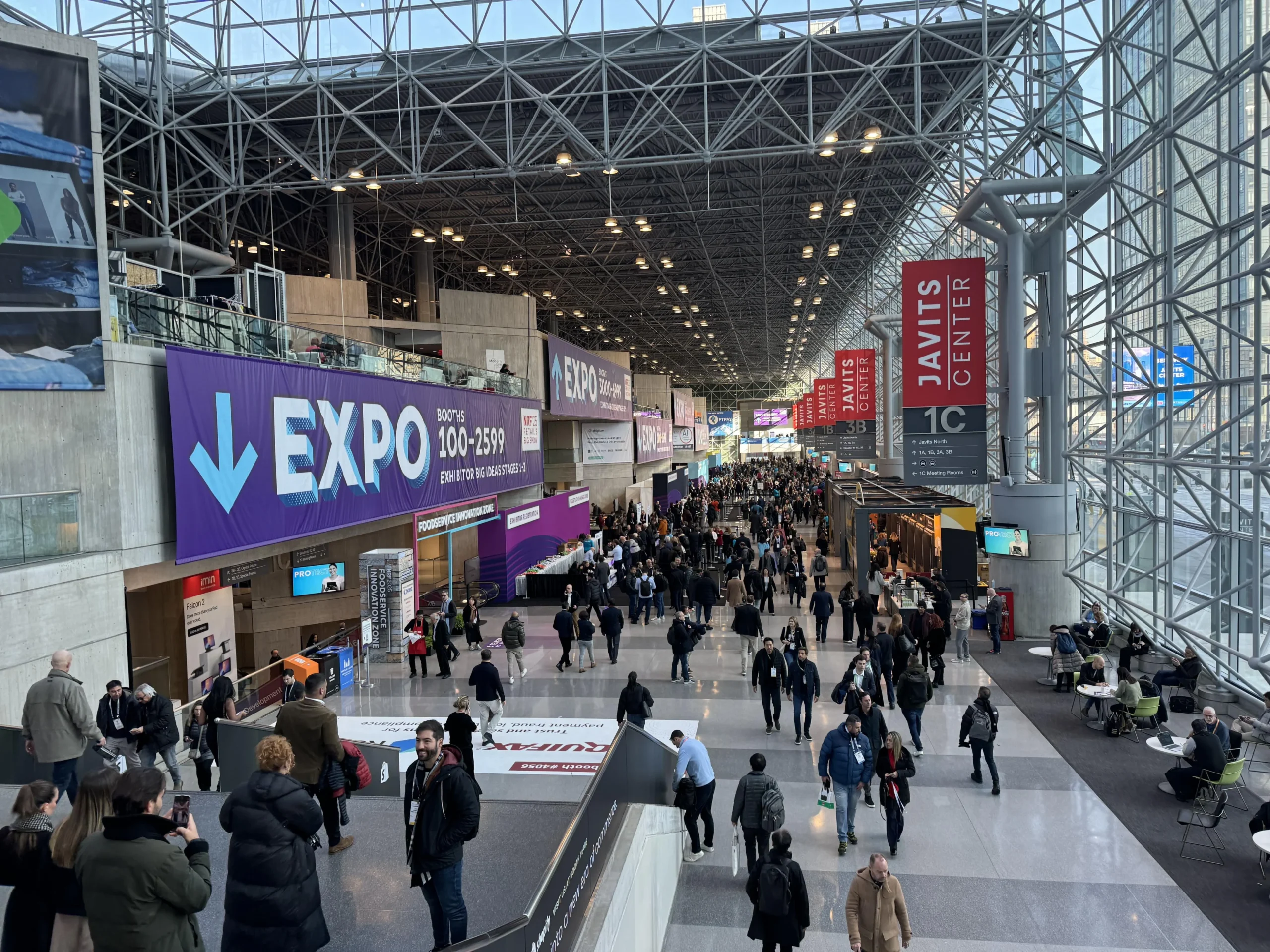
Purple Exhibits is headquartered at 1 Chips Lane in Fishkill, New York. Purple supports exhibitors at the Jacob K. Javits Convention Center with custom exhibit design, fabrication, rentals, graphics, freight planning, installation, dismantling, and show coordination.
Because requirements differ by event, Purple reviews each show’s current manual, deadlines, labor rules, and service-provider requirements before execution. The booth design, production plan, logistics, labor, utilities, and outbound route are coordinated through one project lead instead of treated as unrelated purchases.
Purple’s company profile says it has built 10,000+ high-performing booths since 2015. Its New York roots matter, but local familiarity is only useful when it becomes disciplined preparation: named owners, confirmed orders, current documentation, and a booth that is ready when the doors open.
A field note from Purple’s workflow: Purple’s published process includes pre-assembly, an electrical test, and a dress rehearsal before shipment, followed by a pre-show check of power, rigging, sightlines, and AV. That is the practical reason this checklist connects production readiness to show-floor readiness: a finished wall does not prove the complete exhibit system works.
Because the goal is not to hand your staff a rendering.
The goal is to hand them a finished booth.
Skip the chaos. Start your Javits Center exhibit project—then just show up.

Frequently Asked Questions About Javits Center Exhibit Planning
How much does a Javits Center trade show booth cost?
There is no reliable single price without a defined scope. Booth size and build type matter, but so do graphics, AV, freight, material handling, labor, utilities, rigging, cleaning, project management, and post-show handling. Use Purple’s 2026–2027 trade show booth cost guide for national planning ranges, then build the Javits-specific execution plan from the current event manual and service orders.
What should a Javits Center exhibit proposal include?
A complete proposal should define design, fabrication or rental structure, graphics, flooring, furniture, lighting, AV, crating, freight, installation, dismantling, project management, and post-show handling. It should identify which show services are fixed, estimated, excluded, or billed directly—and name the person responsible for scoping, ordering, verifying, and reconciling each applicable service.
What is the difference between freight and material handling?
Freight moves the exhibit between its origin and the event facility. Material handling generally covers receiving and unloading the shipment, moving it to the booth, storing empty containers, returning them after the show, and moving packed freight back to the loading area. Exact services and charges depend on the event.
What is a Javits Center EAC, and can an outside exhibit company build the booth?
An Exhibit Appointed Contractor, or EAC, is an outside contractor hired by the exhibitor to manage booth installation and dismantling; the industry also commonly says “exhibitor-appointed contractor.” Exhibitors can appoint qualified EACs subject to the current Javits policies and the event’s approval, account, insurance, identification, paperwork, and deadline requirements. Designated venue services and labor still follow the applicable Javits rules.
Can I set up my own booth at the Javits Center?
Current Javits policy permits employees of the exhibiting company to erect or dismantle a display no larger than 250 square feet when no tools or ladders are required. Employee identification, current event rules, and safe conditions apply, and Javits may suspend the exception when conditions are unsafe. Larger, tool-based, or otherwise non-qualifying work needs the applicable labor plan.
Who orders electrical, internet, plumbing, cleaning, and rigging at the Javits Center?
The Javits Center provides an official ordering system for essential exhibitor services, and its personnel perform designated work under current venue policies. Your exhibit partner may help calculate, coordinate, or submit service orders depending on the agreed scope, but the proposal should say exactly who is responsible and who will receive the final invoice.
Should I ship to the advance warehouse or directly to the Javits Center?
The best route depends on the show schedule, shipment type, production timing, risk tolerance, and current exhibitor instructions. When the event offers advance receiving, its GSC warehouse can provide an earlier delivery window. Direct-to-show shipping may reduce handling stages but depends on precise timing. Compare current options, deadlines, and costs before selecting a route.
Is advance-warehouse or direct-to-show shipping cheaper at the Javits Center?
There is no universal answer. Compare the event’s current material-handling rates, storage terms, special-handling charges, carrier detention exposure, receiving windows, shipment characteristics, and production schedule. Online guides conflict because show contracts and rate sheets differ. The current exhibitor manual and written quotes—not a generic percentage—should decide.
Does the Javits Center accept advance exhibit shipments?
No. Current Javits policy says the Center does not accept advance deliveries before the contracted move-in date. If the event offers advance receiving, use the warehouse address and instructions published by its General Servicing Contractor. Do not send advance freight to the Javits delivery entrance.
What address should a truck use for Javits Center freight deliveries?
Current Javits guidance directs event-related truck deliveries to 369 12th Avenue, New York, NY 10018, with the entrance on 12th Avenue between 39th and 40th Streets. The freight booking and current show manual must still be checked because the event’s contractor, delivery window, consignee, labels, and routing instructions control the shipment.
Can exhibitors hand-carry materials into the Javits Center?
Current Javits policy allows qualifying hand-carry operations only through event-designated hours, locations, routes, and access points. The rules generally limit the work to verified employees of the exhibiting company, eligible small items, and specified vehicles and carts. Review the current Javits hand-carry policy and the event manual before arrival; do not use New York City streets as an unloading or staging area.
What information should I send an exhibit builder for an accurate quote?
Send the show name and dates, venue, booth number and size, official floor plan, current exhibitor manual, brand guidelines, objectives, products or machinery, desired booth features, AV and utility requirements, target budget, approval team, artwork timing, and future-show plans. Better inputs produce a more accurate scope and fewer assumptions.
Where can I find the Javits Center exhibitor manual?
The show organizer normally publishes its event-specific Exhibitor Services Manual or show kit through the exhibitor portal, often with separate GSC ordering and shipping pages. Javits publishes current venue policies, freight guidance, and exhibitor-service information, but those venue pages do not replace your show’s dates, labels, contractors, rates, and deadlines. Save the current event manual and record its revision date in the Manual-to-Move-In Brief.
What is the Purple Five-Plan Readiness Check?
It is a pre-move-in check that confirms five connected plans agree: the approved exhibit, inbound freight, labor call, utility layout, and outbound instructions. A change to one plan should trigger a review of the other four before freight leaves.
What is the Purple Four-Owner Test?
It is a responsibility check for every applicable booth service. The plan names who owns the scope, who submits the order, who verifies execution on the show floor, and who reconciles the final cost. A service is not controlled until all four roles are documented.
What is the Purple Dock-to-Doors-Open Sequence?
It is a six-gate Javits move-in framework: freight cleared, footprint locked, build sequenced, systems live, booth dressed, and handoff complete. Each gate needs a named owner and objective proof before the next dependency is released.