
Washington, D.C. is not the place for a beautiful rendering and crossed fingers. Use this Washington DC trade show exhibitor guide to plan a booth that looks confident, supports serious conversations and is fully ready when the doors open—from venue rules and freight to installation and final handoff.
By Purple Exhibits • Updated August 24, 2026
How do you plan a trade show booth in Washington, D.C.?
Confirm the exact venue and current event manual, set booth objectives and scope, map utilities into the design, follow the current general service contractor’s approved receiving, labeling and consignment instructions, submit required EAC or engineering documents, order services before discount deadlines, and assign owners for installation, testing, dismantle and outbound shipping.
Exhibiting in Washington, D.C. means entering a market where credibility often matters as much as visibility. Depending on the event, the people walking the aisle may include association executives, government teams, procurement professionals, defense and aerospace leaders, healthcare and science experts, technology buyers, policy organizations or international delegations.
The exact audience changes from show to show. The central challenge does not: your exhibit must make your value clear quickly, support the conversations your team came to have and be completely operational when the doors open.
Your team came to meet people—not chase freight, electrical orders, missing graphics or an unfinished installation.
A great Washington exhibit is not necessarily the loudest booth in the hall. It is the booth that feels unmistakably credible, makes the right people comfortable stopping and gives your team the environment it needs to move a conversation forward.
If you are currently comparing a Washington, D.C. trade show booth builder, this guide will help you evaluate the work behind the rendering: audience strategy, venue rules, freight, show services, installation, technology, approvals, handoffs and final show-floor accountability.
Design for D.C. credibility—without disappearing into the gray
Washington audiences often arrive with a purpose. Some have scheduled meetings. Some are comparing technical solutions. Some need evidence before they will give a company more than a minute. Your booth should respect that reality.
Start with one aisle-facing message that answers the first question in a visitor’s mind: Why should I stop here? Then organize deeper information in layers:
A clear headline that can be understood in seconds
A product, demonstration or proof point that gives the claim substance
A place for a short conversation without blocking traffic
Meeting space that matches the privacy and formality of the discussion
Technical content that an expert can explore without overwhelming a first-time visitor
Storage, charging, cable management and staff circulation that keep operations out of sight
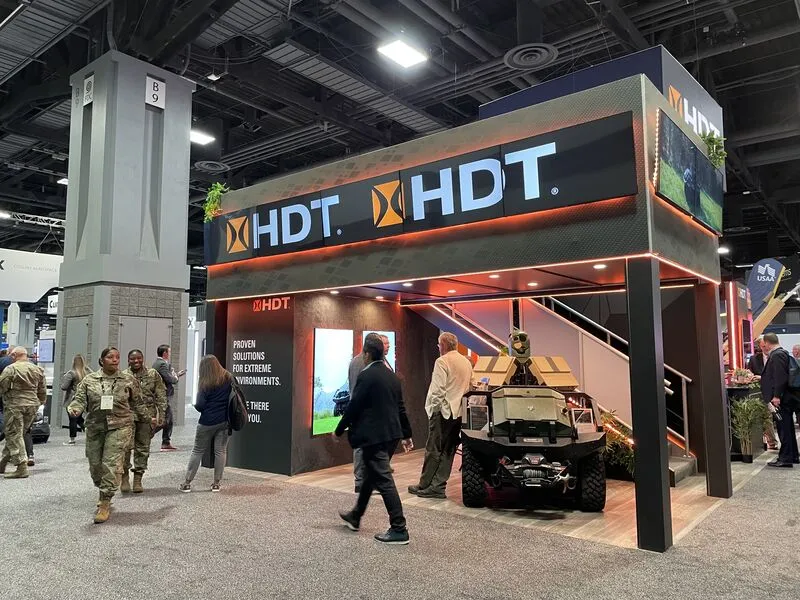
Serious does not have to mean forgettable. Professional is not a synonym for gray. Strong color, lighting, architecture, motion and digital content can all belong in a Washington, D.C. trade show display when each element has a job.
Trade shows have had enough gray. Build authority—but give people something worth remembering.
For government, defense, healthcare, science and technology audiences, clarity is often the strongest form of creativity. Use the booth to simplify the first message, then give qualified visitors a logical path to the evidence, expert or demonstration they need.
Plan accessibility before fabrication—not after move-in
An exhibit can look open in a rendering and still become difficult to navigate once counters, chairs, demonstrations, cables and visitor queues are added. Treat access as part of the floor plan, content plan and staff plan from the beginning.
Preserve clear routes through open entrances, meeting areas and demonstration zones.
Keep furniture, product cases, loose cords and queueing visitors from blocking those routes.
Provide an accessible way to use a counter, view a demonstration or join a meeting.
Caption key video content and provide a useful alternative when information depends on audio alone.
Brief staff on accessible entrances, restrooms and who can solve an access issue during the show.
Events DC publishes accessibility information for the convention center, including accessible entrances and restrooms. That guidance is a starting point, not a substitute for the current event manual, applicable accessibility requirements or advice from a qualified specialist. We review the complete visitor path while changes can still be made efficiently.
Start with the exact venue—not simply “Washington”
Venue names are not interchangeable, even when an event is marketed as being in the Washington region.
Walter E. Washington Convention Center
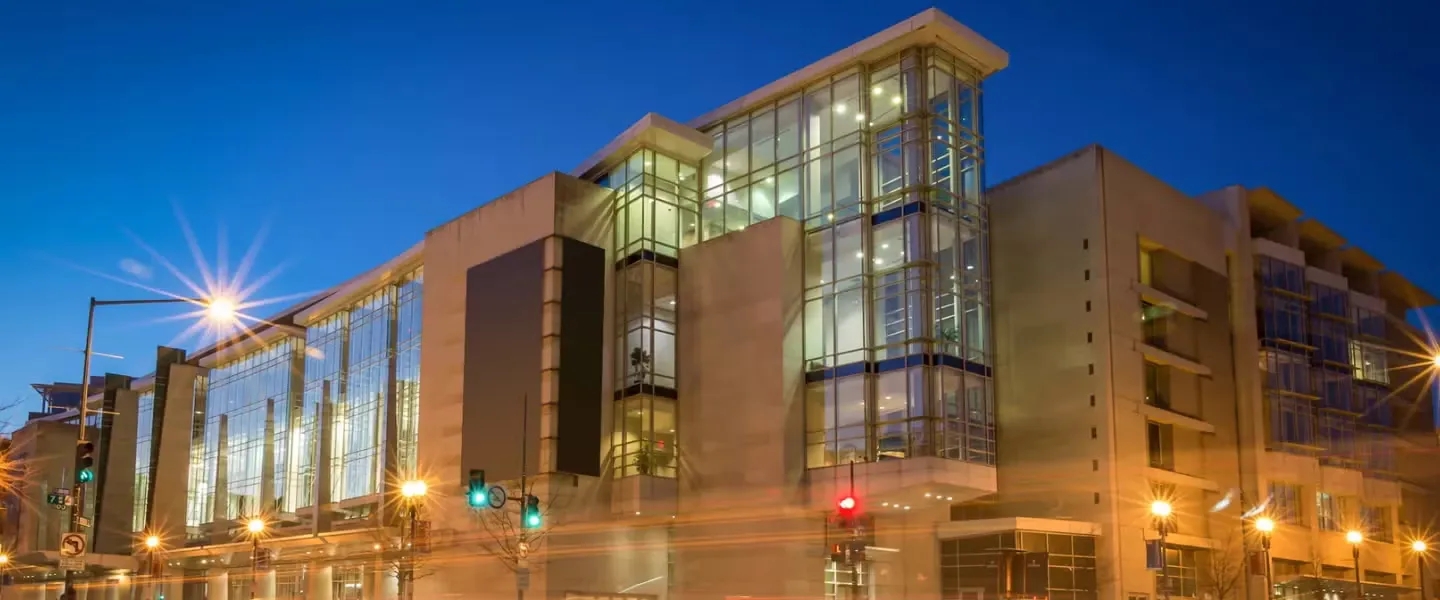
The Walter E. Washington Convention Center is the city’s principal convention facility. Its current official address is 801 Allen Y. Lew Place NW, Washington, DC 20001. The street was renamed in 2023, so older pages, saved contacts and shipping records may still show Mt. Vernon Place. Confirm that every label, vendor instruction and staff itinerary uses the current event documents and approved delivery address—not a copied address from an old web page.
Events DC lists 703,000 square feet of exhibit space at the 2.3-million-square-foot facility. That scale makes disciplined wayfinding, long-distance visibility, installation planning and on-site communication especially important.
If you are preparing for SATShow Week at this venue, use Purple’s SATShow 2027 exhibit booth planning guide for show-specific planning, then follow the current organizer manual for the live dates and requirements.
National Harbor is a separate destination
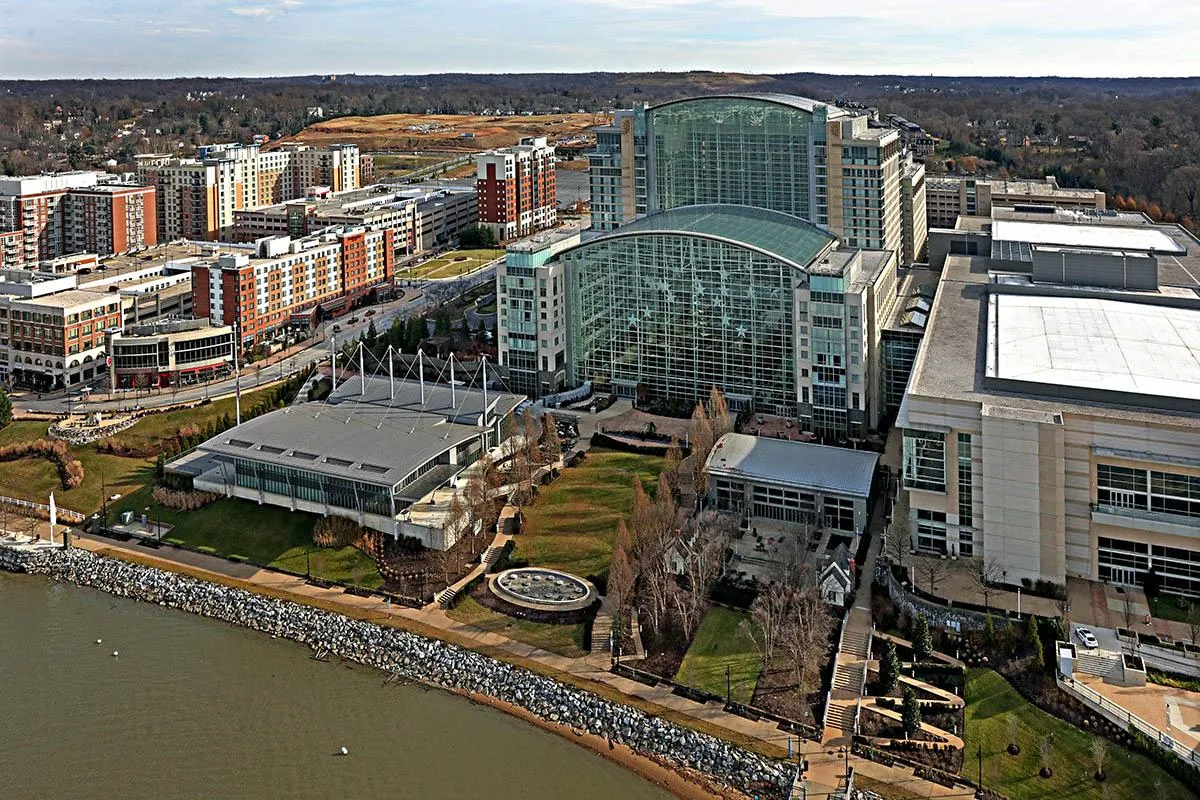
Gaylord National Resort & Convention Center is at 201 Waterfront Street, National Harbor, Maryland 20745. It is part of the greater Washington event market, but it is not in the District of Columbia. It has its own venue rules, event manual, service providers, delivery plan and lodging considerations.
The practical rule is simple: the venue named on your contract controls the venue plan. “Washington-area show” is not precise enough for freight, labor, service orders or installation.
Downtown D.C. versus National Harbor: planning snapshot
Understand the Washington exhibitor rulebook stack
A trade show is governed by several organizations at the same time. Knowing who controls what prevents assumptions, duplicate orders and expensive last-minute corrections.
What does “turnkey” actually mean in Washington, D.C.?
A turnkey exhibit partner should own the path from approved design to finished booth: strategy, custom or rental structure, graphics, AV, freight planning, show-service coordination, installation, quality control and dismantle. Some services must still be ordered through the venue or official contractor, but one project lead should connect the information and manage the handoffs. If a proposal cannot tell you who owns every item, it is not truly turnkey.
Purple Exhibits works for the exhibitor. We can coordinate booth-related information across the show, venue, general contractor and service providers, but no independent exhibit company can replace a provider that the event or venue designates as exclusive. Strong project management begins by making those boundaries clear.
Every vendor can finish its own scope and still leave you with one unfinished booth. Purple’s job is to connect the scopes, expose the gaps and keep the complete program moving. Pretty is good. Ready is better.
Walter E. Washington Convention Center exhibitor guide: five logistics details
The current event manual must always control your specific project, but Events DC’s official exhibitor information highlights several items that deserve early attention:
Do not send freight to the venue independently. Events DC states that the facility itself does not accept event-related freight or booth materials. A show may offer direct-to-show receiving at the convention center, but use the current show labels, receiving window and general service contractor instructions and consign the shipment as required. Use the designated advance warehouse when the show offers one and that route fits the shipment.
Hand-carry is intentionally limited. The venue’s published procedure allows materials an exhibitor can bring in one trip through the designated entrance. Do not build the main freight strategy around repeated hand-carry trips.
Heavy products require verified placement. Events DC currently publishes a maximum exhibit-hall floor capacity of 350 pounds per square foot. Any machinery, vehicle or concentrated load still needs project-specific confirmation with show management and the appropriate professionals.
Decor and special structures may need documentation. Flame-retardancy requirements apply to decorative materials. Multi-story exhibits, enclosed or covered areas, displayed vehicles and certain effects can require engineering, certificates, permits or advance approval. Events DC currently calls for multi-story plans at least 90 days before installation.
Utility and specialty orders cannot be an afterthought. Electrical, internet, plumbing, rigging, catering and booth cleaning may need to be ordered through designated providers. Equipment locations, power requirements, network needs and hanging-sign plans should be resolved while the booth is still being designed.
Review the current Events DC Exhibitor Services, venue policies and official manual for your event before placing orders or shipping freight.
The Purple Washington preflight: five checks before opening
Strong trade show logistics in Washington, D.C. are not a pile of confirmed order numbers. They are a connected chain that ends with a complete, working booth. Purple’s preflight is designed to expose gaps while there is still time to fix them.
Scope and responsibility audit. Match every required deliverable to one named owner. Confirm what Purple, the exhibitor, organizer, general contractor and designated providers will each supply—and identify anything that still has no owner.
Floor-plan and rule audit. Recheck dimensions, orientation, sightlines, neighboring booths, setbacks, height limits, enclosed areas, accessibility and every approval-sensitive feature against the latest documents.
Utility overlay. Place power, data, AV, lighting, plumbing and rigging on the same working plan as products, counters, walls and flooring. A service order without a coordinated location is not complete.
Freight-chain audit. Verify crate inventory, labels, bills of lading, receiving destination, delivery window, installation sequence, empty-container plan, dismantle and outbound carrier—not just the inbound shipment.
Show-ready inspection. Before handoff, inspect structure, graphics, lighting, AV, internet, products, furniture, storage, cleaning and backup content. Photograph the finished booth and close every open item with a named person and deadline.
A confirmed vendor is not the same thing as a finished booth. The preflight tests the whole program.
The 90/60/30/7-day Washington, D.C. exhibitor checklist
Every show has its own deadlines, and a large custom or technically complex exhibit should begin far earlier than 90 days. Use this checklist as a control framework—not as a substitute for the official schedule.
Save the Washington, D.C. Exhibitor Planning Checklist
Print or save the timeline below. The full checklist stays on this page so search engines and readers can access the same useful information without a form or broken download.
Show organizers, associations and exhibitor teams may link to this checklist as a planning resource. Please credit Purple Exhibits and link to the permanent Washington guide URL.
90+ days before move-in: define and disclose.
Confirm the exact venue, event dates, move-in window, booth number, size and configuration.
Choose the primary objective: meetings, demonstrations, launch, education, lead capture, recruiting or brand visibility.
Identify the audiences that matter most and the one message each should understand first.
Give your exhibit partner the current manual, floor plan and organizer contact information.
Document every product’s dimensions, weight, power, data, plumbing, rigging and handling needs.
Flag multi-story construction, vehicles, covered rooms, hanging signs, live effects or other approval-sensitive features.
60 days before move-in: approve and engineer.
Approve the booth layout, traffic plan, meeting areas, demonstration zones, storage and staff workflow.
Lock the graphic hierarchy and begin final content production.
Finalize electrical, internet, AV, lighting, plumbing and rigging locations.
Confirm EAC requirements, certificates of insurance, engineering, fire-safety documents and organizer approvals.
Choose the freight route and compare advance-warehouse versus direct-to-show requirements.
30 days before move-in: produce, test and confirm.
Approve final artwork at production size and proof all names, claims, QR codes and URLs.
Test monitors, LED systems, computers, touchscreens, playback files and backup content.
Confirm venue-service orders and retain every order number and diagram.
Prepare crate inventories, labels, bills of lading, installation drawings and on-site contact lists.
Brief booth staff on goals, scheduled meetings, lead capture, demonstrations and escalation.
7 days before move-in: verify the chain.
Verify freight status, receiving destination and delivery window.
Reconfirm labor calls, credentials, service orders and the on-site decision-maker.
Place backup presentation files in more than one secure location.
Review the opening checklist: graphics, lighting, power, internet, AV, products, furniture, cleaning and storage.
Confirm the dismantle, outbound shipping and return-inventory plan before the show begins.
Not sure who owns what?
Send Purple the show name, venue, booth number and current exhibitor manual. We will help turn the deadlines, service orders and booth requirements into one coordinated working plan.
Start my Washington exhibit plan
Give your exhibit company the information needed to produce a real proposal
The words “turnkey booth” do not create a reliable scope. A strong proposal begins with a complete brief. Send your Washington, D.C. exhibit company:
Show name, venue, dates, booth number and move-in schedule
Booth size and configuration: inline, corner, peninsula, island or split island
Target budget range and whether it must include estimated show-site expenses
Primary objective, target visitors and the action you want them to take
Products, equipment, samples and every related dimension, weight and utility need
Meeting, demonstration, presentation, hospitality, storage and lead-capture requirements
Brand guidelines, final or draft messaging and existing graphic assets
AV hardware, content format, network dependency and backup-playback requirements
Existing booth components that may be reused
Future shows and footprints where the exhibit may need to reconfigure
The current exhibitor manual and all known approval deadlines
That information lets the builder recommend a custom, rental or hybrid solution based on the complete program instead of guessing from square footage alone.
How much does it cost to exhibit at a trade show in Washington, D.C.?
There is no single Washington price. Budget separately for booth space; exhibit design, rental or fabrication; graphics and AV; freight; material handling or drayage; installation and dismantle; electrical and internet; rigging or plumbing; cleaning; permits; travel; taxes; and contingency. Ask for two totals: the contracted exhibit scope and the estimated show- or venue-billed charges. Current event rate sheets control.
Final cost depends on the footprint, custom versus rental construction, technical complexity, freight route, service-order timing, installation schedule and reuse plan. A quote is easier to trust when every inclusion, exclusion, estimate and exhibitor-paid item is visible.
Booth builder, exhibit company or exhibition stand builder?
Exhibitors use different terms for the same broad need. In the United States, searches often use trade show booth builder, exhibit builder, exhibit company, trade show displays or trade show booth rentals. International teams may search for an exhibition stand builder in Washington, D.C. The label matters less than the written scope.
A fabricator may produce the physical structure. A rental provider may supply a system and graphics. A full-service exhibit partner should connect strategy, design, production, show-service information, freight, installation and dismantle within a clearly defined program. Ask what the company actually owns, what it coordinates and what remains your responsibility.
International exhibitors: build locally or import?
An international exhibitor can import an existing stand, produce in the United States or combine reusable branded elements with a locally produced rental or custom structure. Compare the total landed program, not only the fabrication price.
Two-way international freight, customs or carnet handling and schedule risk
Packing volume, weight and the related material-handling or drayage exposure
U.S. electrical, fire-safety, engineering and show-document requirements
Availability of replacement graphics, hardware and technical support before opening
Installation labor, domestic storage and reuse across future North American shows
Currency, payment, tax, controlled-product and temporary-import questions that require qualified advice
A U.S. exhibition stand builder in Washington, D.C. can simplify domestic production, service coordination, freight, installation and dismantle. We recommend the route only after reviewing the design, schedule, total cost, risk and future-show plan.
Choose a Washington booth partner by the handoffs it can remove
Many companies can produce an attractive rendering. Fewer can show how the idea becomes a labeled, packed, shipped, installed, powered, tested and finished exhibit.
Before selecting a trade show booth builder in Washington, D.C., ask for operational proof:
Completed work: Real photographs and relevant case studies, not renderings alone
One responsibility map: Who owns design, production, graphics, AV, freight documents, show forms, I&D, final inspection and dismantle
Written inclusions and exclusions: Especially drayage, electrical, internet, rigging, cleaning, permits, labor, supervision and taxes
Pre-show quality control: What will be assembled, measured, proofed, powered, played, packed and photographed before shipment
Installation documentation: Drawings, labels, inventories, sequence and the contact who can answer a crew question
On-site escalation: Who has authority when a graphic is damaged, a service is missing or the schedule changes
A written change process: How changes are approved, priced and communicated
A post-show plan: Dismantle, outbound freight, condition reporting, storage, refurbishment and future reuse
The lowest opening number is not always the lowest final show cost. Compare proposals line by line and evaluate what your own team would still need to manage. Purple’s trade show booth cost guide explains the budget categories that often sit outside the physical exhibit itself.
One Purple team. Every handoff covered.
A booth program often breaks in the spaces between scopes. Purple connects the complete program.
Depending on the written scope, our team can coordinate custom exhibit design, rental or hybrid structure, fabrication, graphics, flooring, furniture, lighting, AV, freight and trade show logistics, show forms, installation and dismantle, on-site supervision, storage and future reconfiguration.
We review the current event manual, connect design decisions to utilities and show services, keep production aligned with packing and installation, and make sure someone remains accountable through final show-floor inspection.
That is what JUST SHOW UP means. Your team arrives ready for customers, meetings and presentations—not a construction project.
Official Washington, D.C. exhibitor resources
Always use the current exhibitor manual and official order forms for your specific event. Public venue pages are helpful planning references, but show-specific rules, contractors, rates and deadlines may change.
Frequently asked questions about exhibiting in Washington, D.C.
Is Gaylord National Resort & Convention Center in Washington, D.C.?
No. Gaylord National is in National Harbor, Maryland. It serves the greater Washington event market, but its address, service providers, venue rules and shipping plan are separate from those of downtown D.C. venues.
Can I ship my booth directly to the Walter E. Washington Convention Center?
Do not send freight independently to the venue. Events DC states that the facility itself does not accept event-related freight or booth materials. Your show may offer direct-to-show receiving at the convention center, but the shipment must follow the current general service contractor’s labels, consignment instructions, receiving window and delivery procedures. Use the designated advance warehouse when the show offers one and that route fits the shipment.
Who orders electrical service, internet, plumbing and rigging?
These services may need to be ordered through designated providers. The exhibitor remains financially responsible unless the proposal states otherwise, while a full-service exhibit partner can coordinate layouts, requirements, forms and deadlines within its written scope.
Does one labor rule apply to every Washington, D.C. trade show?
No universal public rule should be assumed for every event. Review the current exhibitor manual, EAC requirements, venue policies and any applicable labor jurisdictions for the specific show. Build the installation and dismantle plan around those official requirements.
How early should I begin planning a Washington trade show booth?
Begin six to ten months ahead for a custom island exhibit and eight to twelve months or more for a large, immersive, heavy-product or international program. For a straightforward rental, plan three to six months ahead when possible; eight to twelve weeks should be treated as a compressed minimum subject to capacity, approvals and show deadlines.
What should a heavy-equipment exhibitor confirm?
Confirm product dimensions, total and concentrated weight, center of gravity, unloading method, floor-load approval, placement, assembly sequence, utilities, rigging if applicable and outbound handling. Events DC currently publishes a 350-pound-per-square-foot maximum for its exhibit halls, but show management must verify each heavy-product plan.
What is the difference between an exhibit builder and the general service contractor?
An exhibit builder works for the exhibiting company to design, produce and manage the booth. The general service contractor works across the event and commonly controls show-wide operations such as official freight receiving and material handling. Purple coordinates with the applicable contractors while representing the exhibitor’s booth program.
What is included in a Washington, D.C. trade show booth rental?
Rental scope varies. Confirm whether structure, graphics, flooring, furniture, AV, round-trip freight, installation and dismantle, on-site supervision, return handling and storage are included. Booth space, material handling or drayage, utilities, rigging, cleaning, permits and taxes are often separate unless itemized. Purple can plan a rental, custom or hybrid program and will state every inclusion, exclusion and estimated show-site charge in writing.
What is drayage at a Washington, D.C. trade show?
Drayage, often called material handling, is the show-site service that moves exhibit freight from the official receiving point to the booth, stores empty containers during the event, returns them after the show and moves outbound freight toward the loading area. It is separate from long-haul shipping and is commonly billed by the official contractor under the current event rate sheet.
Can Purple manage EAC paperwork, certificates of insurance and venue approvals?
Yes, when those items are included in the written scope. Purple can coordinate EAC registration, certificates of insurance, booth drawings, engineering or fire-safety documents, service layouts and approval deadlines. The organizer, venue and designated providers retain final authority, and the exhibitor must supply any company-specific information or signatures they require.
Tell us the show. Then JUST SHOW UP.
Send Purple Exhibits the show, venue, booth size, business objective, products, technology requirements, deadline and budget. We will connect the design, build and show-floor plan—with the inclusions, exclusions and responsibilities clearly defined before the project moves forward.
One booth. One coordinated program. One team accountable for getting it show-ready.
Skip the chaos. Show up ready.
Plan my Washington, D.C. exhibit • See exhibits Purple has delivered
Call (800) 994-8030 • Email info@purpleexhibits.com