

On this page
Flooring is the one part of the booth every visitor touches. Your staff also stands on it for eight hours a day. Most exhibitors treat it as an afterthought and rent whatever carpet the show offers. For tile, stone and flooring brands, though, the floor can be the most powerful display in the booth.
This guide compares the main options, explains when to use each, and shares what we’ve learned building booths where the floor is the product.
Quick comparison
| Option | Look | Comfort | Setup | Best for |
|---|---|---|---|---|
| Show-rented carpet | Basic | Low (unless padded) | Easy | Tight budgets, small booths |
| Custom carpet + thick padding | Clean, branded colors | High | Easy | Most booths |
| Interlocking foam / rubber tiles | Modern, many finishes | High | Easy, reusable | Reused booths, high-traffic booths |
| Hard-surface panels (wood-look, laminate, vinyl) | Upscale | Medium | Moderate | Premium look without real product |
| Raised floor platform | Clean, level, hides cables | Depends on top layer | More labor | Islands, heavy displays, installed product |
| Your own product (tile, LVP, stone, hardwood) | The best possible demo | Depends on product | Most labor | Tile, stone & flooring brands |
1. Carpet and padding
The standard option. Many shows require some kind of floor covering, so a booth without flooring isn’t really an option.
- Rented show carpet is the cheapest, but colors are limited and it’s thin. Your team will feel it by day two.
- Custom carpet in your brand color looks far cleaner and can be reused.
- Always add padding. A thick pad under the carpet is one of the cheapest ways to keep your staff comfortable and energetic.
2. Interlocking tiles
Foam, rubber or plastic tiles that snap together. They come in wood-look, solid colors and textures.
- Fast to install and easy to ship
- Reusable across many shows
- Comfortable for staff
- A good choice if you exhibit often with the same booth
3. Hard-surface flooring panels
Wood-look, laminate or vinyl panels give a premium, showroom-like feel. They work well for brands in design-driven industries, or anyone who wants the booth to feel like a store rather than a trade show.
4. Raised floor platforms
A raised platform, usually a few inches high, creates a level base on top of the convention center floor. It’s often the foundation for the best-looking booths.
Why use one:
- Hides cables for lighting, screens and power, so there are no cord covers or tripping hazards
- Gives a perfectly level base, which matters a lot when you install tile or stone
- Supports heavy displays and makes the booth feel like a separate space
- Creates a clear edge between the aisle and your booth
Things to plan for:
- Raised floors usually need a ramp or beveled edge for accessibility. Check the show’s rules.
- They add setup time and labor, so budget for it.
5. Your own product as the floor (for tile, stone and flooring brands)
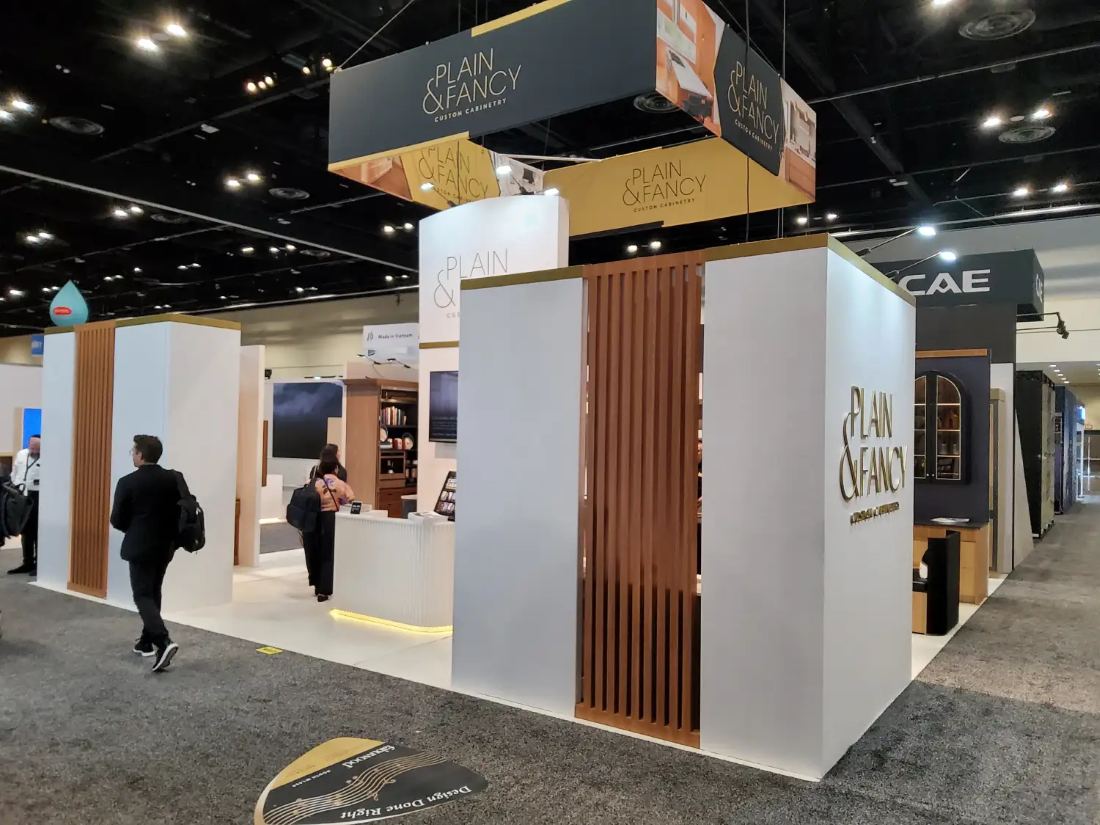
If you sell flooring or tile, your booth floor is your biggest sample. Visitors walk on it, see it at full scale and judge it under real conditions. No sample board can do that.
What we recommend
Start with a raised floor. Installing tile directly on a convention center floor is hard. A raised, level platform gives the installed product a solid, flat base and keeps everything level with the aisle.
Show more than one product. Use different zones of the floor to show different collections, colors or formats. A clear border or inlay between zones makes this look intentional, not random.
Match the floor to the walls. Visitors love seeing the same tile on the floor and on a wall or counter. It shows how the product works in a real space.
Think about the weight. Tile and stone are heavy, and moving freight into the hall (drayage) is usually priced by weight. Ship exactly what you need and plan the layout in advance so there are no extra boxes.
Plan setup time. Installed floors take longer than carpet. Your schedule needs enough setup hours to do it properly. A rushed tile floor shows, and it’s the first thing visitors see.
Plan for reuse. LVP and some floating floors can be designed to be taken up and reused at future shows. Tell us at the design stage which products you want on the floor, so the floor build, materials and setup time are part of the 3D design and the quote.
LVP, laminate and hardwood brands
Floating floors are easier to install than tile and can often be reused. They’re a great way to show many colors in one booth: use different planks in different zones, with a raised edge at the aisle.
Flooring tips for every booth
- Comfort matters. Tired staff sell less. Padding pays for itself.
- Match the floor to the brand. Floor color changes how the whole booth looks in photos.
- Hide every cable. Cords taped across the floor look cheap and are a tripping risk.
- Check the exhibitor manual. Some shows have rules on floor height, ramps, tape and installation materials.
- Plan it in 3D. Seeing the floor in the 3D design helps you choose finishes and layout before anything is ordered. → How Our 3D Trade Show Booth Design Process Works (From Brief to Renders)
Frequently asked questions
Do I need flooring in my trade show booth?
In most shows, yes. Many shows require some kind of floor covering. Even when it’s optional, a bare concrete floor looks unfinished and is hard on your staff.
What is the most comfortable booth flooring?
Carpet with thick padding, or foam interlocking tiles.
Can I install real tile in my booth?
Yes. Use a raised floor for a level base, and plan for extra setup time and the weight of the materials.
What is a raised booth floor?
A platform a few inches high that creates a level base, hides cables and supports heavy displays and installed products.
Can booth flooring be reused?
Custom carpet, interlocking tiles, panels and raised floors can usually be reused. Installed tile usually can’t, but many floating floors can.
Booth flooring with Purple Exhibits
Flooring is part of every Purple Exhibits booth design. Rental packages include everything shown in the design, from screens to stools to carpet, and custom builds include the floor you choose in the design and the quote.
Last updated . Show dates and venue rules come from official sources. Always confirm in your exhibitor manual.
Keep reading
Related guides
 3D Design Process
How Our 3D Trade Show Booth Design Process Works (From Brief to Renders)
See your booth before it's built. A step-by-step look at how Purple Exhibits turns your brief into a 3D booth model, brand-matched graphics and realistic renders.
 SEG Graphics
SEG Fabric vs. Other Trade Show Graphics: Which Is Right for Your Booth?
SEG fabric, backlit fabric, vinyl, or rigid prints? Compare trade show graphic options on look, cost, weight and reuse, plus tips for artwork that prints well.
 2027 Show Calendar
Tile, Stone & Flooring Trade Shows 2027: The Complete Calendar for Exhibitors
The 2027 calendar of tile, stone and flooring trade shows in the U.S. and abroad: dates, venues, who attends, and which shows fit your brand.
Exhibiting in 2027?
See your booth in 3D before anything is built.
Tell us your show and booth size. Our team sends a 3D design proposal with renders: layout, graphics, flooring and pricing.