

On this page
Graphics are what people see first, often from 50 feet away. The material you print on affects how your booth looks, how it ships, how long it lasts and how much you pay over several shows.
This guide explains the main options in plain terms, with the pros and cons of each and tips for artwork that prints well.
Quick comparison
| Graphic type | Look | Weight to ship | Reusable | Best for |
|---|---|---|---|---|
| SEG fabric | Seamless, frameless edges, rich color | Very light | Yes, easy to swap | Most modern booths |
| Backlit SEG fabric | Glowing, high impact | Light (plus light box) | Yes | Hero walls, product photography |
| Pop-up / tension fabric | Clean | Light | Yes | Smaller booths, fast setup |
| Vinyl banners | Basic | Light | Limited (creases) | Low budgets, outdoor, short use |
| Rigid prints (foam board, PVC, acrylic, aluminum) | Sharp, solid | Heavier | Some | Signs, counters, small details |
| Direct print on panels / wall wraps | Built-in | Depends on structure | With the structure | Custom builds, counters, towers |
What is SEG?
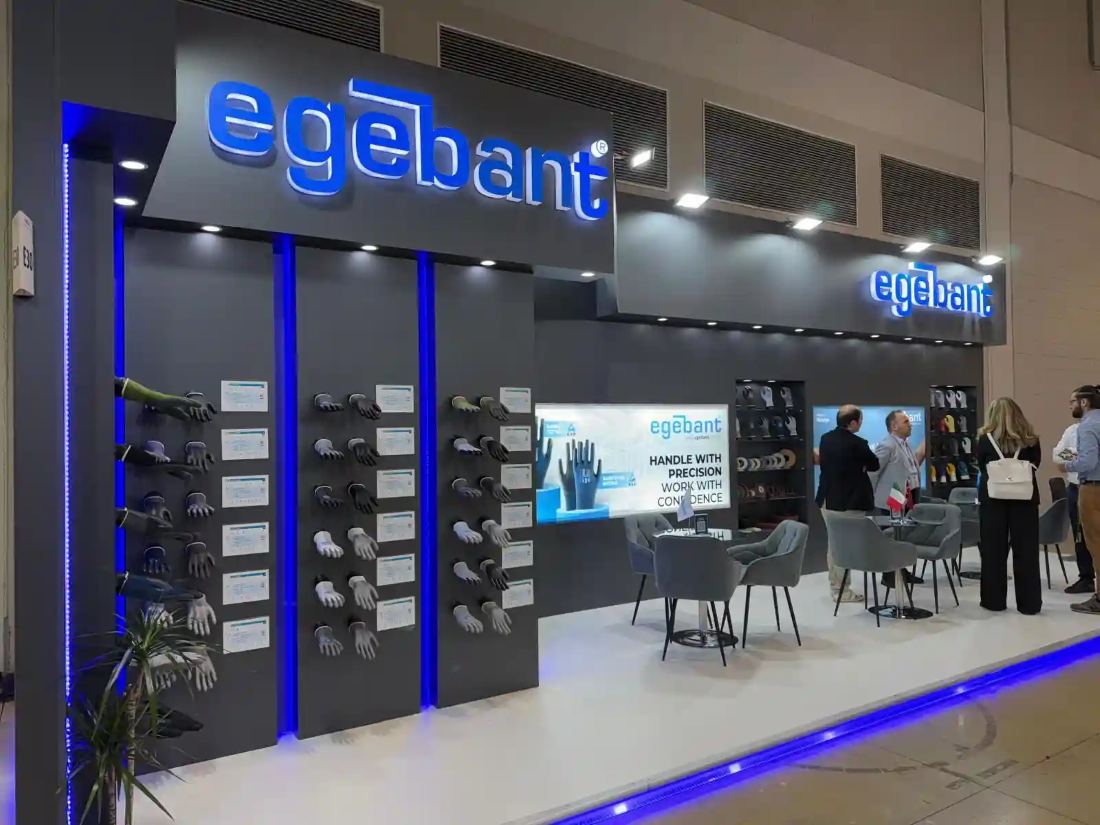
SEG stands for Silicone Edge Graphic. The graphic is printed on fabric using dye-sublimation (the ink is absorbed into the fabric rather than sitting on top). A thin silicone strip is sewn around the edge, and that strip pushes into a groove in an aluminum frame. The fabric pulls tight, and the result is a smooth, wrinkle-free wall with no visible edges.
Why SEG is so popular
- Looks premium. No seams, frames or visible hardware
- Rich color. Dye-sublimation gives deep, accurate color that doesn’t crack or peel
- Light and compact. Fabric folds into a small box, which saves shipping and drayage costs
- Easy to update. Keep the frame, swap the fabric for the next show or a new product launch
- Durable. Fabric can usually be washed, and it doesn’t crease like vinyl
Things to know
- Very dark solid colors and small text need care in the artwork (more on this below)
- Frames need to be planned as part of the booth structure
Backlit SEG: the "wow" wall
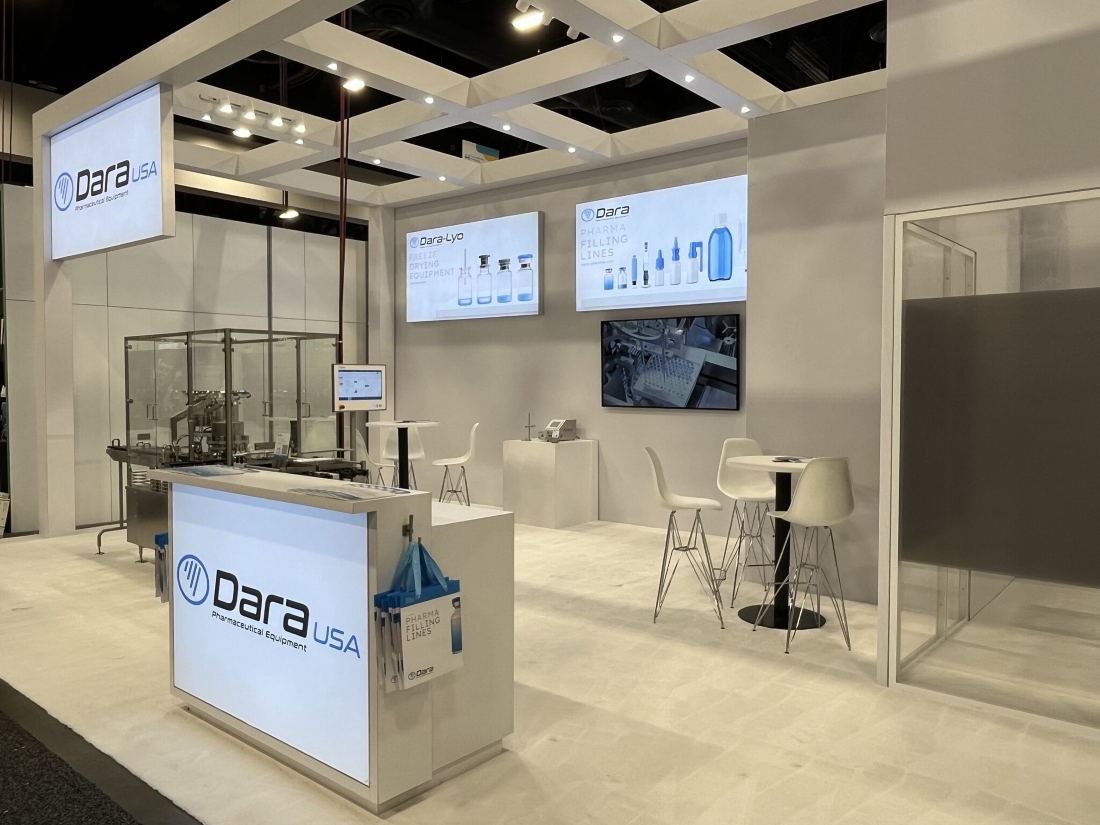
Backlit SEG uses the same fabric graphic, stretched over a frame with LED lighting behind it. The whole graphic glows evenly.
Why it works: backlit walls stand out on a busy show floor, look great in photos and make product photography look its best. For tile, stone and flooring brands, a backlit image of your product installed in a beautiful room is one of the most effective ways to stop visitors in the aisle.
Tip: backlit graphics need artwork prepared for backlighting. Colors shift when lit from behind, so the files have to be adjusted for it.
Other options
Pop-up and tension fabric displays
Fabric stretched over a collapsible frame. Fast to set up, light and affordable. A good choice for 10×10 and 10×20 booths, or a second, smaller show.
Vinyl banners
Cheap and quick, but they crease, reflect light and look dated next to fabric. Best kept for outdoor events or short-term use.
Rigid prints
Printed foam board, PVC, acrylic or aluminum. They’re sharp and solid, which makes them great for smaller signs, counter fronts, product labels and details. They’re heavier and less flexible for large walls.
Direct print and wraps on custom structures
In custom booths, graphics can be printed directly onto panels, counters or towers, or applied as wraps. This makes the graphic part of the build.
Artwork tips: get it right the first time
Good printing starts with good files. These are the most common problems we see:
- Low-resolution images. A photo that looks fine on screen can look blurry at 10 feet tall. Use the highest-resolution images you have.
- Wrong size or no bleed. Every graphic needs to be built at the exact size with extra bleed (artwork that runs past the edge). Purple Exhibits checks every file for free and tells you if anything needs fixing before printing.
- Text too small or too low. Nobody reads small text on a booth wall. Put your key message high, big and short. Nothing important should be near the floor, where tables and people will block it.
- Brand colors that don’t match. Screen colors and print colors are different. Give us your brand color codes (Pantone if you have them) so we can match them.
- Too much on one wall. One strong image and one short message beat a wall full of text.
Not sure your artwork will work? Our design team can create or adapt booth graphics from your brand guidelines. We match your colors, fonts and style, and show you the result in 3D before anything is printed. → How Our 3D Trade Show Booth Design Process Works (From Brief to Renders)
Frequently asked questions
What does SEG mean?
Silicone Edge Graphic: a fabric print with a silicone strip around the edge that fits into an aluminum frame.
Is SEG better than vinyl?
For most indoor trade show booths, yes. SEG looks more premium, weighs less, ships smaller and doesn’t crease.
Can SEG graphics be reused?
Yes. Fabric graphics can be folded, stored and reused, and you can swap in new graphics while keeping the same frames.
What is backlit SEG?
An SEG fabric graphic lit from behind by LEDs, so the whole image glows evenly.
What file format do you need for booth graphics?
Usually high-resolution PDF or vector files at full size with bleed. Purple Exhibits checks every file for free and sends a proof before printing.
Booth graphics with Purple Exhibits
Purple Exhibits designs and prints booth graphics, including SEG walls, backlit lightboxes, hanging signs, counter wraps and floor graphics, color-matched to your brand, with a free file check and proof. Your graphics are printed and shipped by the same team that builds your booth. See exhibit graphics and printing.
Last updated . Show dates and venue rules come from official sources. Always confirm in your exhibitor manual.
Keep reading
Related guides
 3D Design Process
How Our 3D Trade Show Booth Design Process Works (From Brief to Renders)
See your booth before it's built. A step-by-step look at how Purple Exhibits turns your brief into a 3D booth model, brand-matched graphics and realistic renders.
 Booth Flooring
Trade Show Booth Flooring Options: A Guide for Tile, Stone & Flooring Exhibitors
Carpet, padding, interlocking tiles, raised floors, or your own product as the floor? Compare trade show booth flooring options, with tips for tile and stone brands.
 2027 Show Calendar
Tile, Stone & Flooring Trade Shows 2027: The Complete Calendar for Exhibitors
The 2027 calendar of tile, stone and flooring trade shows in the U.S. and abroad: dates, venues, who attends, and which shows fit your brand.
Exhibiting in 2027?
See your booth in 3D before anything is built.
Tell us your show and booth size. Our team sends a 3D design proposal with renders: layout, graphics, flooring and pricing.