

Operations resource · Official sources reviewed September 7, 2026
Las Vegas Exhibit Responsibility Guide: Who Owns Venue Services?
A Las Vegas exhibit can involve the exhibitor, organizer, venue, general service contractor, Exhibitor Appointed Contractor, freight carrier and exclusive suppliers. This guide helps assign who specifies, orders, approves, pays, performs and confirms each task—before a handoff becomes a show-site problem.
Direct answer
Who is responsible for trade show services in Las Vegas?
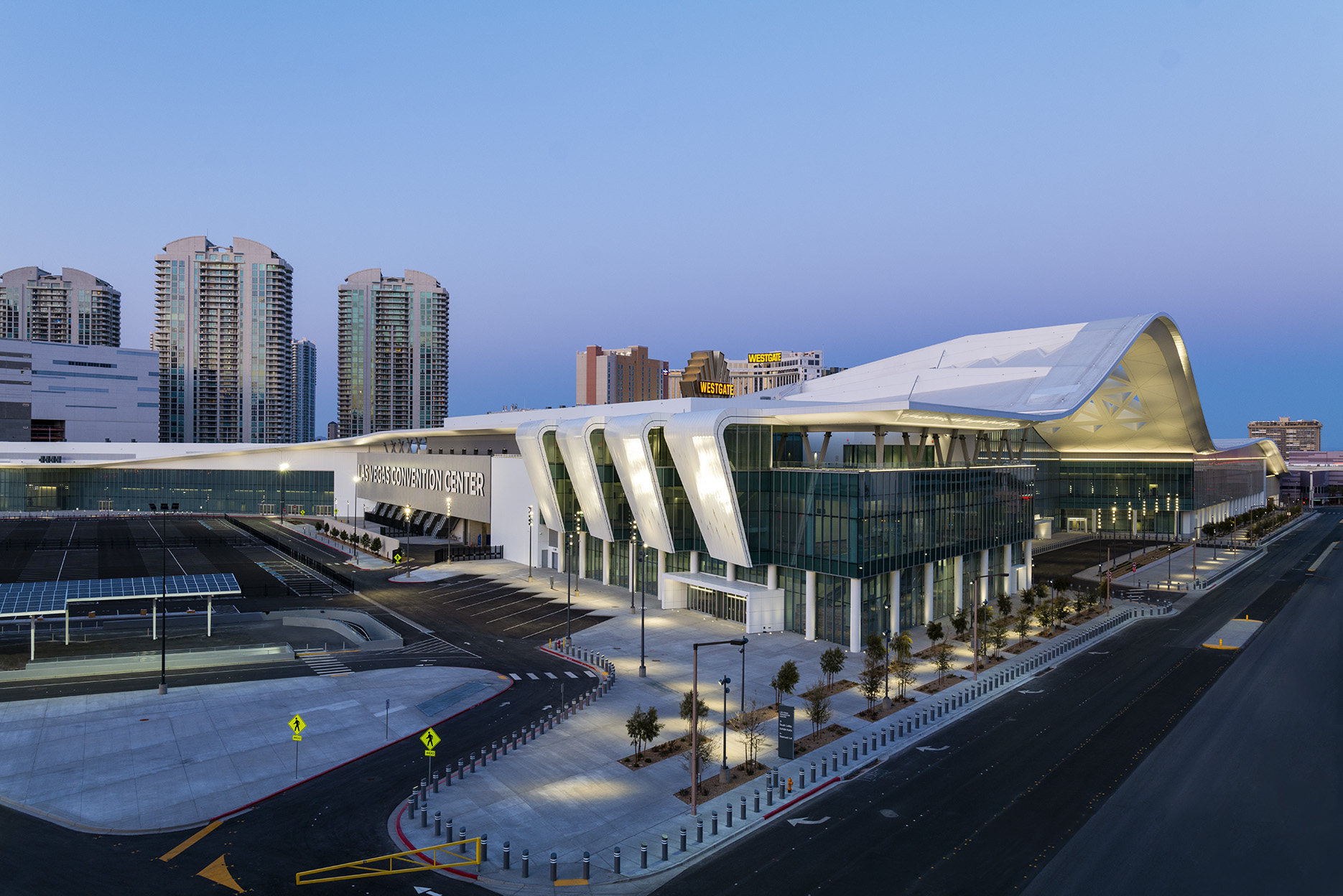
Responsibility is divided by the current event documents and the contracts for your project. The exhibitor normally remains accountable for decisions, accurate company information, approvals and payment obligations. The organizer and venue define access, display and facility requirements. A general service contractor may manage show-wide freight, labor or service desks. An EAC may perform authorized exhibit work. Venue-exclusive or event-appointed providers may be the only parties permitted to deliver specific utilities or services.
The safe planning move is not to ask only, “Who handles electrical?” Ask six separate questions: Who calculates the requirement? Who places the order? Who supplies the floor plan? Who approves and pays? Who performs the work? Who confirms it is ready before opening?
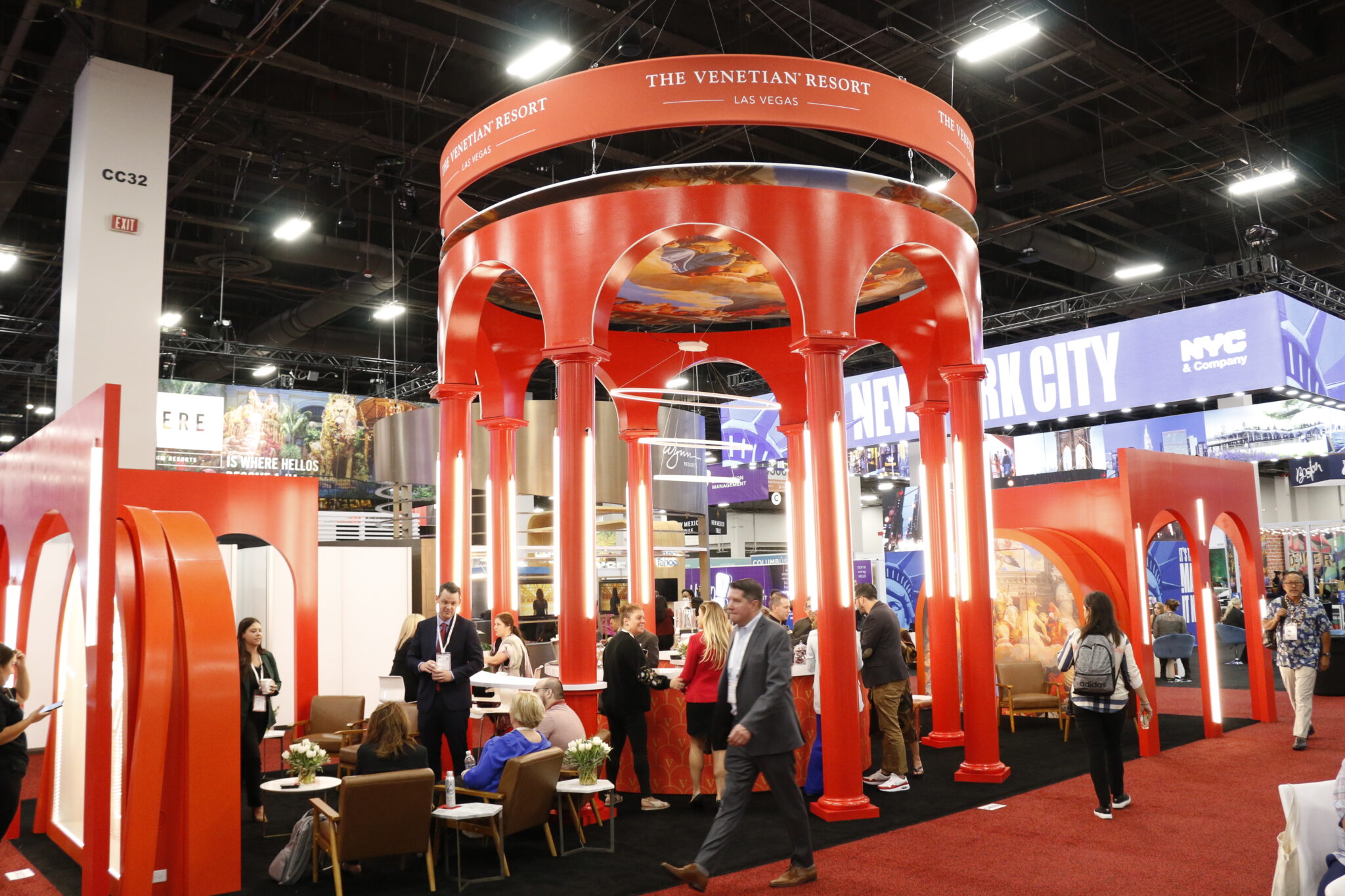
This Las Vegas exhibit responsibility guide is built around that distinction. A project partner may coordinate a service without being the permitted provider, the contracting party or the direct biller. A task is not assigned until the owner, due date, ordering path, payer and confirmation evidence are written down.
Responsibility map
Seven parties can touch one exhibit project
Names vary by event, but these functional roles are the practical starting point. One organization may fill more than one role; the current manual and signed agreements determine the real assignment.

| Party | Typical role | Do not assume |
|---|---|---|
| Exhibitor | Defines objectives, products, staffing, budget authority, brand approvals and authorized signers. | That a supplier can approve spend, sign company forms or correct missing product information. |
| Event organizer | Issues event rules, deadlines, display limitations, contractor procedures and the exhibitor manual or service kit. | That a venue’s general page replaces the event-specific instructions. |
| Venue or facility operator | Controls facility access, safety policies and certain building services or approved-provider paths. | That rules from one Las Vegas property apply at another property. |
| General service contractor (GSC) | May provide show-wide services such as material handling, freight coordination, furnishings, labor or service-desk support. | That every event uses the same GSC or assigns it the same services. |
| Exhibitor Appointed Contractor (EAC) | A contractor selected by the exhibitor to perform permitted work, subject to current event and facility requirements. | That an appointment alone satisfies notice, insurance, credential or permit requirements. |
| Exclusive or official provider | Supplies a service reserved by the venue or appointed by the event, which may include utilities, rigging, internet, cleaning or catering. | That coordination by another vendor transfers provider status or billing responsibility. |
| Carrier or specialist | Handles transportation or a defined technical scope such as customs, equipment commissioning or content systems. | That delivery to the dock equals delivery to the booth, installation or acceptance. |
Source of truth
Five documents should agree before production and shipping are released
Exhibit-space agreement
Confirms the exhibiting company, booth number, space dimensions and organizer relationship. Use it to verify the identity and footprint every downstream document references.
Current exhibitor manual
Provides event-specific rules, forms, deadlines, display limits, freight instructions and contractor procedures. Record its edition or revision date.
Venue requirements
Identify facility policies, access procedures and exclusive-service paths. A venue page is a research starting point; the current event materials remain essential.
EAC and insurance instructions
Define notice, certificate, permit, badge or credential requirements when an outside contractor will work in the facility.
Approved scope and service orders
State what each contracted party will deliver, coordinate, order or exclude—and which invoices are direct to the exhibitor.
If two documents appear to disagree
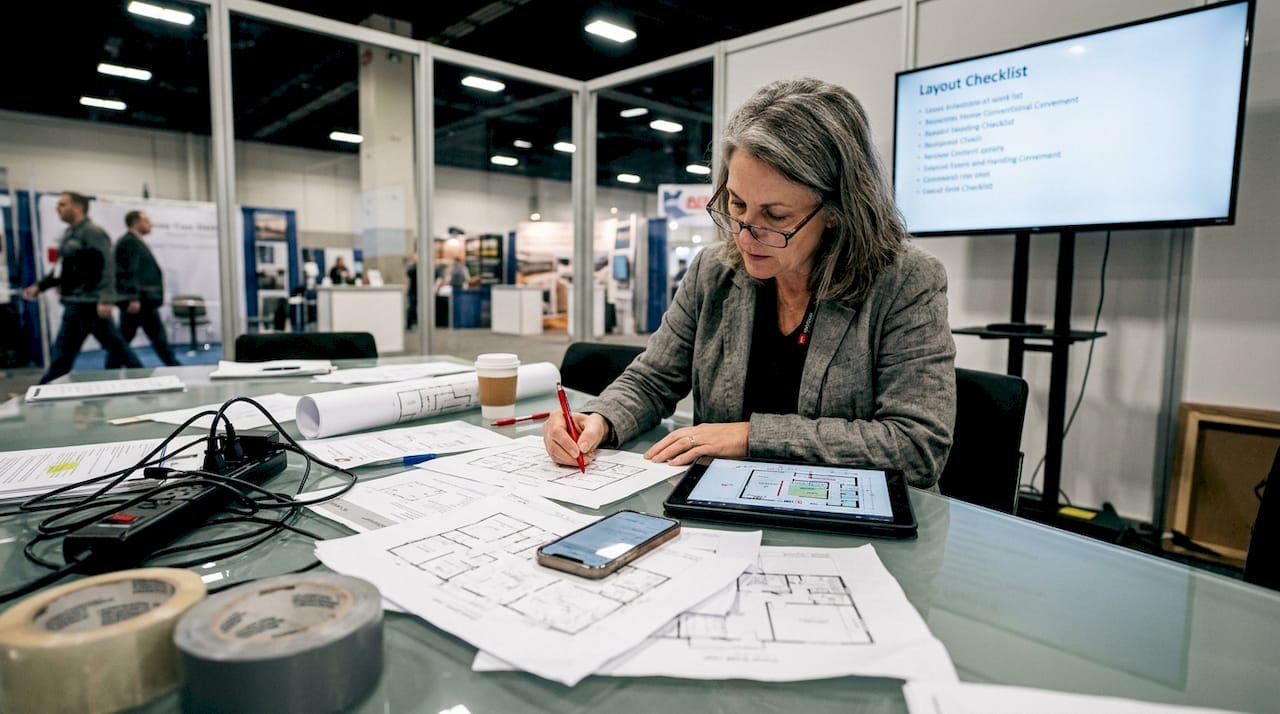
Do not choose the more convenient interpretation. Send the exact question to the organizer, facility contact or named service provider, obtain a written answer, record the responder and date, and update every affected drawing, order and schedule.
Free working tool
Build your Las Vegas exhibit responsibility register
Choose the project’s accountable owner and status for each workstream. Then download a CSV for your team. Entries stay in this browser; the tool does not submit project information to Purple or analytics.

| Workstream | Decision to document | Accountable owner | Due date | Status | Evidence or next action |
|---|---|---|---|---|---|
| Current manual | Who obtains the current edition and distributes changes? | ||||
| Booth drawings & approvals | Who prepares, submits, revises and records approval? | ||||
| EAC notice & insurance | Who completes notices, COI, permits and credentials? | ||||
| Fire & special approvals | Who identifies triggers, submits documents and closes comments? | ||||
| Electrical | Who calculates, orders, maps, pays and verifies power? | ||||
| Internet & data | Who defines bandwidth, orders service and tests devices? | ||||
| Rigging & overhead | Who engineers, orders, supplies files and confirms placement? | ||||
| Plumbing & air | Who specifies connections, orders service and tests equipment? | ||||
| Cleaning & waste | Who orders pre-show and daily service and checks the booth? | ||||
| Inbound carrier | Who books transport, labels freight and monitors arrival? | ||||
| Material handling | Who reviews routing, receives freight and tracks empty crates? | ||||
| Install & dismantle | Who orders permitted labor, supervises and signs completion? | ||||
| Opening-day turnover | Who owns the punch list, tests systems and accepts the booth? | ||||
| Outbound freight | Who provides the carrier, paperwork, labels and confirmation? |
Official-source matrix
What selected Las Vegas facilities publicly state
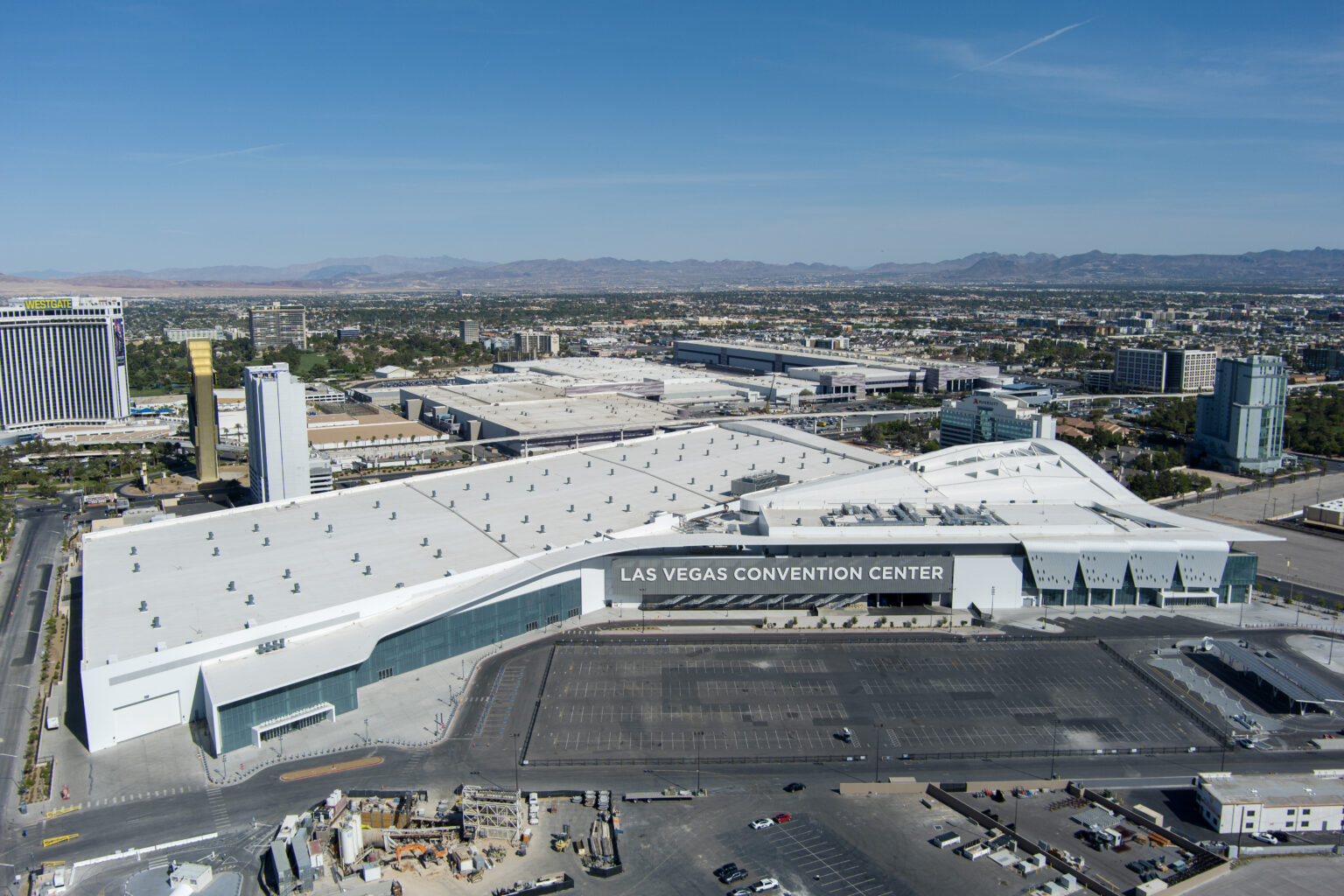
This matrix records a narrow, dated statement from each linked official page and converts it into a verification action. It does not imply endorsement, universal policy or a complete service list. Always check the current event manual and service kit.
| Venue or authority | Verified public statement | Responsibility to assign | Official source |
|---|---|---|---|
| LVCC — EAC access | The LVCVA states that any contractor working at LVCC must obtain an EAC permit. Its current application lists insurance documentation, a company-name matching requirement and an annual permit fee. | Name the EAC owner; verify permit and insurance readiness; then check the event’s contractor-notice process and deadline. | LVCVA contractor application |
| LVCC — facility services | The official facility page identifies Sodexo as the exclusive food-and-beverage provider and Cox as the exclusive telephone, internet, wireless and data-network provider. | Keep these orders separate from exhibit-production scope; record the specifier, orderer, payer, deadline and confirmation contact. | Official LVCC page |
| The Venetian Expo | The official services page lists catering, cleaning, rigging, lighting, internet/telecom, electrical and plumbing as exclusive. It also says booth vacuuming or damp mopping is typically not automatically included. | Create an order line for every required exclusive service; confirm quantity, placement, deadline, approver, payer and completion check. | Venetian meetings services |
| Mandalay Bay | The property identifies Edlen as its exclusive electrical provider, Encore as its production and AV/rigging partner, and a property exhibitor-services path for telecommunications and internet. | Separate power, AV/rigging and connectivity assignments; verify current provider status and order routes in the event kit. | Mandalay Bay support services |
| CAESARS FORUM | The public property page directs planners to its Catering and Convention Services contact for preferred-vendor recommendations and coordination; that page does not resolve every exhibit-service assignment. | Obtain the current service kit and written provider list before assigning freight, utilities, rigging, labor, cleaning or branding work. | Official CAESARS FORUM page |
| Clark County Fire Prevention | The county page includes exhibits and trade shows among the operations addressed by Fire Prevention inspections and plan review. | Identify special conditions early and assign drawing, document, submission, revision and approval ownership through the current event route. | Clark County Fire Prevention |
Operating sequence
A ten-step workflow for closing responsibility gaps

- 1
Confirm the event identity
Record the legal exhibiting entity, show, venue, hall, booth number, dimensions and move-in window. Prevent old projects from contaminating the file set.
- 2
Collect the current documents
Save the current manual, forms, floor plan, venue guidance and every revision notice in one controlled location.
- 3
Extract every required workstream
Turn each service, form, approval and physical dependency into a row. Do not hide unrelated responsibilities inside a single “show services” line.
- 4
Assign the six verbs
Name who specifies, orders, supplies inputs, approves, pays and confirms. If one row has multiple parties, write the handoff between them.
- 5
Resolve EAC access
When an outside contractor is involved, confirm notice, insurance, permit, credentials and facility access through the current official process.
- 6
Connect services to drawings
Power, data, plumbing and rigging orders should match the approved booth plan, equipment schedule, connection points and final orientation.
- 7
Release orders against deadlines
Track the actual due date, submission confirmation, order number, payer and change path. “Sent” is not the same as “accepted.”
- 8
Reconcile freight and labor
Connect carrier milestones, material-handling instructions, crew call times, crate access and the planned install sequence.
- 9
Run an opening-day turnover
Use one punch list for finishes, graphics, products, lighting, technology, cleaning and safety. Name the person authorized to accept or escalate.
- 10
Close the outbound loop
Confirm dismantle ownership, return packing, outbound labels, carrier check-in, bills of lading, storage or next-show destination and final collection.
Workstream detail
The responsibility questions that prevent common handoff failures

Freight vs. material handling
The carrier transports freight to an approved destination. Material handling covers the show-site movement defined by the event provider. Record the destination, arrival rule, receiving party, tracking method, empty-container process and outbound handoff. Never treat “delivered” as a complete status without naming the location and recipient.
Installation and dismantle
Identify who may perform the work, who orders the crew, who supervises, who controls tools or equipment, when materials become available and who signs the final punch list. Match labor calls to freight availability and service installation—not only the official move-in date.
Power, data and plumbing
Separate technical calculation from service ordering. The booth team may determine loads and locations while an official provider fulfills the order. Record the drawing owner, final equipment list, order confirmation, direct-billed amount, install check and troubleshooting contact.
Rigging and production technology
Connect the structural concept, stamped or engineered documents when required, equipment weight, suspension points, power, content systems, provider order and on-site test. A hanging element should not reach production while the approval and provider paths remain unknown.
Cleaning, catering and security
Confirm which services are included, optional or exclusive at the property and event. Assign daily schedules, access, waste removal, consumables, food-and-beverage approvals, supplemental security and the person who confirms performance each day.
Fire and special conditions
Flag vehicles, batteries, fuel, open flame, cooking, compressed gases, covered structures, tall enclosed rooms, special effects or other conditions early. Use the current submission route and name who prepares, submits, answers comments and retains approval evidence.
Project handoff
What to give the team before it confirms ownership
A responsible assignment depends on complete inputs. Send one controlled package and identify which files are final, which are pending and who can approve changes.
- Current exhibitor manual and revision notices
- Venue, hall, booth number, dimensions and orientation
- Approved booth plan and equipment schedule
- Product dimensions, weights, power and operating needs
- Final artwork, content and brand approval contacts
- EAC notices, insurance instructions and signer information
- Provider orders, confirmations and direct-bill contacts
- Inbound and outbound routing, labels and carrier contacts
- Move-in schedule, crew plan and on-site escalation tree
- Open decisions with one owner and one due date each

Quality control
Eight warning signs your responsibility plan is not ready

A status word is not an assignment.
The specifier, orderer, payer and provider may be different.
Old rules and forms are research, not current authority.
Coordination does not prove a charge is included in another contract.
Keep order numbers, accepted drawings and provider contacts.
Artwork, equipment and approvals can block service orders.
One property’s provider arrangement is not a Las Vegas-wide rule.
Name who can accept, correct or escalate the final booth.
Practical answers
Las Vegas exhibit responsibility questions

What is an Exhibitor Appointed Contractor?
An Exhibitor Appointed Contractor, commonly shortened to EAC, is a contractor selected by an exhibitor to perform permitted show work outside the event-appointed contractor structure. The EAC must still follow the current organizer and facility rules, which may include notice, insurance, credentials or permits.
Who files EAC paperwork?
The current event instructions determine the submission path. The exhibitor, EAC and project coordinator may each supply part of the information. Write down who prepares the certificate, who signs or submits the notice, who verifies acceptance and who handles corrections. At LVCC, the facility’s official page states that contractors working there must obtain an EAC permit.
Is the general service contractor the same as the venue?
Not necessarily. The venue operates the facility; the event organizer produces the show; and a GSC may be appointed for show-wide services. Their responsibilities can intersect, but the names and scopes should remain separate in the register.
Who should order electrical and internet?
The approved responsibility register should say. An exhibit team can calculate needs and prepare placement drawings while a venue-exclusive or event-appointed provider receives and fulfills the order. Also record who approves and pays, because coordination and billing are separate responsibilities.
Are freight and material handling the same service?
No. Freight transportation moves the shipment between locations. Material handling covers show-site receiving and movement under the event’s procedures. The handoff points, labels, destination, receiving hours, empty-container process and outbound release need separate confirmation.
Can one exhibit partner coordinate venue services?
Yes, when that coordination is included in the approved scope and permitted by the event. Coordination does not change which provider is authorized to perform a service or which party receives the invoice. The proposal and responsibility register should state both.
Do LVCC requirements apply at every Las Vegas venue?
No. LVCC, The Venetian Expo, Mandalay Bay, CAESARS FORUM and other facilities have their own operating paths, and individual events add show-specific rules. Use facility information only for the named property and verify it against the current event manual.
Which document controls when a webpage and event manual differ?
Do not resolve a conflict by assumption. Ask the named organizer, facility or provider contact in writing, retain the answer, and update the project files. Public webpages can be incomplete or change after event documents are issued.
When should responsibilities be assigned?
Begin when the event and venue are confirmed, then update the register as the current manual and service kit are released. Critical responsibilities should be resolved before design release, service-order deadlines, freight booking and labor scheduling. Exact dates vary by event.
What evidence should be kept before move-in?
Keep the current manual version, approved drawings, EAC acceptance, insurance or permit confirmations where required, provider order numbers, paid or authorized invoices, freight documents, labor confirmations, contact list and unresolved-item log. The team should know where this evidence lives and who can access it on site.
Editorial method
How this guide stays accurate
Purple separates verified facility statements from project recommendations. Venue and government facts on this page are attributed to the official public source and carry a review date. Where a public page does not resolve the complete provider structure, the guide identifies the gap and tells the exhibitor what to obtain.
This resource is operational guidance, not legal, insurance, engineering, fire-code or contractual advice. Requirements can change by event, facility, booth configuration and date. A responsible Purple owner should recheck the sources, visible matrix, downloadable data and structured data together at least quarterly and before any material promotion.
Official sources reviewed
Continue planning