

Planning a KBIS exhibit booth requires more than selecting attractive graphics and reserving space on the show floor. Exhibitors need the right design strategy, a realistic budget and an experienced KBIS exhibit builder capable of coordinating every detail from the first rendering through final dismantling.
So, how much does a KBIS exhibit booth cost?
A professionally designed KBIS exhibit booth may range from approximately $8,000 for a streamlined 10×10 rental exhibit to more than $1 million for an enormous, fully immersive custom environment. The final cost depends on the booth size, design complexity, materials, product displays, technology, freight, drayage, show services and installation requirements.
But the physical booth is only one part of the complete investment.
A total KBIS exhibit budget may include:
- Booth-space rental
- Creative strategy and exhibit design
- 3D renderings
- Engineering
- Custom fabrication or rental structure
- Graphics and signage
- Flooring, lighting and furniture
- LED walls and audiovisual equipment
- Electrical and plumbing services
- Shipping and freight
- Drayage and material handling
- Installation and dismantling
- On-site supervision
- Cleaning and security
- Staff travel and accommodations
- Post-show shipping and storage
This guide explains KBIS exhibit booth costs, how custom KBIS exhibits are designed and built, what a full-service KBIS exhibit builder should provide, and how to plan a booth that attracts attention without losing control of the budget.
KBIS 2027 Show Information
KBIS 2027 is scheduled for February 2–4, 2027, at the Las Vegas Convention Center in Las Vegas, Nevada.
The Kitchen & Bath Industry Show is North America’s premier trade event dedicated to kitchen and bath design, products and technology. It connects hundreds of exhibiting brands with designers, builders, retailers, dealers, distributors, architects and other industry decision-makers.
KBIS is held alongside the NAHB International Builders’ Show as part of Design & Construction Week, creating a major marketplace for brands across the residential design and construction industries.
Exhibitors should monitor the official KBIS Exhibitor Resource Center for current forms, deadlines, service providers and regulations. Show information can change as the event approaches.
Purple Exhibits is an independent exhibit company and is not the organizer of KBIS.
KBIS Exhibit Booth Cost: The Quick Answer
The following table provides preliminary planning ranges for different KBIS exhibit booth sizes and investment levels.
These amounts are broad industry planning estimates—not official KBIS pricing or guaranteed Purple Exhibits quotations.
Depending on the proposal, the ranges may include exhibit design, structural rental or fabrication, standard graphics, flooring, furniture, freight coordination and installation. They generally do not include the raw booth-space fee paid to KBIS, staff travel, major utilities, extensive rigging, proprietary products or significant post-approval changes.
A professional KBIS exhibit builder should provide an itemized proposal based on the actual booth design, product requirements and show-service needs.
What Determines the Cost of a KBIS Exhibit Booth?
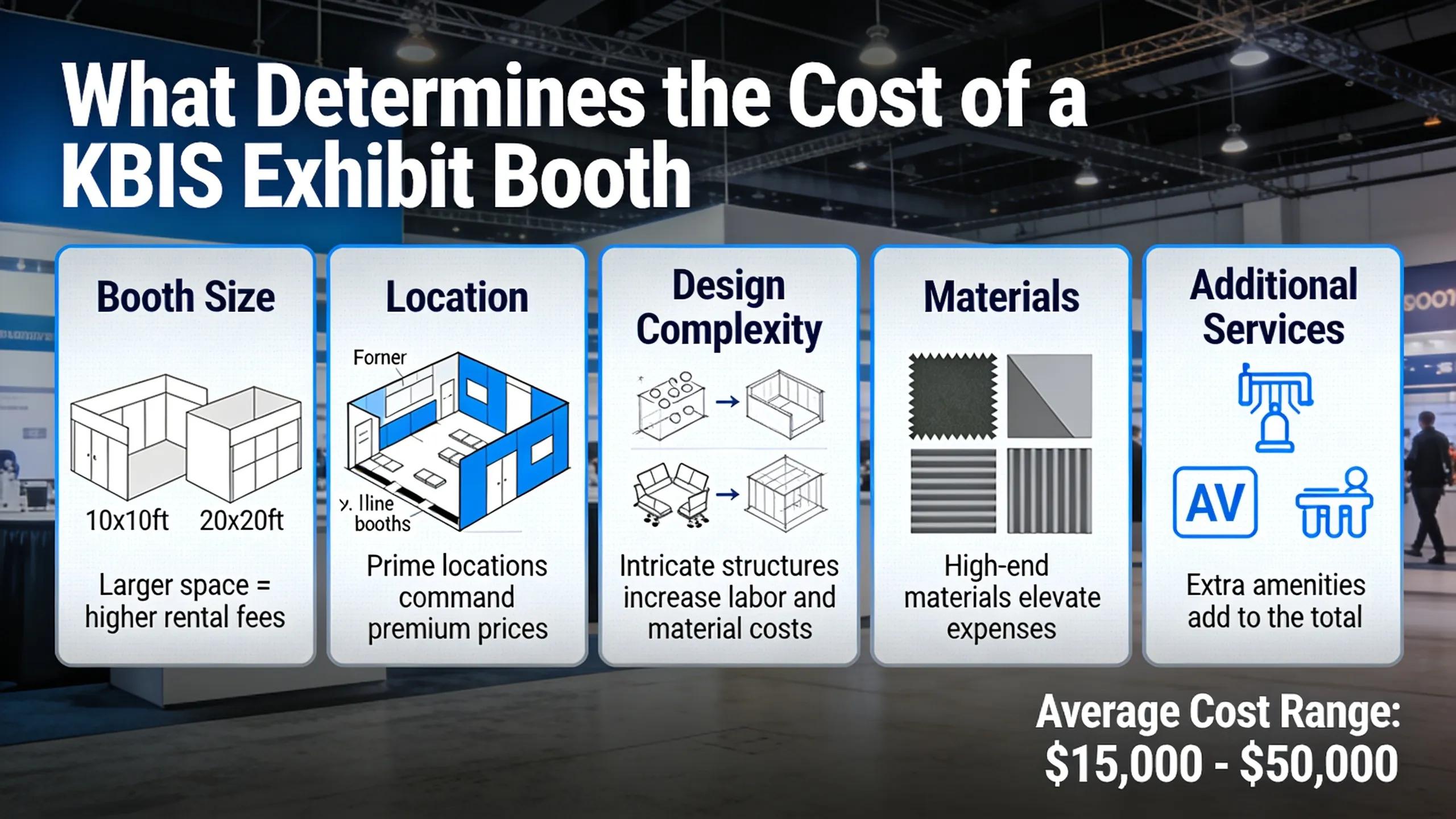
Two companies can reserve identical spaces and still have dramatically different budgets.
A 20×20 booth featuring a modular structure, four product displays and a reception counter will cost considerably less than a 20×20 booth containing working appliances, water connections, custom cabinetry, an LED wall, premium flooring and a private meeting room.
The square footage may be identical. The exhibit build is not.
Booth Size
A larger KBIS exhibit booth usually requires more:
- Structure
- Flooring
- Graphics
- Lighting
- Furniture
- Electrical service
- Shipping capacity
- Drayage
- Installation labor
- Cleaning
- Supervision
Large exhibits may also require hanging signs, multiple installation crews, complex product placement and longer setup schedules.
Design Complexity
Straight walls and standard modular systems are usually less expensive than curved architecture, custom ceilings, oversized portals, suspended elements or specialty millwork.
A design that looks visually simple may still require complex engineering, hidden connections or a carefully controlled installation sequence.
Rental, Custom or Hybrid Construction
A rental exhibit uses reusable structural components customized with branded graphics, furniture, lighting and architectural features.
A custom exhibit includes components designed and fabricated specifically for the brand.
A hybrid exhibit combines rental structures with custom-built elements, providing flexibility while concentrating the budget on the areas visitors will notice most.
Product Display Requirements
KBIS booths frequently display heavy, operational or high-value products, including:
- Cabinets
- Countertops
- Appliances
- Bathtubs
- Vanities
- Plumbing fixtures
- Stone and tile
- Lighting
- Smart-home technology
Heavy products may require reinforced platforms, special crating and additional installation labor. Working products may require water, drainage, ventilation, power or internet.
Audiovisual Technology
Technology can range from a single monitor to a complete immersive environment.
Possible technology expenses include:
- LED walls
- Touchscreens
- Tablets
- Interactive product displays
- Demonstration cameras
- Sound systems
- Synchronized content
- Charging stations
- Live-streaming equipment
- Technical support
Technology should support the product story. It should not be added simply because the booth has an empty wall.
Shipping and Show-Site Labor
Freight and installation costs depend on:
- Shipping distance
- Total weight
- Number of crates
- Delivery schedule
- Advance-warehouse deadlines
- Installation complexity
- Crew size
- Labor rates
- Straight-time or overtime scheduling
- Product-installation requirements
- Return-shipping destination
An experienced KBIS exhibit builder should consider these expenses during design—not after the booth has already been fabricated.
The Four Budgets Inside a Complete KBIS Exhibit Project
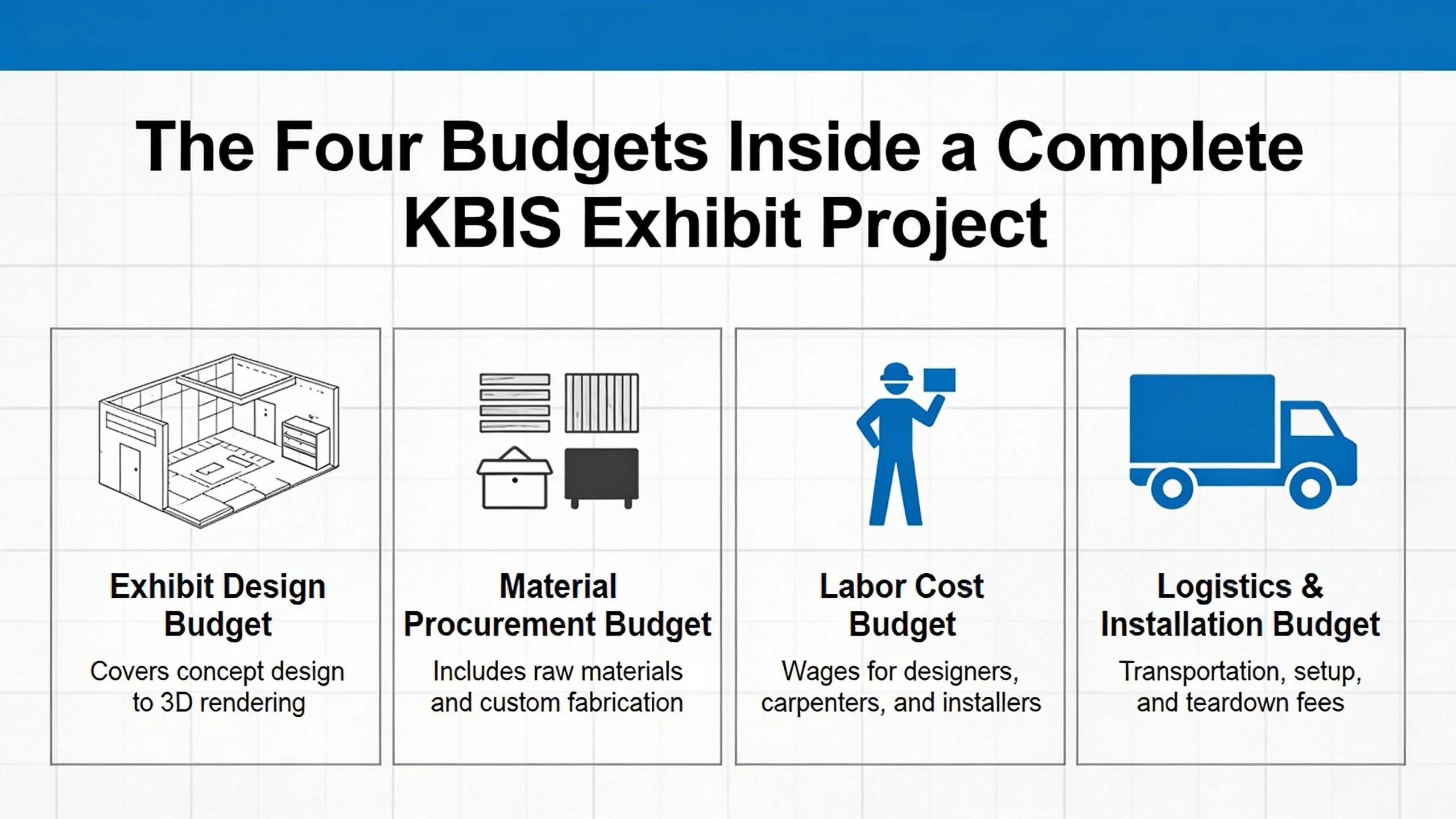
A complete KBIS budget should be separated into four major categories.
1. Booth Space
This is the fee paid to KBIS for the physical exhibit space.
The booth-space fee does not automatically include:
- Exhibit design
- Booth structure
- Graphics
- Furniture
- Electricity
- Freight
- Drayage
- Installation
- Cleaning
- Staff travel
Always confirm exactly what is included with the contracted space.
2. Exhibit Design and Production
This category may include:
- Creative strategy
- Floor planning
- 3D renderings
- Engineering
- Rental structure
- Custom fabrication
- Graphics and signage
- Flooring
- Lighting
- Furniture
- Reception counters
- Storage
- Product displays
- AV integration
3. Logistics, Show Services and Execution
This category may include:
- Packing and crating
- Freight
- Advance-warehouse receiving
- Drayage
- Installation
- Dismantling
- Electrical service
- Plumbing
- Internet
- Rigging
- Cleaning
- Security
- On-site supervision
- Outbound shipping
4. Staffing and Marketing
This category may include:
- Staff travel
- Hotels
- Meals
- Lead retrieval
- Promotional products
- Product samples
- Photography
- Video production
- Professional demonstrators
- Exhibit sales staff
- Pre-show marketing
- Post-show follow-up
Separating these budgets helps prevent the booth structure from consuming funds needed to attract, engage and follow up with visitors.
What Does a KBIS Exhibit Builder Do?
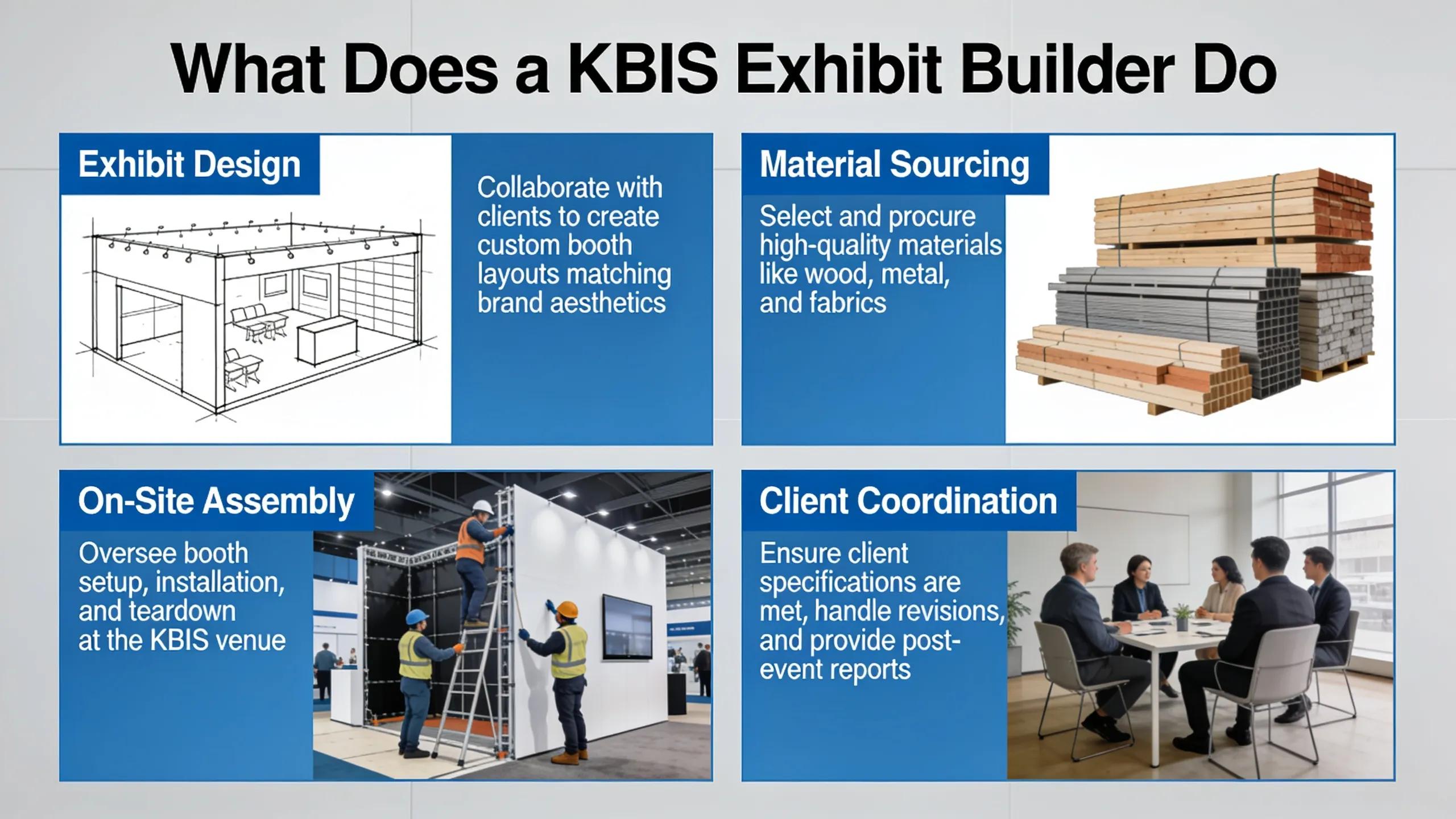
A professional KBIS exhibit builder should do much more than provide a booth rendering.
The right exhibit partner connects creative strategy, design, fabrication, logistics and show-floor execution into one coordinated project.
A full-service KBIS exhibit builder may provide:
- Brand and project discovery
- Custom exhibit design
- Space planning
- 3D renderings
- Engineering
- Production drawings
- Rental exhibits
- Custom fabrication
- Graphics and signage
- Flooring and furniture
- Lighting
- LED walls and AV
- Hanging signs
- Packing and crating
- Shipping and logistics
- Show-service coordination
- Installation and dismantling
- On-site supervision
- Post-show storage
- Refurbishment for future shows
When multiple disconnected vendors handle these responsibilities, important information can be lost between the design, production and installation stages.
A full-service KBIS exhibit company creates clearer accountability and allows every decision to be evaluated in the context of the complete project.
The KBIS Exhibit Booth Design Process
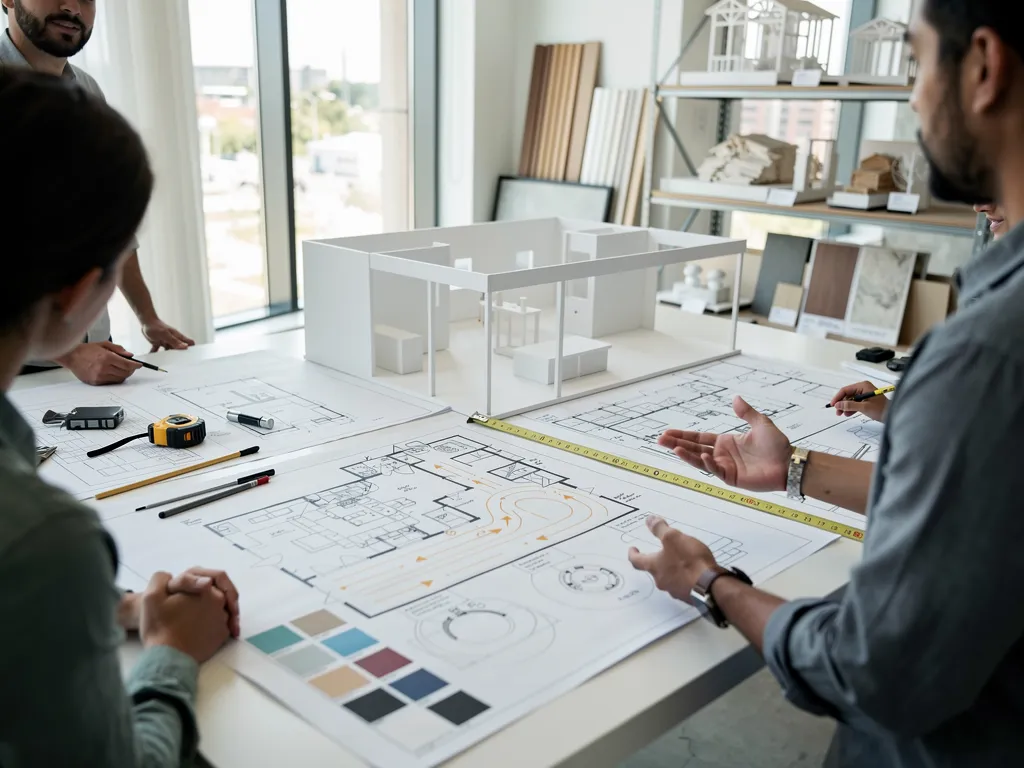
A strong booth begins with strategy—not decoration.
Step 1: Define the Business Goals
Before discussing materials and colors, determine what the booth must accomplish.
Possible goals include:
- Launching a new product
- Generating qualified leads
- Meeting dealers or distributors
- Hosting private meetings
- Demonstrating product technology
- Increasing brand awareness
- Creating social media content
- Strengthening existing relationships
- Entering a new market
- Supporting media appointments
The design should make these activities easier.
Step 2: Understand the Audience
A KBIS exhibit may need to engage:
- Kitchen designers
- Bathroom designers
- Dealers
- Builders
- Remodelers
- Architects
- Retail buyers
- Distributors
- Media
- Technology partners
- International visitors
Different audiences may require different product information, demonstrations and meeting environments.
Step 3: Create the Visitor Journey
A booth should answer three questions immediately:
- Who is the exhibitor?
- What does the company offer?
- Why should the visitor enter?
The layout should guide visitors without making the experience feel forced.
Important considerations include:
- Primary aisle direction
- Open entry points
- Brand visibility
- Product hierarchy
- Demonstration zones
- Meeting areas
- Hospitality
- Storage
- Staff positioning
- Accessible pathways
- Crowd management
Step 4: Select the Right Construction Method
The KBIS exhibit builder should compare rental, custom and hybrid construction based on the goals, schedule and future show program.
Step 5: Engineer the Design
The approved concept must be transformed into a safe, buildable and transportable exhibit.
Engineering should consider:
- Structural loads
- Product weight
- Hanging signs
- Lighting
- Electrical distribution
- Plumbing
- AV mounting
- Storage access
- Installation sequence
- Reusability
Step 6: Fabricate and Test
Production may include:
- Modular preparation
- Custom fabrication
- Graphic production
- Lighting preparation
- Electrical integration
- Product supports
- Finish work
- Inventory
- Pre-show assembly
- Quality-control testing
Step 7: Pack and Ship
Every component should be protected, labeled and documented.
A strong packing plan reduces damage, installation time and missing-item confusion.
Step 8: Install and Inspect
Installation includes more than assembling walls.
The crew may need to coordinate:
- Flooring
- Structure
- Electrical services
- Plumbing
- Graphics
- Lighting
- AV
- Products
- Furniture
- Cleaning
- Final inspection
Complete KBIS Exhibit Booth Cost Breakdown
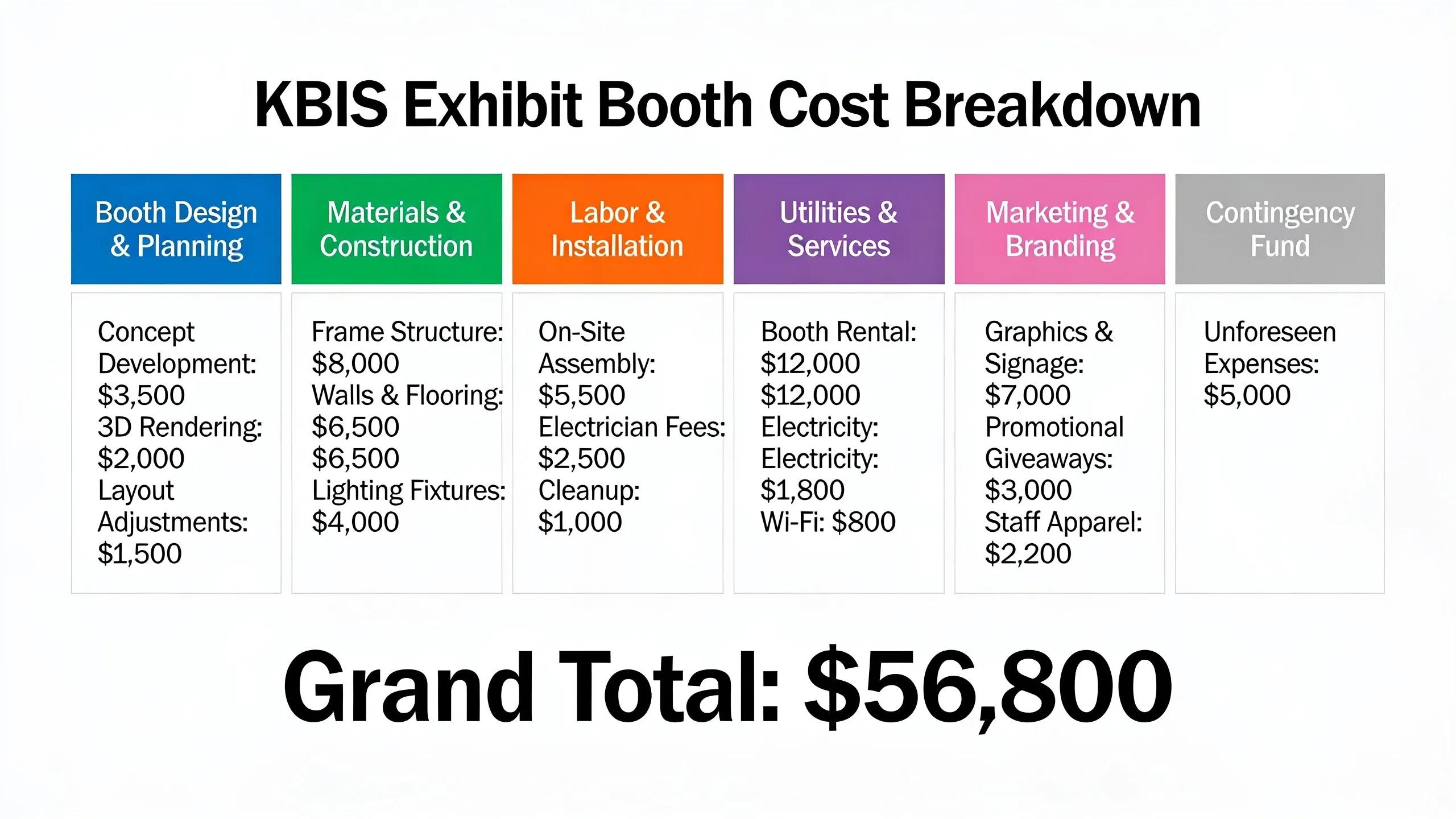
Understanding each expense makes proposals easier to evaluate.
Creative Strategy and Design
The design phase should determine:
- How the exhibit supports business goals
- What visitors see first
- How products are prioritized
- Where demonstrations occur
- How conversations develop
- Where private meetings happen
- How staff use the space
- How storage is concealed
The booth should be visually impressive and commercially functional.
3D Renderings
Renderings allow the client to evaluate the booth before production.
A complete rendering package may show:
- Exterior views
- Interior views
- Product zones
- Floor plans
- Lighting concepts
- Graphic locations
- Furniture
- Materials
- Visitor circulation
Changes are easier during design than during fabrication.
Engineering and Production Drawings
Engineering may be required for:
- Tall structures
- Hanging signs
- Ceilings
- Heavy products
- Platforms
- Custom product supports
- Specialty architecture
Production drawings provide the dimensions, connections and assembly information needed by the fabrication and installation teams.
Rental Structure
A custom-looking rental exhibit may include:
- Modular aluminum frames
- SEG graphics
- Backlit walls
- Lightboxes
- Storage rooms
- Counters
- Shelving
- Meeting spaces
- Product displays
- Architectural portals
Rental systems can provide a polished result while reducing ownership and storage requirements.
Custom Fabrication
Custom fabrication may include:
- Branded architecture
- Specialty millwork
- Curved structures
- Premium finishes
- Custom cabinetry
- Product demonstration stations
- Soundproof rooms
- Integrated storage
- Reinforced displays
- Lighting features
The greater the customization, the more time is generally required for engineering, fabrication, finishing, testing and packing.
Graphics and Signage
Graphics communicate the brand from the aisle.
Common options include:
- SEG fabric graphics
- Backlit graphics
- Printed panels
- Dimensional logos
- Illuminated signs
- Vinyl lettering
- Acrylic signage
- Product labels
- Directional graphics
- Hanging signs
The primary message should remain readable from the aisle and understandable within seconds.
Flooring
Options may include:
- Carpet
- Carpet padding
- Printed vinyl
- Wood-look vinyl
- Laminate
- Raised flooring
- Interlocking tiles
- Mixed flooring zones
Raised flooring can help conceal electrical cables and plumbing connections.
Lighting
Lighting is especially important at KBIS because visitors closely examine materials, colors and finishes.
Lighting options may include:
- Arm lights
- Spotlights
- LED strips
- Backlighting
- Pendant lights
- Display lighting
- Controlled environmental lighting
The lighting should showcase the product accurately without creating glare or distorted colors.
Furniture
Furniture may include:
- Reception stools
- Café tables
- Lounge seating
- Private meeting furniture
- Demonstration counters
- Charging tables
- Hospitality stations
- Consultation seating
Furniture should look intentional and preserve comfortable movement.
LED Walls and Audiovisual Equipment
AV may include:
- Monitors
- LED walls
- Touchscreens
- Tablets
- Product selectors
- Video players
- Sound systems
- Charging stations
- Demonstration cameras
- Live-streaming equipment
Content creation, equipment rental, electrical service and technical support should be budgeted separately when necessary.
Hanging Signs and Rigging
A hanging sign can create long-distance visibility for a large KBIS exhibit booth.
The budget may include:
- Sign design
- Structure
- Graphics
- Lighting
- Shipping
- Rigging labor
- Hanging points
- Motors
- Installation
- Dismantling
Rigging requirements should be planned and submitted early.
Shipping and Freight
Freight costs depend on:
- Distance
- Weight
- Crate count
- Truck size
- Delivery schedule
- Advance-warehouse deadlines
- Return-shipping destination
- Expedited service
A late shipment can affect labor, installation and show-service costs.
Drayage and Material Handling
Drayage is different from shipping.
Shipping transports the exhibit to the advance warehouse or convention center. Drayage moves the materials from receiving to the booth, stores the empty crates during the show and returns them during dismantling.
Material-handling expenses may be affected by:
- Total weight
- Shipment timing
- Multiple shipments
- Special handling
- Uncrated materials
- Overtime arrival
- Minimum charges
Installation and Dismantling
Installation and dismantling costs depend on:
- Booth size
- Crew size
- Setup schedule
- Structural complexity
- Product installation
- Electrical sequencing
- Graphic installation
- AV integration
- Overtime labor
- Move-out schedule
Experienced crews can often prevent expensive mistakes and unnecessary labor hours.
Electrical Service
Electrical requirements may include:
- Booth lighting
- Monitors
- LED walls
- Appliances
- Laptops
- Charging stations
- Demonstration equipment
- Refrigerators
- Storage-room outlets
Every electrical drop should be identified on the floor plan before service is ordered.
Plumbing and Water
Working faucets, sinks, showers, bathtubs and appliances may require:
- Water supply
- Drainage
- Water tanks
- Pumps
- Waterproofing
- Raised flooring
- Shutoff access
- Specialized labor
- Daily inspection
Plumbing requirements should be coordinated before fabrication begins.
Internet
A dedicated internet connection may be needed for:
- Smart-home products
- Cloud demonstrations
- Interactive screens
- Video calls
- Lead retrieval
- Staff devices
- Live streaming
Technology-dependent demonstrations should always have a backup plan.
Cleaning and Maintenance
A premium KBIS exhibit needs to remain polished throughout the event.
Cleaning may include:
- Pre-show cleaning
- Daily vacuuming
- Glass cleaning
- Product wiping
- Trash removal
- Emergency stain removal
- End-of-day touch-ups
On-Site Supervision
The supervisor may coordinate:
- Freight delivery
- Crew scheduling
- Installation
- Electrical service
- Plumbing
- Graphics
- AV
- Product placement
- Client walkthroughs
- Show-day repairs
- Dismantling
- Outbound shipping
For a large KBIS exhibit build, on-site supervision can prevent small problems from becoming expensive delays.
Three Illustrative KBIS Exhibit Booth Budgets
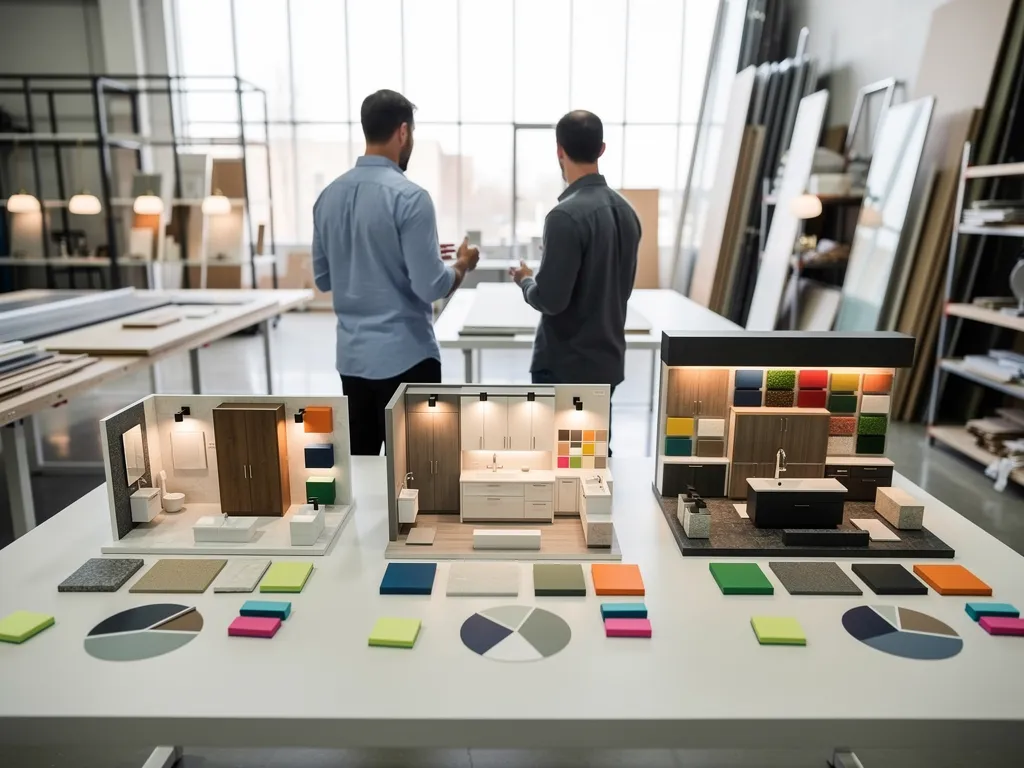
These examples demonstrate how project costs may be distributed. They are educational planning examples—not official quotations.
Example 1: 20×20 KBIS Product-Display Booth
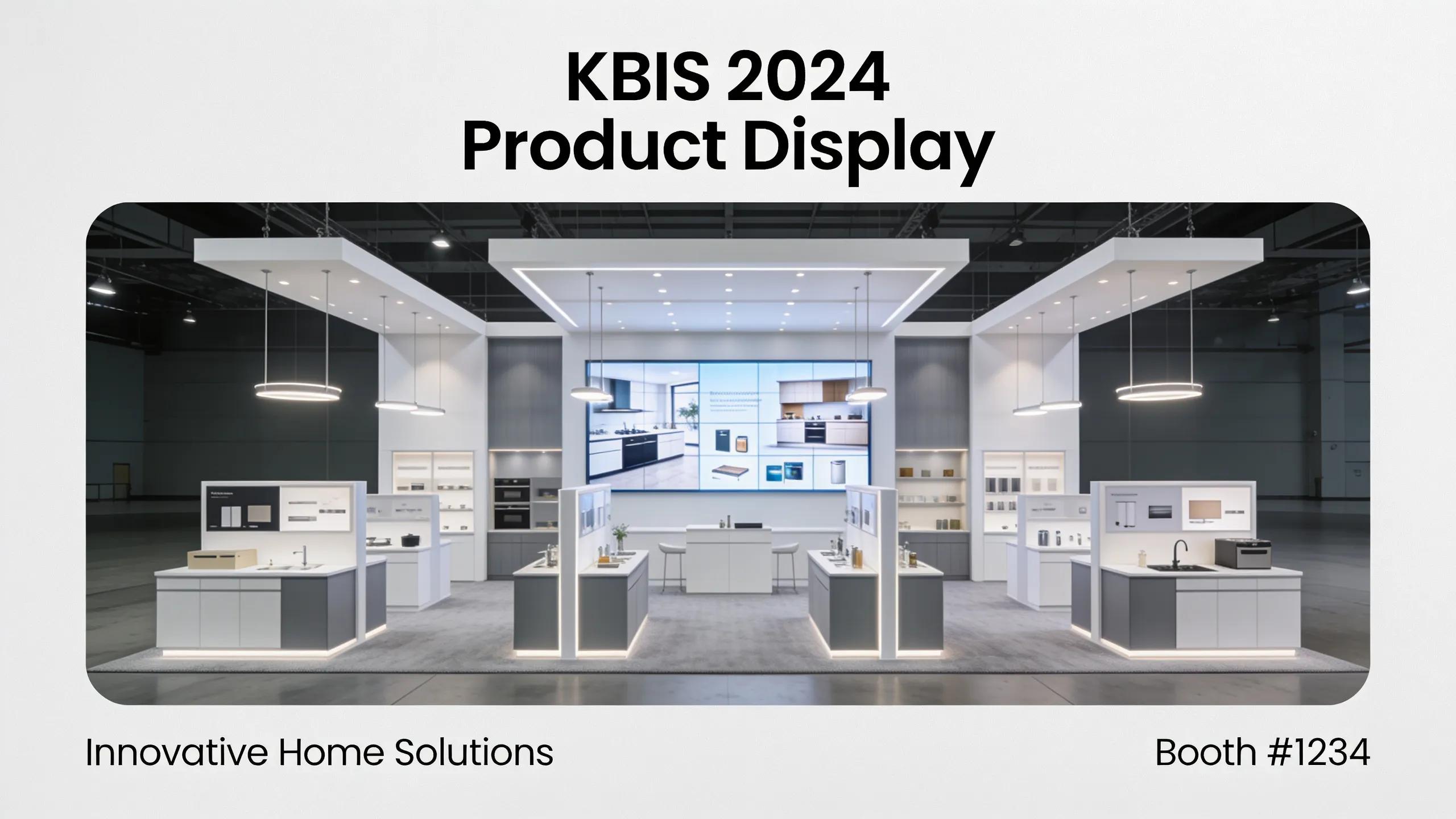
Illustrative project budget: approximately $48,500
This type of KBIS exhibit booth could include:
- Open island layout
- Elevated branding
- Three product displays
- Reception counter
- Small meeting area
- Storage
- Monitor
- Standard lighting
- Branded flooring
A hanging sign, LED wall, working plumbing or custom millwork would increase the budget.
Example 2: 30×50 Custom Cabinetry Exhibit
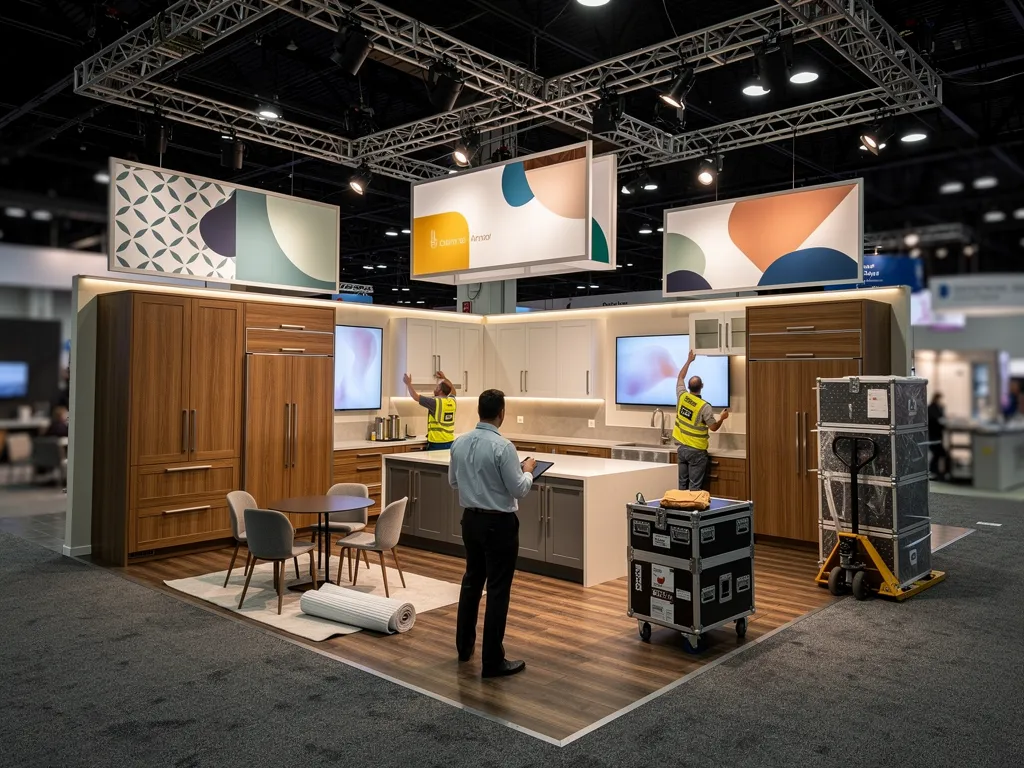
Illustrative project budget: approximately $255,000
This environment could include:
- Several cabinetry collections
- Lifestyle-inspired product zones
- Large exterior branding
- Hospitality area
- Private meeting room
- Product-consultation counters
- Storage
- Monitors
- Premium lighting
- Mixed flooring
Example 3: 50×50 Immersive Kitchen-and-Bath Exhibit
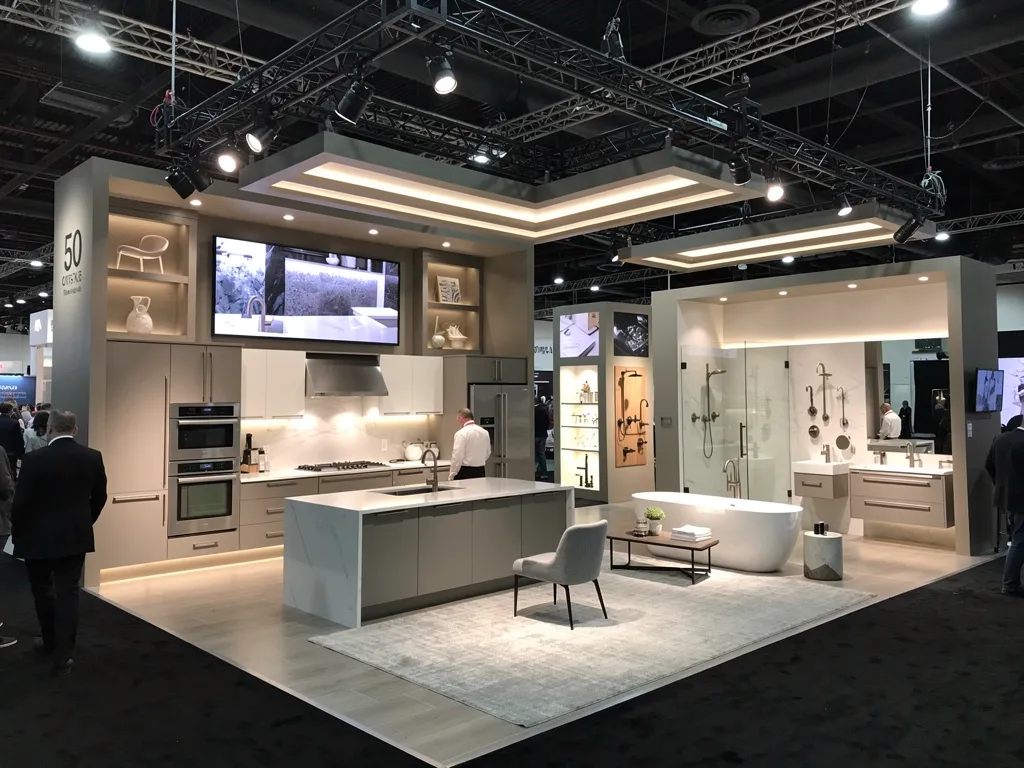
Illustrative project budget: approximately $655,000
This type of KBIS exhibit build could feature:
- Multiple room environments
- Working demonstrations
- Sound-controlled areas
- Hospitality
- Private meetings
- Large-scale signage
- LED displays
- Premium finishes
- Custom lighting
- Complex installation sequencing
Hidden KBIS Exhibit Costs Exhibitors Commonly Miss
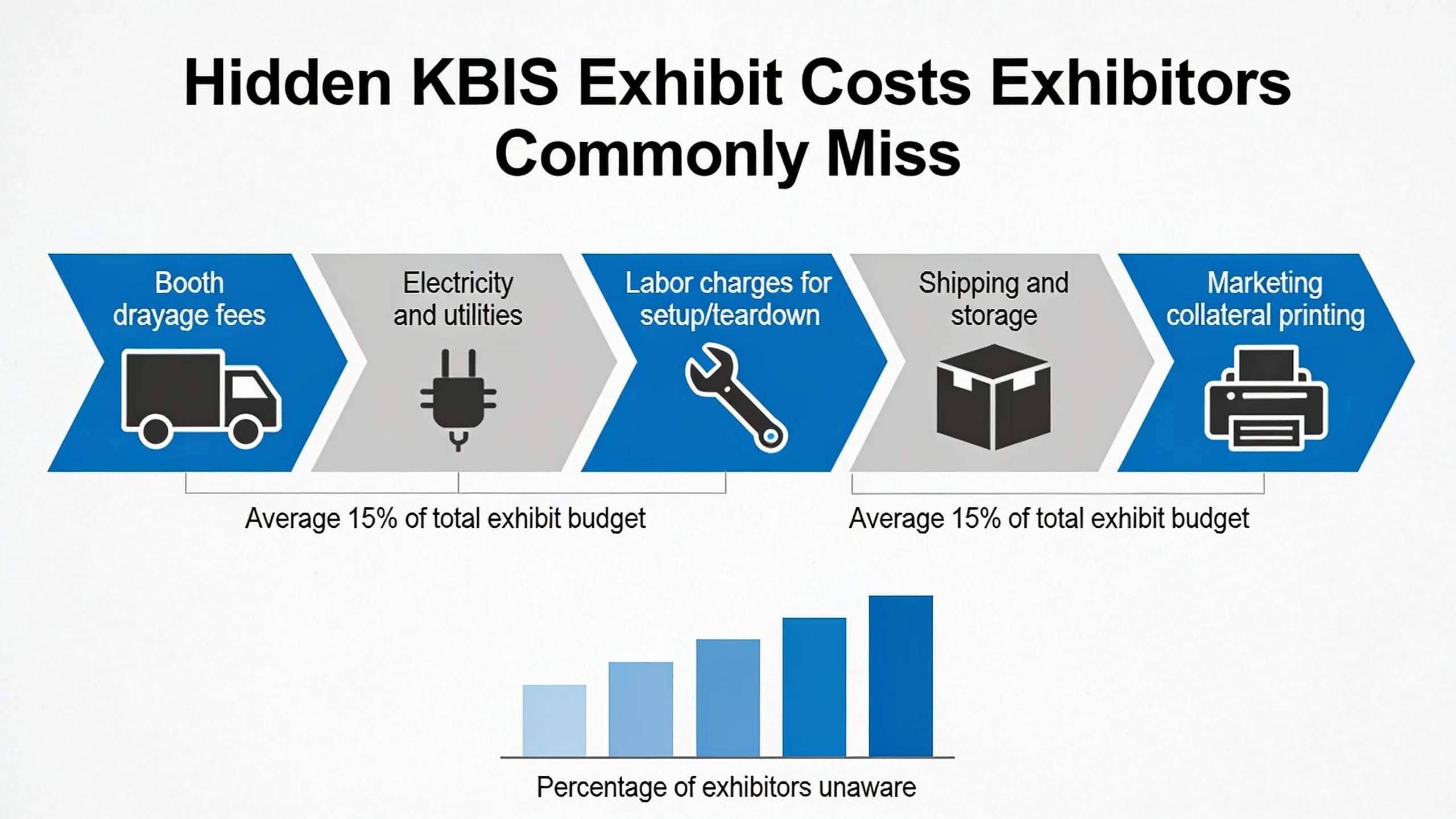
A low initial booth price can become expensive when important services are excluded.
Overtime Labor
Freight delays, revised schedules or late product deliveries may push work into overtime periods.
Ask which labor rates and installation hours were included.
Marshaling-Yard Delays
Carriers may need to check into a marshaling yard before delivery. Waiting time can create additional trucking charges.
Special Handling
Uncrated, mixed, stacked or difficult-to-move freight may receive additional handling charges.
Replacement Graphics
A damaged or incorrectly sized graphic may require immediate reprinting and expedited shipping.
Last-Minute Electrical Changes
Moving a screen, appliance or demonstration counter after electrical installation can create additional labor and service charges.
Internet Upgrades
Connected-product demonstrations may require more bandwidth than originally expected.
Cleaning
Glass, glossy surfaces, appliances and working displays often require daily maintenance.
Security
Prototypes, electronics, samples and personal belongings may require secured storage or dedicated security.
Outbound Shipping
The budget should include:
- Dismantling
- Repacking
- Outbound material handling
- Carrier scheduling
- Return freight
- Warehouse receiving
- Damage inspection
- Storage
Contingency
A contingency of approximately 10%–15% can help cover legitimate changes and unexpected show-floor requirements.
Rental Versus Custom KBIS Exhibit Booths
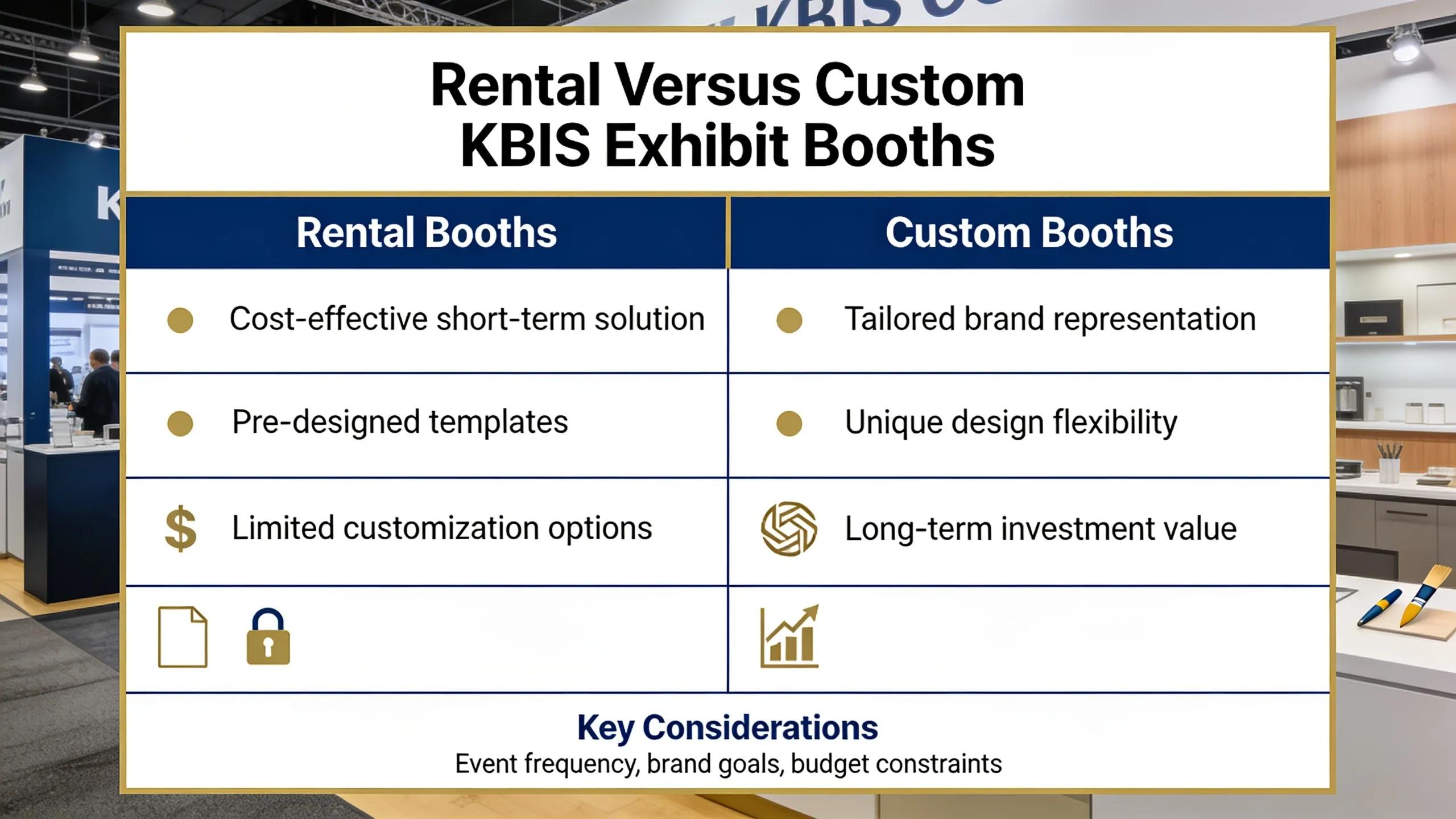
The right choice depends on the company’s goals, budget and future show schedule.
KBIS Booth Rental
A rental exhibit may be appropriate when:
- The company is exhibiting at KBIS for the first time
- The booth is needed for one event
- Storage is not desirable
- The booth size changes between shows
- The design must be produced quickly
- The company wants to prioritize graphics and products
A rental booth can still look highly customized when its structure, graphics, lighting and furniture are designed cohesively.
Custom KBIS Exhibit
A custom exhibit may be appropriate when:
- The company attends multiple major shows
- The exhibit will be reused
- The brand requires proprietary architecture
- Product displays are highly specialized
- The company wants long-term consistency
- The design requires premium custom finishes
Ownership also creates responsibilities for storage, repairs, shipping and refurbishment.
Hybrid KBIS Exhibit
A hybrid exhibit combines reusable rental components with custom branded features.
This approach may offer:
- Greater flexibility
- Reduced production time
- Lower storage requirements
- Easier reconfiguration
- Strong visual impact
- Better control over custom fabrication costs
Designing KBIS Exhibit Booths for Different Product Categories
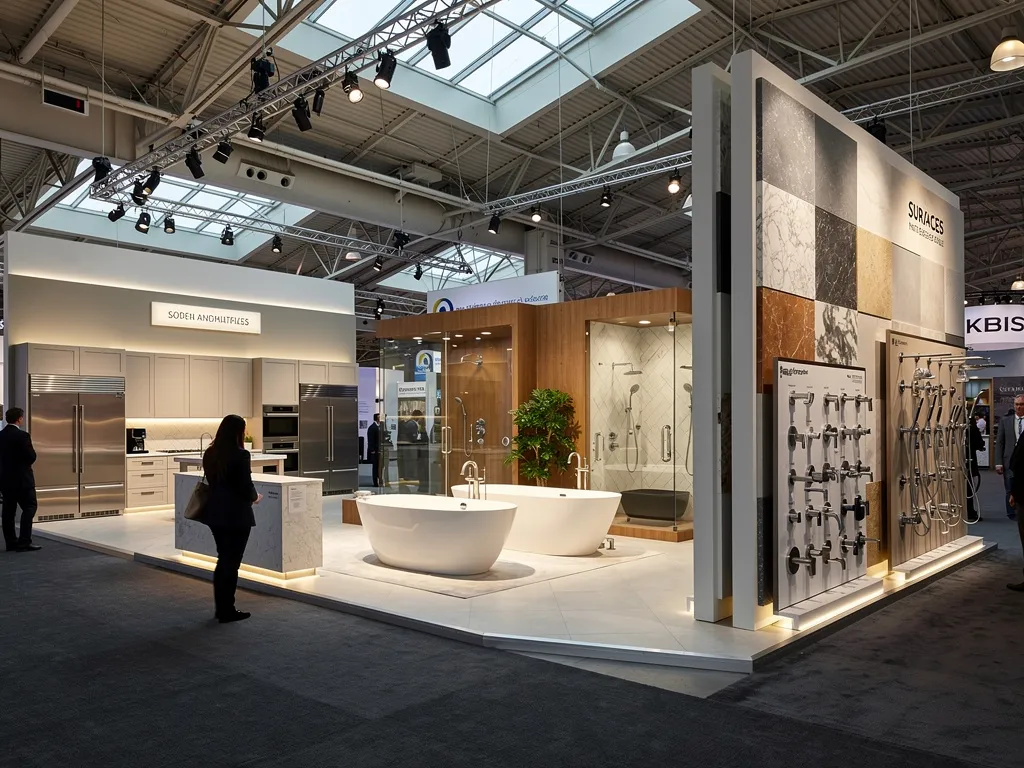
Every product category introduces different requirements.
Cabinetry
Cabinetry exhibits may require:
- Full room environments
- Premium lighting
- Functional doors and drawers
- Concealed storage
- Lifestyle accessories
- Product labeling
- Durable flooring
- Secure installation
Appliances
Appliance booths may require:
- Reinforced flooring
- Electrical capacity
- Ventilation
- Water and drainage
- Live demonstrations
- Heat management
- Safety planning
- Technical support
Plumbing and Fixtures
Plumbing exhibits may include:
- Working faucets
- Sinks
- Showers
- Bathtubs
- Drainage
- Pumps
- Water tanks
- Waterproof floors
- Raised platforms
Surfaces and Countertops
Stone and surface exhibits require planning for:
- Structural support
- Crate weight
- Drayage
- Safe installation
- Edge protection
- Sample organization
- Accurate lighting
- Visitor interaction
Hardware and Accessories
Small products benefit from:
- Organized sample walls
- Focused lighting
- Clear labels
- Touch-friendly displays
- Secure attachments
- Demonstration counters
Lighting
Lighting exhibits may require:
- Dimming controls
- Reduced ambient light
- Electrical distribution
- Color-temperature comparison
- Concealed wiring
- Darkened demonstration areas
Smart-Home Technology
Technology exhibits may depend on:
- Dedicated internet
- Backup connectivity
- Touchscreens
- Tablets
- Demonstration accounts
- Electrical redundancy
- Technical support
Purple Exhibits’ Award-Winning KBIS Experience
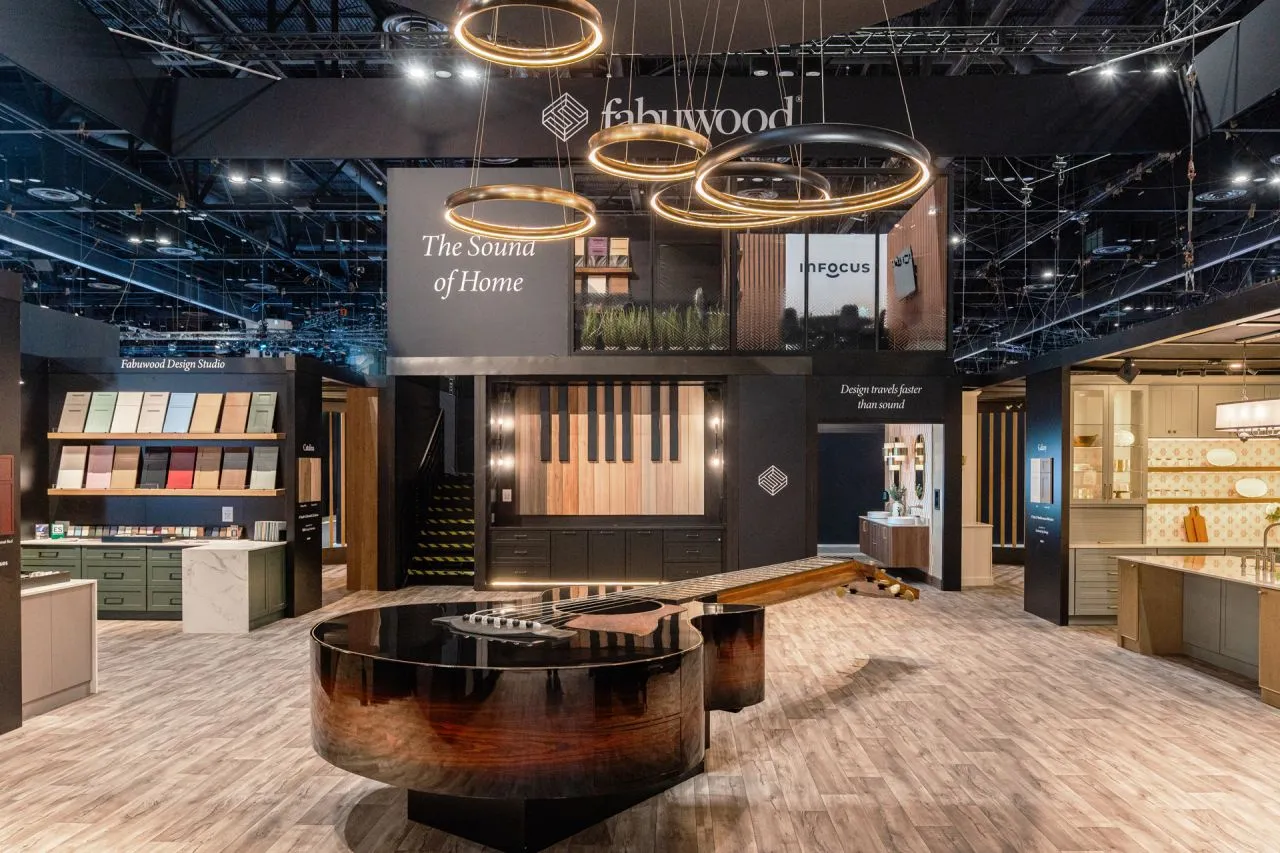
Exhibitors should ask every potential KBIS exhibit builder for proof of actual experience.
At KBIS 2026, Purple Exhibits helped bring Fabuwood’s ambitious vision to life through an immersive exhibit featuring 13 completely designed lifestyle rooms.
The concept demonstrated how Fabuwood cabinetry could move beyond the traditional kitchen and shape living areas, workspaces, entertainment rooms and other spaces throughout the home.
Visitors moved through different environments, each with its own atmosphere, layout and personality. Architecture, products, lighting and sound worked together to create one unified brand story.
Purple Exhibits managed important parts of the project across:
- Exhibit design
- Engineering
- Fabrication
- Graphics
- Lighting
- Logistics
- Installation
- On-site coordination
- Show-floor execution
The completed exhibit was awarded Best Large Booth at KBIS 2026.
The award is confirmed on the official KBIS Best Booth Awards page.
Explore the complete Fabuwood KBIS booth case study to see the finished environment, individual rooms, project photographs and videos.
This award-winning project demonstrates what happens when a strong brand story is supported by strategic design, skilled fabrication and detailed execution.
KBIS Exhibit-Build Timeline
10–12 Months Before KBIS
- Confirm goals
- Reserve booth space
- Establish the budget
- Identify featured products
- Select the KBIS exhibit builder
- Begin creative strategy
8–10 Months Before KBIS
- Develop design concepts
- Plan visitor flow
- Define product zones
- Determine meeting and hospitality needs
- Identify AV and utility requirements
6–8 Months Before KBIS
- Approve the design direction
- Complete revisions
- Confirm product dimensions and weights
- Begin engineering
- Finalize furniture and flooring
- Create the preliminary electrical plan
4–6 Months Before KBIS
- Approve final renderings
- Complete production drawings
- Begin fabrication
- Order specialty materials
- Finalize graphics
- Review show-service deadlines
2–4 Months Before KBIS
- Produce graphics
- Prepare AV content
- Order utilities
- Submit EAC documentation
- Coordinate rigging
- Schedule labor
- Finalize freight
30–60 Days Before KBIS
- Test the exhibit
- Inspect graphics
- Test AV
- Confirm products
- Create the inventory
- Label crates
- Review installation drawings
- Confirm crew schedules
Move-In
- Receive freight
- Install flooring
- Build the structure
- Coordinate electrical and plumbing
- Install graphics
- Set up AV
- Place products
- Arrange furniture
- Clean and inspect
After KBIS
- Dismantle
- Inspect reusable components
- Document damage
- Update inventory
- Arrange outbound freight
- Confirm storage
- Review results
How to Choose the Right KBIS Exhibit Builder
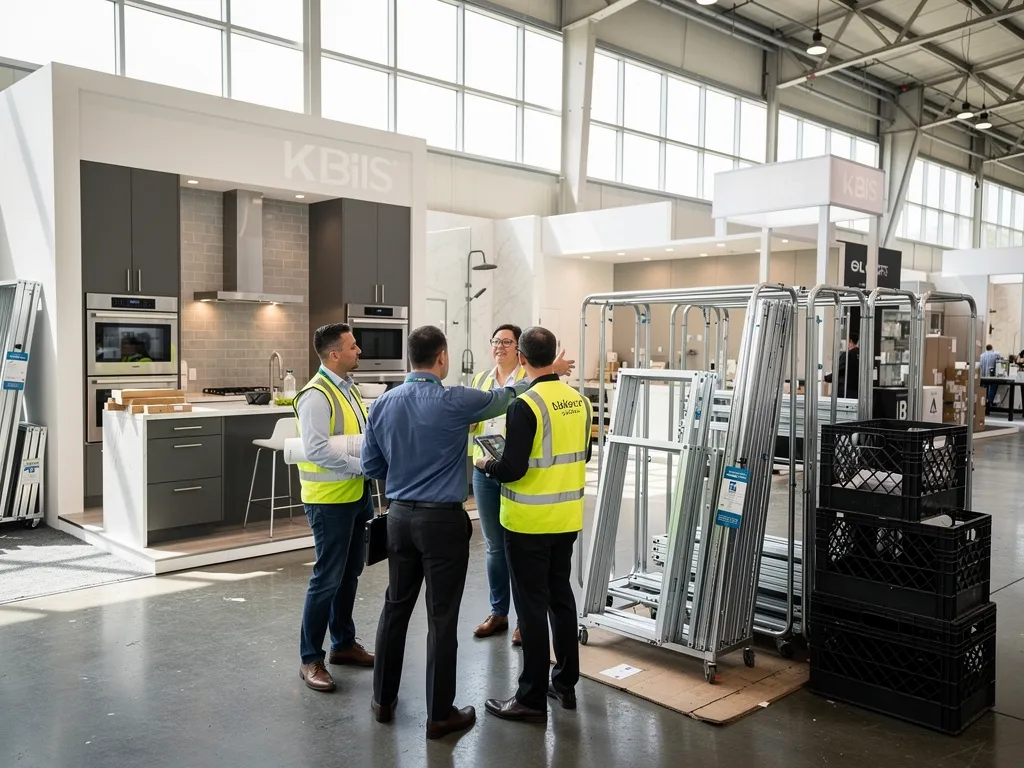
The exhibit builder should be evaluated on more than the rendering and starting price.
Ask:
- Can you show completed KBIS exhibit booths?
- Do you provide design and engineering?
- Do you offer rental, custom and hybrid options?
- Where is fabrication completed?
- Who manages the project?
- Is shipping included?
- Is installation and dismantling included?
- Who coordinates show services?
- Who supervises the installation?
- What is included and excluded?
- Can the booth be reused?
- How are changes handled?
- Where will the booth be stored?
- How are show-floor emergencies handled?
- Can you provide real project photographs and case studies?
The lowest initial number is not always the lowest final cost.
A transparent KBIS exhibit builder should clearly identify inclusions, allowances, estimates and exclusions.
Frequently Asked Questions
How much does a KBIS exhibit booth cost?
A KBIS exhibit booth may range from approximately $8,000 for a streamlined 10×10 rental to hundreds of thousands or more for a large custom environment. Size, design, products, technology, freight, drayage and labor determine the final cost.
How much does a 20×20 KBIS exhibit booth cost?
A 20×20 KBIS exhibit booth may require approximately $25,000–$55,000 for a professional modular rental, $50,000–$100,000 for a premium custom or hybrid exhibit, or $85,000–$160,000 or more for an immersive custom environment.
What is a KBIS exhibit builder?
A KBIS exhibit builder is a company that designs, produces and executes trade show booths for KBIS exhibitors. A full-service builder may manage design, engineering, fabrication, graphics, shipping, installation, dismantling and on-site supervision.
Who builds custom KBIS exhibit booths?
Professional exhibit companies such as Purple Exhibits design and build custom KBIS booths. Exhibitors should select a company with verifiable KBIS experience, complete project capabilities and real examples of finished work.
What should a KBIS exhibit builder provide?
A complete KBIS exhibit builder may provide design, renderings, engineering, rental or custom fabrication, graphics, flooring, furniture, lighting, AV, freight, installation, dismantling and on-site project management.
Does the exhibit price include KBIS booth space?
Usually not. The exhibitor generally contracts the raw floor space separately. Confirm what is included before comparing booth proposals.
Should I rent or purchase my KBIS booth?
Renting may be appropriate for first-time exhibitors, changing booth sizes or one-time projects. Purchasing may make sense when the exhibit will be reused. A hybrid solution combines rental flexibility with custom branding.
When should I hire a KBIS exhibit builder?
Large custom projects should ideally begin 8–12 months before the show. Smaller rental projects may require less time, but early planning provides more options.
What is drayage at KBIS?
Drayage is the material-handling service that moves freight from receiving to the booth, stores empty crates during the event and returns them during dismantling.
Can a KBIS booth include working plumbing?
Yes. Working sinks, faucets, showers, bathtubs and appliances require planning for water, drainage, electricity, waterproofing and safe access.
Who installs KBIS exhibit booths?
Installation may be performed by authorized labor, an approved Exhibitor Appointed Contractor or eligible exhibitor employees under current show rules. Always verify the latest requirements.
How can exhibitors reduce KBIS exhibit costs?
Start early, finalize products before fabrication, order show services before discount deadlines, consolidate freight, reduce unnecessary weight, use modular components strategically and design for reuse.
How much contingency should be included?
Approximately 10%–15% is a reasonable starting point for many projects. Complex exhibits may require a different amount.
Where will KBIS 2027 be held?
KBIS 2027 will be held at the Las Vegas Convention Center in Las Vegas, Nevada.
When is KBIS 2027?
KBIS 2027 is scheduled for February 2–4, 2027.
Can Purple Exhibits manage a complete KBIS exhibit project?
Yes. Purple Exhibits provides custom design, rental exhibits, in-house fabrication, graphics, AV integration, shipping, logistics, installation, dismantling, show coordination, on-site supervision and post-show storage.
Build Your KBIS Exhibit Booth With Purple Exhibits
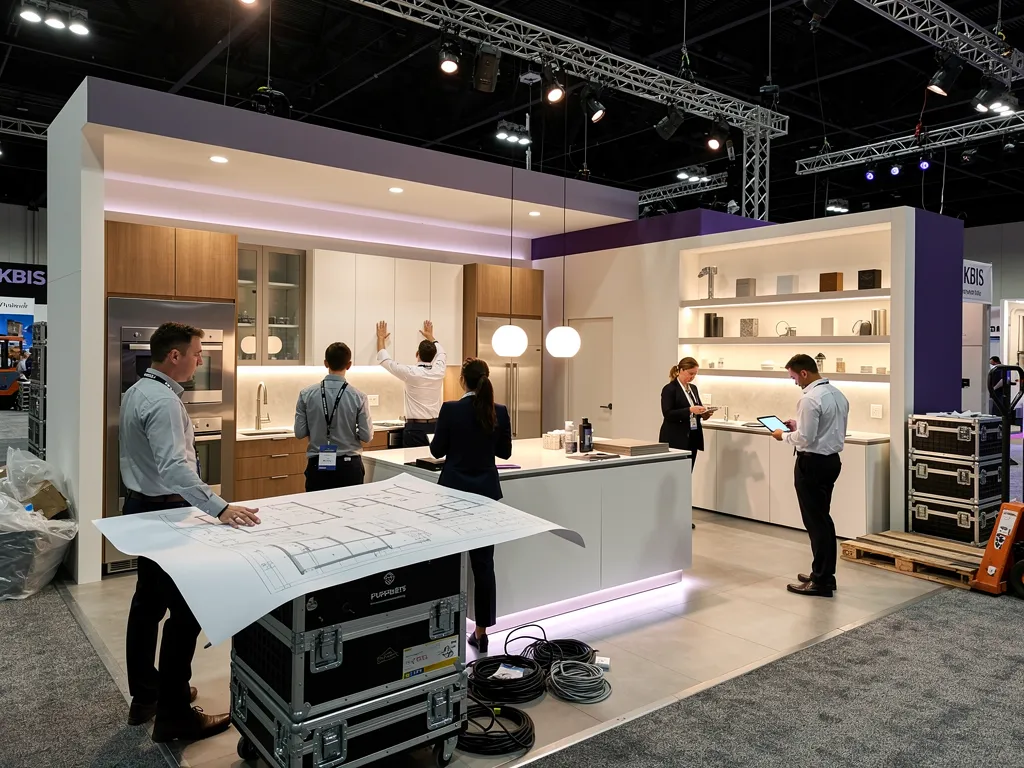
A successful KBIS exhibit booth requires more than a beautiful design.
It requires strategy, engineering, fabrication, product coordination, graphics, technology, shipping, show services and installation to work together as one complete project.
Purple Exhibits delivers full-service KBIS exhibit solutions for brands that want to arrive prepared, look exceptional and focus on the people visiting their booth.
Our capabilities include:
- Custom KBIS exhibit booth design
- Rental and hybrid exhibits
- In-house fabrication
- Graphics and signage
- Flooring, lighting and furniture
- LED walls and AV integration
- Hanging signs
- Freight and logistics
- Installation and dismantling
- On-site project supervision
- Show coordination
- Post-show storage and refurbishment
Explore our complete KBIS exhibit booth design and builder services or review the KBIS 2027 booth-planning checklist.
Whether you are planning a 10×20 rental exhibit, a 20×40 island booth or a massive multi-room experience, Purple Exhibits can manage the process from concept to show floor.
Request your complimentary KBIS exhibit consultation and customized proposal today.
JUST SHOW UP. We’ll handle the rest.