

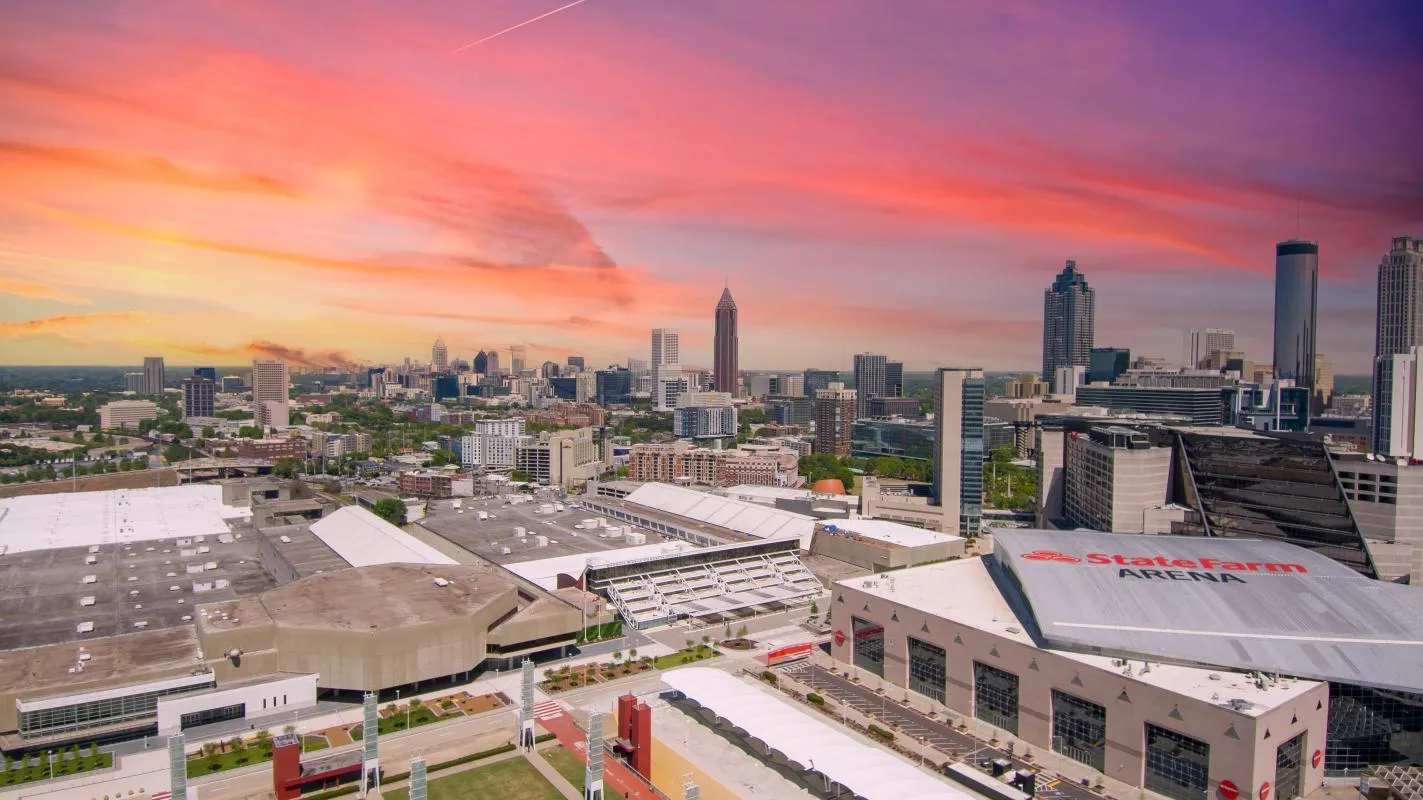
Research and venue information reviewed August 23, 2026
Atlanta is easy to fly into. Exhibiting well here is another matter.
A successful Atlanta trade show exhibit must do several jobs at once. It has to stop the right attendees, explain your value quickly, support product demonstrations, give your team room to sell and arrive show-ready inside a fixed move-in schedule.
That takes more than a beautiful rendering.
It takes a clear objective, the right exhibit format, a complete budget, venue-aware logistics, disciplined production and one accountable team connecting every detail.
If you are exhibiting in Atlanta, start with this rule: the show manual controls the show, but your plan controls whether the show feels organized or chaotic.
This guide explains how to plan the booth, choose an accountable exhibit partner, manage freight and show services, protect your budget and prepare your team to turn attention into real conversations.
Need the booth itself? Explore Purple Exhibits’ Atlanta trade show booth design, build and rental services, or request an Atlanta exhibit consultation.
In This Atlanta Exhibitor Guide
The quick planning answer
Atlanta venue planning
Who handles what
The Purple No-Surprises Five-Answer Test
The complete exhibit budget
Freight, drayage and move-in
The planning timeline
Printable control checklist
Atlanta exhibitor FAQs
Copy-and-paste project brief
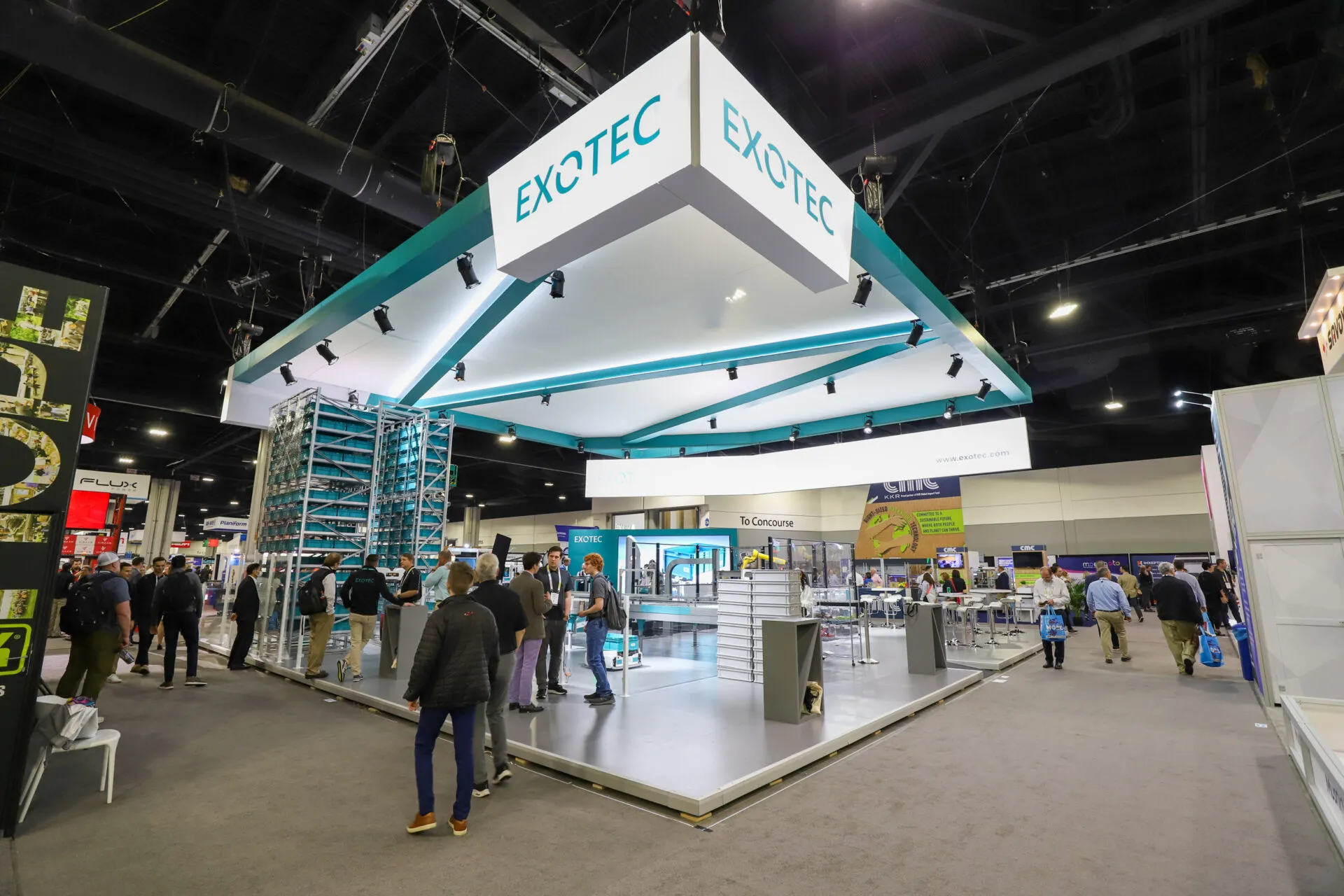
The Quick Answer: What Should You Plan Before Exhibiting in Atlanta?
Before approving an Atlanta trade show booth, confirm these ten items:
The business result the exhibit must produce
Your booth number, footprint, orientation and neighboring spaces
The current exhibitor manual and event-specific display rules
Whether a custom, rental or hybrid exhibit best fits the program
The complete budget—including costs billed outside the booth proposal
Electrical, internet, rigging, plumbing, compressed air and AV requirements
Advance-warehouse or direct-to-show shipping instructions
Installation, supervision, dismantle and return-freight responsibilities
Your staffing, demonstration, hospitality and lead-capture plan
One owner for every deadline, order and approval
Miss one of those items and the issue usually appears when it is most expensive to fix.
Handle all ten early and your team can arrive focused on prospects—not power drops, missing crates or graphics that still need a decision.

Why Exhibiting in Atlanta Requires Real Planning
Atlanta’s event venues serve everything from large industrial exhibitions to specialized wholesale markets and association events.
The scale alone can change how a booth should be designed and delivered. The Georgia World Congress Center Authority says the GWCC provides more than four million square feet of flexible event space, including 1.5 million square feet of contiguous exhibit space.
On a floor that large, visibility cannot be an afterthought. Freight cannot be treated like an ordinary business delivery. A five-minute walk can become a long delay when the tool, adapter or decision-maker you need is somewhere else on the campus.
Atlanta also does not have one universal set of exhibiting rules. The event organizer, general service contractor, venue and appointed providers may each control different services. Requirements can change by show—even inside the same building.
That is why a capable exhibit team should begin with the current show documents, not assumptions from last year or another event.
Start With the Outcome—Not the Structure
Walls are not a strategy. Before design begins, define the attendee you need to meet, the message that person should understand within three seconds, the action you want them to take and the measurable result the show must produce. That result might be qualified meetings, distributor conversations, live demonstrations, a product launch or a defined pipeline target.
Pretty is good. Purpose is better. The best booths deliver both.
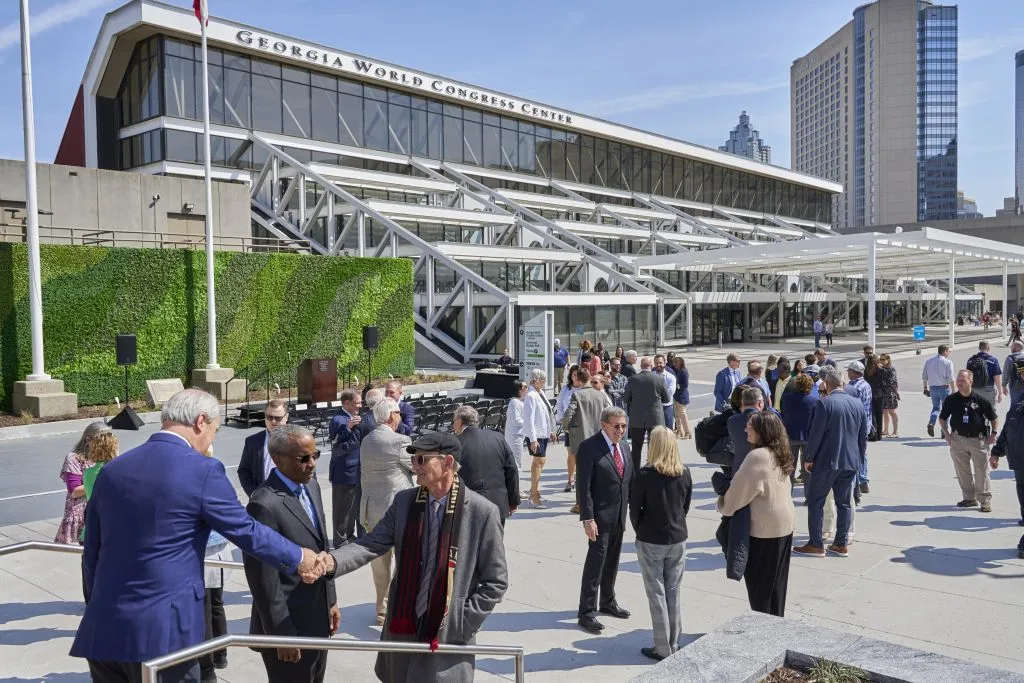
Custom, Rental or Hybrid: Choose the Right Atlanta Trade Show Exhibit
There is no universally “best” booth format. The right option depends on the show, the calendar, the brand, the required features and what happens after Atlanta.
A modern custom trade show booth rental can combine adaptable structure with branded SEG graphics, architectural lighting, product displays, dimensional signage and integrated AV. If the exhibit will travel after Atlanta, plan how it will scale and reconfigure before approving the first floor plan.
Plan for the Atlanta Venue Before the Design Is Locked
Atlanta has several major event venues, but a venue list alone will not plan the booth. What matters is how the building, event and appointed providers affect the exhibit design, service orders and delivery plan.
Venue information reviewed August 23, 2026. Always verify the current event exhibitor manual before ordering services or shipping freight.
Do not copy service orders from a previous Atlanta show and assume they still apply. Download the current manual. Confirm the current deadline. Confirm who is authorized to perform the work. Confirm it in writing.
That is not paperwork for paperwork’s sake. It is how you keep a small assumption from becoming a large on-site invoice.

Who Handles What at an Atlanta Trade Show?
The exact answer comes from the current show manual. This responsibility map gives you the right questions to ask before the order deadlines arrive.
An Exhibitor-Appointed Contractor, commonly called an EAC, is a company hired by the exhibitor instead of the show’s general contractor for permitted work. EAC use may require advance notice, insurance documents, credentials and show approval. “Right-to-work” does not remove event rules or venue-exclusive services.
The Purple No-Surprises Five-Answer Test
An Atlanta exhibit workstream is not fully planned until five answers are documented:
Owner: Who is accountable for it?
Provider: Who is authorized to perform it?
Cost status: Is it included, estimated or billed directly?
Deadline: When must it be approved or ordered?
Confirmation: Where is the written approval, order number or tracking record?
No partial credit. A mental note is not a plan.
Green: All five answers are documented.
Yellow: One answer is missing.
Red: Nobody can identify the owner, authorized provider or deadline in writing.
A verbal “someone is handling it” is not confirmation.
This is a planning test, not venue approval. When the current exhibitor manual says otherwise, the manual wins.
Have a yellow or red row? Send Purple Exhibits the current exhibitor manual, floor plan and booth requirements for an Atlanta exhibit scope review. We will help identify the missing owner, order or decision before it becomes an on-site problem.
Build the Atlanta Exhibit Budget in Two Columns
One of the most common trade show budgeting mistakes is treating the booth-builder proposal as the total cost of exhibiting.
It is not always the total.
Create two columns before approving the project:
Column 1: Exhibit Design and Production
Creative strategy and 3D design
Engineering and production drawings
Custom fabrication or rental structure
Exhibit graphics and signage
Flooring and furniture
Lighting and AV hardware
Product displays and demonstration fixtures
Pre-build, testing and quality control
Packing, crates and inventory preparation
Project management
Column 2: Show, Venue and Field Expenses
Booth-space fee
Freight and transportation
Material handling or drayage
Installation and dismantle labor
Electrical labor and power consumption
Internet and telecommunications
Rigging and hanging-sign services
Plumbing, water, drain, gas or compressed air
Cleaning and waste removal
Catering and sampling permissions
Security
Empty-container storage, if it is not included in material handling
Return freight and post-show storage
Travel, hotel and staff expenses
Taxes, service charges and contingency
Ask every company bidding on your Atlanta exhibit for a written scope showing what is included, what is estimated, what will be billed by someone else and who is responsible for ordering it.
The cheapest first number is not always the lowest final number.
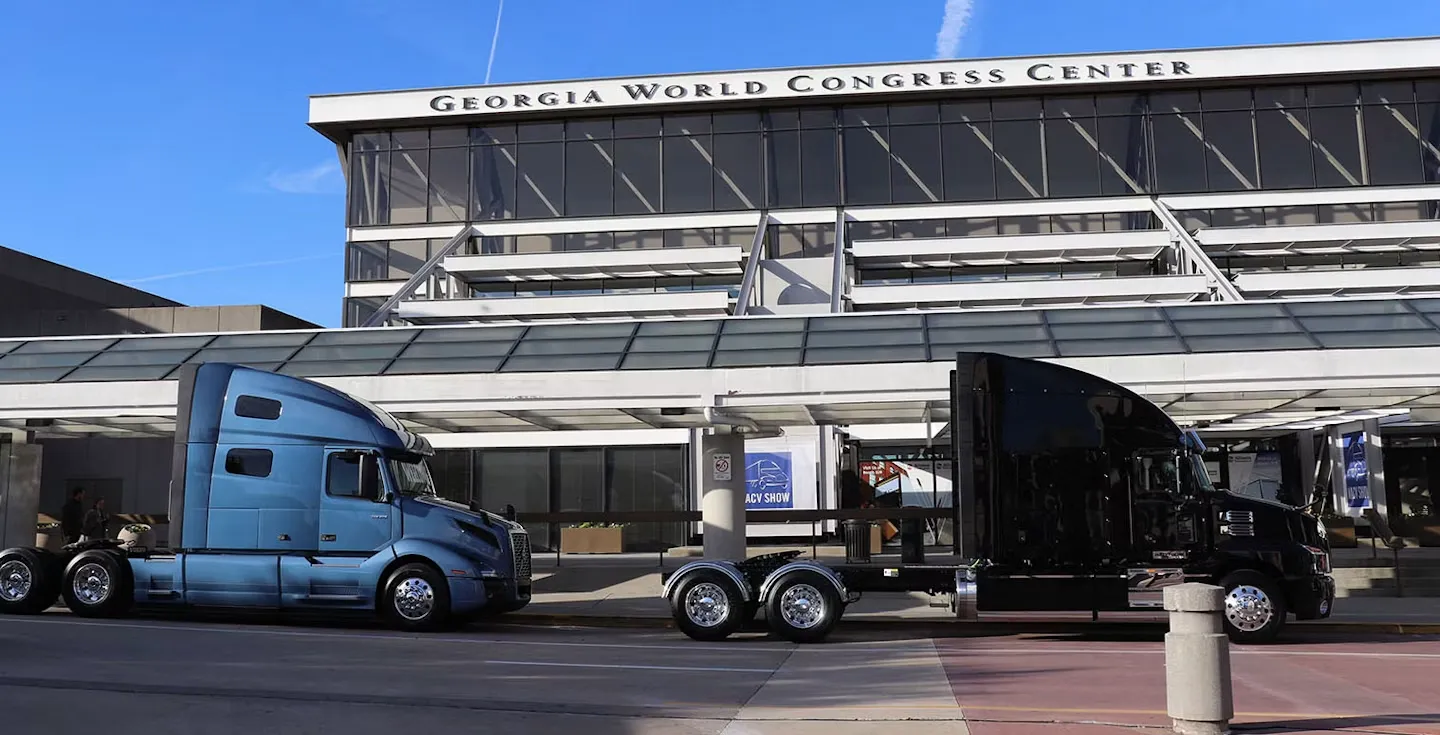
Freight, Drayage and Move-In: Three Different Jobs
These terms are often mixed together, but they are not the same.
Freight is the transportation of your exhibit materials to the advance warehouse or show site.
Material handling or drayage generally covers receiving the shipment, moving it from the dock to the booth, storing empty containers during the event, returning them after the show and moving outbound freight back toward the loading area. The exact service and billing rules come from the event manual.
Installation and dismantle is the labor that assembles the booth before the event and takes it apart afterward.
Your show may allow delivery to an advance warehouse, direct delivery during a targeted move-in window or both. Each option has different dates, labels, handling procedures and risks.
Before anything ships, confirm:
The correct destination, receiving window and required labels
Booth number, exhibitor name, piece count, dimensions and certified weights
Carrier check-in, marshaling and driver-document requirements
Who tracks delivery and confirms receipt
Empty-container labels and storage procedures
The outbound carrier, pickup window, bill of lading and backup plan
A beautiful rendering cannot save an exhibit that misses move-in.
Copy-and-Use Freight Label Fields
Use the event manual’s exact address, dates and label format. These are the fields your shipping plan should account for:
Critical Utility Worksheet
Complete one row for every device or demonstration. Do not rely on memory when service orders are placed.
Purple Exhibits can coordinate trade show booth shipping and logistics alongside the build so the crates, paperwork, installation plan and return shipment are connected before the truck moves.
Design the Booth for the Floor—Not Just the Rendering
A rendering has no crowd, obstructed sightline or competitor twenty feet away. The real show floor does. Build the design around four operating tests:
Three-second clarity: From the aisle, attendees should understand who you are, what category you serve and why stopping is worthwhile.
Distance hierarchy: Use the far view for brand or category, the middle view for the main value proposition or demonstration, and the close view for proof and the next step.
Technical readiness: Give every product, monitor and cable a defined location, power path and service requirement. Plan hard-wired internet, ventilation, drainage, compressed air or sound control wherever the demonstration requires it.
Working space: Protect storage and staff positions so coats, cases, literature, replacement products and trash do not migrate behind the reception counter.
Use the aisle edge to create curiosity, then give qualified visitors a natural route to the product, demonstration or conversation. The architecture works only when the staff understands the intended flow.
The Atlanta Trade Show Planning Timeline
Start earlier for large custom exhibits, complex AV, machinery, hanging structures, multi-level designs or projects requiring extensive approvals.
Rush projects are sometimes possible. Rush should be a managed exception, not the strategy.
Choose One Accountable Exhibit Partner
“Full-service” matters only when the scope and ownership are clear. Before awarding the work, confirm who will:
Review the current show manual and structural requirements
Design, engineer, produce and test the exhibit
Order utilities, internet, rigging and other show services
Own freight labels, tracking and outbound paperwork
Supervise installation, dismantle and the final punch list
Remain reachable during move-in and show days
The operating plan should explain the entire journey—from first brief through outbound shipment—in plain language. No fog. No mysterious handoffs. No “we thought they were handling it.”
One Atlanta Exhibit Partner. Every Workstream Connected.
The booth is one project, even when the work touches ten vendors.
Purple Exhibits can manage the complete program for companies exhibiting in Atlanta:
Exhibit strategy and custom booth design
Custom fabrication
Rental and hybrid exhibit systems
Engineering and production drawings
Exhibit graphics and dimensional signage
Product displays and merchandising
Flooring, furniture and architectural lighting
Monitors, LED walls and audiovisual integration
Interactive displays and demonstration planning
Hanging signs and rigging coordination
Electrical, internet and utility coordination
Show-service forms and deadline management
Shipping, freight and material-handling planning
Professional installation and dismantle
On-site supervision and technical support
Dismantle, return shipping and storage planning
You should not have to manage separate booth, AV, freight and field vendors yourself. One Purple project lead can coordinate the workstreams and venue-appointed providers.
Skip the chaos. Show up ready.
Printable Atlanta Exhibitor Control Checklist
Use the checklist below on the show floor, and keep a printable cost and deadline worksheet with the project file.
Before move-in, write down the control details that disappear fastest when the hall gets busy:
Before the Hall Opens Each Morning
Before the hall opens each morning, verify:
Every light, monitor, media file and interactive element works
Internet-dependent demonstrations connect correctly
Products are clean, powered, secure and fully stocked
Graphics and counters are clean and aligned
Literature and promotional items are replenished
Lead-capture devices are charged and tested
Staff know the day’s meetings, roles and qualification questions
Bags, coats, cartons and food are out of sight
The team knows who to contact for booth, AV or venue issues
Then step into the aisle and look at the booth as an attendee sees it.
Can you identify the company? Understand the offer? See where to enter? Tell what to do next?
If not, fix the communication before adding more decoration.
Do Not Let the Leads Leave Atlanta Without a Plan
The booth creates the opportunity. Follow-up creates the return. Before the first badge is scanned, define what counts as qualified, what the staff must capture, how leads are tagged, who receives each category, when follow-up begins and how the team will measure pipeline and revenue after the show.
Frequently Asked Questions About Exhibiting in Atlanta
How far in advance should I start planning an Atlanta exhibit?
Most professionally designed exhibits should begin four to six months before move-in, with more time for large structures, complex AV, equipment, rigging or multiple approvals. Use the Atlanta planning timeline to assign the work.
What costs belong in an Atlanta exhibit budget?
Include both the exhibit-company scope and show- or venue-billed expenses. A plan that omits freight, drayage, power, internet, labor, rigging or return shipping is not a complete exhibiting budget.
How should I choose a custom, rental or hybrid exhibit for Atlanta?
A custom booth may fit a distinctive long-term program, a rental may fit one major show or changing footprints, and a hybrid can combine reusable brand elements with flexible architecture. Compare the options in the custom, rental or hybrid table.
What is drayage at an Atlanta trade show?
Drayage, often called material handling, generally covers moving exhibit freight between receiving and the booth, handling empty containers and returning outbound materials. The current event manual defines the exact service, rates, weight rules and deadlines.
Should I ship to the advance warehouse or directly to the Atlanta venue?
It depends on the event, shipment, schedule and cost structure. Compare the current manual’s dates, rates, labels and instructions with your carrier and exhibit partner before choosing advance-warehouse or direct-to-show delivery.
Does Atlanta require union labor for exhibit installation?
Georgia is a right-to-work state, but that does not mean an exhibitor may automatically perform every task or bypass venue-exclusive services. Labor rules can vary by venue, event and type of work. Review the current exhibitor manual and confirm which tasks exhibitors, the general service contractor and an approved EAC may perform for your specific show.
Can I use an Exhibitor-Appointed Contractor at the Georgia World Congress Center?
That decision is controlled by the specific event and its exhibitor rules. The official GWCC planning guide explains that show management may allow exhibitors to self-install certain displays, use the general service contractor or appoint an approved EAC. Confirm the current manual, notice deadline, insurance requirements and credentials before assigning work.
Can Purple Exhibits manage booths at the Georgia World Congress Center and other Atlanta venues?
Yes. Purple Exhibits can support projects at the Georgia World Congress Center and other Atlanta-area venues with custom exhibits, rentals, graphics, logistics coordination, installation, dismantle and exhibit management. Each proposal and project plan is built around the rules, providers and deadlines of the specific show.
What information should I send when requesting an Atlanta booth proposal?
Send the show name and dates, venue, booth number and size, floor plan, budget range, brand guidelines, goals, product dimensions, demonstration requirements, AV needs, storage needs, preferred meeting capacity and any existing exhibit assets. Better input produces a more accurate design, scope and budget. The copy-and-paste project brief below organizes those details in one place.
Copy-and-Paste Atlanta Exhibit Project Brief
Use this brief when requesting a proposal from Purple Exhibits or comparing Atlanta exhibit partners. It gives every bidder the same starting information and makes missing assumptions easier to spot before design begins.
Attach the current exhibitor manual, floor plan, brand standards and product or demonstration specifications. Ask each exhibit company to label every major line as included, estimated or billed directly by another provider, and to identify the owner, authorized provider and deadline for each critical workstream.
Ready to Exhibit in Atlanta Without the Last-Minute Chaos?
Tell us the show, the space, the audience and what the booth must accomplish.
Purple Exhibits will connect the strategy, design, fabrication, graphics, AV, logistics, installation and dismantle into one organized Atlanta exhibit program.
See real Purple Exhibits work, then bring us the show, the space and the result you need.
Explore Purple Exhibits’ Atlanta trade show booth services or request a custom Atlanta booth proposal.
Bring the goals. Bring the team. Bring the product.
We’ll handle the booth. You just show up ready. ð