

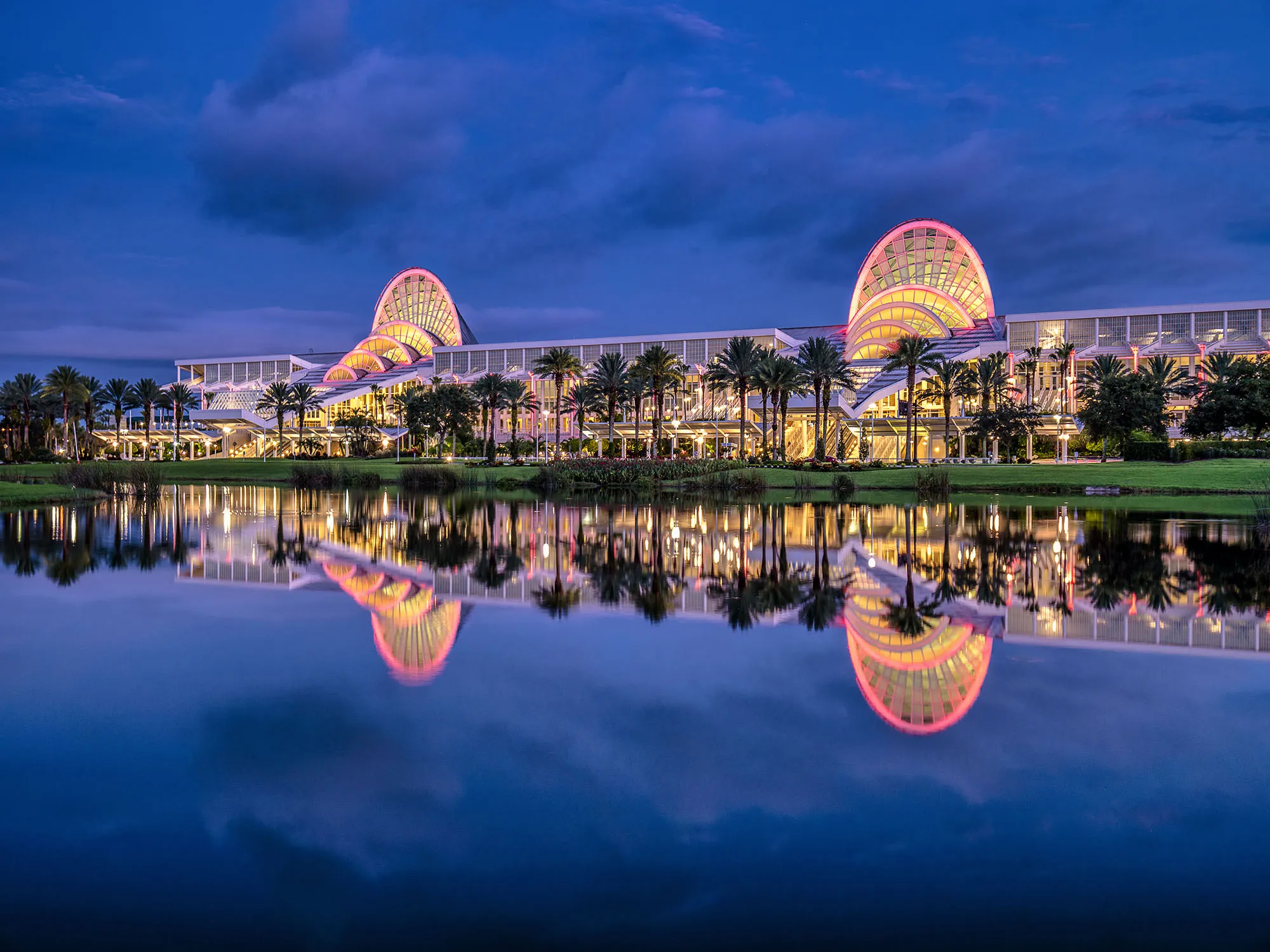
This Orlando exhibit builder quote checklist helps exhibitors compare custom trade show booth proposals for the Orange County Convention Center and other Orlando venues. It does not rank builders or assume the lowest proposal is the best value. It makes costs, responsibilities, assumptions, exclusions and deadlines visible before you sign.
An Orlando exhibit builder quote should identify design, fabrication, graphics, AV, freight, drayage, installation, dismantling, OCCC-controlled services, third-party costs and exclusions—not merely a total.
Two proposals can describe the same booth size, the same trade show in Orlando, Florida, and the same creative direction—and still show dramatically different totals.
That does not automatically mean one exhibit company is expensive and the other is a bargain. It may mean they are pricing two different projects.
One quote may cover the structure and graphics. Another may also include flooring, furniture, AV, crating, freight, installation, dismantling and on-site supervision. A third may call itself “turnkey” while leaving material handling, electrical service, rigging, internet, cleaning and outbound shipping outside the number.
Selecting an OCCC booth builder involves two decisions: who can design and execute the exhibit, and what the proposal actually includes. Purple’s broader Orlando exhibit builder page covers its design-and-build capabilities; this guide covers proposal scope, responsibilities and risk.
Do not begin with one question—How much?
Begin with a better one:
What work, costs and coordination does this number actually cover?
At the Orange County Convention Center, the exhibitor, show organizer, official general service contractor, venue service providers and exhibitor-appointed contractor may each control different parts of the project. A useful proposal makes those boundaries visible before the booth reaches the show floor.
Pretty is good.
Clear is better.
Show-ready requires both.
On this page: 30-second quote test · Worked cost example · Scope matrix · Free quote checker · Deadline map · OCCC services · Freight and drayage · EAC requirements · Red flags · Comparison worksheet · Decision record · FAQs
Orlando Exhibit Builder Quote Checklist: The Short Answer
A complete Orlando trade show booth proposal should identify:
- The approved design and the revision scope
- Engineering, production drawings and any required review
- Custom, rental and client-owned components
- Graphics, signage, flooring, furniture and lighting
- Product displays, equipment integration and structural support
- AV hardware, content responsibility, power and internet requirements
- Pre-show staging, fit checks and quality control
- Packing, crating and labeling
- Inbound and outbound freight
- Material handling or drayage
- Installation, dismantling and on-site supervision
- Electrical, rigging, plumbing, compressed air and other show services
- EAC documentation, insurance and credentials when applicable
- Storage, repairs, refurbishment and future reuse
- Every allowance, exclusion, optional item and third-party charge
Each line should be classified as one of the following:
- Included
- Allowance
- Estimate
- Pass-through
- Direct bill
- Optional
- Excluded
- Unknown
If an item can affect the budget, schedule or opening-day result, its owner should be visible.
Already have a brief or competing proposals? Start an Orlando exhibit proposal conversation and have the show name, booth size, deadline and available scope documents ready for the discussion.
**Talk Through My Orlando Proposal**
“Turnkey” Is Not a Scope of Work
Turnkey is a useful promise when it is supported by details. By itself, it is only a word.
Ask every company using the term to define it in writing:
- Does turnkey include creative design and a stated number of revisions?
- Does it include rental structure or custom fabrication?
- Are graphics, flooring, furniture and lighting included?
- Is AV hardware included? What about content, internet and technicians?
- Does the price include inbound and outbound shipping?
- Is material handling included, estimated or billed directly?
- Are installation and dismantling labor based on stated crew hours and rates?
- Is a dedicated supervisor included during move-in?
- Who prepares and submits show-service orders?
- Who pays the venue and official contractors?
- What happens to the booth after dismantling?
A proposal should not force your marketing team to discover the meaning of “turnkey” during move-in.
Start With a Complete Orlando Booth Brief
An accurate quote begins with accurate information. Before requesting a proposal for a custom exhibit, give every competing exhibit company the same Orlando project brief.
Include:
- Show name and official dates
- Venue, building and assigned hall
- Booth number, dimensions and configuration
- Current exhibitor manual and service kit
- Target audience and primary business objective
- Required visitor actions, demonstrations and meeting needs
- Products or equipment, including dimensions, weights and utility requirements
- Brand standards, approved messaging and artwork assets
- Storage, hospitality, accessibility and staff requirements
- AV equipment, content, connectivity and presentation needs
- Existing exhibit assets that may be reused
- Future shows or booth sizes the system should support
- Working budget range
- Internal decision-makers and approval dates
- Known shipping origin and post-show destination
Without that information, a proposal may look precise while being built on assumptions.
Use the same brief as the front page of your request for proposal. Require each bidder to return the same scope schedule, deadline register, assumptions, exclusions and commercial terms. That turns a creative presentation into a comparable RFP response—and makes the selected response easier to convert into a statement of work.
The Orlando Exhibit Builder Timeline: Map Every OCCC Deadline Before You Sign
“Start early” is sensible advice, but it is not a project schedule. Build the schedule from the current exhibitor manual, service kit and move-in plan. Give every deadline an owner, an input and proof of completion.
The date in the current event documents—not a generic web article—controls. For example, Smart City Networks’ current OCCC page identifies a 30-day incentive deadline for ordering its services. That is one provider’s current pricing threshold, not a universal OCCC deadline. Likewise, IAAPA Expo 2026 currently requires nonofficial EACs to register with both IAAPA and GES; it separately lists October 13 as the IAAPA registration deadline, with escalating late fees after October 13 and October 29. Those dates apply to that event and year; they demonstrate why “we know the venue” never replaces reading the current show rules.
Purple rule: No deadline without an owner. No owner without a deliverable. No deliverable without written proof.
Use One Definition for Every Line in the Quote
Before comparing totals, normalize the language.
The most dangerous line item is not always the expensive one. It is the one both sides silently assume the other side owns.
The 30-Second Orlando Quote Test
Before comparing two proposal totals, calculate one total evaluated cost:
Stated proposal total + all allowances, estimates, pass-through charges, direct bills and necessary excluded work not already included in that total = total evaluated cost
Keep every unknown cost in a separate unresolved-risk column. Never enter an unknown as zero, and never add an allowance twice if it is already part of the stated proposal total.
The test does not predict the final invoice. It makes differently structured quotes comparable enough to expose the next questions. Purple’s rule is simple: make the invisible scope visible before the deadline makes it expensive.
Worked Example: Why the Lower Orlando Booth Quote Can Cost More
Suppose two companies price the same Orlando exhibit brief. Proposal A shows the lower stated total. Proposal B includes more of the work required to reach a show-ready handoff.
Proposal B begins $16,000 higher but evaluates $14,500 lower after the known required scope is normalized. That does not prove Proposal B is the better builder. It proves the original bottom-line totals were not comparable.
These figures are fictional and simplified to demonstrate the method; they are not Orlando market prices, Purple pricing or a prediction of any final invoice. Actual amounts depend on the design, booth type, shipment, labor schedule, event manual and contracted responsibility. Any unresolved amount stays in a separate risk column—it never becomes zero merely because the quote does not state it.
When comparing quotes for custom trade show booths in Orlando, normalize the included scope before comparing price. A rental proposal needs the same responsibility check as a custom-build proposal; “rental” does not automatically mean every show-site cost is included.
Compare evidence, not adjectives.
The Orlando Exhibit Proposal Scope Matrix
Use this matrix when reviewing any Orlando or OCCC booth quote.
Do not ask only whether an item is “included.” Ask how much, how many, by whom, under what assumption and through what deadline.

Free Orlando Exhibit Quote Completeness Calculator
Use the calculator below as a fast first pass across 21 consolidated proposal areas. For each applicable area, select a cost treatment, identify the current responsibility category and confirm whether the amount or assumption appears in writing. The tool then creates a prioritized list of questions you can send to the builder and lets you download a local text summary containing every selection. Use the more detailed scope matrix above for the final line-by-line review.
Scope clarity score = earned documentation checks ÷ all applicable documentation checks × 100.
This is a documentation-clarity check—not a price, quality or vendor ranking. A high score means the proposal answers more scope and ownership questions; it does not mean the price is competitive or the company is right for the project. No login or proposal upload is required, selections stay in your browser and the downloadable review is created locally without sending field values to Purple.
When the tool identifies gaps, ask the company to update the proposal or attach written clarifications before selection. You can also talk with Purple about an Orlando exhibit proposal without sending confidential documents through the generic contact form.
How Is the Scope-Clarity Score Calculated?
Each applicable scope area can earn one point for a known cost treatment, one for an identified responsibility category and one for written evidence. “Unknown,” “unsure” and blank fields do not earn a point. Items marked not applicable are removed from the denominator rather than counted as complete. If every area is marked not applicable, the result is N/A—not 100%.
Does a Higher Score Mean One Exhibit Builder Is Better?
No. The score measures how clearly one document states scope, ownership and evidence. It does not assess creativity, fabrication quality, service, price competitiveness, financial capacity or project fit. Use it to generate due-diligence questions, not to make an automatic award.
Does Purple Receive the Information Entered in the Calculator?
No. The supplied calculator runs in the visitor’s browser and does not transmit selections to Purple. If you separately choose to request a review, send only the documents you are authorized to share through the secure form.

What OCCC Controls—and What Your Exhibit Builder Can Coordinate
The Orange County Convention Center reports a seven-million-square-foot campus with approximately 2.1 million square feet of exhibit space across its West and North-South complexes. Last verified August 2026. The scale makes the assigned building, hall, loading plan and service routing operational information—not background detail. Confirm the assignment against the event documents and current OCCC facility floor plans.
OCCC’s current exhibitor-services page identifies the venue as the exclusive provider of:
- Electricity, with 24-hour power currently included with purchase
- Aerial rigging and lighting
- Water fill and drain
- Natural gas and propane
- Compressed air
- Cable television services
That does not mean an exhibit builder should ignore those services. The builder may need to prepare load information, drawings, equipment locations, schedules and order details so the venue can provide the correct service. The proposal must state who prepares the order, who approves it and who pays the invoice.
OCCC currently identifies Smart City Networks as its exclusive internet and telecommunications provider. Public-space Wi-Fi should not be treated as a substitute for dedicated booth connectivity when demonstrations, lead capture or presentations depend on a stable connection. Verify the current event order process before finalizing the AV and utility plan.
OCCC also publishes separate exhibitor guidelines for exhibitor-appointed contractors, electrical work, rigging, fire regulations, plumbing and compressed air, and multilevel or covered booths.
Those venue resources are only one layer. Every event can have its own organizer, general service contractor, exhibitor manual, move-in schedule, approved-vendor rules, forms and deadlines. The current manual for the specific show remains essential.
No serious Orlando quote should rely on “we know OCCC” as a substitute for reviewing the actual event documents.
OCCC Quote Responsibility Map: Who Orders, Who Pays and Who Confirms?
The exact assignment varies by contract and event, but this framework helps expose missing scope. Separate the exhibit builder, exhibitor, OCCC or an exclusive venue provider, the organizer or official general service contractor, and any other named provider. For each material service, record who specifies the need, prepares the order, submits it, approves it, pays it and confirms completion.
This table is not a substitute for the event manual. It is a way to make the contract match the manual.
Purple’s trade show installation and dismantling services connect the approved build plan with show-floor execution.
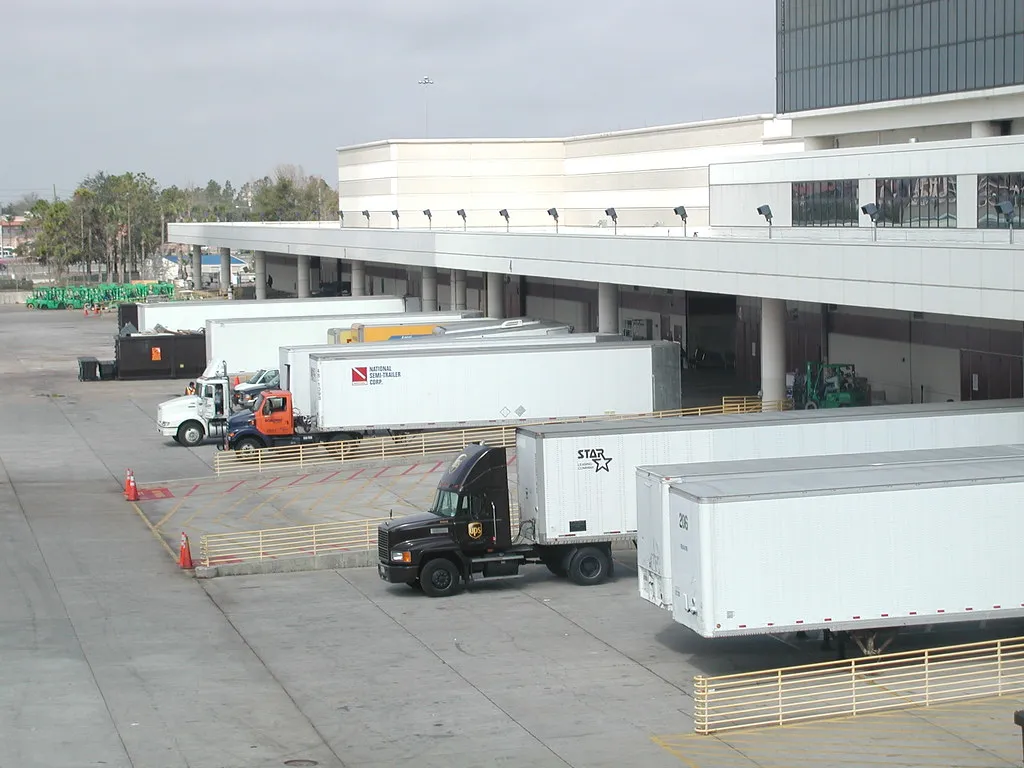
Freight and Drayage Are Not the Same Charge
Freight is the transportation of the exhibit between its origin, warehouse, venue and next destination.
Material handling—often called drayage—is the show-floor service that receives freight, unloads it, moves it to the booth, stores empty containers during the event, returns those containers for teardown and reloads outbound freight. It is commonly provided by the show’s official contractor and often billed by weight, with event-specific rules and possible surcharges.
That distinction matters because a proposal can honestly say freight included while material handling remains outside the price.
The quote should identify:
- Estimated shipment weight
- Crate and pallet count
- Advance-warehouse or direct-to-show routing
- Targeted delivery or move-in requirements
- Special-handling assumptions
- Material-handling rate source
- Inbound carrier and tracking owner
- Empty-container labels
- Outbound bill-of-lading responsibility
- Final post-show destination
The booth does not finish its job when the show closes. Neither should the logistics plan.
See how Purple coordinates trade show logistics and shipping from packing through return freight.
The EAC Question Every Orlando Exhibitor Should Ask
An exhibitor-appointed contractor, commonly called an EAC, is a third-party company selected by the exhibitor to perform permitted, nonexclusive booth services rather than serving as an official show contractor.
Hiring an EAC does not remove the organizer’s or venue’s authority. The contractor may still need to meet current notice, insurance, safety, credential and work-rule requirements. The exhibitor may remain responsible for submitting information and ensuring compliance.
Before signing, ask:
- What EAC documents are required for this exact event?
- Who prepares and submits the certificate of insurance and authorization forms?
- Who tracks approval and corrects rejected documents?
- What credentials are required for move-in and move-out?
- Which services remain exclusive to OCCC or the official show contractor?
- Who is the on-site supervisor and escalation contact?
Do not accept a general claim that a contractor is “approved at OCCC” as proof that the company has completed the requirements for your specific event.
What Pre-Show Quality Control Should Actually Mean
“We inspect everything” sounds reassuring. Ask what the inspection produces.
A useful pre-show QA plan may include:
- Structural components fitted or staged to the agreed level
- Graphics matched to the location schedule
- Dimensional logos and signs test-fitted
- Product mounts checked against approved dimensions and weights
- AV hardware powered and signal flow tested
- Content loaded in the correct format and resolution
- Lighting fixtures and power requirements confirmed
- Furniture and flooring selections verified
- Hardware kits labeled by area or installation step
- Crates numbered against an inventory
- Spare parts and touch-up materials packed separately
- Open issues recorded, assigned and closed before shipment
Ask for the evidence that fits the project: staging photographs, a video review, a test log, a graphic schedule, a packing inventory or a signed punch list.
Show-ready is not a feeling. It is a completed handoff.
Eight Red Flags in an Orlando Exhibit Proposal
1. The Quote Does Not Name the Show, Venue, Building or Booth Type
An Orlando price built without the actual event context is a preliminary assumption, even if the document looks final.
2. “All-Inclusive” Has No Exclusion List
Every proposal has boundaries. A company unwilling to show them has not made the project simpler.
3. The Rendering Is More Detailed Than the Scope
The picture shows what the booth may look like. The scope determines what will actually be built, shipped, installed and supported.
4. Freight Has No Direction
“Freight included” should say inbound, outbound or both—and identify the delivery route and final destination.
5. Labor Has No Assumptions
Crew size, hours, rates, call times and supervision determine whether an installation estimate is meaningful.
6. Venue Services Are Mentioned but Nobody Owns the Orders
Coordination without an identified preparer, approver and payer leaves deadlines exposed.
7. There Is No Dismantle or Outbound Plan
Opening day receives the attention. Forced freight, repacking problems and missing assets often happen after the audience leaves.
8. There Is No Named Show-Floor Decision Maker
Someone must be able to approve a practical solution when the plan meets reality.
How to Compare Orlando Exhibit Builder Quotes Fairly
Create one worksheet and give every line item one status.
Use only these statuses: included, allowance, estimate, pass-through, direct bill, optional, excluded or unknown.
Then compare risk, accountability and total scope—not just the bottom line.
Scorecard version 1.0 · OCCC information reviewed August 2026
After selecting a partner, turn the completed matrix, written clarifications and deadline register into the statement of work. A question resolved during procurement should not disappear when the contract is drafted.
For general planning ranges by booth size, use Purple’s separate trade show booth cost guide. This Orlando article deliberately does not repeat those price tables; its job is to help you determine whether two proposals are pricing the same work.

Turn the Winning Proposal Into a Statement of Work
Do not let the selection meeting become the last place where the complete decision exists. Create a one-page procurement decision record and attach it to the signed scope.
The statement of work should incorporate the final rendering, technical scope, graphic schedule, responsibility matrix, deadline register, commercial terms and accepted clarifications. If a necessary answer remains only in an email thread, attach it or write it into the agreement.
No service line without an owner. No owner without a deadline. No deadline without written confirmation.
Talk Through an Orlando Exhibit Proposal
If you already have a proposal, use this guide to identify questions about inclusions, allowances, direct bills, exclusions, ownership and deadlines. Then contact Purple with the show, venue/building, booth dimensions and configuration, dates, working budget and decision deadline. Purple can discuss the next appropriate step without requiring confidential proposal files through the generic contact form.
**Discuss My Orlando Exhibit Project**
Ask for Proof That Matches Your Project
Before selecting an Orlando trade show booth builder, request evidence that answers the actual risk:
- Completed OCCC or Orlando work—not only renderings
- A project similar in footprint, product complexity or technology
- Real show-floor photographs with the client, show and year identified
- A redacted example of a production or installation document
- An explanation of pre-show staging and quality control
- A clear EAC-documentation process
- One named project lead and one show-floor escalation contact
- A documented change-order process
- A complete inclusion, allowance and exclusion schedule
At KBIS 2026 in Orlando, Fabuwood received the official Best Large Booth award. Purple’s Fabuwood project case study documents Purple’s fabrication, production, logistics, installation and on-site execution work for the exhibit. The award itself is confirmed in the official KBIS announcement.
The importance of that example is not the trophy alone. It is that ambitious environments depend on many parties, documents, deliveries and deadlines working as one project.
What Purple Needs to Prepare an Accurate Orlando Exhibit Builder Quote
To prepare a project-specific Orlando proposal, send Purple the completed booth brief above together with the current exhibitor manual, confirmed booth assignment, budget range, approval schedule, shipping origin and post-show destination.
Purple can then prepare a project-specific proposal, distinguish exhibit-team scope from show- and venue-controlled costs, and identify the proposed owner for each material handoff.
Joey Bartman was appointed Lead Account Manager for Purple’s Orlando trade show projects.
Request an Orlando exhibit builder quote or call (800) 994-8030.
**Start My Orlando Exhibit Project**
Your booth does not open inside a rendering.
It opens on a real show floor, under a real deadline.
Skip the chaos. Just show up.

Frequently Asked Questions About Orlando Exhibit Builder Quotes
What Should an Orlando Exhibit Builder Quote Include?
The proposal should identify the design and revision scope, engineering, custom and rental components, graphics, flooring, furniture, lighting, product integration, AV, staging, packing, freight, material handling, installation, dismantling, on-site supervision, show services, storage and future reuse. Every item should be marked as included, allowance, estimate, pass-through, direct bill, optional, excluded or unknown.
Is an Exhibit-Builder Quote the Same as the Complete Trade Show Budget?
No. The complete event budget may also include booth-space rental, sponsorships, organizer fees, staff travel, hotels, meals, promotions, lead-capture tools and post-show marketing. Even within the physical exhibit budget, some venue and show-contractor charges may be billed outside the exhibit-builder proposal.
Are OCCC Electrical and Rigging Included in the Booth Quote?
They may be estimated or coordinated within the proposal, but OCCC currently identifies electricity and aerial rigging and lighting as exclusive venue services. The contract should state who prepares the technical information, who submits the order, who approves it and who pays the OCCC invoice.
What Is the Difference Between Freight and Drayage?
Freight transports the exhibit between locations. Material handling or drayage receives the shipment at the event, unloads it, moves it to the booth, stores empty containers, returns them after the show and reloads outbound freight. They are separate services and may appear on separate invoices.
What Is an EAC at an Orlando Trade Show?
An exhibitor-appointed contractor is a third-party company selected by the exhibitor to perform permitted, nonexclusive booth services. The show may require advance notice, insurance, authorization, credentials and other event-specific documentation.
Can an Orlando Exhibit Quote Be Fixed Price?
Builder-controlled work can often be fixed after the scope and approvals are defined. Venue services, material handling, labor overages, late changes and other third-party costs may remain allowances, estimates, pass-through charges or direct bills. A trustworthy proposal identifies which category applies to every material line.
How Do I Compare Two Booth Quotes With Different Inclusions?
Place each scope item into a common worksheet and classify it as included, allowance, estimate, pass-through, direct bill, optional, excluded or unknown. Add missing items and third-party costs before comparing totals. The lower initial number is not necessarily the lower complete project cost.
Who Should Order OCCC and Show Services?
The responsibility should be assigned in writing. Depending on the scope, the exhibitor, exhibit partner or another authorized party may prepare and submit orders, while the exhibitor or another named party approves and pays. The current event manual and venue rules determine the available ordering channels and deadlines.
What Contract Terms Should I Compare Besides the Booth Price?
Compare the deposit and milestone schedule, payment deadlines, taxes and administrative fees, revision limits, change-order authorization, cancellation or postponement terms, responsibility for overtime and third-party overages, ownership and rental-damage terms, insurance requirements and the process for reconciling estimated costs with final invoices.
How Far in Advance Should I Contact an Orlando Exhibit Builder?
For a normal custom project, begin before the earliest design, artwork, engineering, EAC, venue-service, internet, freight or move-in deadline—not merely a fixed number of weeks before opening day. Complex product integration, hanging signs, custom fabrication and lengthy approvals require more lead time; rush work narrows options and can trigger premium charges. Ask for a reverse schedule based on the current event manual before signing.
What Is the Total Evaluated Cost of an Orlando Booth Proposal?
It is the stated proposal total plus any allowances, estimates, pass-through charges, direct bills and necessary excluded work that are not already included in that total. Track unknown costs separately rather than treating them as zero. This creates a more comparable planning number without pretending every third-party charge is fixed.
Why Can the Lower Orlando Exhibit Quote Cost More?
The lower stated proposal may exclude freight, material handling, installation labor, OCCC utilities, internet, AV, outbound shipping or other necessary work that another proposal includes. Normalize both proposals to the same scope, add every known outside cost once and keep unknown amounts visible before comparing total evaluated cost.
What Is an Exhibit Quote-Normalization Worksheet?
It is a common line-item schedule used to compare differently structured proposals. Every item receives the same cost treatment, responsible party and written-evidence check, so an included item in one proposal is not compared with an allowance, direct bill or unknown in another.
Is an “Exhibition Stand Builder Orlando” the Same as an Orlando Exhibit Builder?
Usually. “Exhibition stand builder” and “exhibition booth builder” are common international terms for a company that designs, produces or manages trade show exhibits. The contract scope matters more than the label: confirm fabrication, rental components, logistics, labor, show services and post-show responsibility in writing.