

KBIS 2027 Product-Launch Playbook
This KBIS 2027 product launch playbook is for teams that want more than traffic. It connects the launch story, on-floor proof, staffing, lead qualification and follow-up so the right buyer understands the product and leaves with an owned next step.
Show facts last verified September 7, 2026. Confirm current information through the official KBIS Exhibitor Resource Center.
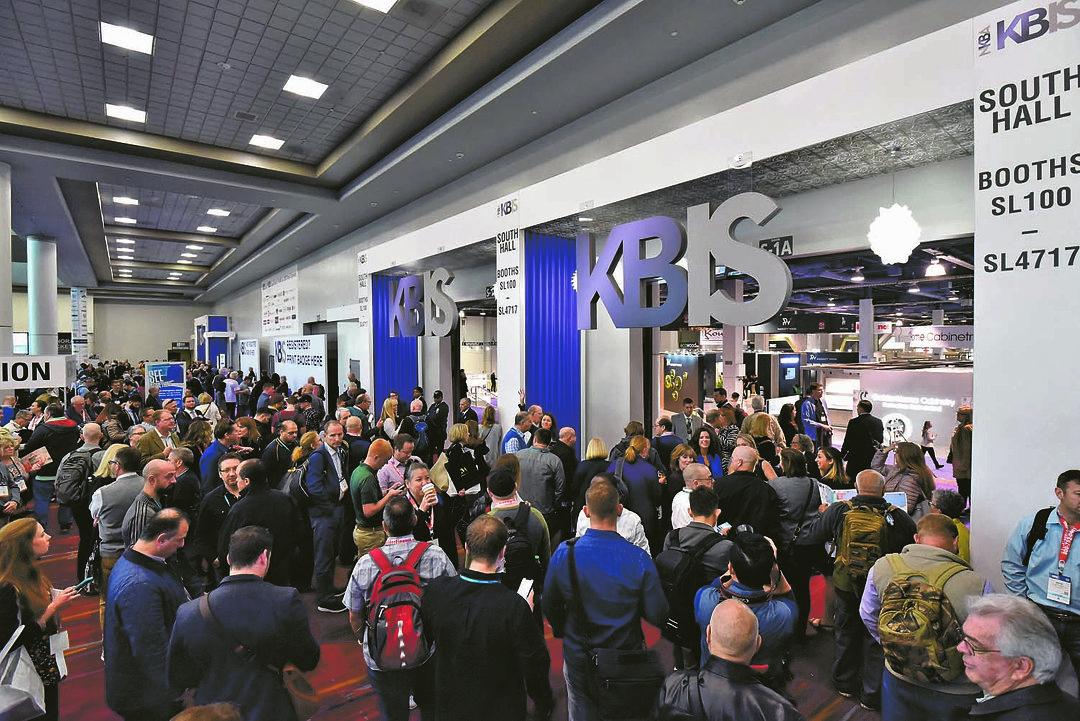
Why a KBIS product launch needs more than a beautiful booth
KBIS is built for product discovery. The official About KBIS page describes the audience and live product-demonstration environment, while the official KBIS 2027 registration announcement describes more than 600 exhibiting brands across more than 500,000 net square feet. Designers, architects, dealers, showrooms, builders, remodelers, distributors, media and other industry professionals arrive ready to compare what is new.
That creates opportunity—and compression. A visitor may encounter hundreds of claims about performance, style, wellness, technology, sustainability, installation or value in a single day. The product does not win attention because a team says it is innovative. It wins when the visitor can quickly answer four questions:
- Is this relevant to my work or customer?
- What is meaningfully different?
- What proof can I experience here?
- What should we do next?
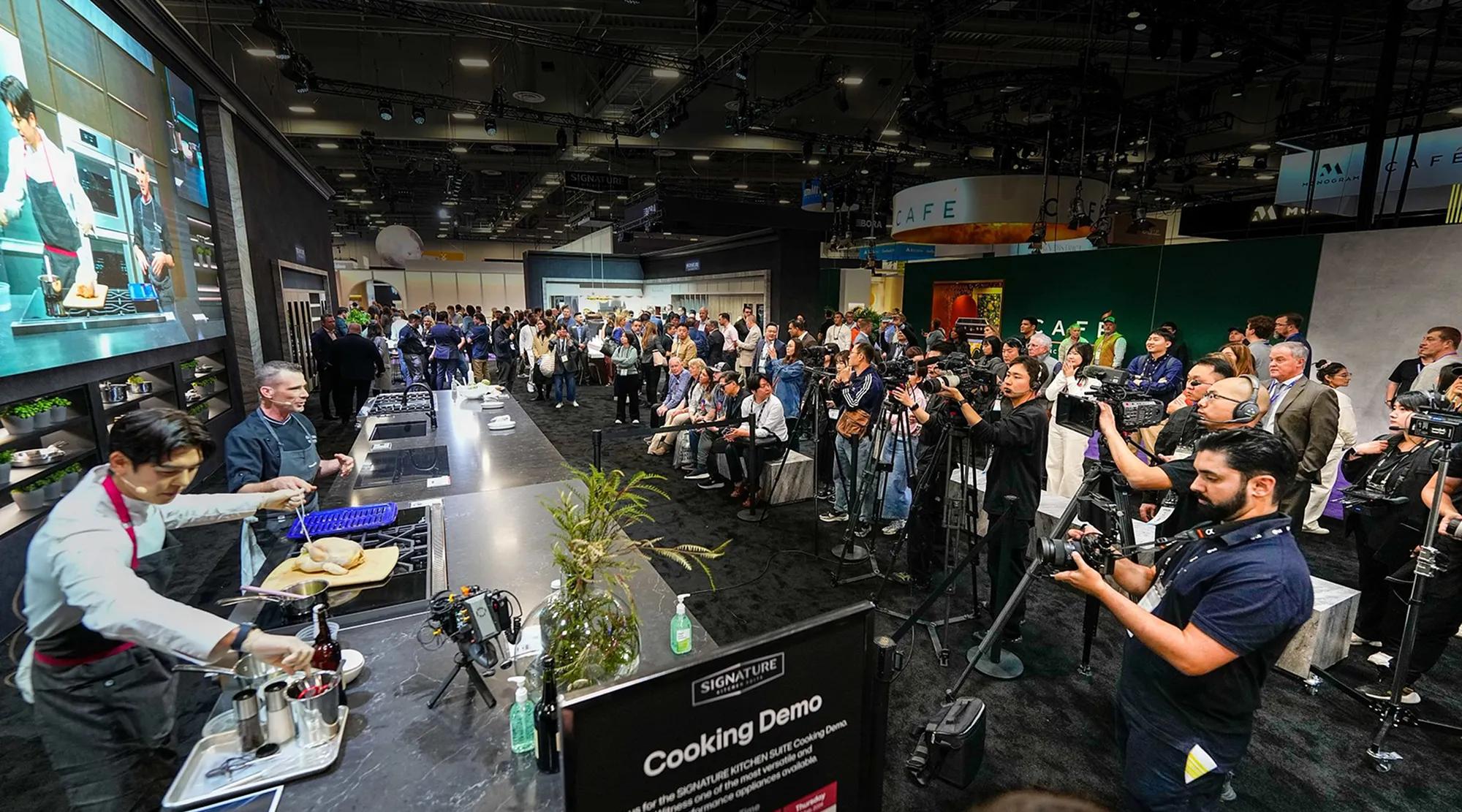
The exhibit, marketing and sales plan should answer those questions in the same order. Purple’s KBIS 2027 booth design ideas explain how to organize visitor flow and product presentation. This playbook begins at the next layer: converting that environment into a working launch system.
The Purple LAUNCH Framework for KBIS 2027
The Purple LAUNCH Framework gives product, marketing, sales and exhibit teams one shared definition of readiness.
- Lead with one customer outcomeState what becomes better, easier, safer, faster, clearer or more valuable for the customer. Avoid opening with a list of features.
- Assign the priority audienceName the buyer, specifier, dealer, builder, distributor, media contact or partner the launch is designed to move.
- Use proof visitors can experienceLet people see, touch, compare or test the evidence behind the promise. Unsupported adjectives are not proof.
- Name one next stepDefine the action that should follow a qualified conversation: a meeting, sample, specification review, dealer discussion, quote or technical session.
- Capture context, not only contact dataRecord why the visitor cared, what they need, their timing, the product discussed and the exact commitment made.
- Hand off every promiseGive each follow-up one owner, one due date and one completion check before the visitor leaves the booth.
A launch is not ready because the product is in the crate, the graphics are approved or the press release is drafted. It is ready when all six elements connect.
Turn every KBIS launch claim into credible proof
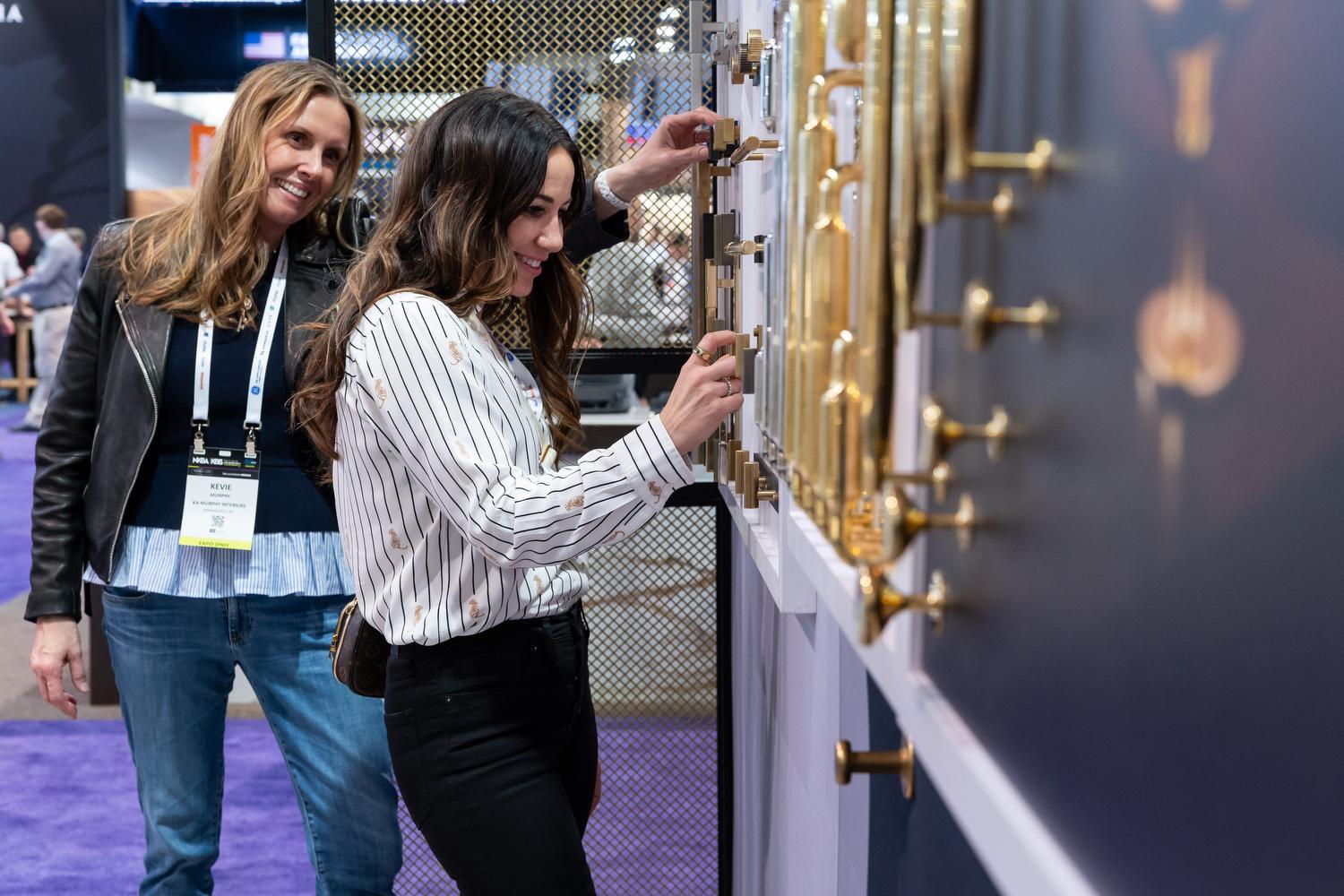
A product claim belongs on the show floor only when the team can identify what it means, what supports it, what visitors will experience and where the claim stops. This claim-to-proof record prevents sales language, graphics and demonstrations from drifting apart.
| Claim element | Question the team must answer | Acceptable evidence | Show-floor expression | Hard gate |
|---|---|---|---|---|
| Customer outcome | What becomes materially better for whom? | Approved use case, observed workflow, test result or documented customer evidence | One plain-language outcome sentence at the aisle and in the demo opening | No unsupported absolute or universal promise |
| Meaningful difference | Compared with what realistic alternative? | Like-for-like comparison with conditions, source and owner documented | Side-by-side sample, timed task, cutaway, operating view or clearly labeled visualization | Comparison conditions must be fair and visible |
| Performance claim | What method, unit and operating condition produced the result? | Internal test with documented method or qualified independent evidence | Short proof statement with a path to the complete method | Marketing, product and legal approval recorded |
| Sustainability claim | Which specific attribute, boundary and standard support the language? | Current certification, material disclosure, lifecycle evidence or other verifiable documentation | Specific qualified statement—not a broad green adjective | Certification status and scope must be current |
| Connected-product claim | Which devices, networks, accounts and versions are required? | Tested compatibility record and failure-mode plan | Live task plus an honest offline or simulated fallback label | Never disguise a recording or mockup as a live connection |
Choose the priority audience before choosing the message
One product can matter for several reasons. A designer may care about finish options and specification support. A showroom may care about display requirements, margin and training. A builder may care about installation and service. A distributor may care about territory, demand and operational fit. A journalist needs a clear, timely story backed by evidence.
Trying to say everything to everyone usually produces a wall of features. Start with a primary audience, then build a secondary path for the other important groups.
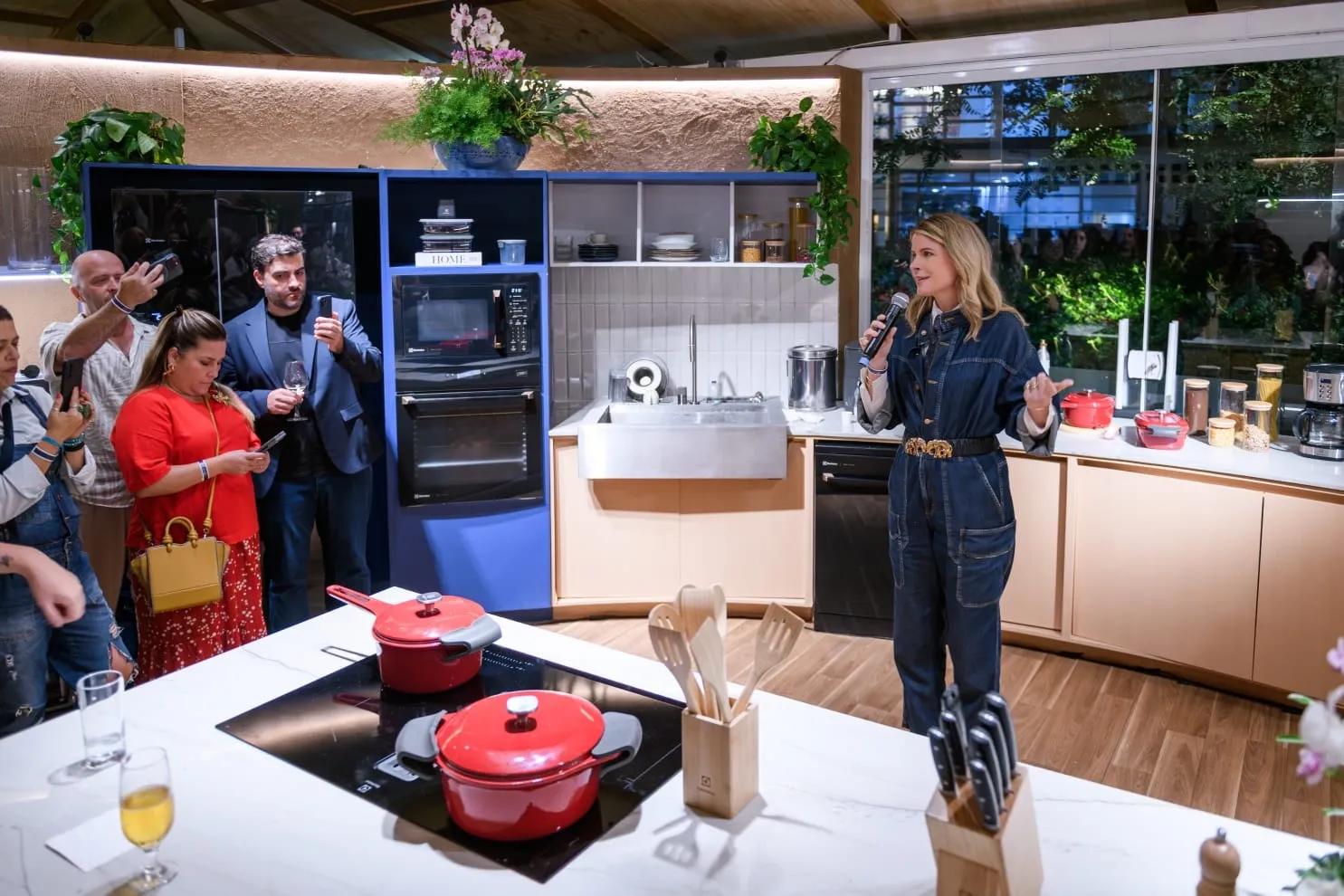
| Audience | What they may need to learn | Useful proof | Strong next step |
|---|---|---|---|
| Designer or specifier | Where the product fits, how it looks, what can be specified and what support exists | Physical finishes, application vignette, dimensions, samples and specification resources | Sample request or project-specific specification review |
| Dealer or showroom | Why customers will care and what is required to sell, display and support the line | Merchandising concept, training plan, assortment logic and customer-use demonstration | Dealer conversation with the appropriate channel owner |
| Builder or remodeler | Installation, compatibility, reliability, availability and service implications | Install detail, operating demonstration, clearances, maintenance access and technical documentation | Technical follow-up tied to an active or representative project |
| Distributor or representative | Market fit, territory opportunity, operational requirements and demand plan | Category positioning, launch assets, product support and qualified-market evidence | Scheduled channel-development meeting |
| Media or content creator | What is genuinely new, why it matters now and what can be shown clearly | Concise news angle, verified claims, strong visuals, expert access and usable product information | Press appointment, interview or approved media-kit delivery |
| Technology or strategic partner | How the product connects to a larger system, customer journey or market need | Integration story, compatibility evidence and mutual use case | Named partnership or integration discussion |
After the audience is chosen, write the launch promise in one sentence:
If that sentence cannot be completed without vague language, the launch story is not finished.
Build demand before the KBIS doors open
The first day of KBIS should not be the first time the market hears the product story. Strong KBIS exhibitor marketing gives customers, prospects, channel partners and media a reason to place the booth on their route before the doors open.
Effective KBIS booth marketing uses one consistent promise across the official listing, launch page, invitations, media materials, partner promotion and show-floor demonstration. The message may change depth by audience, but the underlying claim and evidence should not change.
Make the official KBIS discovery surfaces complete
Use the Exhibitor Hub to keep the company profile, product categories, booth information and directory content accurate. The official Exhibitor Resource Center currently links exhibitors to directory upgrades, sponsorship opportunities, official logos, press-release submission, lead retrieval and other resources. The official KBIS exhibitor list and floor plan are planning tools for attendees, so the listing should make the launch easy to find and understand.
Do not rely on a purchased “attendee list” from an outside seller. KBIS warns that unauthorized companies do not have its attendee list and directs exhibitors to official options through their account representative.
Create one launch page that all promotion can point to
The landing page should include the product promise, booth number, dates, proof visitors can experience, demonstration schedule, who should attend, a meeting request and a post-show path for people who cannot attend. Use campaign parameters on email, social, partner and paid links so the team can compare which sources drove useful actions.
Give media a story, not a brochure
KBIS currently allows exhibitors to submit releases through its resource center and publishes an official PR guide for exhibitors. A strong pitch explains what changed, the problem it solves, why the timing matters, what evidence supports the claim and what a journalist can see or capture at the booth.
The current resource center also identifies Kitchen & Bath Business as the official publication of NKBA and KBIS and provides a route for exhibitors to share product launches or special events. Treat that as an editorial submission opportunity—not a guaranteed placement or backlink—and confirm the current contact and requirements before sending.
Prepare approved product facts, expert availability, high-resolution photography, short demonstration clips, captions, credits and a clear press contact. Never promise editorial coverage. Make the story easier to evaluate.
Treat awards as a program—not a promise
Relevant awards can give a launch another discovery path, but eligibility, categories, deadlines and judging belong to the organizer. Monitor the official KBIS events and awards page, submit only when the product or booth qualifies, and build the launch so it creates value whether or not it is selected.
Invite by reason, not by announcement
“We will be at KBIS” is information. “See the five-minute test that compares these two installation methods” is a reason to visit. Segment outreach by audience and give each segment the proof and next step most relevant to it.
For the broader email, LinkedIn, social and post-show system, use Purple’s complete trade show marketing strategy. This page keeps the focus on the KBIS product launch itself.
Design a product demonstration that creates belief
A demonstration is not a feature tour. It is a controlled proof of the launch promise. The best format depends on visitor time and intent, so build the story in layers:
- 20-second aisle proof: one visual action or comparison that makes the difference understandable without a full explanation.
- Two-minute discovery demo: the problem, the action, the result and one qualifying question.
- Five-minute specialist demo: deeper proof, relevant options, limitations and application fit.
- Fifteen-minute scheduled session: technical, channel or project-specific discussion for qualified visitors.
Every version should end with the next action—not with “any questions?”
| Product category | What the visitor should be able to evaluate | Operational question to solve before show day |
|---|---|---|
| Cabinetry and storage | Finish, construction, access, movement, organization, fit and the room-level story | Who resets doors, drawers, samples, lighting and fingerprints after repeated use? |
| Appliances | A completed customer task, control experience, performance difference and relevant installation context | What power, ventilation, connectivity, cleaning, consumables and backup mode are required? |
| Faucets, showers and plumbing fixtures | Control, water pattern, ergonomics, finish, accessibility and maintenance or installation logic | Is the display live or dry, and who owns supply, drainage, containment, testing and emergency shutoff? |
| Surfaces, tile and countertops | Color under correct lighting, texture, edge, scale, seams and supported performance claims | How will heavy samples be secured, handled, cleaned, protected and replaced? |
| Hardware and lighting | Movement, feel, adjustment, illumination, finish and application context | Can visitors interact repeatedly without loosening, misalignment, glare or unsafe heat? |
| Smart-home and connected products | A real user task, response, integration, setup logic and the value of connectivity | What happens if venue internet, an account login, an app, content or a connected device fails? |
Claims must be supportable. If a demonstration uses a special condition, mockup or simulated result, say so clearly. Product, marketing, legal, engineering and sales should agree on the language before staff training.
The technical system belongs in the booth plan from the beginning. Purple’s guide to engineering working KBIS product displays covers utilities, support, access, testing and installation in greater depth.
KBIS booth staffing for discovery, proof and commitment
The number of people in the booth matters less than whether each person has a job. In a large launch environment, four functions should always be covered:
- Opener: identifies relevance quickly and routes visitors without creating a line at the aisle.
- Discoverer: asks enough to understand role, application, priority and timing.
- Product specialist: demonstrates the proof accurately and handles deeper questions.
- Next-step owner: secures the meeting, sample, technical response, quote or channel conversation and records ownership.
In a smaller booth, one trained person may cover two or three functions. The functions still need to be defined. When the internal team cannot cover every shift or role, review Purple’s trade show booth staffing and product-demonstration support and define the training, authority and escalation boundaries in writing.
Use a qualification card that can be completed in under a minute
A useful lead record should answer:
- Who is the visitor and what role do they play?
- Which product, use case or customer problem created interest?
- Is there a real project, channel opportunity or editorial need?
- What is the approximate timing?
- What concern or requirement matters most?
- What did Purple or the exhibiting brand promise?
- What is the exact next step, owner and due date?
KBIS currently lists lead retrieval through an official provider in its resource center. Configure qualification questions before the event, test every device and define an offline fallback. Follow the organizer’s terms and applicable privacy requirements. A visitor’s contact information should not be treated as permission for unrelated or indefinite outreach.
Free KBIS 2027 Product-Launch Planner
Score the plan, pressure-test staffing capacity, model live-demo throughput, generate a one-page launch brief, build consistent campaign links and test whether the follow-up promise fits the team’s available time. These tools run only in this browser; no inputs are submitted, transmitted or stored.
1. Purple LAUNCH Readiness Score
Score each item as missing, in progress or confirmed with evidence. A total score cannot cancel a missing proof experience or an unowned handoff.
Complete the six launch decisions before release. Missing proof or handoff ownership is a stop condition.
2. Qualified-Conversation Capacity Planner
Use your own conservative assumptions. Capacity is not attendance, demand, leads, sales or ROI; it is a staffing model that helps expose whether the goal fits the time available.
Planning model only. Results depend entirely on the assumptions entered and do not predict show performance.
3. Live-Demo Throughput & Queue Planner
Model how many visitors the demonstration can serve without quietly promising more capacity than the booth can deliver. This is a communication-flow model—not an engineering approval, attendance forecast or guarantee. Use Purple’s KBIS booth-engineering guide for utilities, structural support, drainage, ventilation, equipment access and formal testing.
The current demand assumption uses half of modeled capacity. Rehearse at a higher load and protect the reset time before approving the plan.
Formula: stations × 3,600 ÷ (demo seconds + reset seconds) × utilization × visitors per cycle. The queue trigger is one full visitor wave across all stations.
4. One-Page KBIS Launch Brief Builder
Complete the fields product, marketing, sales and exhibit teams must agree on. The generator converts them into a plain-text working brief your team can copy or download.
Your generated launch brief will appear here. Required fields are marked with an asterisk.
Nothing entered here leaves your browser.
5. KBIS Campaign Link Builder
Create one consistent, trackable destination for owned, partner, PR, QR and paid campaigns. UTM parameters help attribute campaign activity; they do not create ranking value. Never place names, email addresses, lead IDs, confidential launch details or other personal data in a URL.
Nothing entered here leaves your browser, and generated parameter values are never sent to analytics.
6. Promise-Handoff Capacity Planner
Pressure-test whether the team can fulfill its highest-priority KBIS promises inside the chosen service-level window. This model measures first-action capacity—not lead quality, buyer intent, pipeline or revenue. Use the button below to bring in the current owned-next-step result from the staffing planner, or enter a separate scenario.
The example plan fits, but one unavailable owner or complex promise could create a backlog. Protect the time and name an overflow owner.
Formula: priority records × first-action minutes ÷ 60, compared with owners × available hours per owner. Example values are planning assumptions, not Purple or KBIS benchmarks.
KBIS lead generation: route by next step—not badge-scan volume
The follow-up process should be designed before the lead form. Effective trade show lead follow-up begins with the commitment made in the booth, so build routes around that promise instead of a generic email sequence. Use the Promise-Handoff Capacity Planner to test whether the highest-priority commitments fit the protected time and owners available after the show.
| Visitor commitment | Record before the visitor leaves | Immediate owner | Completion evidence |
|---|---|---|---|
| Meeting requested | Topic, attendees, timing, urgency and decision context | Named sales or channel owner | Accepted calendar invitation with agenda |
| Technical answer or specification help | Exact question, application, dimensions or file promised | Product or technical specialist | Specific answer or asset delivered and acknowledged |
| Sample requested | Product, finish, quantity, project and shipping details | Sample-program owner | Shipment confirmation and follow-up task |
| Dealer, distributor or representative interest | Market, territory, current lines, opportunity and requested conversation | Channel-development owner | Qualified channel meeting held or formally declined |
| Media interest | Angle, deadline, assets, spokesperson and usage needs | PR lead | Requested information delivered before the deadline |
| Structured product feedback | Audience role, tested claim, reaction, objection and permission to follow up | Product-marketing or research owner | Feedback coded to the correct audience and reviewed after the show |
A useful operating target is to send meeting invitations and fulfill urgent promises while the conversation is still distinct—often the same day or next business day. The exact service level should match team capacity. It is better to promise an honest date than to automate a generic message that ignores what the visitor asked for.
The minimum CRM record should contain the show, product, visitor role, reason for interest, qualification context, promise made, next step, owner, due date and source campaign. Only then can leadership separate meaningful pipeline movement from raw scan totals.
Measure the launch against its purpose
Do not choose metrics after KBIS. Select them before outreach begins and define the evidence required for each one.
| Launch objective | Useful measures | Weak substitute |
|---|---|---|
| Generate qualified pipeline | Qualified conversations, accepted meetings, created opportunities, influenced pipeline and progression by 30/90 days | Total badge scans |
| Develop dealers or distributors | Qualified channel meetings, territory fit, applications completed and agreements advanced | Business cards collected |
| Win specifications | Sample requests, specification reviews, active projects, approved-vendor steps and product selections | Brochures taken |
| Earn media attention | Qualified media conversations, interviews, requested assets, accurate coverage and referral traffic | Press kits distributed |
| Validate product positioning | Structured feedback by audience, repeated objections, message comprehension and requested comparisons | General compliments |
| Strengthen existing accounts | Account meetings, resolved issues, expansion discussions and documented relationship actions | Customer visits without notes |
Use formulas that expose what happened
Revenue attribution may take months and should follow the company’s existing finance and CRM rules. Track event-sourced and event-influenced activity separately. For budget categories and planning ranges, use the KBIS exhibit booth cost guide.
A practical KBIS 2027 product-launch timeline
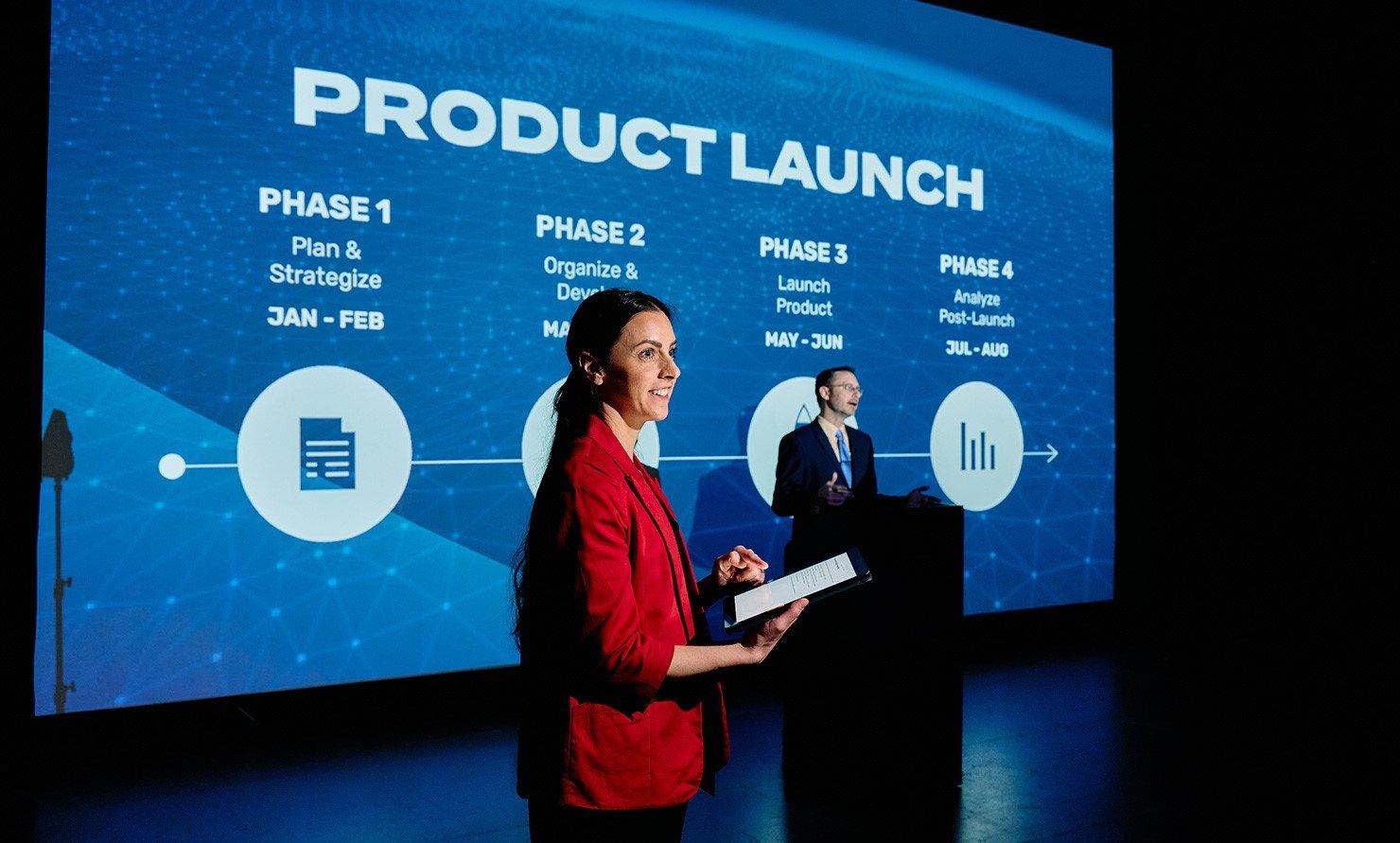
This timeline covers marketing, demonstration, staffing and follow-up. Use Purple’s separate KBIS 2027 booth planning checklist for design approvals, production, graphics, freight, show services, installation and dismantle.
| Window | Launch decisions and deliverables | Exit condition |
|---|---|---|
| 120–90 days before | Define objective, priority audience, launch promise, proof, next step, measurement rules and approval team. | One approved launch brief connects product, marketing, sales and exhibit teams. |
| 89–60 days before | Build the landing page, directory copy, press materials, demonstration script, qualification fields, campaign tracking and meeting targets. | Every public claim and demonstration step has an owner and evidence. |
| 59–30 days before | Begin segmented outreach, media conversations, partner promotion and appointment setting. Train the first staff group and test the lead-routing workflow. | The market has a specific reason to visit, and the team can process a test lead end to end. |
| 29–7 days before | Confirm demonstration times, staff schedule, content capture, meeting calendar, device setup, offline fallback, follow-up templates and escalation paths. | A full rehearsal produces accurate proof and a complete CRM handoff. |
| Show days | Run short daily huddles, monitor visitor questions, protect demo reliability, record context, secure next steps and correct bottlenecks. | No important promise or qualified conversation leaves the booth without ownership. |
| 1–3 business days after | Deliver urgent assets, confirm meetings, route technical and channel requests, clean data and resolve unowned records. | Every priority action is accepted by a named owner. |
| 7–30 days after | Hold follow-up meetings, report early pipeline, analyze message and product feedback, and document improvements. | Leadership sees outcomes, gaps and the next decision—not only total scans. |
| 30–90 days after | Review opportunity progression, specification activity, channel movement, coverage, attributable outcomes and program lessons. | The next show or campaign inherits the evidence and improvements. |
Real KBIS proof: one idea carried through the environment
At KBIS 2026, Fabuwood presented an immersive exhibit built around 13 lifestyle-inspired rooms with distinct atmospheres. The official KBIS award announcement named Fabuwood the Best Large Booth winner. Purple’s published Fabuwood KBIS 2026 booth case study documents the collaboration and Purple’s role across the exhibit’s design and show-floor execution.
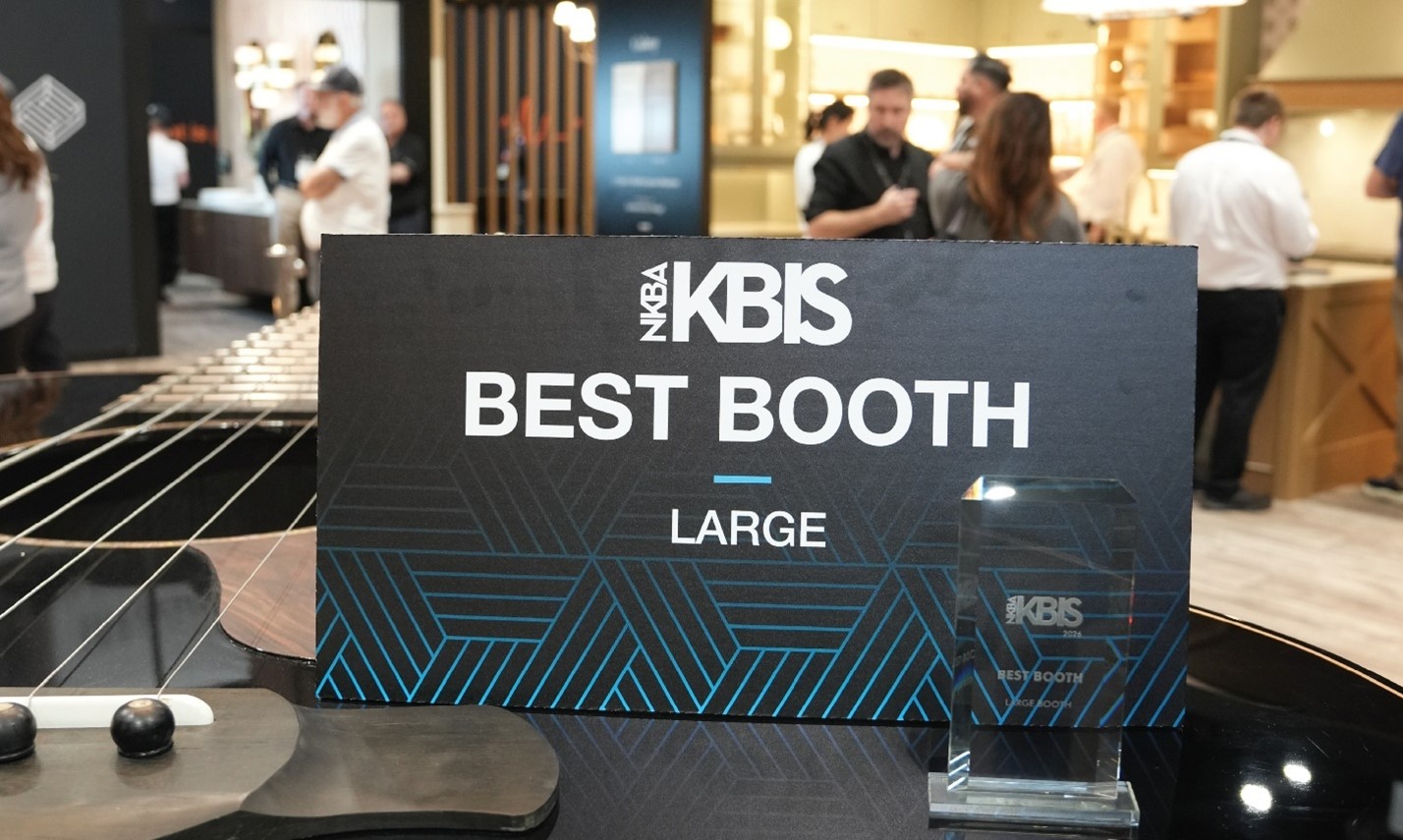
The lesson for a 2027 product launch is not that every brand needs 13 rooms. It is that one clear idea should connect the architecture, product presentation, lighting, content, demonstration and visitor journey. Scale changes. Coherence does not.
See Purple’s full-service KBIS exhibit booth design and execution capabilities when the launch requires one coordinated plan across design, fabrication, graphics, AV, logistics, installation and on-site support.
Ten KBIS product-launch mistakes that weaken conversion
- Launching a feature list instead of a customer outcome.
- Treating every attendee as the same audience.
- Using “innovative,” “premium” or “revolutionary” as proof.
- Designing the demonstration after the booth and utilities are finalized.
- Building one long demo with no 20-second or two-minute version.
- Letting demonstrations create a crowd that blocks the product or aisle.
- Scanning badges without capturing relevance, timing and the promised next step.
- Collecting more leads than the team can follow up with responsibly.
- Sending the same generic post-show email to every contact.
- Reporting traffic and scans without measuring progression.
If the launch is still missing the right delivery partner, compare proposals with Purple’s 100-point KBIS booth-builder RFP scorecard. If flexibility and structural ownership are the main questions, review KBIS 2027 booth rentals in Las Vegas.
Frequently Asked Questions About Launching at KBIS 2027
When and where is KBIS 2027?
KBIS 2027 is scheduled for February 2–4, 2027, at the Las Vegas Convention Center in Las Vegas, Nevada. The official KBIS schedule currently lists show-floor hours of 9:00 a.m.–5:00 p.m. each day. Verify current details before making operational decisions.
How early should a brand begin planning a KBIS product launch?
Begin the launch strategy several months before the show so the audience, claims, proof, demonstration, landing page, outreach, staff training and follow-up process can be built together. Large custom exhibits and working products may need a much earlier design and engineering start.
How should an exhibitor promote a new product before KBIS?
Build one useful launch page, complete the official exhibitor profile, invite priority customers and prospects with a specific reason to visit, schedule high-value meetings, prepare segmented email and social content, submit appropriate product news through official channels and give media a clear evidence-backed story.
Can KBIS exhibitors submit a press release?
Yes. As of the September 7, 2026 review, the official submission form is for current KBIS 2027 exhibitors, requires at least one qualifying high-resolution image, permits up to five images and says posting may take up to one week. A useful KBIS press release explains what changed, why the product matters, what evidence supports the claim and what visitors can experience at the booth. Requirements can change, so recheck the official form before submitting.
Who provides lead retrieval for KBIS 2027?
As of the September 7, 2026 verification date, the KBIS resource page identifies Maritz Global Events as the lead-retrieval provider. Confirm the current provider, ordering process, device limits, export fields and deadlines through the official Exhibitor Resource Center.
Can I buy the KBIS attendee list from a third party?
KBIS warns exhibitors that it does not sell, rent or distribute attendee information to outside list companies and that unauthorized list offers are not affiliated with the show. Ask the KBIS account representative about official promotional options and do not buy unverified lists.
What should a KBIS product demonstration include?
Show a customer problem, one meaningful product action, credible evidence of the result and a next step. Prepare short and deep versions, train staff on approved claims, and assign responsibility for reset, cleaning, consumables, utilities, connectivity and backup.
How should KBIS leads be qualified?
Capture role, application, reason for interest, timing, product, concern, promise made and next step. Route the record to a named owner before the visitor leaves. Qualification should identify relevance and action, not simply score enthusiasm.
Should the KBIS launch planner be gated behind a form?
No. Keep the framework, scoring criteria, planning templates and core guidance available without requiring contact information. A meeting request can be the commercial next step, but the useful resource should earn trust before asking the reader to identify themselves.
How do you measure whether a KBIS product launch worked?
Define success by the launch objective before the show. Useful measures may include qualified conversations, owned next steps, accepted meetings, samples or specification reviews, channel progression, verified media interest, created or influenced opportunities and 30/90-day movement. Report raw scans separately from qualified outcomes.
Is Purple Exhibits the organizer of KBIS?
No. Purple Exhibits is an independent exhibit company and is not the organizer, owner or official authority for KBIS. Use KBIS.com and the Exhibitor Resource Center for official event rules, dates, vendors, forms and deadlines.
Can Purple Exhibits build a demonstration-ready booth for KBIS 2027?
Yes. Depending on the agreed scope, Purple Exhibits can coordinate strategy, exhibit design, engineering, fabrication, rental or hybrid structure, graphics, lighting, AV, product integration, freight, installation, dismantle and on-site supervision. Show- or venue-designated providers may perform or invoice certain services; the proposal should identify who coordinates, performs, approves and pays for each item.
How this playbook was built—and how Purple keeps it accurate
Purple Exhibits created this page as an independent planning resource for kitchen-and-bath manufacturers preparing a product launch. The LAUNCH Framework, readiness score, qualified-conversation model, live-demo throughput model, brief builder, campaign-link builder, promise-handoff capacity model, operating workbook, control sheet and internal milestone plan are Purple planning tools; they are not KBIS rules, organizer approvals or performance forecasts.
- Content-gap check: Purple’s published KBIS pages were reviewed before this topic was selected, so this guide adds product-launch marketing and lead-conversion intent instead of duplicating the existing booth builder, rental, cost, design, engineering, RFP and production-planning pages.
- Primary-source standard: changeable event facts link to KBIS’s own schedule, exhibitor resources, exhibitor directory, PR, awards and show-news pages.
- Evidence standard: claims distinguish organizer-published facts, Purple project evidence, planning assumptions and actions the reader must verify.
- Update standard: show dates, hours, vendors, forms and resource links must be rechecked before publication and after any material KBIS update.
- Independence disclosure: Purple Exhibits is not the owner, organizer or official authority for KBIS.
Content owner: Purple Exhibits. Last event-fact review: .
Your product deserves more than floor space
Bring Purple the product. We’ll help build the launch around it.
Tell us what you are introducing, who must understand it, what visitors need to experience and what business should happen next. Purple can connect the booth, the product, the technology and the show-floor execution into one accountable plan.
Bring to the first conversation: product or collection; booth size and number if assigned; launch date; working-demo requirements; priority audience; and the result the team needs after KBIS. If part of the plan is unknown, bring that too.
Skip the chaos. JUST SHOW UP.