Purple Exhibits
Trade shows/July 2027/Future of Memory and Storage
FMS / SANTA CLARAA clearer product story

The architecture of an exhibitSanta Clara / 2027

Future of Memory and Storage 2027 · Custom exhibit design & build Make the technology clear at a glance.

A memory and storage exhibit needs a tangible entry point into a technical conversation. Purple can help turn devices, architecture diagrams and approved demonstrations into a focused FMS experience for the people evaluating your technology.

An IT professional works at a computer in a server room.
Data infrastructure in practice · industry reference photograph Photo: panumas nikhomkhai · Pexels License
01 / HARDWARE02 / APPLICATION03 / ARCHITECTURE
Exhibit focusMemory & storageTechnical demonstrationsArchitecture conversations
Full eventJuly 2027 — exact dates need confirmation
Exhibit hallExhibition dates not independently confirmed
Santa ClaraSanta Clara Convention Center
Official show ↗

A show-specific perspective

Small components can carry a substantial story

The physical product may fit in a hand while its value depends on a much larger system. We recommend connecting three scales: the device, its place in the architecture and the application the exhibitor wants to discuss. An effective booth lets an engineer inspect detail and gives a less specialized visitor a clear starting point, without making a performance claim the product team has not approved.

Find your product story

The architecture of an exhibit

FMS / concept study

From component to application

Build a demonstration around one understandable question rather than filling every surface with technical vocabulary. The physical display, screen and conversation should describe the same configuration. Treat benchmark content and architecture claims as exhibitor-owned material that needs explicit review.

  1. Component

    Create a tangible entry point

    Present the device, board or representative system with enough context to understand what it is. A carefully designed mount and concise label can make a small component readable. Identify samples, demonstration units and conceptual models accurately so visitors know what they are inspecting.

  2. System

    Map its place in the system

    Use a clear architecture graphic to show the relationships that matter to your application. Keep the level of detail appropriate to the station. A specialist can add depth through a screen or supporting document instead of expecting one wall diagram to answer every question.

  3. Demonstration

    Explain the demonstration conditions

    Display the approved configuration and context for any performance presentation. Give the product team control over the evidence, definitions and qualifications. The exhibit should make that information readable and accessible, with a useful explanation available when the demonstration is paused.

  4. Dialogue

    Make room for engineering dialogue

    Provide a surface where visitors and specialists can review diagrams or notes together. A separate meeting position supports deeper system and integration questions. Capture the actual application and requested follow-up rather than treating every badge scan as the same type of interest.

A closer look

Design for a conversation that moves between scales

A useful discussion may begin with a component, move to a system diagram and finish with an application question. Place those resources within a coherent station so the presenter can guide the visitor without searching for another screen or sample. Give the physical product a stable, intentional display and use a separate surface for working notes. This helps preserve both the visual presentation and the usefulness of the conversation.

Plan how different specialists will share the space. Product marketing may introduce the offer, while an engineer or application expert handles a deeper question. A visible handoff point and a modest meeting area can support that transition. Keep open demonstrations distinct from material the exhibitor intends to discuss only in an appropriate private setting, and let the exhibitor define what content belongs in each context.

Build your planning checklist
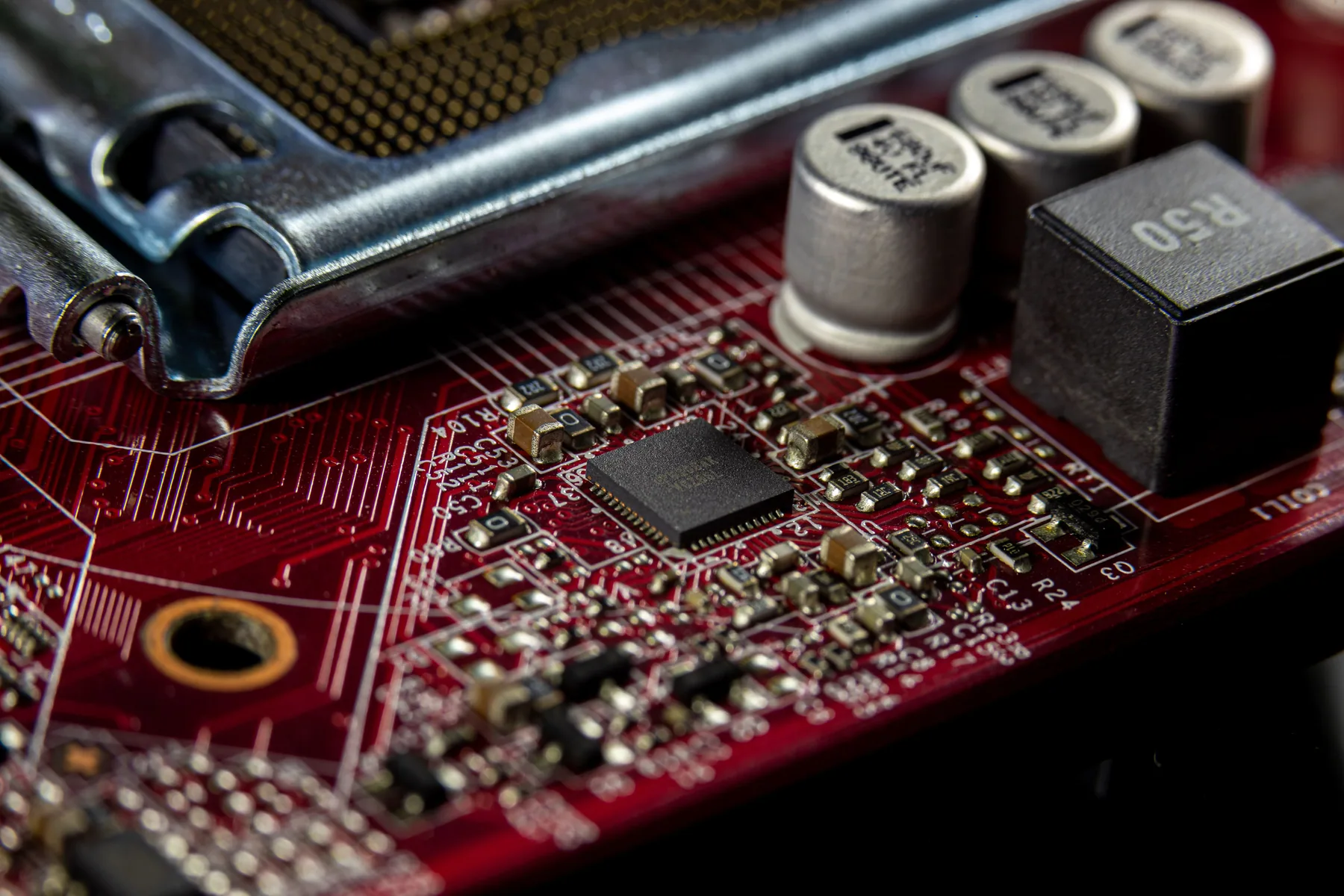
Close view of chips, capacitors and traces on a computer circuit board.
Computing hardware detail · industry reference photographPhoto: Sergei Starostin · Pexels License

Built around what you bring

Present the technology at the right scale

01

Memory devices and components

Use consistent mounting and labeling to make small products easy to compare. A magnified visual can support the physical sample when detail is difficult to see. Keep the display selective and connect each item to its approved application instead of showing an unexplained collection of parts.

02

Storage systems and media

Connect the visible hardware to the architecture being discussed. If a rack or enclosure is included, ask the product owner which surfaces and interfaces must remain accessible. Exhibit finishes and graphics should clarify the system, with services and handling coordinated by the appropriate specialists.

03

Controllers, software and IP

Build a short demonstration around the user or engineering task your audience recognizes. Use clear diagrams for elements that are not physical products. A screen should have a defined narrative and a presenter position, with deeper material available for a more technical exchange.

04

AI and data infrastructure

Show the specific role of your offer within the larger application. Avoid relying on a generic AI message when the real distinction lies in a device, architecture or workflow. Use exhibitor-approved examples and qualify simulated or representative content so the presentation remains precise.

DESIGN NOTES / 01

Give technical evidence room to breathe

A visitor should not need to read a dense specification sheet to identify the product’s purpose. Establish a small number of messages with a clear hierarchy: application, product role and supporting evidence. Maintain consistent terminology across the physical display, architecture graphic and presenter’s screen. The result can be technically serious and visually calm, with enough room for an engineer to choose the depth of conversation that matters.

For benchmark or performance content, collect the approved source material before designing the screen treatment. Ask the exhibitor to identify the relevant configuration, units, conditions and qualifications. Do not let decorative charts imply comparisons that the underlying evidence does not support. The design task is to make an approved technical story easier to read, not to invent an advantage or extrapolate a claim from incomplete information.

A technician works on a circuit board at an indoor workbench.
Electronics expertise · industry reference photographPhoto: Mikhail Nilov · Pexels License

The human connection

Let engineers and product teams work together

Build staffing around the actual questions the exhibit is designed to invite. Agree on a concise introduction, who owns each demonstration and how a visitor reaches a specialist. Include a shared vocabulary for products and configurations so notes remain useful after the event. We recommend rehearsing the transition from physical sample to diagram to discussion before the show environment adds distractions.

Shape the visitor experience

The practical details

FMS 2027 schedule needs confirmation

Organizer information checked September 16, 2026. Event dates and exhibit-hall dates are labeled separately.

Exact dates awaiting organizer confirmationThe official page identifies Santa Clara Convention Center and July 2027. Its headline says July 27–29, while a lower block says July 28–30. This page intentionally does not choose an exact date range or publish an unverified expo schedule. Obtain direct organizer confirmation before booking date-dependent activity. Purple is an independent exhibit provider.

Useful answers

Future of Memory and Storage exhibit questions.

Talk through your brief
What are the confirmed FMS 2027 dates?

Exact dates need organizer confirmation. The Terrapinn page headline lists July 27–29, 2027, but a lower block lists July 28–30. An organizer social post also gives July 27–29. Because the official page remains inconsistent, this page uses July 2027 without assigning exact start and end dates.

Where is FMS 2027 planned?

The official event page identifies Santa Clara Convention Center in Santa Clara, California. The venue is consistent in the information reviewed. Confirm the exact schedule, your booth allocation and exhibitor arrangements directly before making travel, freight or installation commitments that depend on particular days.

How do we make a small component interesting?

Give it a clear mount, an accurate label and a visible connection to a larger application. A magnified image or architecture diagram can add context. The point is to make its role understandable, while retaining the real sample and the technical detail specialists need for a credible discussion.

Should our booth lead with benchmark results?

Lead with the visitor’s application and use approved results where they help explain the product. Any performance presentation should include the context and qualifications supplied by the exhibitor. Purple can help with visual clarity, while the product team remains responsible for the accuracy and scope of the claim.

Can we combine hardware and software demonstrations?

Yes. Plan one coherent journey between the visible device, its architecture and the interface. Make the relationship clear and identify simulated or representative elements. Give staff a repeatable demonstration and reserve a separate position for visitors who want to discuss deeper implementation details.

How should we plan engineering meetings?

Consider typical group size, the documents or screens required and how long the conversations may run. Place a meeting surface near the technical story but outside the main demonstration audience. Let the exhibitor define which material is appropriate for open display and which needs another setting.

What affects the project cost?

Physical fixtures, demonstration technology, custom media, technical services, transport and meeting provision all influence scope. A clear product inventory and approved content plan make estimates more useful. Separate reusable exhibit elements from hardware-specific mounts or launch graphics, and keep unresolved schedule assumptions visible in the proposal.

Can design begin before the dates are resolved?

Yes. Product storytelling, layout exploration and reusable asset planning can proceed from a confirmed booth brief. Keep date-dependent production, freight and staffing decisions conditional on organizer confirmation. Purple can help develop the concept while the exhibitor obtains a definitive event and expo schedule.


Your working checklist

Bring a precise technical story to the brief

0 of 12 items confirmed

Confirm the brief
Design the experience
Prepare the delivery

Choose the working space

A footprint with a purpose.

Layout direction 1

Component display studio

For a focused range, combine a precise sample display, one application graphic and a guided screen. Use concealed storage for spare devices and literature. The visitor-facing surface should remain available for the product conversation, with small components presented clearly and consistently.

Explore this approach
Layout direction 2

Demonstration and meeting booth

Separate a repeatable guided demonstration from longer engineering conversations. This lets the main station remain available while a specialist explores a visitor’s application. Confirm power, connectivity and product requirements with the responsible teams before selecting the final technology and furniture arrangement.

Explore this approach
Layout direction 3

Architecture-led environment

A larger space can connect components, systems and applications through several related stations. Use a consistent visual language and an obvious starting point. Shared meeting space and technical storage should support the stations without becoming a barrier between the aisle and the products.

Explore this approach

Conceptual layouts, adapted to your confirmed footprint, open sides, equipment and current show requirements.

Price the demonstration and its supporting content

Custom mounts, product fixtures, screens, media preparation and technical coordination can matter more than a large quantity of decorative construction. Hardware transport, service needs and installation add further variables. Compare the scope of each demonstration and the required meeting capacity before expanding the footprint. Keep the schedule flexible until the organizer resolves the published date conflict, and avoid treating an unconfirmed day as a contractual assumption.

JUST SHOW UP.

Give the technical story a clear physical form

Share your FMS product lineup, demonstration goals and booth allocation. Purple can help develop a focused exhibit concept while exact July dates are confirmed with the organizer.

(800) 994-8030info@purpleexhibits.comExhibit design · custom builds · rentals · show coordination

Request a proposal

Tell us what you are bringing to Future of Memory and Storage and what your exhibit needs to accomplish.

Add booth details (optional)

Your request goes to Purple’s exhibit team.

Plan my Future of Memory and Storage exhibitCall Purple