
Exhibitor guide · New York, New York
Javits Center: the exhibitor's guide
The busiest convention center in America runs on three unions, fifty docks and a 250-square-foot rule. Everything an exhibitor needs to know about the Jacob K. Javits Convention Center, from a builder whose shop is ninety minutes up the Hudson.
 Javits Center · 429 11th Ave
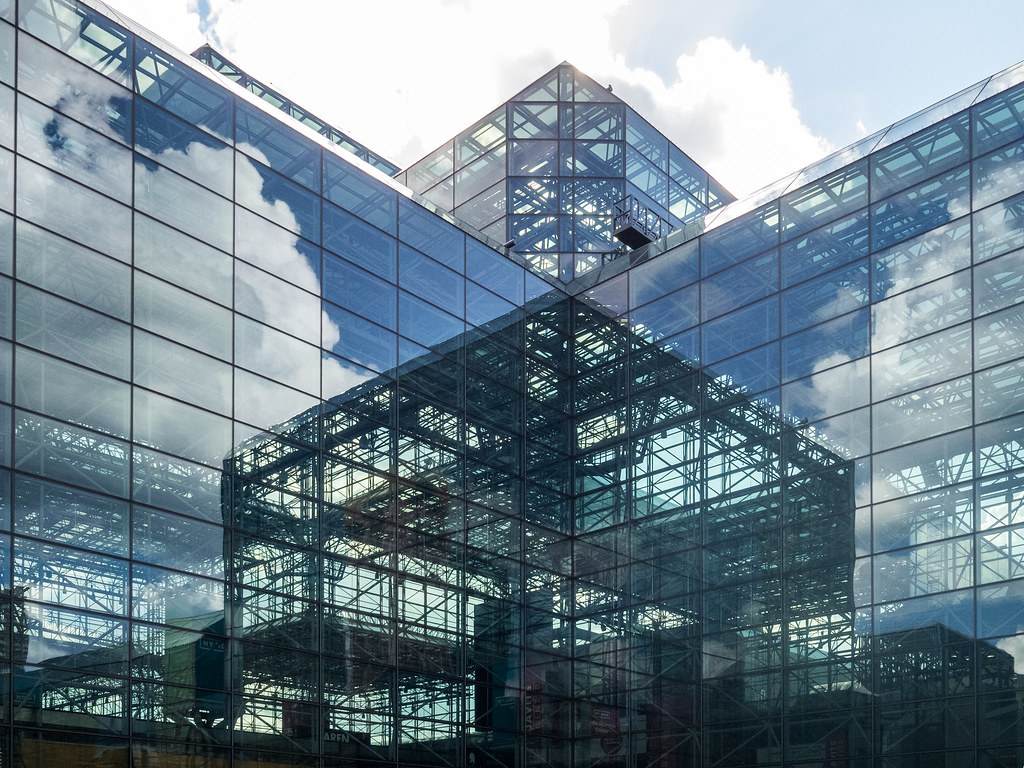
Hero photo: "Javits Center" by ajay_suresh, CC BY 2.0, via Flickr. Source
Why this page exists
The Javits Center is the show floor where first-time exhibitors get the biggest surprises. Not because the building is difficult, but because New York works differently: three union jurisdictions decide who touches what, drayage runs at the top of the national range, and a booth that your own staff could set up in Orlando needs a carpenter crew on Eleventh Avenue. Learn the rules once and the Javits becomes one of the best floors in the country to sell on.
This guide covers the building after its $1.5 billion expansion, the union jurisdictions and the 250-square-foot self-install rule, a checker that tells you who does the work on your booth, drayage that runs above Las Vegas, the truck marshaling facility that replaced the Twelfth Avenue queue, a travel-time planner for Manhattan, the shows that fill the building from NRF in January to BDNY in November, the hotels exhibitors use, and the history of a glass building that went from killing thousands of birds a year to hosting sixty species on its roof.
- The building: halls, levels, docks
- Who sets up my booth? Union jurisdiction checker
- The three unions, explained
- History: from the Coliseum to the green roof
- Rules of the floor
- Drayage estimator
- Freight countdown and the marshaling facility
- Manhattan travel-time planner
- Shows at the Javits
- Hotels, transit, crew logistics
- New York in pictures
- Free resources
- FAQ
The building
The building: halls, levels, docks
The Javits is a stacked building on a narrow site between Eleventh Avenue and the Hudson River. Exhibit halls sit on two levels, the 2021 expansion added a third block of contiguous space to the north, and the docks are split between levels. Knowing which level your hall is on decides how your freight moves.
| Space | What it is | Typical shows | Booth planning note |
|---|---|---|---|
| Level 3 exhibition halls (3A, 3B, 3D, 3E) | The main floor. About 500,000 sq ft of contiguous exhibit space across the original halls and the expansion, with clear heights of roughly 30 ft under the space frame; exact clear heights are on the venue's hall plans. | NRF, Auto Show, NY NOW, Toy Fair, NYCC | Islands, double-decks and hanging signs are all routine here. Column grid is 90 ft; the space frame has rigging points at fixed nodes, so sign placement follows the point map. |
| Level 1 exhibition halls (1A, 1B, 1C, 1D, 1E) | The lower halls, about 250,000 sq ft, with lower clear heights and direct dock access. | Second halls of large shows, ISC East, JA New York | Check the ceiling before designing tall. Freight to Level 1 is faster than to Level 3 during targeted move-in. |
| Special Events Hall and Level 4 rooms | A 100,000 sq ft column-free hall seating up to 3,800 in the expansion, plus a 55,000 sq ft ballroom above it. | Keynotes, galas, hybrid events | Carpeted rooms: lighter builds, floor protection, no forklifts. |
| Crystal Palace and Galleria | The 65,000 sq ft glass entrance hall on Eleventh Avenue, 180 ft high, and the 60,000 sq ft Galleria running north. | Registration, sponsorship activations | The best sponsorship real estate in the building. Structures need engineering review; the floor is public circulation. |
| River Pavilion | A 23,400 sq ft glass pavilion on the Hudson side with river views. | Receptions, press events | Daylight all day; plan graphics for glare, not for a dark hall. |
| Rooftop terrace, farm and pavilion | A one-acre working farm and glass event pavilion on the expansion roof, above the 6.75-acre green roof. | Sponsored receptions | Weight limits and weather plans apply. Nothing that needs a forklift. |
| 102 meeting rooms | Across Levels 1 to 4, from boardrooms to 1,000-seat rooms. | Conference tracks | Pop-up and tabletop only; hand-carry rules apply. |
| Docks and the truck marshaling facility | More than 50 loading docks on two levels, and a four-level, in-building marshaling facility from the expansion that holds at least 229 trucks off the street. | All shows | Trucks are called from the facility to the dock by the contractor. Off-target trucks wait; on-target trucks unload within hours. |
Hall labels and areas from the Javits Center floor plans and the expansion project fact sheet; figures marked verify are being confirmed with Javits event services.
Free tool
Who sets up my booth? The Javits jurisdiction checker
The Javits allows exhibitors to set up their own booth only inside strict limits: 250 square feet or less, by full-time employees of the exhibiting company, without tools or ladders. Everything else is union work, and each trade has its own jurisdiction. Answer eight questions and the checker tells you who does what.
Based on the Javits Center union jurisdiction summary published in exhibitor service manuals (ICFF, BDNY, JA New York, NY NOW). Show management can set stricter limits; the show kit wins.
The labor map
The three unions, explained
Exhibitors do not hire the unions directly. Labor is ordered through the show's general contractor or through an exhibitor-appointed contractor like Purple, who supervises the crew and signs the tickets. What matters to you is which trade owns which task, because that decides how many people you pay for.
| Trade | What they handle at the Javits | What that means for your booth |
|---|---|---|
| Teamsters | Unloading trucks and vehicles, delivering freight to and from the booth, rigging and spotting machinery, and moving exhibitor material on the floor. | Everything from the dock to your booth is Teamster work and is billed as material handling, priced by weight. Hand-carry is the only exception. |
| Carpenters | Erecting and dismantling booths and displays, uncrating and re-crating, installing and removing carpet, flooring and drape, and all display work. | If your booth needs a screwdriver, is over 250 sq ft or is set up by anyone but your full-time staff, carpenters build it. Purple's crews are supervised carpenters. |
| Electricians | Power to the booth, connecting equipment to outlets, installing lighted signs and headers unless they are a permanent part of the back wall, and electrical distribution under the carpet. | Order power early through the show electrical contractor. Design lit headers as permanent parts of the wall to keep them in carpenter scope; confirm scope with the show. |
| Riggers | Hanging signs and truss from the space frame, through the show contractor's rigging department. | Rigging points are fixed nodes on the frame. Purple checks the point map before designing the sign. |
The 250-square-foot rule
Full-time employees may set up and dismantle a display of 250 sq ft or less without tools or ladders. A 10×20 qualifies; a 20×20 does not. Bring ID and business cards; floor managers check.
One person, one trip
Exhibitors may hand-carry what one person can carry in one trip. No dollies, hand trucks or wheeled cases beyond a rolling bag; the show kit sets the exact allowance. Everything else goes through the dock and the Teamsters.
Exhibitor-appointed contractors
Purple files the EAC form and certificate of insurance by the show deadline, usually 30 days out, and works under the show contractor's labor rules with our own supervisors.
Straight time is a window
Straight-time hours are weekday daytime; evenings, weekends and holidays bill at overtime or double time. Purple schedules installs to land in straight time wherever the move-in allows.
History
From the Coliseum to the green roof
New York had the first auto show in North America in 1900 and spent the next eighty years without a convention hall to match the city. The Javits is what finally answered that, and it has been rebuilt twice since.
The first New York Auto Show opens at the original Madison Square Garden, the first automotive exhibition in North America. The city's trade shows spend the next half-century in armories, hotels and the Grand Central Palace.
Robert Moses opens the New York Coliseum at Columbus Circle: 323,000 sq ft on four floors, with a freight elevator said to be the largest outside an aircraft carrier. The Auto Show moves in and stays for thirty years.
James Ingo Freed of Pei Cobb Freed designs a glass space-frame building on Eleventh Avenue that evokes London's 1851 Crystal Palace. Construction takes seven years. The building is named for Senator Jacob K. Javits, who died weeks before it opened.
The Javits opens and takes over as the city's convention center. The Coliseum closes and is demolished in 2000 to make way for the Time Warner Center. The Auto Show moves to the Javits in 1987 and has been there since.
New York Comic Con debuts in the building with 33,000 attendees. Within a decade it draws 200,000 and takes over every hall plus the neighborhood.
A $463 million renovation replaces the glass with bird-safe fritted panels and adds a 6.75-acre green roof, the largest in New York State. Before the renovation the building's mirrored glass killed an estimated 4,000 to 5,000 birds a year; today more than 60 bird species and five bat species use the roof.
Hillary Clinton's election-night event is held under the glass ceiling of the Crystal Palace.
In March the Javits becomes a 2,500-bed field hospital run by the Army Corps of Engineers and FEMA, and in 2021 one of the largest vaccination sites in the country.
The $1.5 billion expansion opens in May: 1.2 million sq ft including 500,000 sq ft of contiguous exhibit space, a 54,000 sq ft ballroom, a rooftop farm growing up to 40,000 pounds of produce a year, a glass pavilion, and an in-building truck marshaling facility that takes the queue off Twelfth Avenue.
A rooftop solar array, one of the largest in Manhattan, comes online. The Javits bills itself as the busiest convention center in the United States and is preparing to host events around the 2026 FIFA World Cup, whose final is played across the river at MetLife Stadium.
Rules of the floor
Rules of the floor
Union building, three jurisdictions
Teamsters move it, carpenters build it, electricians power it. Self-install only under 250 sq ft, tool-free, by full-time employees. Purple supervises union crews as your EAC.
Top of the national range
Planning rates run about $195 per hundredweight with a 200 lb minimum per shipment and surcharges for uncrated, off-target and special handling. Above Las Vegas; the weight of the booth is the budget lever.
Marshaling first, dock second
Carriers check in at the marshaling facility and are called to a dock by the contractor. Targeted move-in windows are enforced; missing yours can cost a day.
What you can bring in yourself
One person, one trip, no dollies or hand trucks. Entrances for hand-carry are designated per show; the dock is not one of them.
FDNY and the Javits fire marshal
Covered and multilevel exhibits need plans, flame-certificates for all fabrics and a fire watch above thresholds; double-decks need engineer-stamped drawings. FDNY certificates of fitness apply to some activations. Purple prepares the package.
Fixed points on the space frame
Hanging signs attach at frame nodes and are priced per point. Order rigging with the show contractor at the early-bird deadline; late rigging at the Javits is the most expensive line in the city.
Venue-exclusive services
Electrical, plumbing, internet and telecom, cleaning, catering and security are exclusive to the Javits or its designated providers; the show kit carries the current list. Order at the deadline; on-site orders are priced to discourage them.
Empties and the MHA
EMPTY stickers as you unpack; empties return after the aisle carpet is up. Turn in the material handling agreement before you leave or the freight goes to forced routing at the highest rate.
Free tool
Javits drayage estimator
Planning numbers for 2026 and 2027; your show's exhibitor kit has the tariff. All-venue comparison and a glossary on the drayage rates page.
How Purple keeps Javits drayage down: aluminum frame systems instead of wood, one consolidated shipment from Fishkill, crated everything, and advance warehouse on time. A 20×20 that weighs 1,800 lbs instead of 3,200 saves about $2,700 on this floor before labor.
Deadlines
Freight countdown and the marshaling facility
The expansion moved truck queuing indoors. Trucks check in at the four-level marshaling facility, wait for a dock call, unload, and leave the same way. The countdown below is the version Purple runs for a typical Javits show; the show kit sets the actual dates.
Free tool
Manhattan travel-time planner
The Javits is on the far west side, one block from the 7 train's Hudson Yards station and a fifteen-minute walk from Penn Station. Pick two points; the planner gives normal, show-week and peak-event times.
The calendar
Shows at the Javits, 2026–2027
The Javits runs year-round. These are the shows exhibitors ask Purple about most, with the next confirmed dates where organizers have published them.
| Show | Next dates | Industry | Attendance | Purple |
|---|---|---|---|---|
| NRF 2027: Retail's Big Show | January 10–12, 2027 | Retail technology | 45,000 | Custom exhibits |
| NY NOW Winter | January 31 – February 2, 2027 | Gift, home and lifestyle wholesale | 20,000 | 10×10 rentals |
| Toy Fair New York | February 20–23, 2027 | Toys and play | 30,000 | Toy Fair booths |
| New York International Auto Show | March 26 – April 4, 2027 | Automotive | 1,000,000 | Custom exhibits |
| ICFF | November 7–9, 2027 (moves from May) | Contemporary furniture and design | 25,000 | Custom exhibits |
| NY NOW Summer | August 2–4, 2026 | Gift, home and lifestyle wholesale | 20,000 | 10×20 rentals |
| Anime NYC | August 20–23, 2026 | Anime and pop culture | 150,000 | Booth rentals |
| The Armory Show | September 2026 | Contemporary art fair | 60,000 | Custom exhibits |
| New York Comic Con | October 8–11, 2026 | Comics, film, TV, gaming | 250,000 | Custom exhibits |
| JA New York Fall | October 25–27, 2026 | Fine jewelry | 8,000 | 10×10 rentals |
| ISC East | November 3–5, 2026 | Security and public safety | 10,000 | 10×20 rentals |
| BDNY (Boutique Design New York) | November 10–11, 2026 | Hospitality design | 9,000 | Custom exhibits |
| New York Boat Show | January 2027 | Marine | 40,000 | Booth rentals |
| Vision Expo (returns to New York) | March 30 – April 1, 2028 | Optical | 15,000 | Vision Expo booths |
Attendance is the organizer's or trade press figure, rounded; Auto Show and Comic Con figures are total public attendance. Dates from organizer sites in 2026; confirm before booking. Vision Expo consolidated to one annual event in 2026 and returns to the Javits in 2028.
Logistics
Hotels, transit, crew logistics
- Airports: three, none close. Newark is often the fastest by car to the west side; JFK by AirTrain and Long Island Rail Road to Penn Station is the most predictable. LaGuardia has no rail.
- Transit: the 7 train's 34 St–Hudson Yards station is a block east of the building and connects to Times Square and Grand Central in under ten minutes. Penn Station and Moynihan Train Hall are a fifteen-minute walk.
- Freight: carriers check in at the marshaling facility; no truck goes to a dock without a call. Address every piece with hall, booth number and show name.
- Crew: Purple's crews come down from Fishkill the same morning, 70 miles up the Hudson. No hotel nights for install labor on most shows.
- Hotels: Hudson Yards and the west 30s have hotels within a ten-minute walk; Times Square is one subway stop.
| Hotel | Distance | Why exhibitors pick it |
|---|---|---|
| Equinox Hotel, Hudson Yards | 8-min walk | Closest full-service hotel; client dinners at Hudson Yards. |
| Hotels in the west 30s (Yotel, Hampton, Fairfield, Moxy) | 10-min walk | Show blocks and crew rooms. Book at registration; NRF and NYCC weeks sell out. |
| New York Marriott Marquis | One subway stop | Company meetings in the same building as the show hotel. Venue guide. |
| New York Hilton Midtown | 20 min by cab | Conference headquarters for many associations that also exhibit at the Javits. Venue guide. |
| Sheraton New York Times Square | 20 min by cab | Large blocks, next door to the Hilton. Venue guide. |
The city
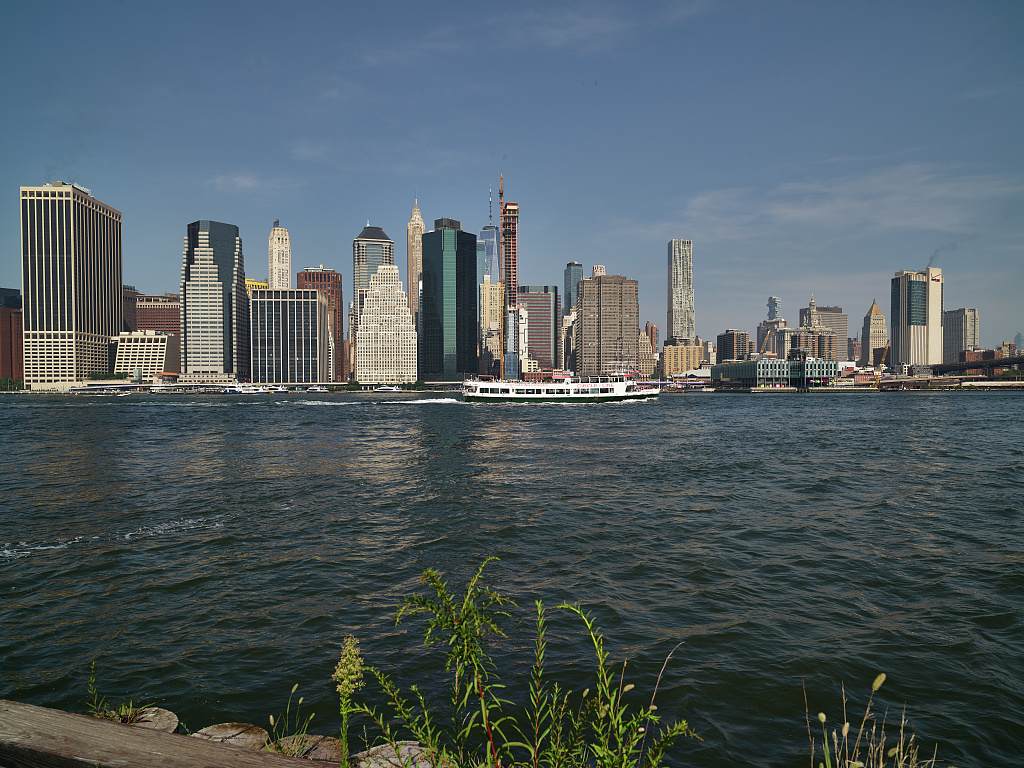
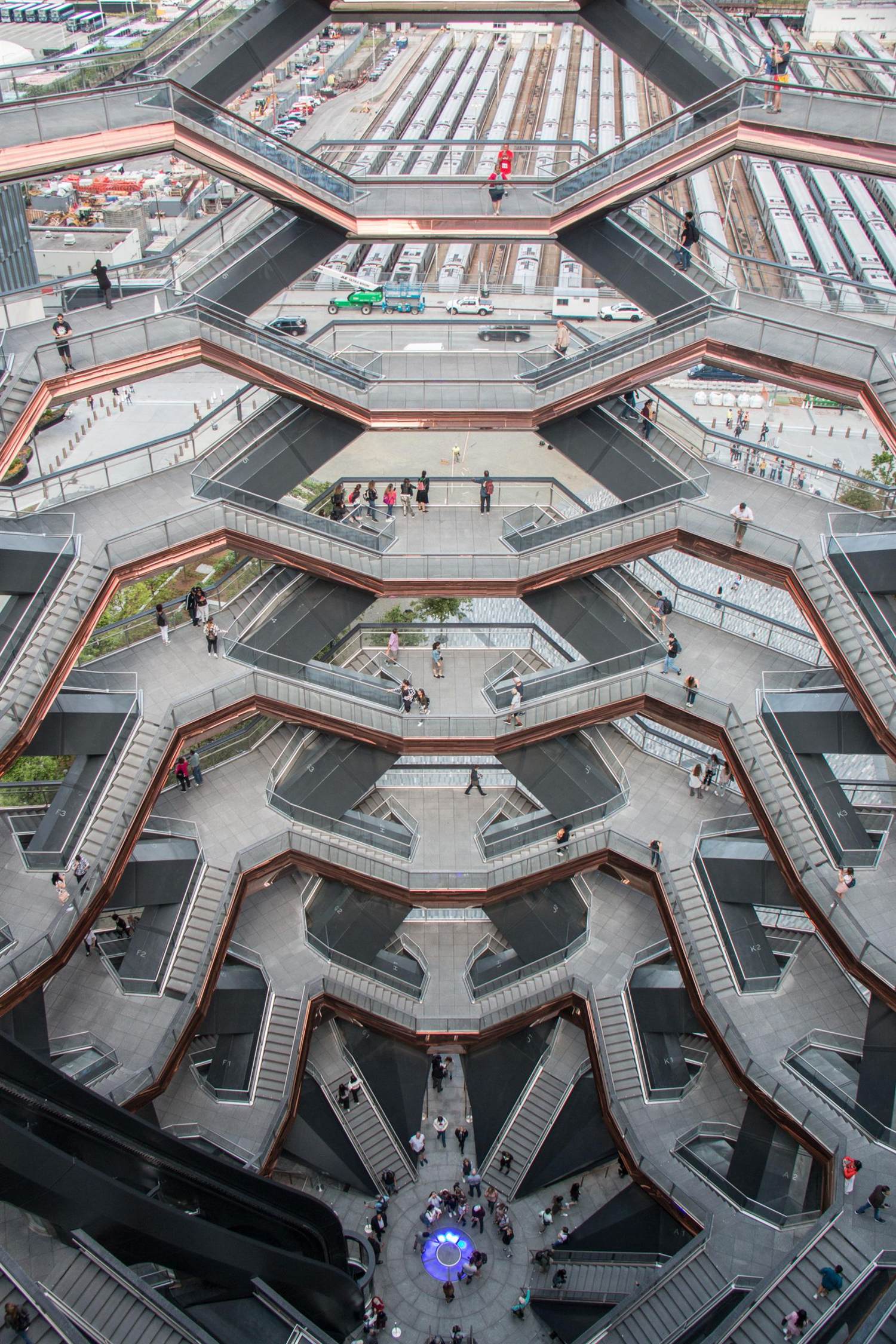
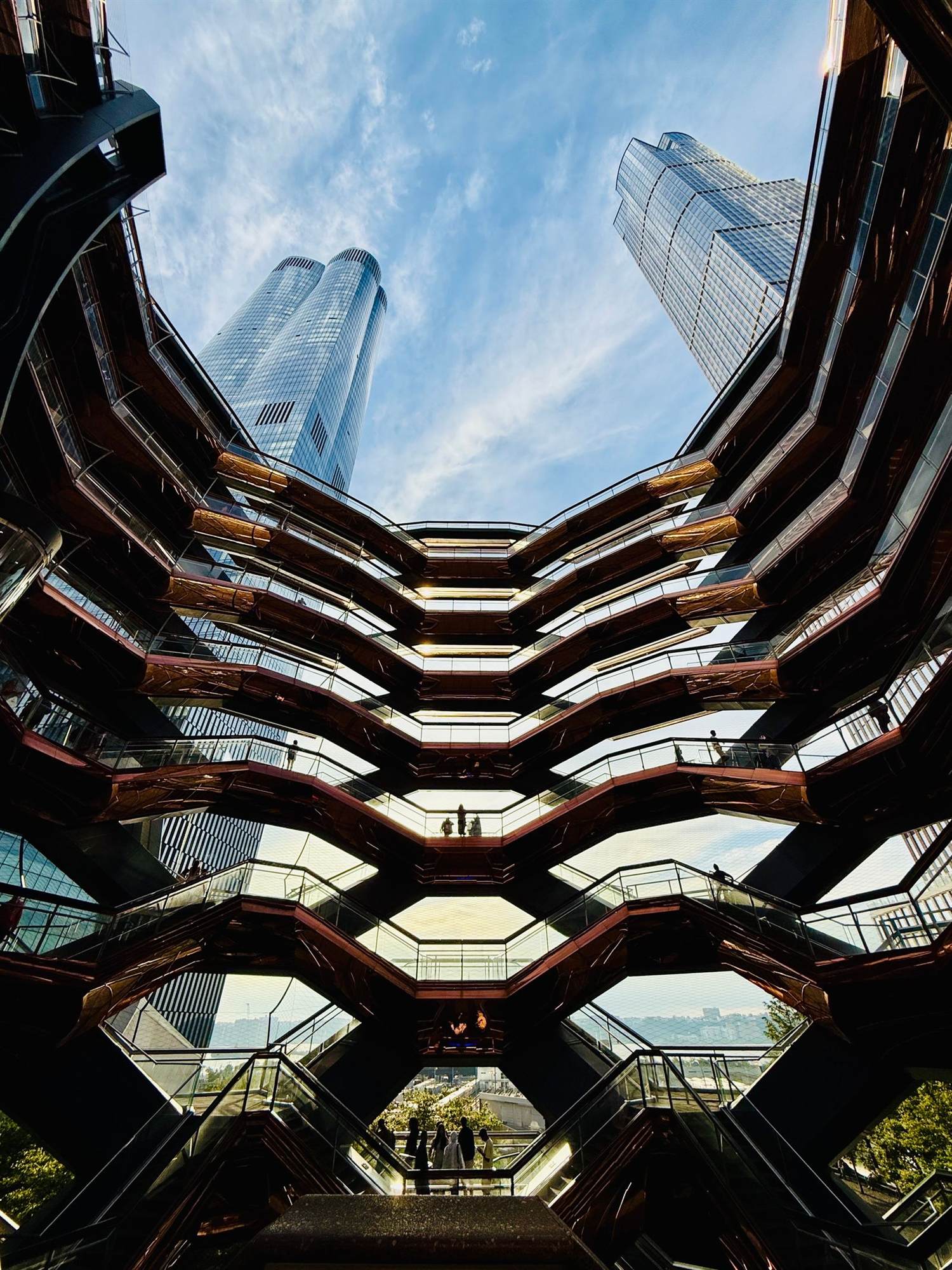
New York in pictures
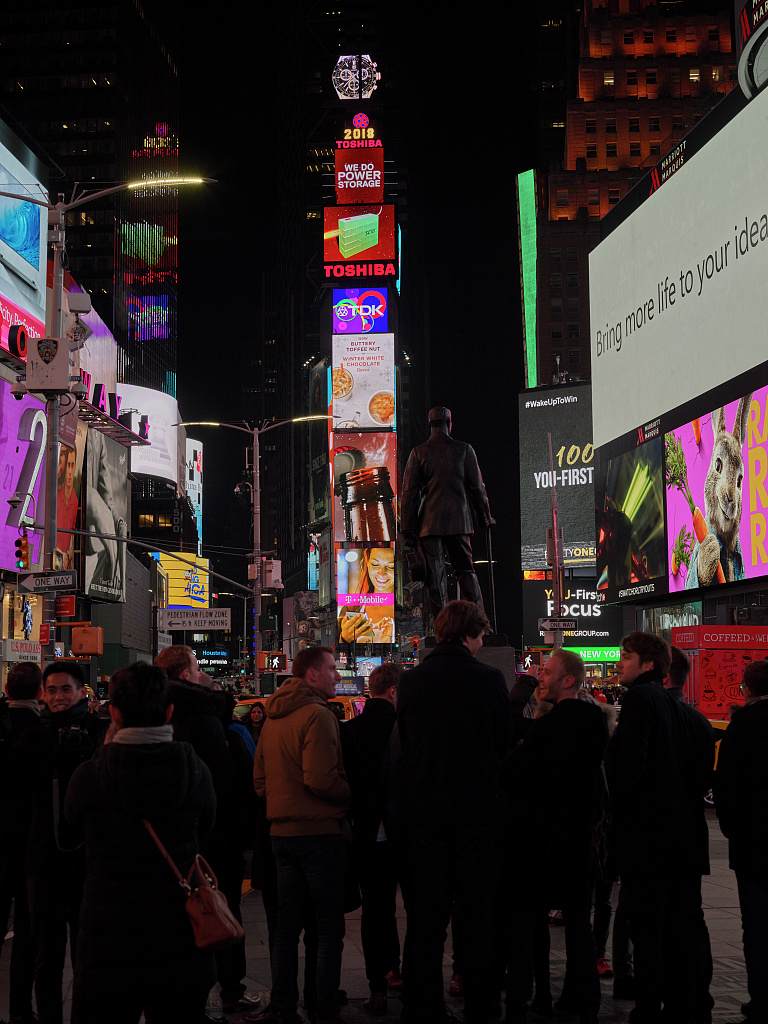
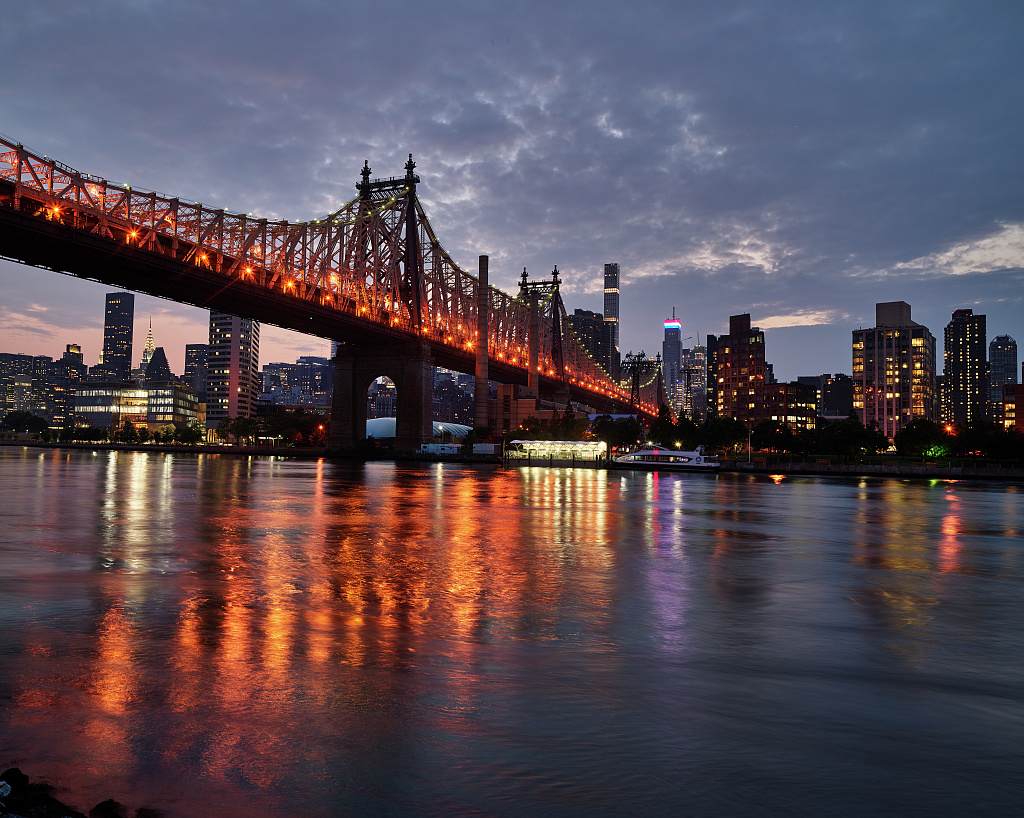
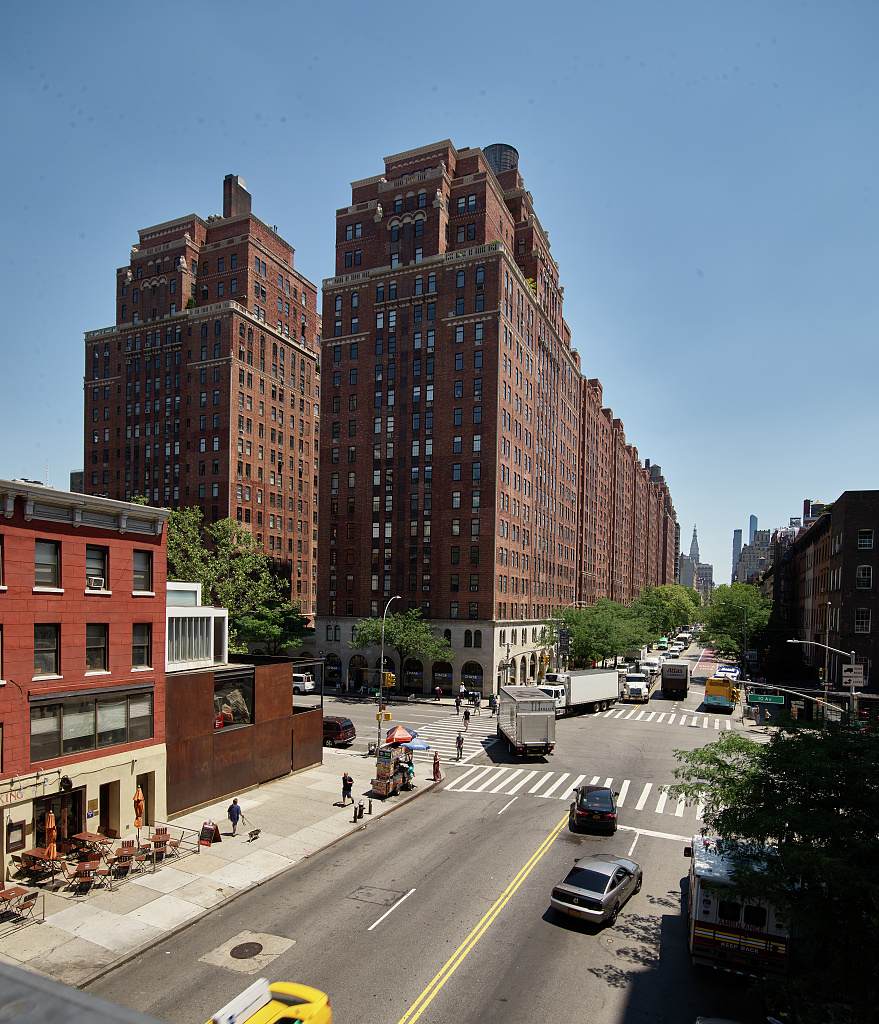
Resources
Free resources you can link to
Embed the jurisdiction checker
Cite the numbers
One-page cheat sheet
Jurisdictions, the 250 sq ft rule, hand-carry, docks, deadlines.
Related on purpleexhibits.com: Javits exhibitor checklist: freight, labor, setup · New York trade show booth builder · Toy Fair booths · Northeast booth builder.
Questions
Javits Center FAQ
Can I set up my own booth at the Javits Center?
Only if the display is 250 square feet or less, is set up by full-time employees of your company, and needs no tools or ladders. Anything larger or anything that needs a screwdriver is carpenter work ordered through the show contractor or an exhibitor-appointed contractor.
Which unions work at the Javits?
Teamsters handle freight, unloading and delivery to the booth. Carpenters erect and dismantle booths, lay carpet and handle display work. Electricians handle power and lit signs. Riggers hang signs from the space frame through the show contractor.
What can I hand-carry into the building?
What one person can carry in one trip, without a dolly or hand truck. Bring it through the designated exhibitor entrance, not the docks. Anything more goes through the marshaling facility and is billed as material handling.
How much is drayage at the Javits?
Purple's planning estimate is about $195 per hundredweight in 2026 and 2027, with a 200-pound minimum per shipment and surcharges of 25 to 35 percent for late, off-target, uncrated or special-handling freight. It is one of the three most expensive floors in the country, so booth weight matters more here than anywhere.
How big is the Javits Center?
About 3.3 million square feet of interior space after the 2021 expansion, with roughly 850,000 square feet of exhibit space, 500,000 of it contiguous, a 100,000-square-foot special events hall, a 54,000-square-foot ballroom and 102 meeting rooms.
How do trucks get to the docks?
Carriers check in at the in-building truck marshaling facility and wait for a dock call from the show contractor. Trucks arriving in their targeted window unload within hours; off-target trucks wait and pay a surcharge.
Which airport should I use?
Newark is often the fastest by car to the far west side. JFK by AirTrain and Long Island Rail Road to Penn Station is the most predictable at 55 minutes. LaGuardia is closest on the map but has no rail link.
Is there a hotel attached to the Javits?
No. Hudson Yards and the west 30s have hotels within a ten-minute walk, and Times Square hotels are one stop on the 7 train.
Where does Purple ship from for Javits shows?
Fishkill, New York, about 70 miles up the Hudson. One truck, same day, and our crews drive down the morning of the install, so there are no hotel nights on the labor line for most shows.
Does the Javits allow double-deck booths?
Yes, with engineer-stamped drawings, a plan submitted to show management and the Javits fire marshal by the deadline, and a fire watch or approved extinguishing approach for covered areas. Purple prepares and files the package.
Exhibiting at the Javits?
Send us the show and booth number. You get a jurisdiction-checked design brief, a drayage estimate at Javits rates, a rigging point check and a build timeline within two business days.
Venue guides
Every venue we have a guide for
Same standard, every hall: the building, the rules, the tools and the calendar.