

Call time
45 minutes before doorsThe crew arrives with phones charged, picks up the devices from your booth captain and walks the booth so everyone knows where the demo stations, the meeting area and the storage closet are.
Purple Exhibits books lead capture staff for trade shows across the United States: badge scanners and lead qualifiers who ask your questions, tag every visitor and leave your sales team notes they can actually use. One rate for every role, $85 an hour, with no travel fees.
$85/hr per person · 4-hour minimum · local crews, no travel fees
09:42IT director · budget approved · wants a demo callHOT
09:47Buyer, 12 stores · comparing vendors in springWARM
09:51Student · interested in careersNURTURE
Lead capture staff are the people at your booth whose whole job is to make sure no serious visitor leaves unrecorded. They scan each badge, ask your three to five qualifying questions in plain conversation, tag the lead hot, warm or nurture, and type a short note your sales team can act on the next morning. Purple Exhibits books lead capture staff, badge scanners and lead qualifiers for trade shows across the United States at $85 per person per hour, with a four-hour minimum per shift and no travel fees. We brief them on your product, your questions and your lead retrieval app before the doors open.
The difference shows up after the show. A list of badge scans tells your team who walked past. A list from trained lead qualifiers tells them who needs what, by when, and who to call first, so the follow-up starts the day the show ends instead of a week later.
Role specUpdated Oct 2026
The job changes through the day. Fast scanning in the rush, deeper qualifying in the lull, and a clean handoff at close. Here is how our badge scanners and lead qualifiers spend a typical day on the floor.
The crew arrives with phones charged, picks up the devices from your booth captain and walks the booth so everyone knows where the demo stations, the meeting area and the storage closet are.
Each person logs in to the lead app, scans a test badge and confirms the record shows up in your portal with the custom questions in the right order. Spare batteries and a charging strip go in one known spot.
Your booth captain repeats the day’s goal, the hot-lead rule and who on your team takes handoffs. We also note when big sessions or keynotes let out, because those minutes bring the rush.
The first wave is fast and impatient. Staff use the short version of your questions, scan every interested visitor and tag quickly. Depth comes later; nobody walks away unscanned now.
The crew lead compares scans to the hourly target and reads a handful of notes at random. Thin notes get fixed now, not at the end of the day when nobody remembers the conversation.
Breaks are staggered so the front of the booth is never empty. With two people on lead duty, one eats while the other covers both sides and the roaming scanner steps in.
Traffic thins, and good staff use it. They hold longer conversations, run the full set of qualifying questions and book meetings on your team’s calendar while visitors have time to talk.
Sessions end, aisles fill again, and the pace goes back to quick scans with clear tags. Hot leads get walked straight to your sales lead instead of waiting in the app.
Staff keep scanning until the lights dim; some of the best buyers visit late because their schedules were full all day. Anything marked hot gets a same-night flag for follow-up.
Apps sync, totals are counted and the crew lead sends a short end-of-day sheet: scans, tag split, standout conversations and anything that went wrong. Devices are charged and locked away.
Times follow your show’s exhibit hours. We set the call time and the breaks once you send the schedule.
“Lead capture” covers three different jobs. Most booths need the middle one all day, the first one during the rush and the third one once the lead team grows past three or four people.
Scans every interested visitor, asks one or two quick questions and applies a simple tag. Right for a busy giveaway counter, a fan-heavy consumer day or a rush hour when speed matters more than depth.
Speed, a friendly ask, no visitor missedHolds a real conversation, works through your three to five questions, tags by your sales rules and writes a four-part note. This is what most exhibitors mean when they ask for lead capture staff, and it is our default.
Your questions, honest tags, useful notesRuns the lead team on a larger booth. Sets positions, checks notes during the day, walks hot leads to your sales lead, books meetings and sends the end-of-day sheet.
Quality control and the handoffAll three levels cost the same $85 an hour. The difference is the brief, not the price, so tell us which level you need at each hour and we plan the crew around it.
Start with the problem you need solved at the booth. Many exhibitors pair lead staff with one other role: someone draws people in or shows the product, and the lead team makes sure every interested visitor is recorded.
Every serious visitor must be recorded and sorted for sales
This page. Scanning, qualifying, tagging and notes are the whole job.
Guests need a warm welcome, check-in and on-time meetings
Hosts run the front desk, lounges and meeting calendars. Pair them with lead staff when meetings also need notes.
The aisle walks past and you need people pulled in
Ambassadors start conversations and hand interested visitors to lead staff, who take it from there.
Your product only makes sense when someone shows it working
Demonstrators run the demo; lead staff stand at the end of it and capture everyone who watched.
Many of your buyers prefer Spanish or another language
Bilingual staff can qualify in two languages. Tell us early so we can confirm the person by name.
A launch, a photo spot or a stage moment needs presence
Models draw the crowd for the moment; lead staff make sure that crowd turns into names.
The pairing that works most often: one person who starts conversations and one who finishes them. A brand ambassador or demonstrator creates interest, then introduces the visitor by name to the lead qualifier, who already knows the questions. Neither person has to switch modes mid-conversation, and the visitor never feels handed off to a stranger, because the introduction carries the context with it. On a small booth one person can do both; past a 10×20, splitting the jobs nearly always produces more qualified leads per hour than adding another generalist.
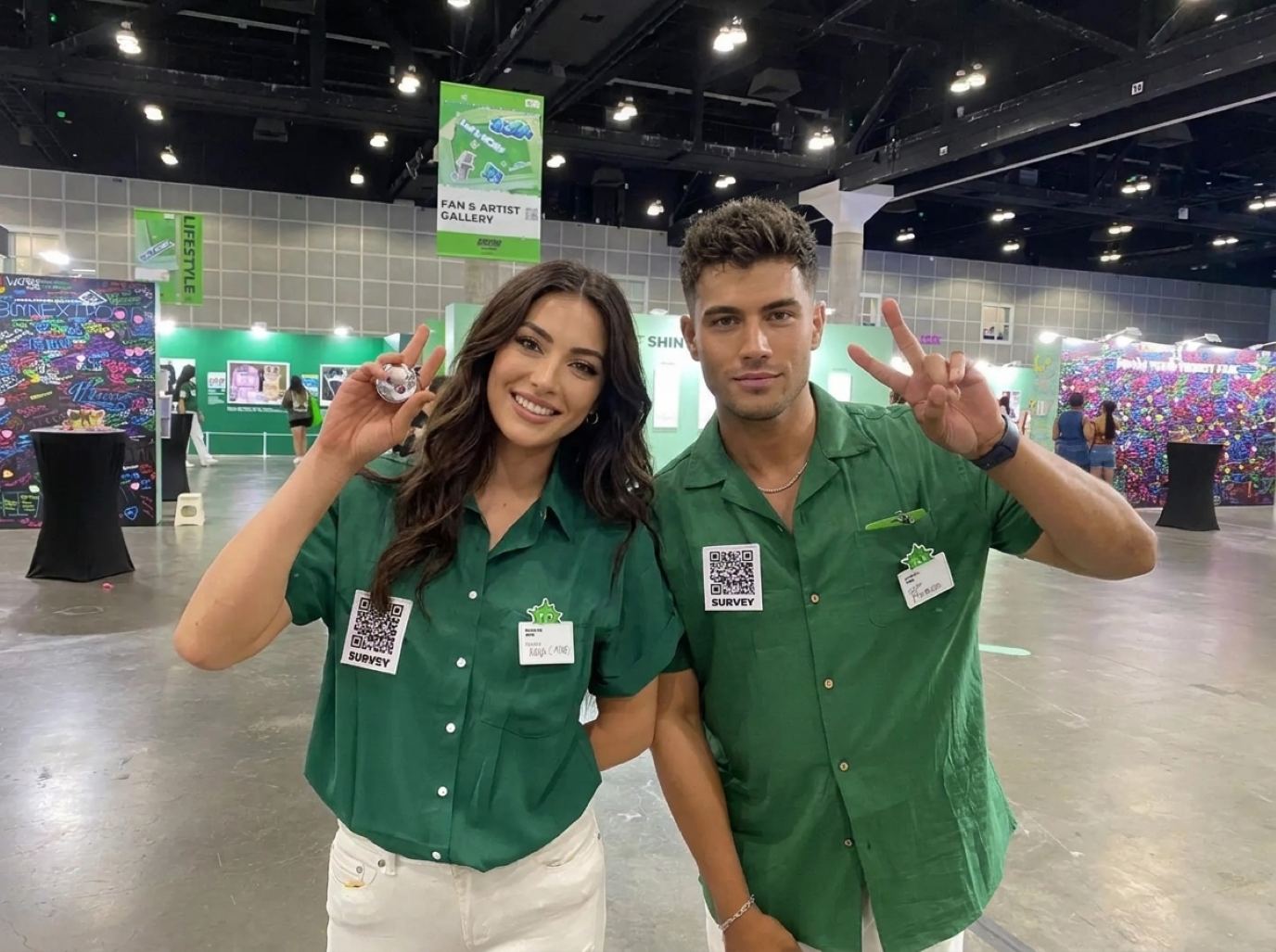
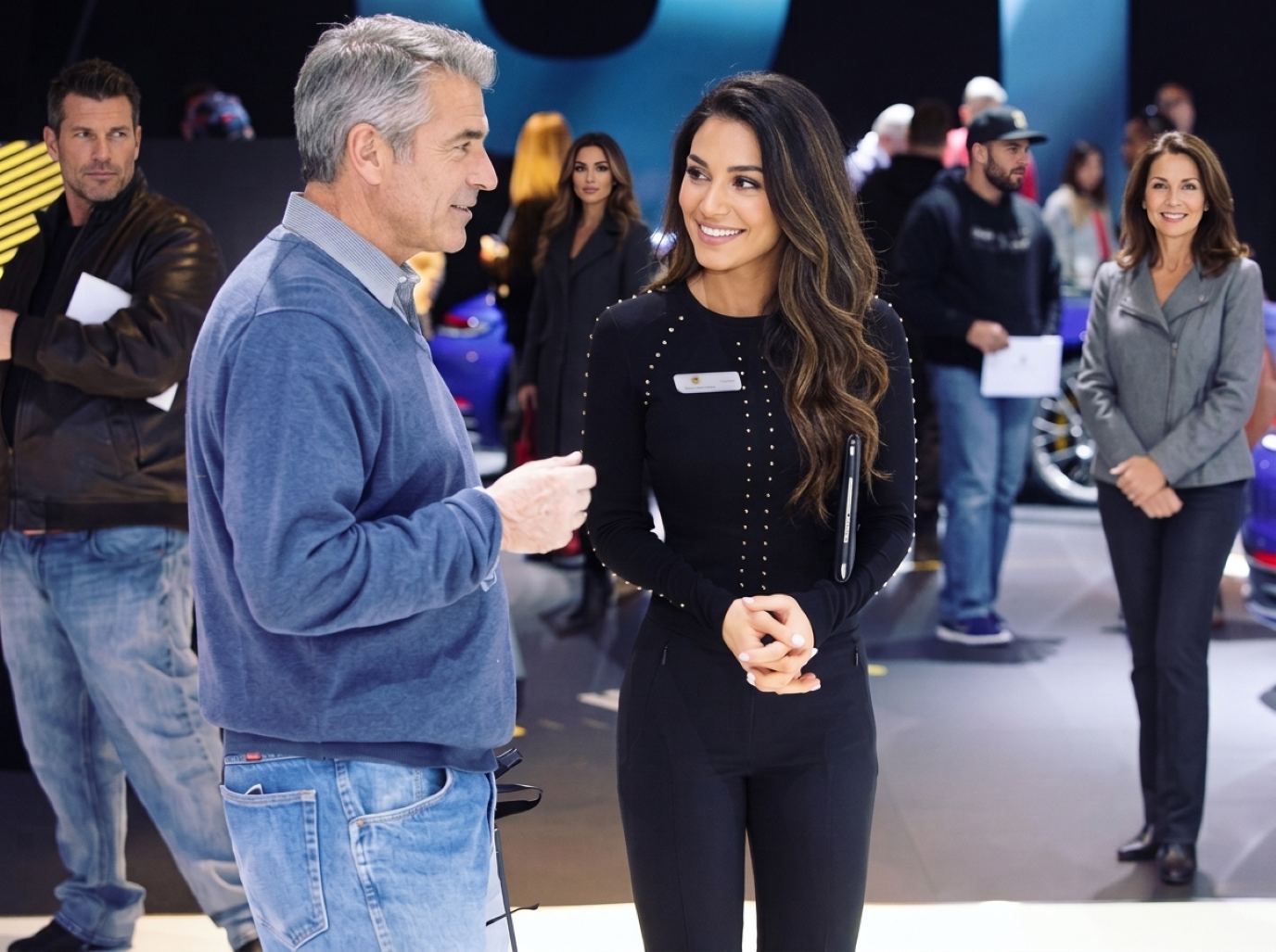
Good lead staff look approachable and organized at the same time: a clean outfit, a device that is ready, and full attention on the person in front of them. These are real Purple Exhibits crews.
Two staff in matching green camp shirts and white jeans, each with a printed survey QR code on the chest. Visitors can scan the code with a phone while the staffer scans their badge, so the conversation and the form happen at the same time.
Back to the hero photo ↑Real Purple Exhibits events.
Most exhibitors book staff by booth size and hope the leads follow. Turn it around: set the number of qualified leads your sales team wants, and the planner works out how many lead capture staff you need on duty, what each person should aim for every hour and what it costs.
Scan and tag assumes about 12 conversations per person per hour, full qualifying about 7 and meeting booking about 4, with roughly three quarters of each hour spent in conversation.
Visitors who answer your questions and get a hot or warm tag. The planner assumes 45%, 65% and 80% of conversations qualify in the three modes, because deeper questions filter as they go.
Quiet niche shows lower the numbers and busy halls raise them. Send us your plan and we adjust it to your show, your booth and your sales team’s rules.
Worked example, the planner’s default: 300 qualified leads from a three-day show, full qualifying, steady traffic, a 20×30 booth and eight-hour days. That needs four people on lead duty plus one relief person, for a staff cost of $10,200, or about $34 per qualified lead. Switch to scan and tag during the rush hours and the same team reaches more people, with lighter notes.
These are the people on lead duty at the same moment. Hosts, demonstrators and ambassadors are extra, and they make lead staff more productive because they feed them interested visitors.
| Booth | On lead duty | How they work it | Setup |
|---|---|---|---|
| 10×10 inline | 1 | One person who greets, scans and tags from the front corner. Add a second for the busiest day or hours. | Standing at the open edge |
| 10×20 inline | 1–2 | One at each end of the open side, or one at a small counter and one roaming the front. | Counter plus roamer |
| 20×20 | 2–3 | A lead counter near the back of the traffic flow, plus a roaming scanner who covers the demo stations. | Counter plus roamers |
| 20×30 | 3–4 | One scanner per cluster of demo stations, plus a lead desk lead who checks notes and walks hot leads over. | Stations plus desk lead |
| 30×30 island | 4–6 | A scanner on each open side, a lead desk lead and relief cover for eight-hour days. | Four sides plus relief |
| 40×40 and larger | 6–8+ | Zone captains who own a side or a theater each, a desk lead and a relief rotation planned by the hour. | Zones plus rotation |
The rule of thumb: one person per open side of the booth, one more for each cluster of demo stations, and one relief person for every four on duty when shifts run eight hours or longer. A desk lead who checks notes pays for itself once you have four or more on lead duty.
Corner booths and islands with several entrances need a person facing each stream of traffic, even if one side is quieter. Visitors rarely walk across a whole booth to find someone with a scanner; they leave by the side they came in. If one side stays slow all day, we move that person to the busy side and keep a roamer floating between both.
A badge scanner can be trained in five minutes. A lead qualifier needs your rules. We collect these eight things from your team, turn them into a one-page brief and run through them with the crew on a call and again at the booth rehearsal.
Three to five questions, written the way a person talks, not like a form. We turn “Purchase timeline?” into “Is this for a project this year, or are you looking ahead?”
Hot, warm and nurture defined with real criteria from your sales team, such as timeline, budget, role and the size of the need. Staff tag by your rule, not by a gut feeling.
Who on your team takes hot leads, how staff call them over and what to do when that person is busy. A hot lead should never wait alone at the counter.
The one-line answer to “So what do you do?” and three points staff can say with confidence. Enough to keep a visitor talking while they qualify.
Login steps, field order, custom questions, how to add a note and what to do when the hall signal drops. We test it during the rehearsal, not at the first scan.
Scan first, one item per badge, and what to say when someone wants the gift without the conversation.
Pricing, contract terms, roadmap and anything technical beyond the basics. Staff say “Let me get the right person” and hand off.
Four parts in every note: who they are, what they need, when, and the next step. Short enough to type in twenty seconds, clear enough for a stranger to act on.
Your sales team writes the rules; we help turn them into questions people actually enjoy answering. Here are starting sets by industry. Swap in your own, keep it to five or fewer, and make the last one about the next step.
Staff learn the questions by heart and ask them in their own words. The order matters less than the conversation; the tag rule is what keeps everyone consistent.
Lead staff need to be easy to find and easy to talk to, and they carry more than most roles: a scanner or tablet, a pen, sometimes a phone for photos of business cards. Pick a look, ship any branded pieces and we confirm sizes before the show.
Camp shirts or button-downs in one bold color, with white or neutral bottoms. Visitors can spot your lead team from across the aisle, and a printed QR code on the chest can send phones straight to your form.
Works best: Busy halls, consumer and fan showsDark blazer, white shirt or blouse, tailored trousers and a lanyard. The right look when the person being qualified is a director with a budget.
Works best: Enterprise, medical, financeYour logo polo, chinos with deep pockets and comfortable shoes. Practical for long days with a scanner, a pen and a phone to carry.
Works best: Industrial, manufacturing, logisticsFitted black tops and trousers that work with any booth color and keep the attention on the conversation and the tablet in hand.
Works best: Auto, design, premium boothsHalls can run cold in the morning and warm by afternoon, so we suggest a light layer in your color for early shifts. If you send branded shirts, send one extra per person for multi-day shows; a fresh shirt on day three looks better in every photo and every conversation.
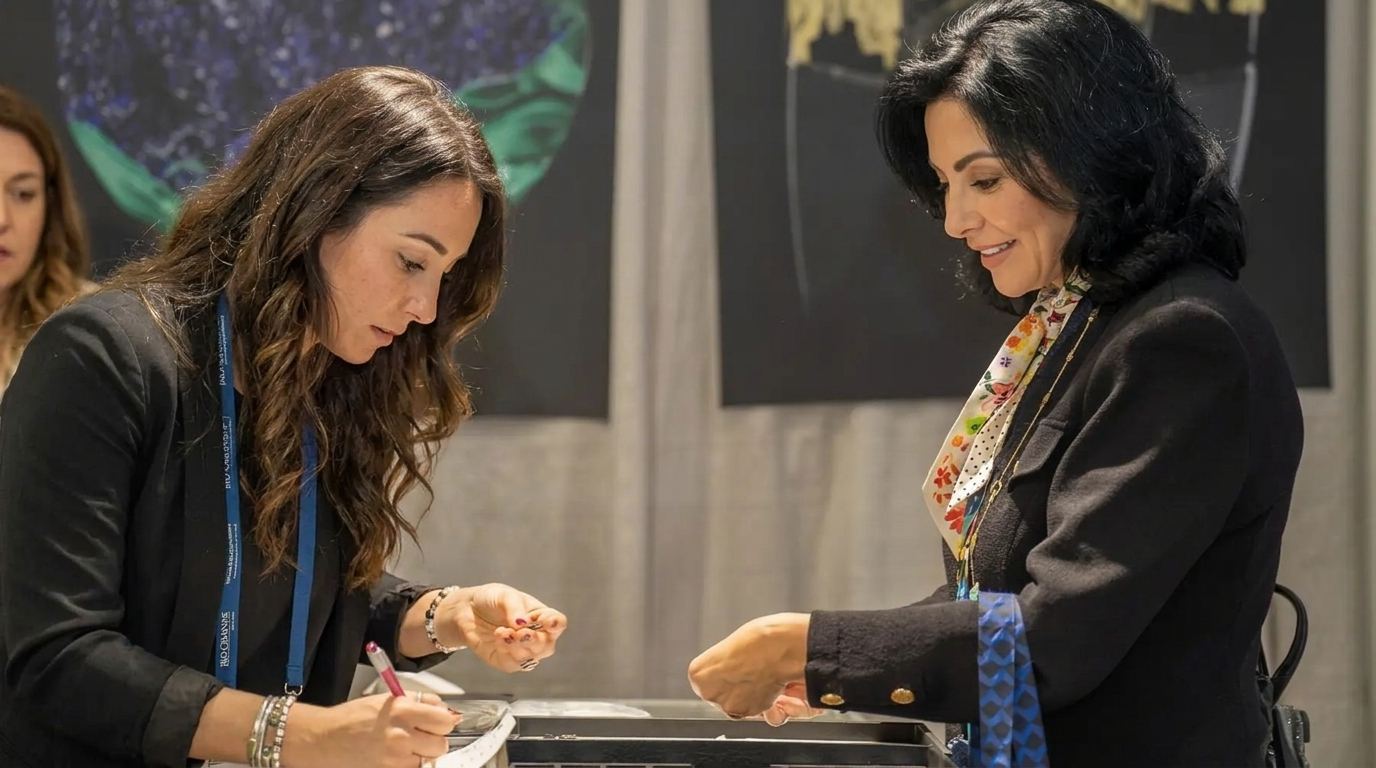
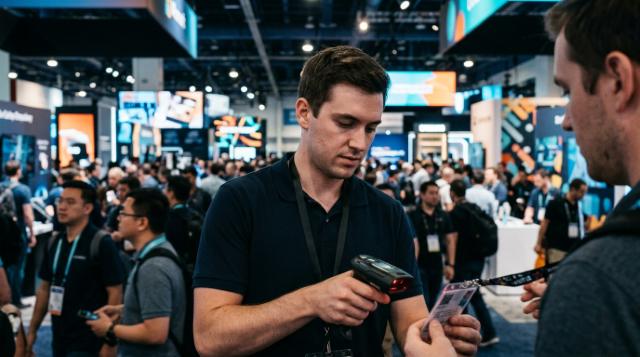
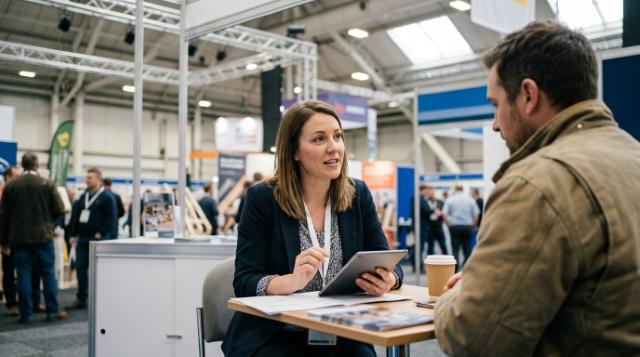
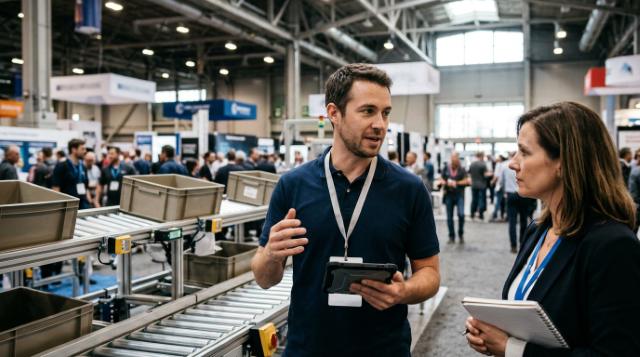
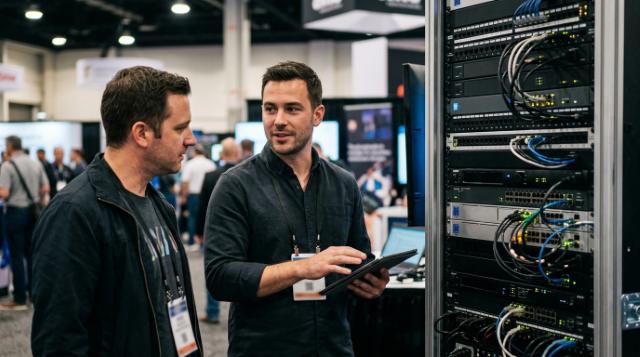
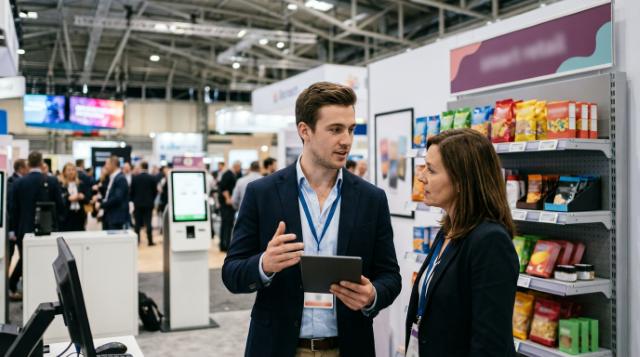
The same job looks a little different on every show floor. A tablet at a retail booth, a handheld scanner in a packed tech aisle, a seated chat at an industrial show. These scenes show the moments our lead staff are trained for.
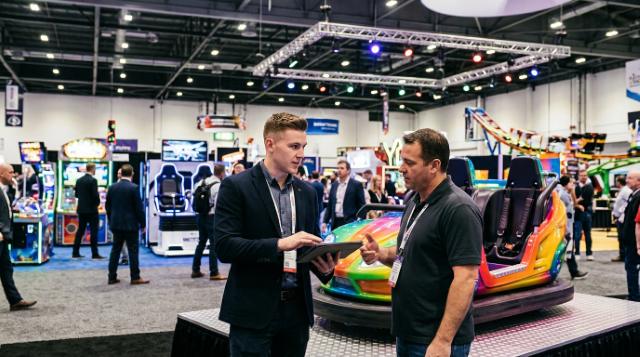
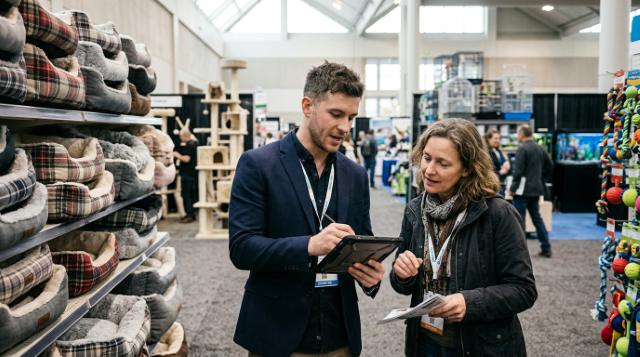
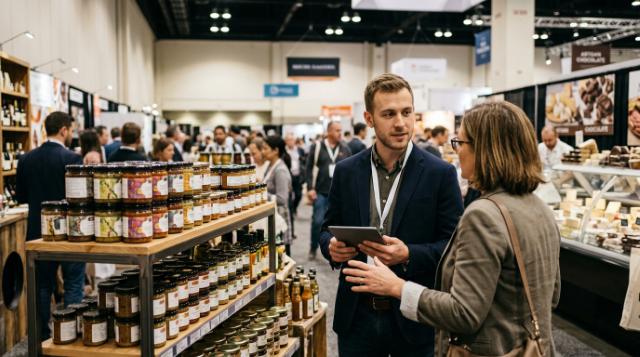
Scan counts are easy to inflate and easy to misread. These six numbers tell you whether your lead team is doing the job, and the last one tells you whether the show was worth it.
Scans ÷ staffed hoursShows effort and traffic. Watch it hour by hour; a sudden drop usually means a position is empty or an app has logged out.
Hot + warm ÷ all scansShows whether staff are asking the questions. Very high can mean loose tags; very low can mean they are scanning everyone at the swag counter.
Leads with all four note parts ÷ all leadsThe quality check that sales feels most. A lead with a full note gets a better first call.
Count of hot tagsThe number your sales lead cares about on the flight home. Compare by day and by hour to plan next year’s staffing.
Staff cost ÷ qualified leadsPuts staffing next to your other lead sources. The planner on this page estimates it before the show.
Meetings and opportunities at 30, 60 and 90 daysThe real answer, measured in your CRM. Tag the leads with the show name so you can trace them later.
Every evening the crew lead sends a short report to your booth captain. It takes ten minutes to write and it is the fastest way to fix tomorrow, because problems show up while there is still a show day left to change them.
Lead capture staff do their part at the booth. What they hand over decides how fast your team can do theirs. This is the follow-up rhythm good lead notes make possible.
The crew lead sends the end-of-day sheet with hot leads listed at the top, so your sales lead can send a same-night email or text while the conversation is fresh.
Your team exports the leads from the app. Because every note has the same four parts, sorting by tag and assigning owners takes minutes instead of an afternoon.
Hot leads get a call, warm leads a personal email that mentions what they told the staffer. The note makes it sound like you remember them, because you do.
Nurture leads go into your regular follow-up. Check meetings and opportunities by tag at 30, 60 and 90 days to decide how to staff the same show next year.
Lead retrieval is the exhibitor’s order, not ours, but it is the tool our staff live in all day. Here is what to set up so the crew can work from the first minute.
Most shows sell lead retrieval through their registration provider, as an app license per device or a rented scanner. Order it in your exhibitor portal early, with one license for each person on lead duty at the same time plus a spare.
Some exhibitors prefer their own capture app or a form tied to their CRM. That works well if the app can read the show badge or if staff can scan a business card. We test the setup during the rehearsal.
Show badges usually carry a QR code or barcode. When a visitor has no badge handy, staff take a photo of a business card or enter the details by hand.
Hall wifi and cell coverage can be weak. Good apps save scans offline and sync later. Staff sync at every break so a dead battery never takes the morning’s leads with it.
A short printed form in a binder at the counter, for the rare outage. Ten minutes of paper beats ten minutes of lost conversations.
Staff work only in your app or device, keep no lists, log out at the end of the show and return every device to your booth captain.
Each one costs leads, and each one is easy to fix before the show opens.
A badge scan with no questions and no note is a name, not a lead. Set a qualified target, not just a scan count.
A free item handed out first turns your counter into a line of people who will never buy. Scan and ask first, every time.
Reading questions off a screen ends conversations. Staff should know them by heart and ask them naturally.
If staff do not know who takes a hot lead, that buyer waits, gets bored and leaves. Name the person and a backup.
Logins fail, licenses are missing and custom questions are in the wrong order. Test everything at rehearsal.
Flat staffing leaves people idle in the lull and short in the rush. Plan coverage around session times.
A wrong number at the booth can cost a deal. Give staff a clear line and a handoff for every pricing question.
Notes typed at the end of the day are vague. Notes typed during or right after the conversation are useful.
One flat rate for lead capture staff and every other role we book. No travel fees, no extra charge for qualifying instead of only scanning, and no surcharge for a bilingual person.
| Example | Staff × hours × days | Cost |
|---|---|---|
| Half-day cover for one opening rush | 1 × 4 × 1 | $340 |
| One scanner, one full day | 1 × 8 × 1 | $680 |
| Two on lead duty, a three-day show | 2 × 8 × 3 | $4,080 |
| A 20×20 with a counter and roamers | 3 × 8 × 3 | $6,120 |
| A 20×30 over four show days | 4 × 8 × 4 | $10,880 |
| An island with relief cover | 6 × 8 × 3 | $12,240 |
The formula is the whole price: people × hours × days × $85. The lead goal planner adds cost per qualified lead, so you can compare the booth team with your other lead sources. One cost sits outside our invoice: the lead retrieval licenses or rented scanners, which you order from the show. Budget one per person on lead duty at the same time, plus a spare.
About three minutes. No deposit to ask.
We’ll email your quote within 24 hours, usually much sooner. Need it now? Call (800) 994-8030.
Lead capture matters most at business-to-business shows, where one good conversation can be worth a year of follow-up. Our crews scan and qualify at shows like CES booth staffing in Las Vegas, ProMat lead staff in Chicago, InfoComm booth staff in Orlando, NRF Big Show staffing in New York and Black Hat USA booth staff, and in busy convention cities including Las Vegas trade show staffing, Chicago booth staff, Orlando event staffing and Atlanta trade show staff.
Call (800) 994-8030 and ask for lead capture staff.
They stop interested visitors, scan the badge with your lead retrieval app or device, ask your qualifying questions, tag the lead hot, warm or nurture, and add a short note. Hot leads are walked to your sales team on the spot. At the end of each day they send you a short summary.
$85 per person per hour, the same as every other role we book. Each person has a four-hour minimum per shift, and there are no travel fees because we book crews who live near the venue. One person for an eight-hour day costs $680.
A badge scanner records who stopped by. A lead qualifier also asks your questions, tags the lead and writes a note. We book qualifiers for the price of scanners, because a scan without a conversation rarely turns into a sale.
Yes. They work with the app or device the show sells through its registration provider, or with your own CRM capture app. Send the login steps and custom questions two weeks out so we can test them at rehearsal.
No. Lead retrieval is ordered by the exhibitor, usually in the show’s exhibitor portal. We tell you how many licenses you need based on how many people are on lead duty at the same time, plus one spare.
Plan one person per open side of the booth, then one per cluster of demo stations, plus relief on eight-hour days. A 10×10 usually needs one, a 20×20 two or three, and an island four to six. The lead goal planner on this page does the math from your target.
Yes, within limits. They learn your questions and three product points, then hand technical, pricing and contract questions to your team. That keeps your engineers and sales leads talking only to visitors who are worth their time.
You do. Staff work only inside your app or device, keep no copies, log out at the end of the show and return every device to your booth captain.
Four to six weeks is ideal, so we can match people to your industry and run a proper briefing. We can often fill a rush request with 72 hours’ notice.
Yes, and it works best that way. The rule is scan first, then the gift. Staff can run a prize draw too, where every entry is a scanned and tagged badge.
We staff trade shows nationwide, and every city and show page linked on this page has local crews. If your show is somewhere else in the United States, ask; we book local staff there too, with no travel fees.
Yes. Book any single day, such as opening day or the day of your product launch. The minimum is four hours per person per shift.
We keep briefed standby staff during your show. A replacement reaches your booth within two hours, and if we miss that, you do not pay for that shift.
Spanish is the language we are asked for most. Other languages are available on request and confirmed by name before we book, and there is no extra charge for a bilingual person.
Look at qualified leads, not scans: the share tagged hot or warm, how many notes are complete and how many hot leads you got each day. Then check meetings and opportunities in your CRM 30, 60 and 90 days later.
Send your show, booth size and lead goal. A lead capture staffing price within one business day.
Let’s get right on that answer for you: