Staffing by role · Nationwide

Bilingual booth staff for trade shows

/ bī-ˈliŋ-gwəl ˈbüth staf / noun, plural

  1. 1Booth greeters, reps and hosts who work your trade show in English and a second language, all day, at booth pace.
  2. 2Most often: Spanish-speaking trade show staff. Other languages on request, each speaker confirmed by name before we book.

Purple Exhibits books bilingual booth staff for exhibitors in every major U.S. show city, so international buyers and Spanish-speaking visitors hear your pitch in the language they think in. One rate for every language: $85 an hour.

$85/hr per person · 4-hour minimum · no language surcharge · no travel fees

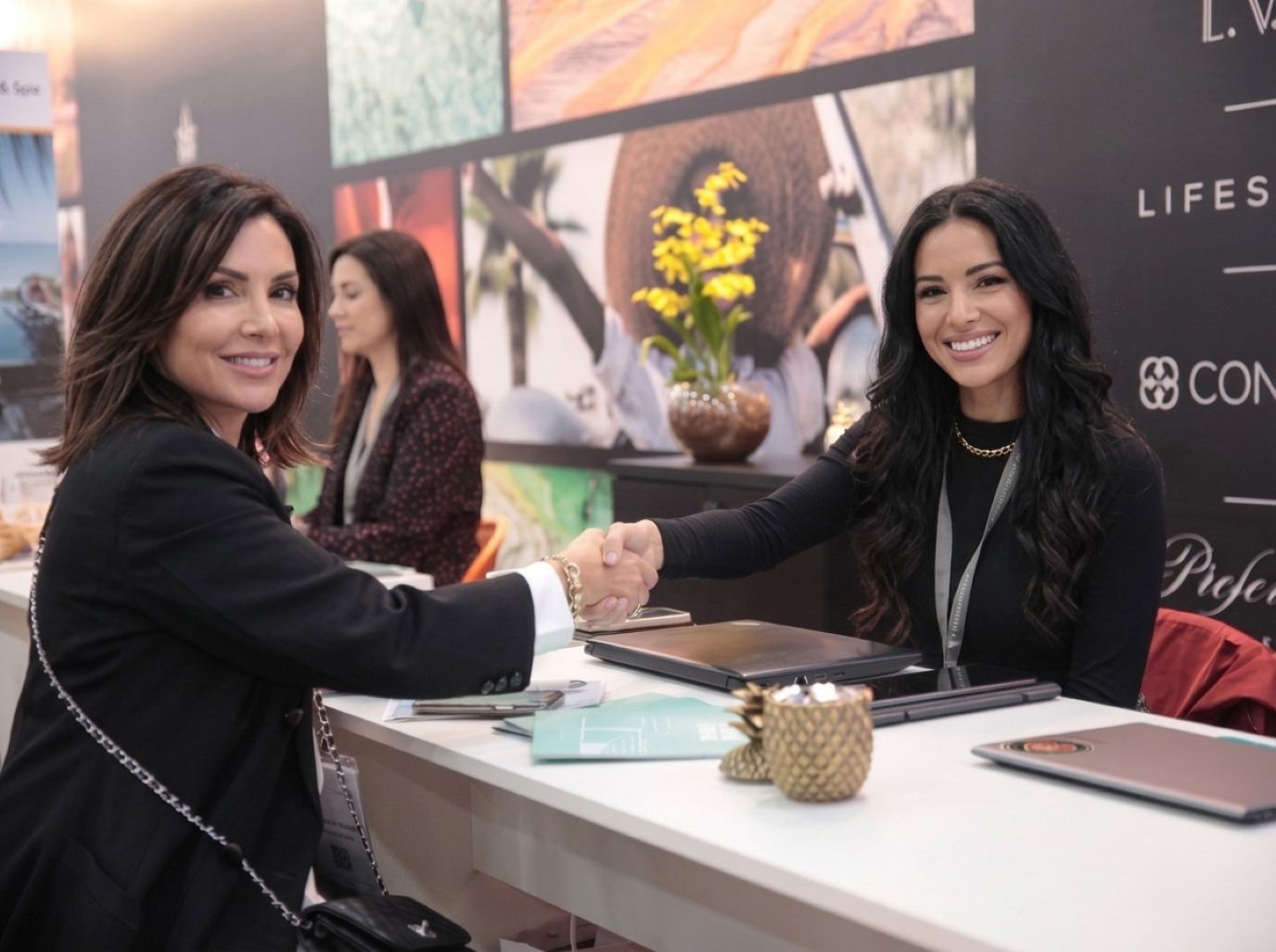
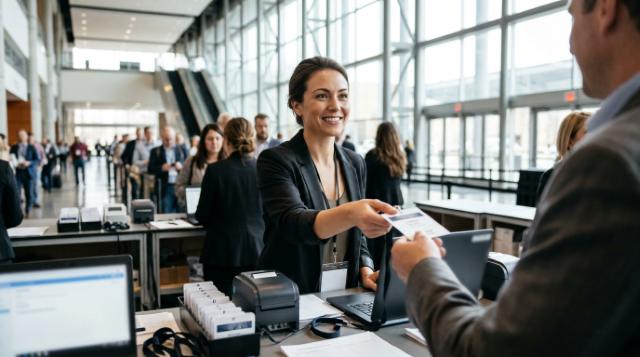
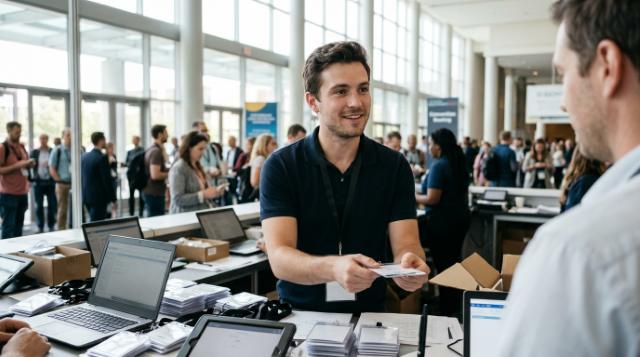
Bilingual booth staff member in a black top and lanyard smiling and shaking hands with a visitor in a black blazer across a white welcome counter with laptops
A welcome desk greeting: the first handshake decides which language the rest of the conversation happens in. Real Purple Exhibits event.
The short answer

What bilingual booth staff do, and what they cost

Bilingual booth staff greet, qualify and demo in English and a second language, so a buyer who is more at ease in Spanish, Portuguese or Mandarin never waits for the one person on your team who speaks it. Purple Exhibits books bilingual booth staff for trade shows across the United States. Spanish is the language exhibitors ask us for most. Portuguese, Mandarin, French, Korean, Japanese, Arabic and other languages are available on request, and each speaker is confirmed by name before we book; we never promise a language we have not confirmed. Every person costs $85 an hour, with a four-hour minimum, no language surcharge and no travel fees.

Most trade show booths are staffed for the visitor who speaks English. That works until a distributor from Monterrey, a buyer from São Paulo or a delegation from Shanghai walks up and your best salesperson can only smile and hand over a brochure. A bilingual staffer turns that moment into a real conversation: a greeting in the right language, three qualifying questions, a short demo and a lead tagged so the follow-up happens in the same language.

At a glance

RoleBilingual greeters, booth reps, hosts and demo staff
Most requestedSpanish
On requestPortuguese, Mandarin, French, Korean, Japanese, Arabic and more
How we confirmBy name, before you sign off on the booking
Rate$85 per person per hour
Minimum4 hours per person, per shift
Language surchargeNone
Travel feesNone
WhereTrade shows and events nationwide
Languages

Spanish first, other languages by name

Spanish is what exhibitors ask us for most. Every other language is booked on request: we look for a speaker in your show city, confirm the person by name and only then confirm the booking. Same rate for all of them.

ES

Spanish

EspañolMost requested

The language exhibitors ask us for most. Useful for buyers, distributors and contractors from Latin America, Spain and the large Spanish-speaking communities in many U.S. show cities. Tell us if your buyers lean Mexican, Caribbean, South American or Castilian, and we brief vocabulary to match.

PT

Portuguese

PortuguêsOn request · confirmed by name

Often asked for alongside Spanish when Brazilian buyers are on the guest list. A Spanish speaker is not a Portuguese speaker, so we book this one as its own language and confirm the person by name.

ZH

Mandarin

普通话On request · confirmed by name

Requested by exhibitors who meet suppliers, distributors or investors from mainland China and Taiwan. Tell us whether your printed material uses simplified or traditional characters so the speaker reads it at a glance.

FR

French

FrançaisOn request · confirmed by name

Useful for buyers from Quebec, France, Belgium and West Africa. We ask which market you expect most, because product terms and courtesy forms differ between them.

KO

Korean

한국어On request · confirmed by name

Common at tech, beauty and manufacturing booths with Korean partners or visitors. Booked on request and confirmed by name before you commit.

JA

Japanese

日本語On request · confirmed by name

Helpful where formal greetings and business-card etiquette matter as much as the pitch. We look for speakers comfortable with polite business Japanese.

AR

Arabic

العربيةOn request · confirmed by name

Requested for buyers and delegations from the Gulf and North Africa. Spoken Arabic varies by region, so tell us where your visitors come from.

+

Other languages

Vietnamese, Hindi, German, Italian, Tagalog…On request · confirmed by name

Ask us. If we can find and confirm a speaker for your dates and city, we book them at the same rate. If we cannot, we tell you plainly and early, so you can plan around it.

Our honest rule: we never promise that a language is always available. Spanish is the one we are asked for most often. For any other language, the booking is not final until we have a named speaker for your city and dates, and if we cannot find one, we tell you early instead of sending someone who “gets by”.

How we match a speaker

We start with the staff who already work trade shows in your city, so the person knows how a booth runs before language even comes into it. From there we look for fluency at working level: someone who can explain a product, answer a follow-up and write a clean lead note, not only order dinner. We share the name and the language we matched them for, and you decide.

What we ask you for

The languages in order of importance, a rough share of visitors for each, the countries or regions your buyers come from and any terms that must never be translated. With that, a Spanish match is usually quick, and a rarer language gets a clear yes or no early enough for you to plan.

Spanish at the booth

Spanish-speaking trade show staff, matched to your buyers

“Spanish” covers buyers from more than twenty countries and many U.S. communities. The words for a truck, a tile, a sale price or a pallet change from one market to the next, and a good staffer adjusts without making a show of it.

Ask your sales team who is coming

Before we match a Spanish speaker, we ask one question: where do your Spanish-speaking buyers come from? A booth selling building products to contractors from Texas and northern Mexico needs different everyday vocabulary than a beauty brand meeting distributors from Colombia and Spain. Both need Spanish-speaking trade show staff; they do not need the same brief.

We then build the glossary around that answer. If your price list says “wholesale” and your Mexican distributors say mayoreo while your Spanish partners say al por mayor, the staffer knows both and uses the one the visitor uses first.

Formal first, friendly second

At a business booth, our Spanish speakers open with usted, the formal “you”, and move to the familiar tú only when the visitor does. It is a small courtesy that older buyers and senior executives notice, and it costs nothing.

Switching languages without friction

Many visitors are fully bilingual themselves. The staffer opens in English, listens and follows the visitor’s lead. If the visitor stays in English, so does the staffer. If they switch to Spanish halfway through a question about specs, the answer comes back in Spanish, with the product name still in English so it matches the label.

What we brief against: switching to Spanish just because of a name on a badge or how someone looks. The visitor picks the language; the staffer follows.

Mixed groups

Delegations often arrive with one decision maker who prefers Spanish and two colleagues who prefer English. The bilingual staffer speaks to each person in their language and keeps a short summary going for the whole group, so nobody is left out and nobody has to translate for their own boss.

Hour by hour

A bilingual staffer’s show day, in two columns

What a bilingual booth staffer does from call time to close. The right-hand column is the same idea in Spanish, the way we often write shift notes for Spanish-speaking crews.

  1. Call time

    The crew arrives before the hall opens to exhibitors, changes into your look and picks up the language pins and badge sleeves you shipped.

    Llegada, uniforme y gafete.

  2. Two-language huddle

    Your lead walks the booth with the crew. The bilingual staff read the glossary aloud, check how to say each product name and agree who covers which language during breaks.

    Repaso del glosario y los nombres de producto.

  3. Doors open

    Greeters take the aisle edge. The bilingual greeter opens in English and switches the moment a visitor answers in, or looks more relaxed in, another language.

    Saludo en inglés; cambio de idioma al instante.

  4. First wave of buyers

    Group visits arrive. One bilingual rep stays with a group so its decision maker hears the whole story in one language instead of in fragments from three people.

    Atención completa a un grupo, sin cortes.

  5. Staggered lunch

    Breaks are staggered so each language you booked is covered at every hour. If a language has one speaker, that person breaks in the quietest window you named in the brief.

    Descansos escalonados para cubrir cada idioma.

  6. Demo and pricing questions

    The staffer runs the guided part of the demo in the visitor’s language, then brings over your engineer or sales lead and translates the short back-and-forth in plain words.

    Demostración guiada y apoyo con el equipo técnico.

  7. Lead capture

    Each badge scan gets a language tag and a note in English, so your sales team knows who to follow up with in Spanish, Portuguese or Mandarin next week.

    Cada contacto con etiqueta de idioma.

  8. Late visitors and appointments

    Booked meetings and serious buyers often come late. The bilingual host greets them by name and walks them to the right person on your team.

    Citas al final del día, recibidas por nombre.

  9. Close and handover

    The crew writes a short shift note: conversations by language, questions they could not answer, terms that tripped them up. You get it the same evening.

    Resumen del turno por idioma.

Which role

When you need bilingual staff, and when you need someone else

Bilingual booth staff are booth staff first. They are the right call when visitors need a second language to talk to you; other jobs need other people, and sometimes a certified interpreter.

A visitor in the aisle who would rather speak Spanish

Bilingual booth staff

They greet, qualify and demo in the visitor’s language and log the lead, all day, at booth pace.

A signed contract, legal terms or a regulated health claim

Certified interpreter

Exact meaning carries legal or safety weight. Our staff are fluent speakers, not certified interpreters, and we will tell you when you need one.

A VIP lounge, suite or dinner with international guests

Bilingual hostess

A host who greets by name and runs the guest list, in two languages when your guests need it.

A short, repeatable product demo

Product demonstrator

If most visitors speak English, book a demonstrator and add one bilingual staffer beside the demo.

Badge scanning and lead qualifying at volume

Lead capture staff

Scanners who ask your questions fast. One bilingual scanner on the team keeps non-English leads from slipping.

Pulling traffic off the aisle

Brand ambassadors

Ambassadors stop people. A bilingual ambassador stops the visitors your English-only crew walks past.

A launch moment or photo spot

Promotional models

Camera-ready presence. Pair with a bilingual host if the crowd is international.

How many

Bilingual seats by booth size

A starting point for a booth where a meaningful share of visitors prefers one language other than English. Add seats for each extra language, and use the planner below to size your own crew.

BoothTotal crew per shiftBilingual seatsHow to place them
10×10 inline1–21With two people on a small booth, make one of them bilingual. With one person, book the bilingual speaker and let them cover English too.
10×20 inline2–31–2One bilingual greeter at the aisle edge, plus a second if a large share of your buyers speak the same language.
20×20 island or peninsula3–52Two open sides mean two places to be greeted. Put a bilingual speaker on each side, or one at the front and one at the demo.
20×30 or 30×305–82–3Cover each language you booked at every hour, including breaks. Add a bilingual host if you run a meeting area.
Large island, 40×40 and up8–143–5Plan by station: greeters, demo, meeting rooms and the lead desk. Each station with international traffic gets a bilingual seat.
Language crew planner

Pick your languages, get a crew card

Set your booth size and how many of your visitors prefer each language. The card shows people per shift, bilingual seats by language, the cost at $85 an hour and a sample opening line in each language.

Share of visitors who prefer…
What we brief

The bilingual briefing, term by term

A fluent speaker who has never seen your product will still stumble on its vocabulary. The briefing closes that gap before the doors open.

A two-column glossary

Send your 20 to 40 key terms in English. We ask the bilingual staff to write how they would say each one, then your native-speaking colleague or distributor checks the list. Terms with no good translation stay in English on purpose.

Product names, out loud

Brand and model names are said the same way in every language. We drill the pronunciation so a visitor hears one name, not three versions of it.

Numbers, units and money

Inches or millimeters, pounds or kilos, dollars or local currency. Staff learn which units your spec sheet uses and never convert a price on the fly.

Who the visitors are

Distributors, contractors, retail buyers or investors, and the countries they come from. Courtesy forms and small talk change with the audience.

What staff must not say

Prices, lead times, certifications and claims stay with your team. Bilingual staff translate your answer; they do not invent one.

The handoff in two languages

Who takes a serious buyer, how the staffer introduces them, and how the staffer stays on to translate the short exchange that follows.

Your term (English)
Staff version (Spanish)
Lead time
Tiempo de entrega
Distributor pricing
Precio para distribuidores
Spec sheet
Ficha técnica
Your product name
Stays in English, said the same way
“Let me bring over our engineer.”
“Permítame llamar a nuestro ingeniero.”
The look

What bilingual booth staff wear, and how visitors spot them

Bilingual staff dress like the rest of your crew. The difference is one small, readable signal that tells a visitor who to approach in their language.

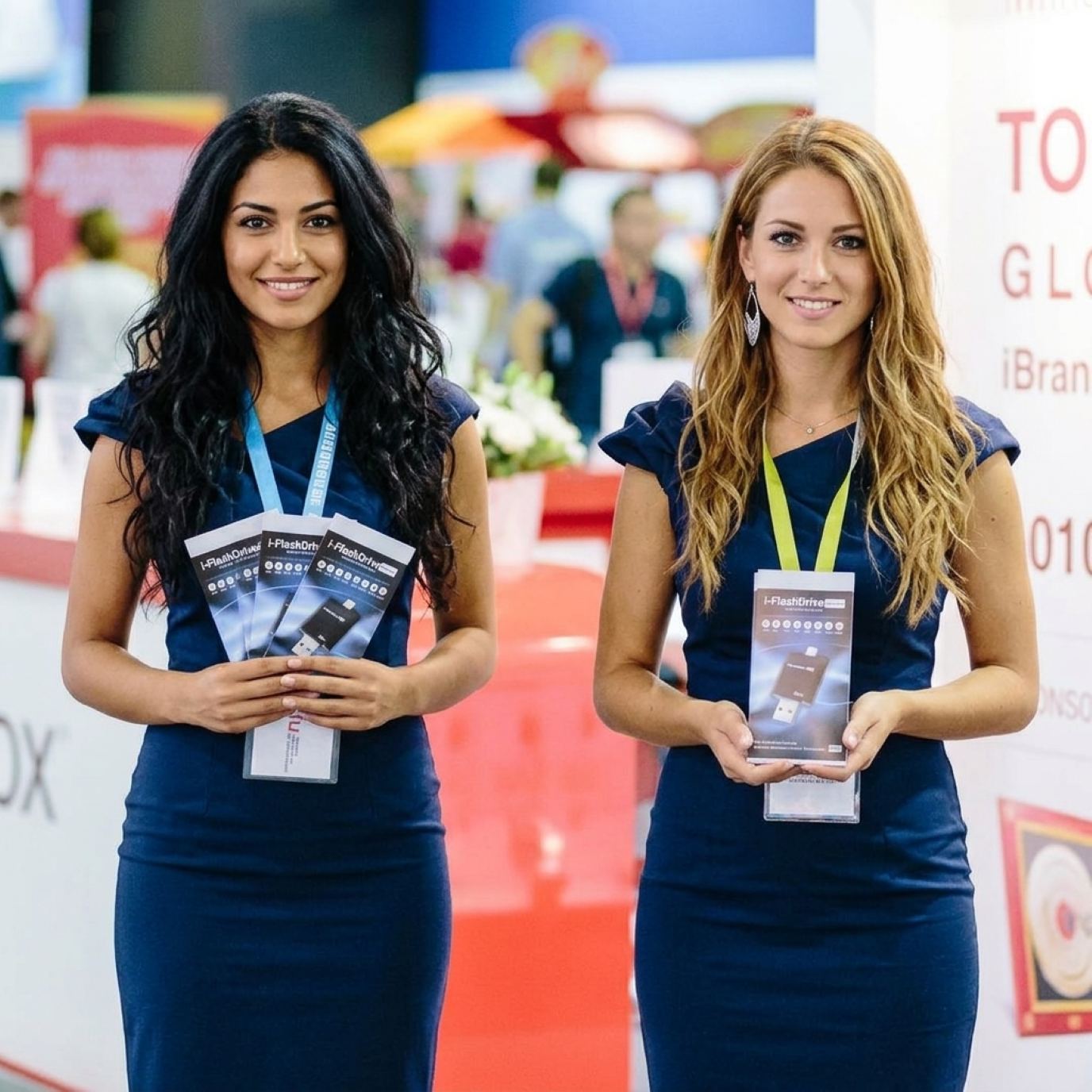
Two bilingual booth staff greeters in matching navy cap-sleeve sheath dresses and lanyards holding product cards at the front of an exhibit booth
Lookbook · greeting pairMatching navy dresses, cards in handTwo greeters in the same navy cap-sleeve dress hold product cards at the booth edge. A matched pair reads as one team from the aisle; add a language line to one badge and visitors know who to ask in Spanish.
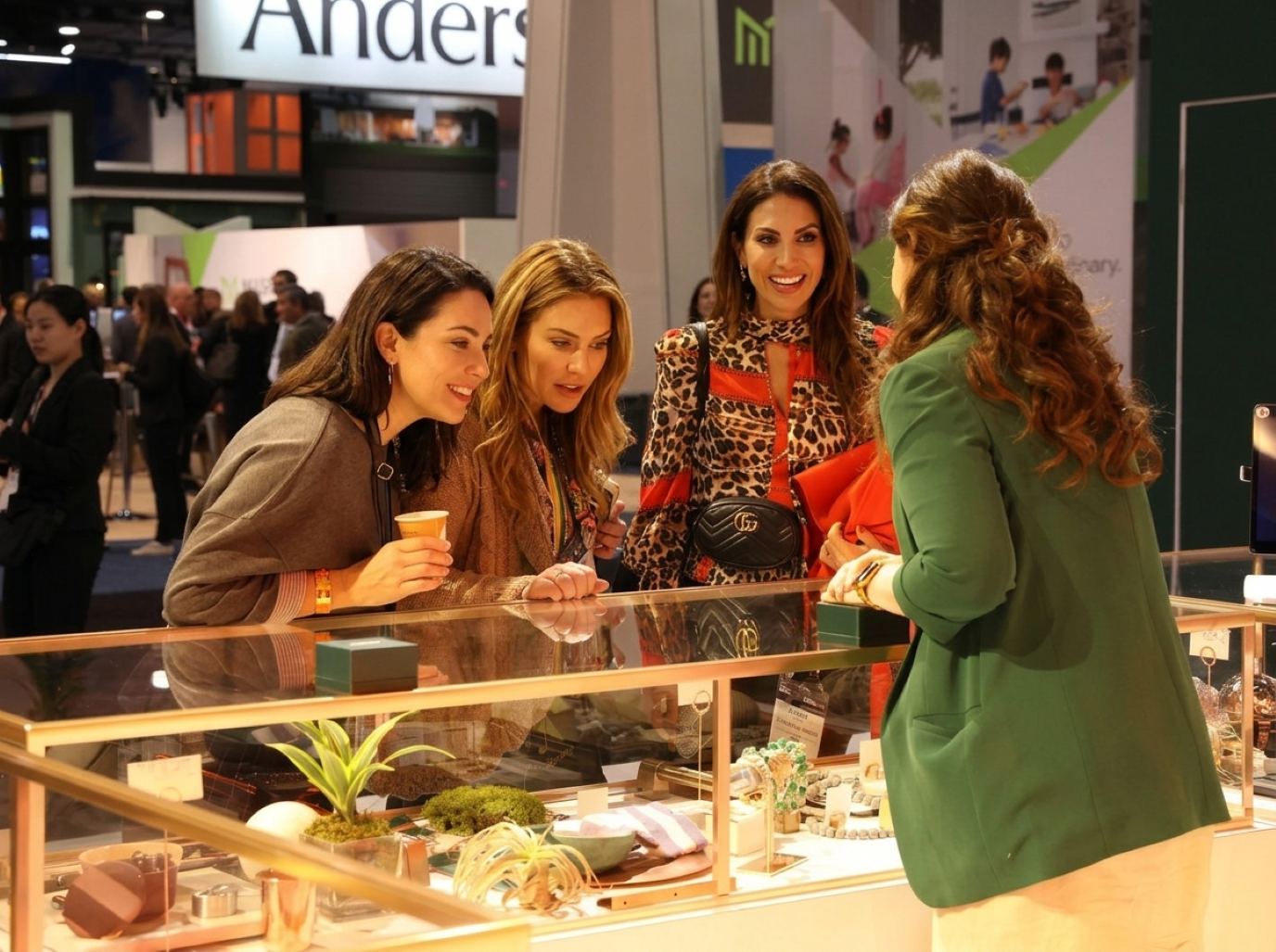
Booth host in a green blazer behind a glass display case presenting jewelry to three smiling visitors, the showcase role bilingual booth staff often fill
Lookbook · showcase hostA green blazer at the display caseA host in a soft green blazer presents pieces from behind a glass showcase to three visitors leaning in. At a counter like this, a buyer who hears their own language tends to stay longer and ask the question that leads to an order.

Real Purple Exhibits events.

The language pin

Black or charcoal suiting with a small pin or badge line that names the language, such as “Hablo español” or “Falo português”. Visitors find the right person from across the aisle.

Works best: Greeters, booth reps

Brand polo, bilingual badge

Your branded polo or quarter-zip with a name badge printed in both languages. Easy, washable and right for industrial and building shows.

Works best: Contractor and equipment shows

Matching sheath dresses

One dress in your brand color, worn by the whole greeting team. Polished from the aisle and in photos, as in the lookbook below.

Works best: Aisle greeters, lounges

Soft blazer over neutrals

A colored blazer over a light top and neutral trousers: approachable at a display case, still sharp for a buyer meeting.

Works best: Showcases, meeting areas
Measure it

How to measure what a second language earns

Bilingual staff should show up in your numbers, not only in good feelings at the booth. Six things to track, all of which the crew can log for you.

  1. Conversations by languageA simple tally on each shift note: how many visitors chose a language other than English, and which one.
  2. Leads tagged by languageEvery scan carries a language field in your lead app, so follow-up goes to a rep who speaks it.
  3. Meetings booked in languageAppointments set during the show with buyers who needed a second language to get there.
  4. Questions they could not answerThe list tells you which terms, specs or prices you should translate before the next show.
  5. Follow-up speedHow many days pass before a Spanish or Portuguese lead hears back in their language. Slow follow-up erases the goodwill from the booth.
  6. Share of non-English leadsCompare with your last show without bilingual staff. It shows whether the language crew reached people you used to miss.

Example lead note

Language
ES Spanish, prefers calls over email
Visitor
Distributor, three branches, asked about volume pricing
Interest
Saw the demo, took the Spanish one-pager
Next step
Call in Spanish within five business days
Staff note
Asked for lead time in weeks, not days
Pitfalls

Eight bilingual staffing mistakes we help you avoid

Each one is easy to fix when you catch it in the briefing, and expensive once the show has started.

Booking “someone who speaks a little”

Conversational travel Spanish fails on technical questions. Ask for staff who can work a full shift in the language, and say so in the brief.

One speaker, no break plan

If one person covers Mandarin, Mandarin is closed at lunch. Stagger breaks around your quietest hour or book a second speaker.

Flags instead of language names

A Spanish flag tells a Mexican buyer nothing about who speaks Spanish. Use the name of the language on the pin or badge.

English-only collateral

Bilingual staff can explain a brochure, but visitors take home what they can read. Print a one-page summary in the main language at least.

No language tag on leads

Without it, a Spanish-speaking distributor gets an English email from someone who cannot take the call. Add the field before the show.

Asking staff to translate contracts

Booth staff are not certified interpreters. Keep terms, pricing agreements and regulated claims for a professional.

Assuming one language covers a region

Brazil speaks Portuguese, much of West Africa speaks French, and Chinese visitors may prefer Mandarin or Cantonese. Ask your sales team who is coming.

Booking a rare language last minute

Spanish is often possible on short notice; Korean or Arabic for a specific city and date may not be. Ask early so there is time to confirm a speaker by name.

Pricing

One rate for every language

Bilingual booth staff cost exactly what every other role costs. Spanish, Mandarin or Arabic, the line on your invoice reads the same.

$85/hr per person
  • Minimum per shift4 hours
  • Language surcharge$0
  • Travel fees, flights, hotels$0
  • Same rate on weekends$85
Bilingual staffOne 4-hr shiftOne 8-hr day3 days × 8 hrs4 days × 8 hrs
1 person$340$680$2,040$2,720
2 people$680$1,360$4,080$5,440
3 people$1,020$2,040$6,120$8,160
4 people$1,360$2,720$8,160$10,880
Booking timeline

From first request to the last shift note

Bilingual bookings follow the same steps as any crew, with two extra: confirming each speaker by name and building the glossary. Start earlier for rarer languages.

  1. Six weeks out

    Name the languages

    List every language you expect, in order of importance, with the share of visitors you think will need each one. Rare languages start here.

  2. Four weeks out

    Confirm by name

    We send the name of each matched speaker. For anything beyond Spanish, this is when the booking becomes final. Your native speaker can call them now.

  3. Three weeks out

    Send the glossary

    Your 20 to 40 key terms, product names and the questions you want asked. The staff return their versions for your team to check.

  4. Two weeks out

    Lead app and looks

    Login steps for the lead app with a language field added, apparel sizes and badge text with the language line.

  5. Show eve

    Walk-through

    A short walk of the booth, a run through the demo in each language and the break plan that keeps each language covered.

  6. After the show

    Shift notes

    Conversations and leads by language, unanswered questions and terms to translate before your next show.

Where we staff

Bilingual crews in every show city

Our staff are local to each city, which is why there is never a travel fee. Bilingual teams are especially useful in cities with large Spanish-speaking communities and heavy international traffic, such as bilingual staff for Miami trade shows, Houston booth staffing, San Antonio convention staff, Anaheim and Los Angeles booth crews and Las Vegas trade show staffing. At shows that draw many buyers from Latin America and abroad, like World of Concrete booth staff, IAAPA Expo staffing, Expo West booth staff and Global Pet Expo staffing, one Spanish or Portuguese speaker often changes who stops at the booth.

Request a crew

Tell us the show, the dates and the languages your visitors speak. We reply with a bilingual crew plan and price within one business day.

  • 1
    $85 an hour, any languageNo language surcharge, no travel fees, four-hour minimum per person.
  • 2
    Confirmed by nameFor every language other than Spanish, you see the speaker’s name before the booking is final.
  • 3
    Briefed on your termsGlossary, product names and the handoff to your team, rehearsed before doors open.

Bilingual staff request

About three minutes. No deposit to ask.

EN ⇄
ES
Who do you need?

Prefer to talk? (800) 994-8030

FAQ

Bilingual booth staff questions

Call (800) 994-8030 and ask for bilingual booth staffing.

PE

Purple Exhibits staffing team
Checked by our staffing coordinators · Updated

How much do bilingual booth staff cost?

Bilingual booth staff cost $85 per person per hour, the same as every role we book. Each person has a four-hour minimum per shift. There is no language surcharge and no travel fee, so a Mandarin speaker costs the same as a Spanish speaker.

Which languages can you provide?

Spanish is the language exhibitors ask for most. Portuguese, Mandarin, French, Korean, Japanese, Arabic and other languages are available on request. For every language we confirm the speaker by name before you sign off, and we never promise a language is available until we have confirmed it for your city and dates.

How far ahead should I book Spanish-speaking trade show staff?

Three to four weeks gives us time to match Spanish-speaking trade show staff to your product and audience. Rarer languages need more time, ideally six weeks or more. Short-notice requests are possible, but the less time we have, the less likely a specific language can be confirmed.

Are your bilingual staff certified interpreters?

No. They are booth staff who speak a second language fluently enough to greet, qualify and demo for a full shift. For contracts, legal terms, regulated health claims or stage interpretation, hire a certified interpreter. We will tell you if your brief needs one.

How do you confirm someone speaks the language?

Before you approve the booking we send the person’s name and the language we matched them for. If you like, a native speaker on your team or a distributor can have a short call with them first. If a call shows a poor fit, we look again.

Can bilingual staff translate our brochures and signs?

They can read your glossary and flag terms that sound wrong, which helps a lot. Written translation of brochures, signs and packaging should go to a professional translator. We do not sell translation services.

How many bilingual staff does my booth need?

Start with your visitor mix. If a large share of your buyers prefer one language, cover it at every hour, which usually means two speakers on long days so breaks do not leave a gap. The language crew planner on this page does the math by booth size.

Can one staff member cover three languages?

Sometimes a person speaks three languages well, and we will tell you when we find one. Do not plan your booth around it: book each important language as its own seat, and treat a third language as a bonus.

Do bilingual staff scan badges and qualify leads?

Yes. They use your lead app or scanner, ask your qualifying questions in the visitor’s language and add a language tag and a short English note to each lead, so your sales team follows up in the right language.

What do bilingual booth staff wear?

Your branded apparel, or one of the looks on this page. We suggest a pin or badge that names the language, such as “Hablo español”, rather than a national flag, so visitors know who to approach.

Can I book a bilingual staffer for one day only?

Yes. Book a single day, such as your busiest day or the day of a buyer delegation visit. The four-hour minimum applies per person, per shift, and you can add days later if the speaker is free.

What happens if a bilingual staff member cancels?

We look for a replacement who speaks the same language and tell you right away. If no speaker of that language can be confirmed in time, we say so plainly and only send an English-speaking replacement if you agree to it.

Do you provide bilingual hostesses for dinners and suites?

Yes. Bilingual hostesses can run a guest list, greet international guests by name and keep a dinner or meeting suite on schedule, at the same $85 hourly rate with a four-hour minimum.

Which cities and trade shows do you staff with bilingual crews?

We staff trade shows nationwide, from Las Vegas, Orlando and Chicago to Miami, Houston and New York. Our staff are local to each city, so you never pay airfare or hotel nights. The full city and show lists are on this page.

Is there an extra charge for Mandarin, Arabic or other languages?

No. Every language is $85 per person per hour. Rare languages may need more notice to confirm a speaker, but they never cost more.

Speak to every buyer who walks up.

Send your show and your languages. A bilingual crew plan within one business day.

Book bilingual staff(800) 994-8030Staffing desk · Mon–Fri
×

Is a Custom Exhibit Right for me?

Let’s get right on that answer for you: