The Promo IssueNationwide · 35 city guidesUpdated October 27, 2026

Promotional models for trade shows, cast to your brand

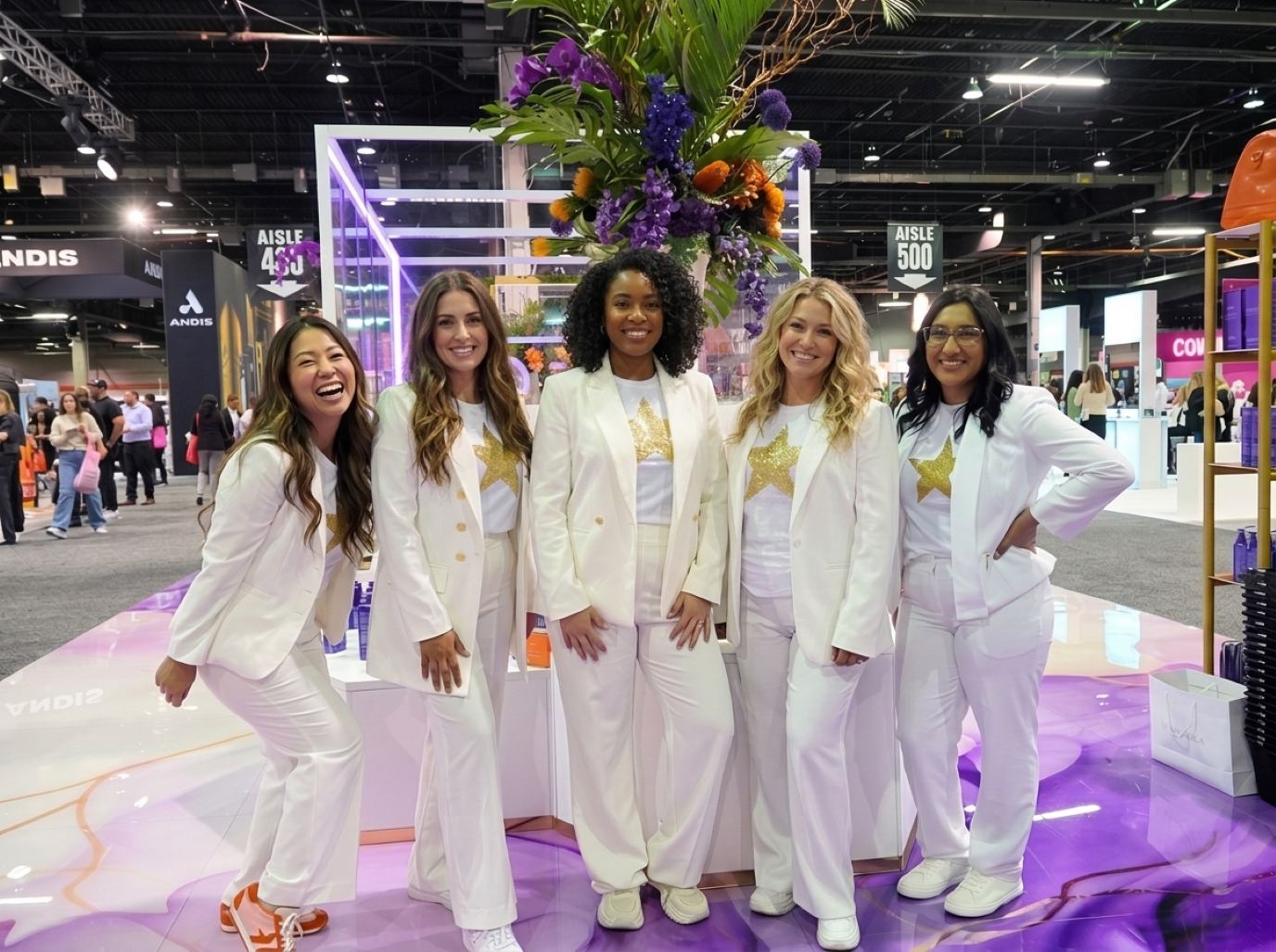
Five promotional models in matching white pantsuits over star-print tees, smiling together on a glossy floor at a beauty booth
Five promotional models in white suits over star tees: one look, one team. Real Purple Exhibits event.

Rate$85 per person, per hour

Minimum4 hours per shift

Travel feesNone. Crews are local

Where35 city guides, plus other U.S. cities on request

Promotional models and spokesmodels who stop the aisle, present your product and hand real buyers to your team, booked in the show city so you never pay for flights.

p.01Editor’s letter

What promotional models actually do

Promotional models are the people who make a trade show booth impossible to walk past, and the good ones also know what to say once a visitor stops. Purple Exhibits books promotional models and spokesmodels for exhibitors across the United States: camera-ready crews who hold the aisle, present your product, run a reveal or a photo moment, and hand interested visitors to your sales team. Every person costs a flat $85 an hour, with a four-hour minimum per shift, and we book people who live in the show city, so there are no travel fees, flights or hotel nights on your invoice.

The phrase covers a wide range of work, and that is where most bookings go wrong. Some exhibitors picture a model as decoration; the best results come when you treat promotional models as the front line of your sales process. They are the first person a visitor sees, the reason a buyer slows down in a crowded aisle and the bridge between a glance and a conversation with someone on your team who can close.

This page is a working guide to the role: what the day looks like hour by hour, how promotional models compare with spokesmodels, hostesses and the other people we staff, how many to book for each booth size, what we brief them on, what they wear, how to measure whether they paid for themselves, and the mistakes we see exhibitors make. The call sheet builder further down turns your booth into a crew and a price.

p.02A day on the floor

Hour by hour, from call to recap

A promotional model’s show day has a rhythm. Here is a typical eight-hour shift, set against the way traffic actually moves through a convention hall. Your times follow the hours the organizer posts.

Call

Crew call, before doors

The crew arrives dressed and ready: hair done, outfits steamed, badges on. Your booth manager or our lead does a wardrobe check against the look you approved, so the five people on your carpet read as one team before the first visitor arrives.

+15 min

Booth walk and product refresh

A short walk through the booth: where the hero product sits, which screen loops which video, where the brochures live and who on your team handles which kind of question. Models repeat the three talking points back once, out loud. It takes ten minutes and saves a day of guessing.

+30 min

On their marks

Each person takes a named position, such as an aisle corner, the turntable, the photo wall or the lounge entrance. Marks matter more than headcount: two models on the right corners outperform four people clustered at the counter.

Doors

The first wave

The opening hour brings the most purposeful attendees, the ones with a list. Promotional models greet, invite and qualify lightly: one question, then a handoff to the right person on your team or to lead capture staff with a scanner.

Late morning

Scheduled moments

If you booked a spokesmodel, this is the first presentation on the mic. If you planned a reveal, the cover comes off now. Moments are what turn a booth into a place people come back to, so they run on a schedule the crew knows by heart.

Midday

Staggered breaks

Breaks rotate so no mark goes empty during the lunch traffic. A floater covers each position in turn. Nobody eats in the booth, and nobody disappears for an hour without a replacement standing in their spot.

Mid-afternoon

The dip

Every hall goes quiet for an hour or so after lunch. Good crews use it: they restage the photo moment, push the giveaway, run an extra presentation, or step one pace into the aisle to catch people walking between halls.

Late afternoon

Second wind

A quick reset of makeup, a swap of positions so fresh energy is on the main aisle, and a final round of presentations for the attendees who saved your hall for last.

Close

Recap

In the last minutes the lead gives your booth manager a short recap: rough stop counts, the questions people asked most, what drew a crowd and what did not. Tomorrow’s plan starts from that note, not from a blank page.

p.03Which role

Promotional model, spokesmodel or someone else?

Every role we staff costs the same $85 an hour, so the choice is about the job, not the budget. Start with the bottleneck in your booth: attention, explanation, welcome, conversation, proof, records or language.

Attention, presence, the moment

Promotional models

The aisle is crowded, the product photographs well, or you have a reveal, a launch or a photo wall that needs people who own the camera.

A product story told to a crowd

Spokesmodels

You want scheduled presentations on a headset or handheld mic, a short scripted pitch delivered the same strong way at 10 a.m. and 5 p.m.

Welcome and flow

Trade show hostesses

Guests are invited: a lounge, a meeting room, a VIP list or a suite where people need to be greeted by name, seated and kept on schedule.

Conversation at volume

Brand ambassadors

You want warm, chatty people who sample, start conversations in the aisle and talk about the brand like they use it.

Hands-on proof

Product demonstrators

The product only makes sense when someone uses it in front of you: a tool, a device, software or a kitchen gadget.

Turning visits into records

Lead capture staff

The bottleneck is the scan: qualifying questions, notes and tags so sales knows who to call back first.

Buyers in another language

Bilingual booth staff

A meaningful share of your visitors are more comfortable in Spanish or another language.

Promotional model

  • Holds an aisle mark and invites visitors in
  • Poses with the product for photos and at the reveal
  • Asks one qualifying question, then hands off
  • Wears the look that makes the booth recognisable
  • Best when the product sells itself at a glance

Spokesmodel

  • Everything a promotional model does, plus the mic
  • Learns a two-to-five-minute script word for word
  • Gathers a crowd before each presentation
  • Delivers the same energy on the last run of the day
  • Best when the product needs a story to land

Most booths over 20×20 end up with a mix. A common pattern is two or three promotional models on the aisle, one spokesmodel at the screen and one or two lead capture staff at the counter, so the people drawing the crowd never have to stop and type. If your visitors are mostly invited guests rather than walk-ins, trade show hostesses are the better fit; if you are sampling a drink or a snack all day, brand ambassadors will out-talk anyone. When the product needs hands-on proof, book product demonstrators, and when a large share of your buyers prefer another language, add bilingual booth staff.

p.04How many

Promotional models by booth size

The rule of thumb: one model per open side of the booth, plus one for each moment you plan, such as a reveal, a photo wall or a presentation. Then add a floater on long days so breaks never leave a corner empty.

10×10 inline

1 model

One promotional model on the open aisle edge. Pick someone who can also scan badges, because in a 10×10 there is no room for a second person doing nothing. For a full day, book a second person for a short midday shift so the booth is never empty.

10×20 inline

2 models

Two models, one at each front corner, so the booth reads open from both directions of the aisle. One of them can double as the spokesmodel if you run short presentations on a small screen.

20×20 peninsula

3 models

Three people: one per open side plus a third at the hero product. The third person is often the spokesmodel. Add a lead capture person if the models are meant to stay out front.

20×30 or 30×30

4 models

Four models plus a dedicated spokesmodel if there is a stage or a large screen. At this size, plan a floater so breaks never leave a corner empty.

Island, 40×40 or larger

6+ models

Six or more: a model on each corner, a reveal team for the hero product, a photo wall host and a spokesmodel on the mic. Islands draw from four aisles at once, and each one needs someone on it.

Launch or reveal only

2–4 models

Two to four models booked for the reveal window and the hour after it, at the four-hour minimum. A useful way to add impact on day one without carrying a big crew all week.

Headcount is only half of the answer. Where people stand changes results more than how many there are. A 10×20 with two models on the front corners reads as open from both directions of the aisle; the same two people standing together behind the counter make the booth look closed. For corner and peninsula booths, put your strongest people on the side toward the heavier traffic flow, which is usually the side facing the main entrance or the nearest food court.

Shift length matters too. An eight-hour day with one model in a 10×10 means a booth with nobody out front during lunch. For long days, either book a second person for a four-hour midday shift or ask one of your own team to cover the aisle during breaks.

p.05Casting

What we look for in a promotional model

Looks open the door. These are the qualities that decide whether a visitor walks through it, and what we match against your brief before we propose anyone.

Presence that reads from the aisle

Posture, eye contact and an easy smile that carries thirty feet. Visitors decide whether to stop in about two steps.

A memory for talking points

Three product points, delivered naturally, the same way on day three as on day one. We test this on the call before the show.

Comfort on camera

Promotional models are photographed all day by visitors, by your team and by the press. The good ones know their angles and help visitors with theirs.

Judgment

Knowing when a visitor wants to chat and when they want a brochure, when to hand off and when a question is above their pay grade.

Stamina

Eight hours on carpet over concrete, with the same energy at the last presentation as at the first. Fit for long shifts matters as much as fit for the look.

A match for your brand

A luxury jewelry line, an off-road accessory brand and a kids’ licensing booth need very different people. We cast to your audience, not to a type.

Once you approve the quote, we send profiles with photos for the people we propose for your dates and city. You approve each person, and if someone is not right for your brand, we swap them. The crew you approve is the crew that shows up, and if anyone cannot make a shift, a briefed standby reaches your booth within two hours or you do not pay for that shift.

p.06The brief

Eight things we brief every crew on

A promotional model is only as good as the brief behind them. We build it with you a week before the show, run a short call with the crew, and do a final walk-through at the booth before doors.

The three talking points

What the product is, who it is for and the one thing that is new. Plus the one-sentence answer to “So what do you do?” Every promotional model on your crew should say it the same way.

Who is who on your team

Names, roles and the handoff rule: which visitor goes to which person. Technical questions go to your engineers; pricing goes to sales; press goes to your PR lead.

The qualifying question

One or two questions the model asks before a handoff, such as “Are you buying for a store or for a brand?” and how the answer is recorded.

Marks and rotation

The booth plan with every position named, the order people rotate in, and the break schedule that keeps each mark covered.

The look

Outfit, hair, makeup, shoes and accessories, plus what not to wear. If you ship branded pieces, we confirm sizes ahead of the show.

The moments

Reveal times, presentation schedule, photo wall cues, giveaway rules and any music or lighting changes the crew needs to know about.

The show rules

What the organizer allows in the aisle, sound limits for presentations, sampling and giveaway rules, and any dress code the show publishes for booth staff.

What not to say

No pricing promises, no claims about competitors and nothing about unreleased products. Those questions go to your team, with a smile and a handoff.

Writing a spokesmodel script. If your crew includes a spokesmodel, the script is the one piece of the brief worth real time. Keep it between two and five minutes, built in four beats: a hook that names a problem your visitors recognise, the product as the answer, one proof point they can see on the screen or in your hand, and a clear next step, such as “Ask at the counter for a demo” or “Scan in for the sample kit.” Write it the way people speak, with short sentences and no acronyms the audience would not use themselves.

Send the script at least a week out. The spokesmodel learns it word for word, runs it for your booth manager on the first morning and keeps the timing tight across the day. If something in the script falls flat with real visitors, tell the crew lead at the first break and the next run changes. A good script also tells everyone else on the crew when to gather the audience, so the room is full when the presentation starts.

p.07Lookbook

Two spreads, two ways to dress a crew

Real Purple crews at past events. One look disappears so the product can lead; the other turns the crew into the brand color.

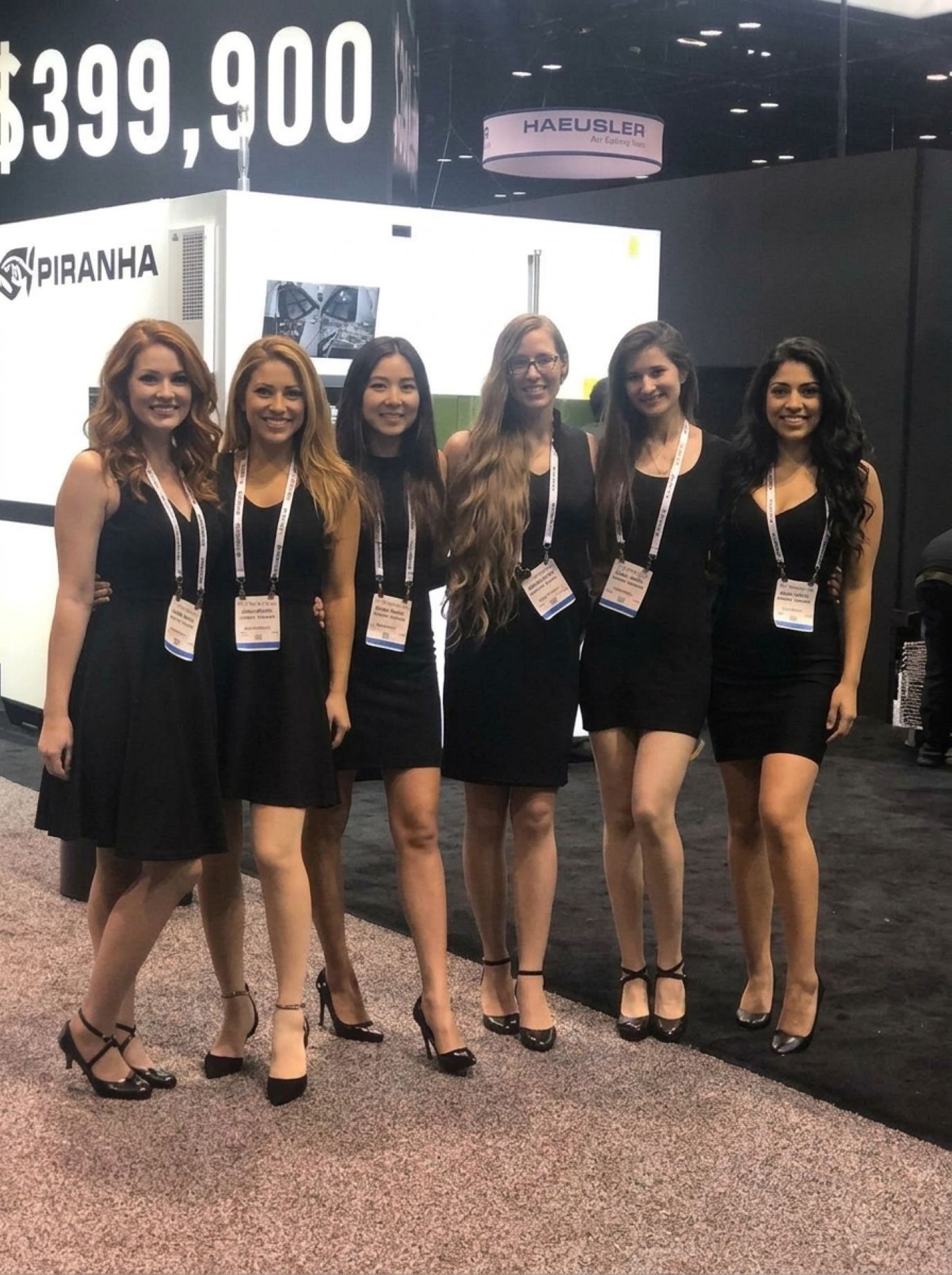
Six promotional models in black fitted dresses, black heels and show lanyards standing shoulder to shoulder at an industrial equipment booth
Spread 1 · All black, fittedAll black, fittedSix people, one silhouette. Black fitted dresses, black heels and show lanyards worn neatly at the same height. The look disappears into the booth so the machine behind it stays the hero, and the crew still reads as a single, deliberate team of trade show promotional models.
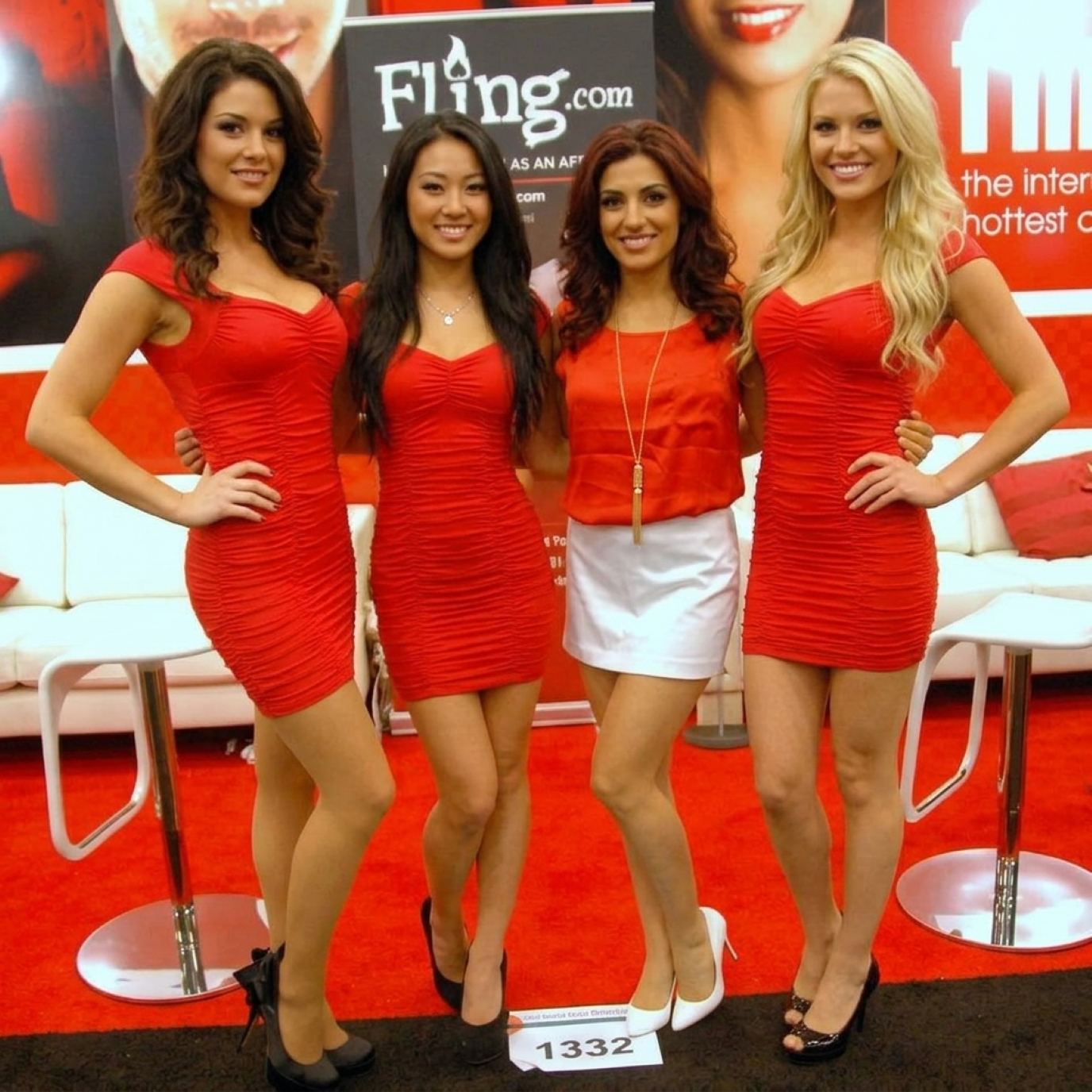
Four promotional models in red ruched dresses and a red blouse with a white skirt, posed together on a red carpet at a lounge-style booth
Spread 2 · One brand colorOne brand colorThree red ruched dresses and one red blouse with a white skirt, on a red carpet in front of a white lounge. One color, worn four ways, so the crew matches the booth from forty feet away and every photo of the space carries the brand.

Real Purple Exhibits events.

Brands that have booked Purple

AmazonWayfairLGVenmoVallenSunliteergoPouchBiolab HoldingsStellar
p.08The looks

Six looks for promotional models

Pick one for the whole crew, or one for the day and one for the evening event. You can ship branded pieces; we confirm sizes, steam everything on call and keep the look identical across every person on the floor.

All black, fitted

Black fitted dresses or sharp black suits, black heels or clean black flats, show lanyards worn neatly. The most forgiving look there is: it works in any hall and lets the product be the color.

Best for: Machinery, tech, finance, any booth with busy graphics

One brand color

The whole crew in a single bold color pulled from your logo, often a fitted dress or a blazer. Visible from forty feet down the aisle and instantly yours in every photo.

Best for: Lounges, consumer brands, launches

White suit, brand tee

Crisp white suits over a tee in your brand color or print. Clean, modern and friendly, and it reads beautifully against a dark or colorful floor.

Best for: Beauty, wellness, lifestyle, retail

Branded performance wear

Fitted jumpsuits, race-style suits, polos or quarter-zips with your logo. It looks like the product category and keeps people comfortable through a long day.

Best for: Automotive, outdoor, sports, equipment

Evening cocktail

Cocktail dresses and dark suits for the launch party, the VIP lounge or a dinner after the hall closes. Same crew, a different register.

Best for: After-hours events, VIP rooms, press nights

Wearing your product

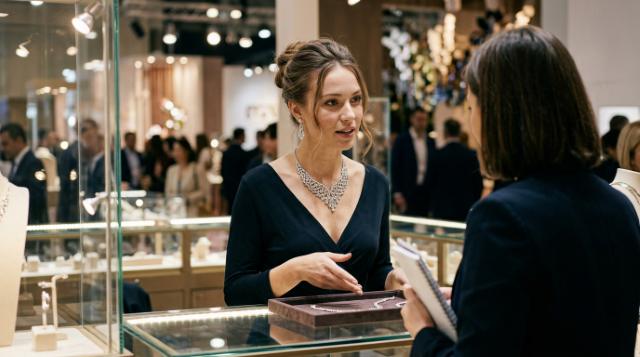
Models dressed in your line, from apparel and footwear to jewelry, watches and eyewear. A neutral base, hair up for earrings, necklaces and frames, and none of their own jewelry.

Best for: Fashion, jewelry, eyewear, accessories

A few practical notes. Heel height should follow the shift length: a reveal window of two hours can take a statement heel; an eight-hour day on a concrete floor is kinder in a lower heel or a clean flat, and most looks above work with either. Fabrics that crease, like linen, look tired by noon. And always check the look against the booth: black on a black back wall disappears in photos, while a white suit on a white floor can wash out. If the show publishes rules about booth staff attire, we read them with you and adjust the look before anything is ordered.

p.09Call sheet builder

Cast your crew, then price it

Pick your booth, the job you want the crew to do and the look. The call sheet places each person on a mark, sets the day’s schedule and totals the cost at $85 per person per hour.

Main job for the crew
The look
Add to the crew
p.11Impact

How to measure what the models earned

Promotional models are easy to judge by feel and hard to judge by numbers, unless you decide on the numbers before the show. These six are simple enough to track with a clicker, your lead app and a notebook.

Stops per hour, per mark

Count the people who stop and engage at each position in a ten-minute sample, three times a day. It shows which corners work and which models should rotate onto them.

Handoffs

How many visitors a model walked to a rep, a demo station or a meeting. A promotional model’s job is to start the conversation; a handoff is the proof it started well.

Scans per model-hour

If models carry scanners, divide scans by staffed hours. Compare it to your own team’s rate, then read the next row before you celebrate.

Qualified share

The percentage of those scans that your sales team would actually call. A model who asks one good question will scan fewer badges and hand you better ones.

Photo moments

Posts, tags and photos taken at your photo wall or reveal. A rough count is enough to tell whether the moment earned its square footage.

Cost per qualified lead

Total staff cost divided by qualified leads. It turns a staffing line into a number your sales leader can compare with every other channel.

Worked example. Three promotional models on eight-hour shifts for three show days is 72 person-hours, or $6,120 at $85 an hour. If your team marks 150 of the leads they handed over as worth a call, the models cost about $41 per qualified lead. Compare that with what a qualified lead costs you from paid search, events or outbound, and you have a number to plan next year’s crew around. Your own counts will differ; the point is to decide what you will count before doors open.

p.12Pitfalls

Eight retakes we see too often

None of these is about the people. Each is a planning gap that turns a strong crew into an expensive one, and each takes minutes to fix before the show.

01

Booking a look with no job

Models who are told only to stand and look good are wasted money, and visitors can tell. Give each person a mark, a line and a handoff.

02

Briefing on the morning of

A slide deck handed over at the badge desk is not a brief. Send talking points and the booth plan a week ahead so the call starts with questions, not reading.

03

Shoes that cannot last

Ten hours on carpet over concrete is hard in any shoe. Choose heel heights for the shift length, or pick a look that works with flats or clean sneakers.

04

A crowd with nowhere to go

A great model can stop twenty people in five minutes. If nobody on your team is free to talk to them, they leave and remember the wait.

05

The whole crew on one mark

Clusters look like a break room. Spread people across the open sides and the moments, and rotate them so every corner gets fresh energy.

06

A look that disappears

Black dresses against a black back wall vanish in photos. Test the outfit against your graphics, or ask us for a swatch suggestion before you decide.

07

Ignoring the show rules

Some organizers limit aisle activity, presentation volume, sampling or booth staff attire. We read the exhibitor manual with you so nothing is shut down on day one.

08

Counting badges, not conversations

A pile of scans looks like success until sales calls them. Track the qualified share as closely as the total.

p.13Pricing

What promotional models cost

One rate for every person on the crew, promotional model or spokesmodel, in every city we staff.

$85per hour, per person

  • Four-hour minimum per person, per shift
  • No travel fees: no flights, hotels or per-diems
  • The same rate for spokesmodels, hosts and lead capture staff
  • Briefing call and look planning included
  • A briefed replacement within two hours, or that shift is free
Example bookingCost
One model, one short shift1 person × 4 hours × $85$340
One model, a full show day1 person × 8 hours × $85$680
Launch reveal team3 people × 4 hours × $85$1,020
10×20 crew, three show days2 people × 8 hours × 3 days × $85$4,080
30×30 crew with spokesmodel, three days5 people × 8 hours × 3 days × $85$10,200
Island crew, four show days6 people × 8 hours × 4 days × $85$16,320

Totals are hours × people × $85. Use the call sheet builder above to price your own booth, days and evening events.

Why no travel fees? Because we book promotional models who live in or near the show city. An agency that flies a crew in has to bill airfare, hotel nights and per-diems on top of the hourly rate, and for a five-person crew over a three-day show that can add thousands of dollars before anyone sets foot on your carpet. With local crews, the invoice is the hours and nothing else.

1

Tell us the show

Booth size, show dates, the look you have in mind and what the models should achieve: traffic, a reveal, presentations or photos.

2

Get a quote in a day

We reply within one business day with crew size, hours and the total at $85 per person per hour.

3

Approve every person

Once you approve the quote, we send profiles with photos for each person we propose. You approve the crew and can ask for a swap.

4

Brief, dress, show

Talking points and the look are locked a week out. The crew arrives on call time, dressed and ready for doors.

p.14Where we staff

Promotional models in every show city

Local crews in 35 cities, and in other U.S. cities on request. Every guide below covers the venues, the shows and the people we book there.

The role fits best wherever the product is visual. On the show calendar that means SEMA Show models beside custom builds, CES promotional models at consumer tech launches, JCK jewelry models wearing one piece at a time, MAGIC fashion models on the showroom runway, Cosmoprof beauty models at hair and skin demos and NAB Show booth models in front of broadcast gear. By city, the deepest benches for the look-led work on this page are our Las Vegas trade show models, promotional models in New York, Anaheim and Los Angeles booth models, Miami spokesmodels, Orlando trade show models, and Detroit auto show models, where car, fashion, beauty and consumer shows fill the calendar.

Staffing by city

Staffing by show

p.15Request a crew

Tell us the show, the booth and the look. We reply with a promotional model quote within one business day.

  • 1
    $85 an hour, every rolePromotional models, spokesmodels, hosts and lead capture staff share one rate, with a four-hour minimum.
  • 2
    You approve every personAfter you approve the quote, we send profiles with photos. Ask for a swap any time before the show.
  • 3
    Local, so no travel feesWe book people who live in the show city, with briefed standby cover within two hours.

Promotional model request

About three minutes. No deposit to ask.

Promo
models
Who do you need?

Prefer to talk? (800) 994-8030

p.16FAQ

Promotional model questions

Call (800) 994-8030 and ask for promotional models.

PE

Purple Exhibits staffing team
Checked by our staffing coordinators · Updated

How much do promotional models cost for a trade show?

Purple Exhibits charges a flat $85 per hour per person for promotional models and spokesmodels, with a four-hour minimum per shift. There are no travel fees, because we book people who live in the show city. A single model for an eight-hour day is $680.

What is the difference between a promotional model and a spokesmodel?

A promotional model draws and holds attention at the booth: greeting, inviting, posing with the product and handing visitors to your team. A spokesmodel does that and also presents: a short scripted pitch on a microphone, delivered on a schedule. Both cost the same $85 an hour.

How are promotional models different from hostesses and brand ambassadors?

Hostesses welcome invited guests and manage lounges and meeting rooms. Brand ambassadors start conversations at volume, often while sampling. Promotional models are booked for presence and the moment: the aisle, the reveal, the photo wall. Many booths mix all three.

How many promotional models does my booth need?

A useful rule is one model for each open side of the booth plus one for each moment, such as a reveal, a photo wall or a presentation. That means one for a 10×10, two for a 10×20, three for a 20×20 and six or more for an island. The call sheet builder on this page does the math.

Can I choose the models who work my booth?

Yes. Once you approve the quote, we send profiles with photos for each person we propose for your dates. You approve every person, and if someone is not right for your brand, ask for a swap.

What do promotional models wear?

Whatever look you approve. Common choices are all black, one bold brand color, white suits, branded performance wear, cocktail attire for evening events or your own product. You can ship branded pieces and we confirm sizes ahead of the show.

Will the models know our product?

Yes, at the level their job needs. We brief every crew on three talking points, your qualifying question and the handoff rule, and spokesmodels learn a short script. Deep technical questions go to your team by design.

Can promotional models scan badges and capture leads?

Yes. They can use your lead retrieval app or scanner, ask a qualifying question and add a note. For larger booths, pair them with dedicated lead capture staff so the models stay on the aisle.

How far ahead should I book promotional models?

Three to six weeks out gives the best choice of people and time to settle the look. Rush requests on 72 hours’ notice are possible, depending on who is available in the show city.

Do you charge travel fees for promotional models?

No. We book promotional models who live in or near the show city, so there are no flights, hotel nights or per-diems on your invoice. The rate stays $85 an hour per person.

Which cities do you book promotional models in?

We have city guides for 35 U.S. cities, including Las Vegas, Orlando, Chicago, New York, Anaheim and Los Angeles, Atlanta, Dallas, Miami and Detroit, and we staff other cities on request. Every city page is linked on this page.

Can I book promotional models for one day or just a launch?

Yes. Book a single day, a single reveal or one evening event. Each person has a four-hour minimum per shift, and you can add days later if the first one works.

What happens if a model cancels?

We keep briefed standby people in the show city. If someone cannot make a shift, a replacement reaches your booth within two hours, or you do not pay for that shift.

Can promotional models work launch parties, suites and dinners?

Yes. The same crew can work your booth during the day and your launch party, VIP suite or customer dinner at night, at the same $85 an hour with a four-hour minimum for each shift.

Do you book men as well as women?

Yes. Tell us the crew you picture, whether that is women, men or a mixed team, and we match it from local people available for your dates. Profiles come to you for approval either way.

Your booth, cast and called.

Send the show, the booth size and the look. A promotional model quote within one business day.

Book promotional models(800) 994-8030Staffing desk · Mon–Fri
Get my promotional model quote
×

Is a Custom Exhibit Right for me?

Let’s get right on that answer for you: